 Divisi
Oil palm bunch rot
Marasmius palmivorus · Fungal
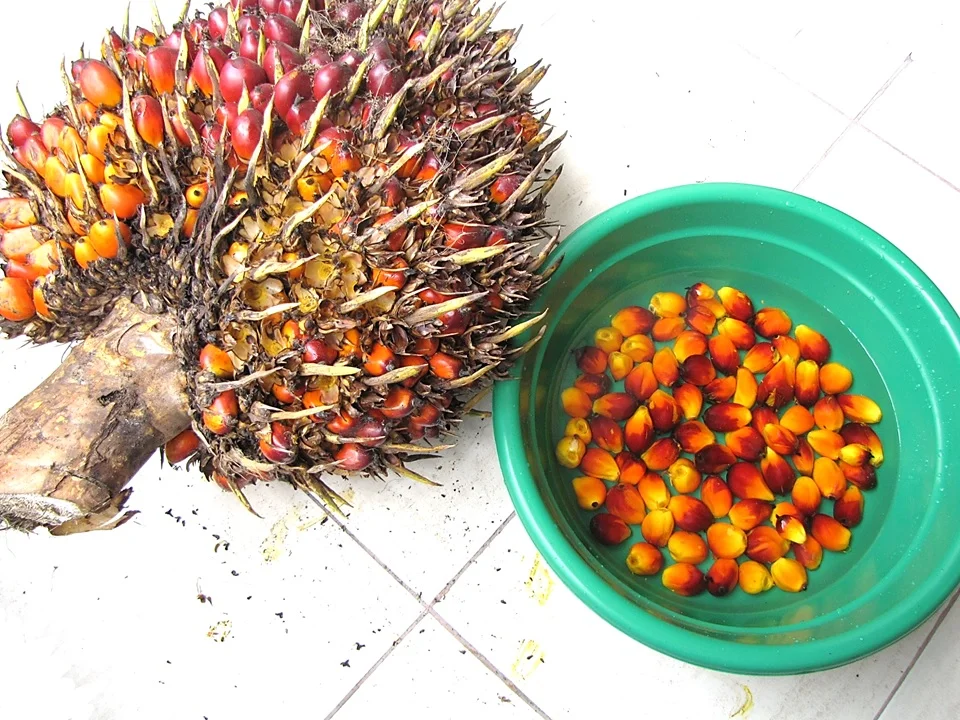
Photo: T.K. Naliaka · CC BY-SA 4.0
Oil palm bunch rot is a fungus (Marasmius palmivorus, a small toadstool) that rots the fruit bunch right on the palm, before you can harvest it. It spreads as white, cottony threads that creep over the bunch and grow in between the fruitlets, binding and rotting them; on badly-rotted bunches and on dead flower trash in the crown it sprouts tiny white mushrooms. It gets started on poorly-pollinated and aborted bunches left sitting in a damp, crowded canopy, then jumps fruit-to-fruit and bunch-to-bunch onto the healthy ones nearby.
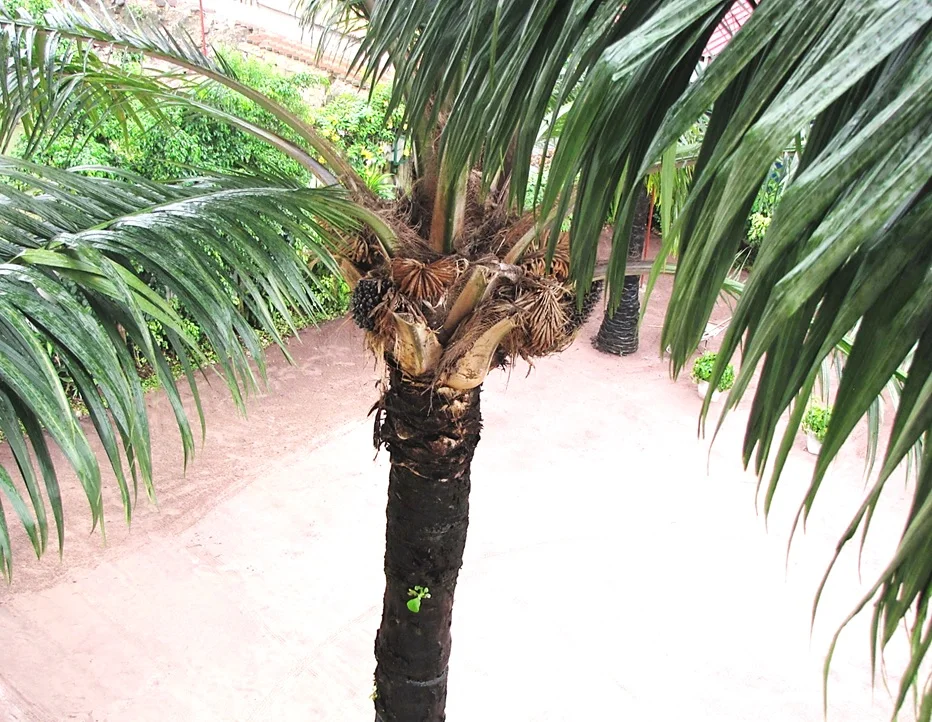
T.K. Naliaka · CC BY-SA 4.0
Why it matters
Bunch rot attacks the one thing you grow the palm for — the fruit bunch — and rots it on the palm before you can cut it. In a wet season, in a crowded canopy with poor pollination, it can spoil up to 3 in every 10 bunches (30% of your crop), and the loss is doubly cruel: the palm still spent its potassium and its year building those bunches, but you get nothing from them. Worse, every rotting bunch you leave hanging in the crown feeds the fungus and throws its threads onto the good bunches beside it — so a few ignored bunches quietly become many.
When to act
cut out and carry away the very first bunch you find with white threads or rotting fruit — 1 rotten or aborted bunch left in the crown is enough to spread it — and clear every aborted, gappy or over-ripe bunch on sight
This guidance is general, compiled from published agronomic references including FAO and CABI. Thresholds and timing shift with your crop, your variety and the season.
In much of the region a spray is simply called mushonga — medicine. But a chemical group you cannot name is one you cannot rotate, and a product you did not write down has no pre-harvest interval you can observe. Mushonga, and other farming words →
The full Oil palm bunch rot field guide
Identify it
The first thing you see
a spread of white, cottony threads over the fruit bunch — like fine cobweb or a dusting of cotton — creeping down between the fruitlets and binding them together. Under and around the threads the fruit goes soft, brown and rotten, and the rot creeps outward from fruit to fruit across the bunch.
Where it starts
look first at the poorly-pollinated bunches (the gappy ones full of small, hard, seedless fruit) and the small aborted bunches left sitting in the crown — those are where the rot takes hold, before it spreads onto the good, full bunches next to them. A bunch left hanging too long past ripe rots the same way.
The tell-tale sign
on a badly-rotted bunch, and on old bunch stalks and dead male flowers and trash in the crown, the fungus sprouts tiny white toadstools — little mushrooms with a slender stalk and a small cap, growing in clusters. That little mushroom is the disease making its spores to infect the next bunch.
Don't confuse it
with an ordinary over-ripe bunch (the fruit softens and browns, and loose fruit drops, but there are no white threads and no little mushrooms) or with rat and squirrel damage (gnawed, chewed fruit with teeth-marks, again no white mould). Ganoderma is a different disease — that one is a hard bracket at the base of the trunk, not on the fruit. Bunch rot is the one with the white cottony threads binding the fruit, and the tiny white mushrooms.
Scout for it
When to look hardest
from flowering right through bunch-fill to harvest (the mid-season and late-season stages) — the whole time bunches are hanging on the palm. Step up your checks in the rains, and in still, damp weather, and in any block where the canopy is crowded and shady, because the rot loves warm, wet, airless conditions (about 24-32 degrees C and high humidity).
How to walk the block
every 3-5 weeks, walk right through the stand — not just the edge rows — and stop at each palm to look up into the crown at the forming and hanging bunches, and at the trash caught among the frond bases.
What to check first
go straight to the gappy, poorly-pollinated bunches, the small aborted bunches, and any over-ripe bunch held too long — hunt them for white threads, rotting brown fruit, and the tiny white mushrooms in the crown.
The number that means act now
the threshold is the very first bunch you find with white threads or rotting fruit — 1 rotten bunch is enough to trigger action, because a bunch left in the crown throws the fungus onto its neighbours. On the same round, clear every aborted, gappy or over-ripe bunch on sight, before it starts to rot.
Control it
Prevent it first
-
keep the pollinating weevil working (your strongest tool):
a well-pollinated bunch fills up full and tight, with no gappy, seedless fruit for the rot to start on. Protect the male flowers (the weevils' breeding ground), and never blanket-spray insecticide over flowering palms — kill the weevils and you get half-empty bunches that rot. Good pollination is the cheapest bunch-rot control there is.
-
grow an open, airy canopy:
prune off the dead, broken and hanging lower fronds to keep a clear window, so air moves through the crown and the bunches dry after rain. The rot thrives in still, damp, shaded air — a crowded, over-grown palm is the one that rots. (But never over-prune green fronds — that starves the palm.)
Act
-
sanitation is the main control:
the moment you find it, cut out and carry away every rotting, aborted and over-ripe bunch, every dead male flower and old bunch stalk from the crown and the field. Burn or bury them well away — never leave them hanging in the crown or dropped under the palm, because that rotting trash is exactly where the fungus lives and where it throws its threads onto the next bunch. Do a clean sanitation round every scouting walk.
-
harvest on time, every round:
go round every 1-2 weeks and cut each bunch as soon as it is ripe, and pick up every loose fruit. A bunch left hanging past ripe over-ripens, rots, and becomes a seed-bed for the disease — so timely harvesting is itself a bunch-rot control.
Chemical only as a last resort — protectant fungicide:
bunch rot is rarely worth spraying — sanitation and pollination do the real work. Only in a bad, spreading outbreak, and only on top of a hard sanitation round, use a recommended protectant (contact) fungicide on the bunches. "Protectant" means it coats and shields healthy bunches but cannot cure a bunch already rotting — so cut out the rotten ones first, then protect the rest.
Spray safely
cover your skin, eyes, nose and mouth; spray in the cool of the morning or evening with the wind at your back; keep the spray off the fruit you'll send to the mill, off drinking water and rivers, and away from children, and away from the flowering palms where the pollinating weevils work. Respect the pre-harvest interval — the number of days the label says to wait between the last spray and cutting bunches for the mill. Wash yourself and your clothes afterwards. And don't lean on one product — rotate to a different chemical group so the fungus can't get used to it.
If it keeps spreading — go back to the root cause:
if bunches keep rotting even after you clear them, the trouble is almost always poor pollination and a damp, crowded canopy — so count and protect the weevils, and open the canopy by pruning dead fronds. Tighten your sanitation to a weekly round, strip every rotten and aborted bunch off the worst palms, and carry it all right out of the field. Fix the pollination and the airflow and the rot has nothing to start on.
Catch Oil palm bunch rot before it costs you the harvest
This guide is the general answer. Divisi works out yours — the week to scout your own field for Oil palm bunch rot, and what to do the day you find it.


Crops it affects
Plan the crops it attacks

All planting calendars, country by country
Get Insights by email
A short digest of new Divisi articles. No email on quiet weeks.
Frequently asked questions
How do I identify Oil palm bunch rot?
The first thing you see. a spread of white, cottony threads over the fruit bunch — like fine cobweb or a dusting of cotton — creeping down between the fruitlets and binding them together. Under and around the threads the fruit goes soft, brown and rotten, and the rot creeps outward from fruit to fruit across the bunch.
When should I take action against Oil palm bunch rot?
cut out and carry away the very first bunch you find with white threads or rotting fruit — 1 rotten or aborted bunch left in the crown is enough to spread it — and clear every aborted, gappy or over-ripe bunch on sight
How do I control Oil palm bunch rot?
Prevent it first — keep the pollinating weevil working (your strongest tool):. a well-pollinated bunch fills up full and tight, with no gappy, seedless fruit for the rot to start on. Protect the male flowers (the weevils' breeding ground), and never blanket-spray insecticide over flowering palms — kill the weevils and you get half-empty bunches that rot. Good pollination is the cheapest bunch-rot control there is.
Which crops are attacked by Oil palm bunch rot?
Among the crops covered here: Oil palm.