 Divisi
Passion fruit collar rot
Phytophthora nicotianae (with Fusarium solani) · Fungal
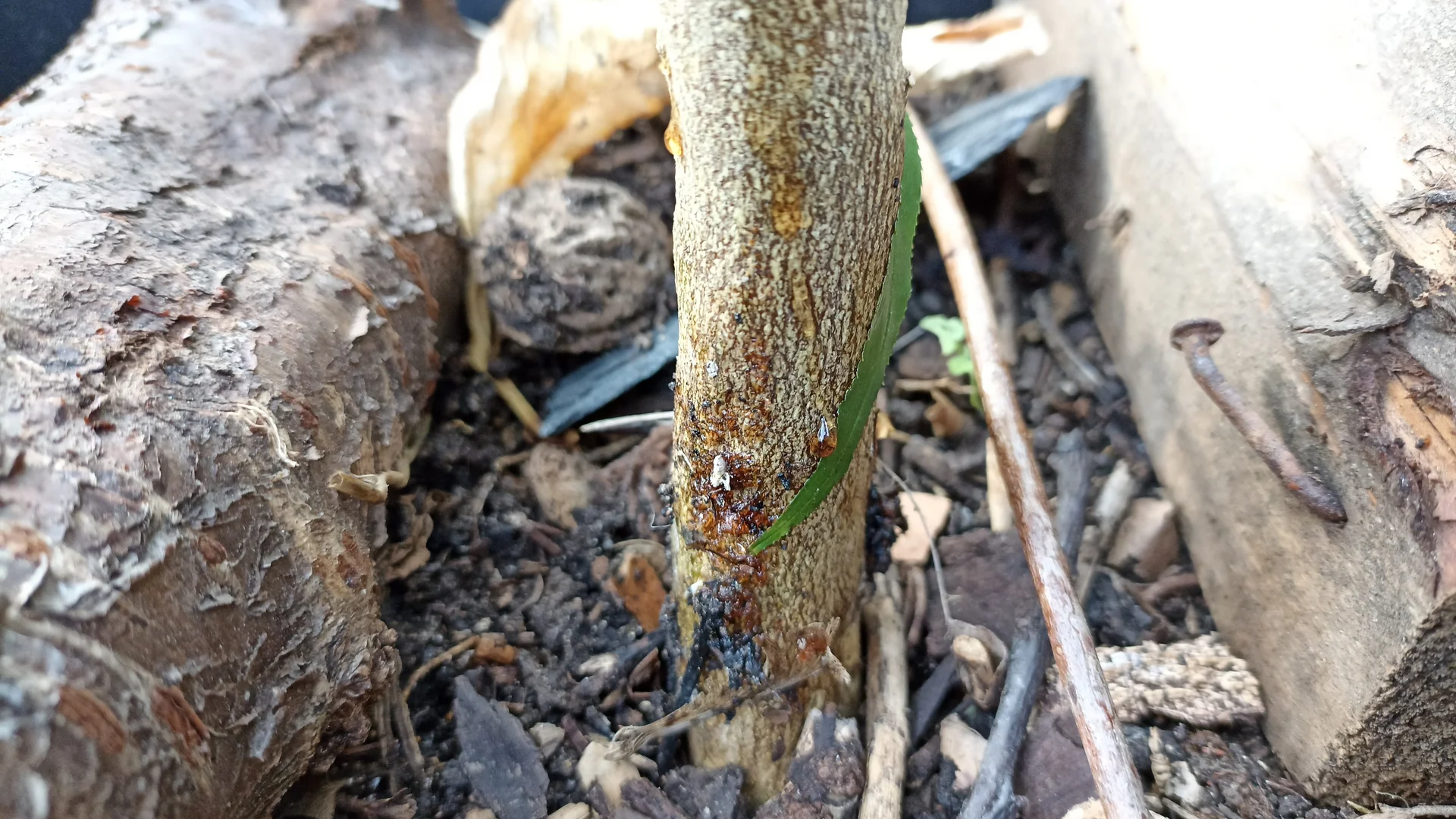
Photo: Eiku · CC BY-SA 4.0
Passion fruit collar rot is a soil-borne water mould — Phytophthora nicotianae, an oomycete (a fungus-like organism) — usually joined by the fungus Fusarium solani, that rots the vine at the collar (the stem-base at the soil line) and its roots. It thrives in warm, wet, poorly drained soil, spreading in splashing rain and surface water, and once the rot rings the stem all the way round there is no cure: the whole vine wilts and dies. The mould survives in the soil for years, so it keeps coming back on the same ground.
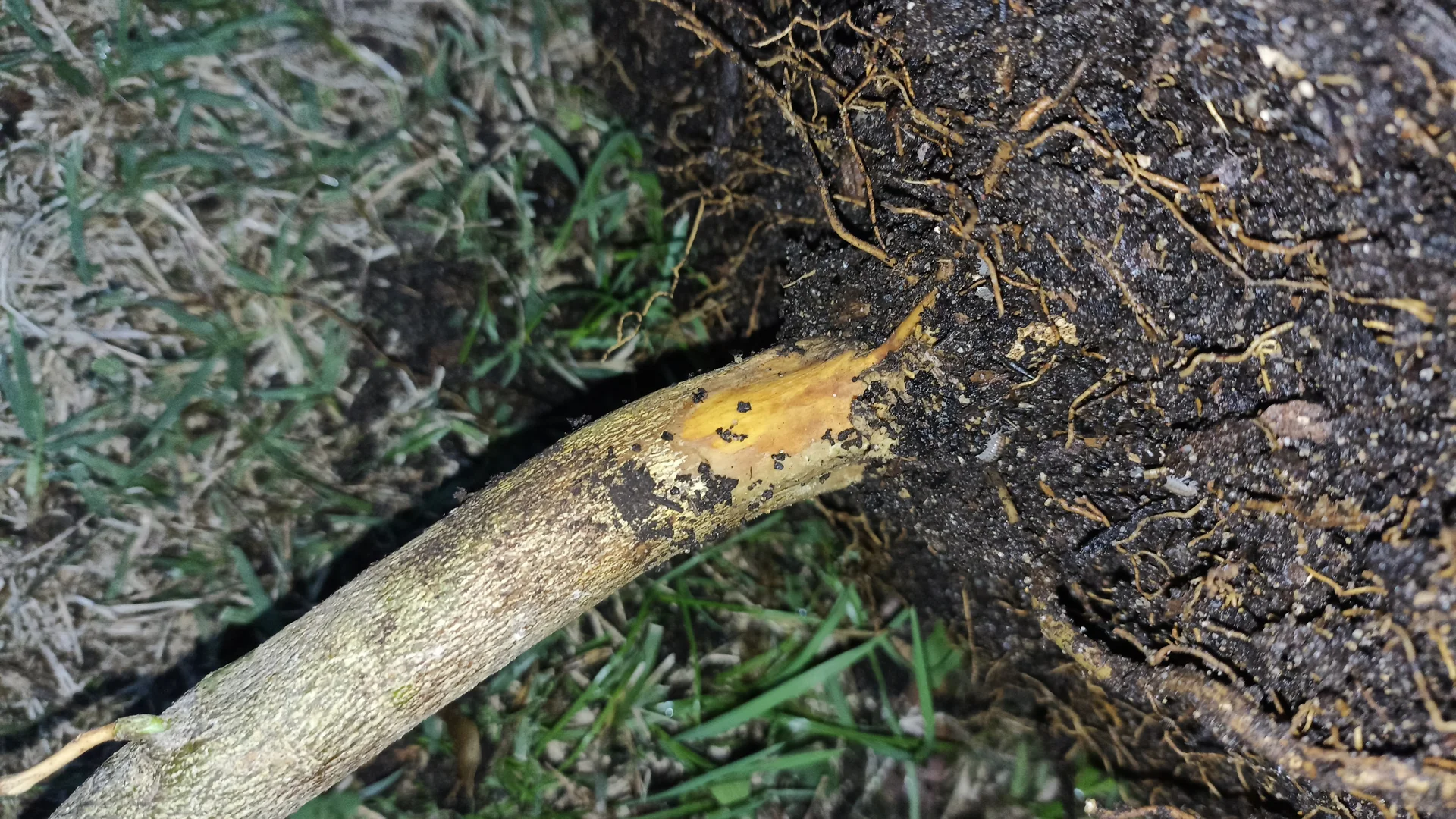
Eiku · CC BY-SA 4.0
Why it matters
Collar rot is the disease that kills passion-fruit vines outright — it does not just spot a few leaves, it rots clean through the trunk so a whole bearing vine wilts and dies in a matter of days. In a wet season on poorly drained land it can take most of a plot — up to 8 in every 10 vines (80% of your crop) — and because each vine feeds you for 2–3 years, a dead vine costs you years of fruit, not one harvest. Worst of all there is no cure once the collar is girdled, and the mould lives on in the soil for about 4 years, so the land itself turns against passion fruit. That is why the whole fight is in the prevention — good drainage, grafted vines and a dry collar — long before you ever see a sick plant.
When to act
the very first vine that wilts with a soft, brown, cracked stem-base — 1 sick vine is enough to act, because there is no cure once the collar is girdled; and drain, keep collars dry and protect the rest before symptoms whenever warm, wet weather and standing water set in
This guidance is general, compiled from published agronomic references including FAO and CABI. Thresholds and timing shift with your crop, your variety and the season.
In much of the region a spray is simply called mushonga — medicine. But a chemical group you cannot name is one you cannot rotate, and a product you did not write down has no pre-harvest interval you can observe. Mushonga, and other farming words →
The full Passion fruit collar rot field guide
Identify it
The first thing you see (above ground)
a whole vine — or one big arm — suddenly wilts. The leaves droop, yellow and hang, and the vine looks thirsty even when the soil is wet. Over a few days to a couple of weeks the whole vine collapses and dies. On a vine you were already harvesting from, this sudden death for no clear reason is the classic warning.
The tell-tale sign — look at the collar (the stem-base right at the soil line):
you will find a dark brown to black, water-soaked, sunken rot ringing the stem at the ground. The bark is soft and cracked, may ooze or gum, and if you scrape it with a knife the wood underneath is brown, not green and living. Once this rot rings the stem all the way round (girdles it), everything above it is doomed — there is no cure.
Below ground and on low fruit
scrape the soil back and the roots are brown, soft and rotten instead of white and firm. In wet weather, fruit hanging low and splashed with soil can show a firm grey-brown rot, and leaves near the ground can go dark and blighted.
Don't confuse it
with Fusarium wilt, the other vine-killer: split the stem lengthwise — Fusarium wilt shows brown streaks in the wood running up the stem, but the collar itself stays firm, not soft and wet. Collar rot is a soft, sunken, rotting wound at the very base (and Fusarium solani often joins in that same collar rot). Also tell it apart from woodiness virus (mottled leaves and hard, misshapen fruit, but no stem-base rot), and from plain waterlogging or drought (the vine wilts, but there is no browned, soft, cracked collar and no brown wood underneath).
Scout for it
When to look hardest
through the wet season and every warm, rainy spell — from the young, just-planted vine settling in right through the vine growing its framework and carrying fruit (the establishment, development, flowering and fruit-filling stages). Warm (about 20–35 °C) wet soil is what the mould explodes in — step up your checks after heavy rain and wherever water pools.
How to walk the plot
every week, walk a big "W" shape so you cross all four corners and the middle — not just the row by the path. Make about 5 to 10 stops along the way, and always check the low, wet, poorly drained corners first, because that is where the rot starts.
What to check at each stop
pull back the mulch and soil and look closely at the collar (the stem-base at the soil line) for browning, softening, cracking or ooze; then look up for any vine wilting or yellowing for no clear reason. A wilting canopy above and a soft brown collar below together mean collar rot.
The number that means act now
the threshold is the very first vine you find wilting with a soft, brown, rotting collar — 1 sick vine is enough to act, because it cannot be cured and it seeds the soil with the mould for years. And when warm, wet weather and standing water set in, act before any vine sickens — drain the water off, bare and dry the collars, and protect at-risk vines rather than waiting to find a dead one.
Control it
Prevent it first
-
plant grafted vines on a resistant root (your strongest tool):
use grafted plants — a sweet purple top joined onto a hardy yellow passion-fruit rootstock that resists the collar and root rots — and keep the graft join a hand-span above the soil so the disease-prone top never grows its own roots. Start with clean, certified planting material, and never replant passion fruit on land where collar rot killed vines before — the mould stays in that soil about 4 years.
-
drain the water away and keep the collar dry:
choose a well-drained site, and on heavy or low, wet ground plant on raised mounds or ridges so water never sits around the stem. Keep mulch and soil pulled back from the stem-base so the collar stays open and dry; water at the base, not over the collar; and do not wound the collar with hoes or slashers — the mould enters through wet, damaged bark.
-
help the soil fight back (biological):
work Trichoderma (a friendly soil fungus sold as a biocontrol) plus plenty of well-rotted compost into the planting hole and around the collar. These crowd out and suppress the Phytophthora and Fusarium in the soil and are safe for you, your family and bees.
Act early — rogue the first sick vine:
the moment a vine wilts with a rotted collar, dig it out with as much of its roots as you can and destroy it — burn it or bury it deep, well away from the plot. Do not compost it, and do not replant passion fruit in that exact spot. Disinfect your tools (wipe with bleach or pass through a flame) afterwards so you don't carry the rot to a healthy vine.
Chemical as a last resort — a systemic Phytophthora fungicide:
on high-value or at-risk vines you can use a phosphonate (phosphonic acid) as a trunk-paint or soil drench, or a metalaxyl-based soil drench, around the collar and root zone; a copper protectant on the lower stem and splashed fruit helps in wet weather. Understand what they do: they protect healthy vines and slow the spread — they cannot raise a vine whose collar is already girdled, so they must go on before or at the very first sign, never as a hoped-for cure.
Spray and drench safely
cover your skin, eyes, nose and mouth; apply in the cool of the morning or evening with the wind at your back; keep the product off fruit you'll eat or sell soon, off drinking water and rivers, and away from children and bees. Respect the pre-harvest interval — the number of days the label says you must wait between the last treatment and picking or selling the fruit. Wash yourself and your clothes afterwards.
Fight resistance
don't lean on one product forever — rotate to a different chemical group, and never rely on metalaxyl alone, because Phytophthora learns to shrug it off. Chemicals only ever buy time; pair them with the drainage, grafting and sanitation that actually keep the rot out.
If it keeps spreading — change the ground, not the medicine:
if vines keep dying one after another down a row, the land is almost certainly too wet and now infested. Fix the drainage hard, stop replanting passion fruit there for several years, and rotate to a non-host crop on that ground. Start your next plot on fresh, well-drained land with grafted vines — that is the only way to truly get ahead of collar rot.
Catch Passion fruit collar rot before it costs you the harvest
This guide is the general answer. Divisi works out yours — the week to scout your own field for Passion fruit collar rot, and what to do the day you find it.


Crops it affects
Plan the crops it attacks

All planting calendars, country by country
Get Insights by email
A short digest of new Divisi articles. No email on quiet weeks.
Frequently asked questions
How do I identify Passion fruit collar rot?
The first thing you see (above ground). a whole vine — or one big arm — suddenly wilts. The leaves droop, yellow and hang, and the vine looks thirsty even when the soil is wet. Over a few days to a couple of weeks the whole vine collapses and dies. On a vine you were already harvesting from, this sudden death for no clear reason is the classic warning.
When should I take action against Passion fruit collar rot?
the very first vine that wilts with a soft, brown, cracked stem-base — 1 sick vine is enough to act, because there is no cure once the collar is girdled; and drain, keep collars dry and protect the rest before symptoms whenever warm, wet weather and standing water set in
How do I control Passion fruit collar rot?
Prevent it first — plant grafted vines on a resistant root (your strongest tool):. use grafted plants — a sweet purple top joined onto a hardy yellow passion-fruit rootstock that resists the collar and root rots — and keep the graft join a hand-span above the soil so the disease-prone top never grows its own roots. Start with clean, certified planting material, and never replant passion fruit on land where collar rot killed vines before — the mould stays in that soil about 4 years.
Which crops are attacked by Passion fruit collar rot?
Among the crops covered here: Passion fruit.