 Divisi
Pearl millet blast
Magnaporthe grisea (Pyricularia grisea), pearl-millet pathotype · Fungal
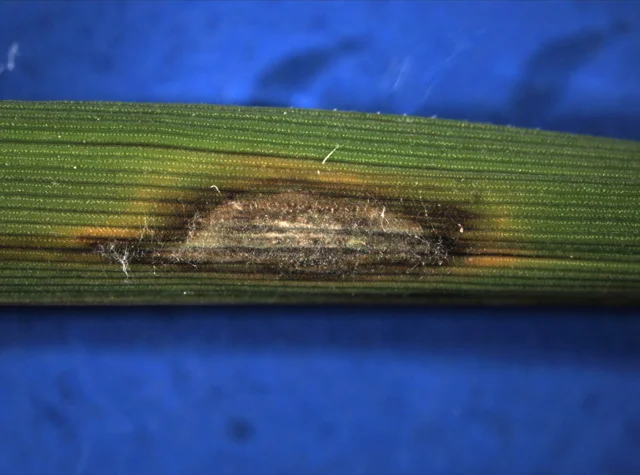
Photo: Wikimedia Commons · Public domain
A fast fungal leaf-and-head disease of pearl millet, different from the paddy-rice blast fungus. It scorches the leaves and, worse, rots the neck just below the grain head so the head bends, breaks or fills with shrivelled, chaffy grain.
Why it matters
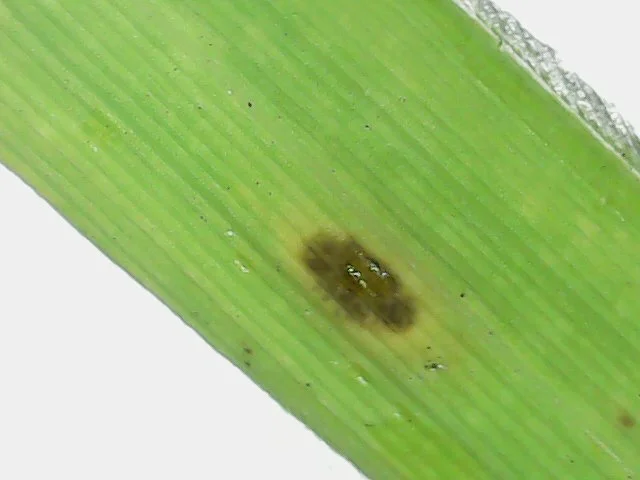
Blast can take up to 60% of the grain in a bad, wet year. Leaf blast slows the crop, but the real damage is neck blast: the fungus rots the thin neck just below the grain head, so the head bends over, snaps off, or fills only with light, chaffy grain. Once the neck is rotten there is no cure — the head is lost — so this is a disease you must stop early, before heading, not treat late.
When to act
First spindle-shaped grey lesions on the leaves, OR any rotten grey collar just below a head — act at once; in warm, wet weather with a dense crop, protect the heads at the very start of heading before you see much.
This guidance is general, compiled from published agronomic references including FAO and CABI. Thresholds and timing shift with your crop, your variety and the season.
In much of the region a spray is simply called mushonga — medicine. But a chemical group you cannot name is one you cannot rotate, and a product you did not write down has no pre-harvest interval you can observe. Mushonga, and other farming words →
The full Pearl millet blast field guide
Identify it
On the leaves (first sign)
small grey-green, water-soaked spots that quickly grow into diamond- or spindle-shaped lesions — a grey or ash-white dead centre with a brown or reddish edge. In wet weather many join up and whole leaves dry off from the tip.
On the neck and head (the dangerous sign)
a greyish-brown rotten band on the thin neck just below the grain head. The head then bends over like a shepherd's crook, breaks off, or stands up empty with shrivelled, light grain.
Rub test
in damp early morning the lesions may carry a faint grey, dusty mould (the fungus's spores) — wipe a lesion and your finger picks up a little grey powder.
Tell it apart from look-alikes
downy mildew (green-ear) turns whole heads into a leafy green tuft and yellows leaves in stripes — very different; drought/sun scorch dries leaves evenly from the edges with no spindle-shaped spots and no grey centres; normal leaf-age browning starts on the oldest bottom leaves without the diamond shape.
Scout for it
When
start once the crop is knee-high and growing fast (DEVELOPMENT), and check hardest right at heading (MID_SEASON), which is when neck blast strikes and does the most harm.
Watch the weather
the fungus explodes in warm (25–30°C), wet weather — frequent rain, heavy dew, or leaves that stay wet for most of a morning. After such a spell, scout within 2–3 days.
How
walk the field in a "W" path, stopping about 10 times. At each stop look at the middle and upper leaves for spindle lesions, and at heading bend down and check the necks just below the heads.
Threshold — act on the first sign:
as soon as you find spindle-shaped grey lesions spreading on the upper leaves, or ANY rotten grey neck, act. In warm wet weather with a thick, well-fed crop, don't wait to see damage — protect the heads at the very start of heading.
Check the thick, shaded, over-fed patches first
— blast always shows there first.
Control it
Prevent
-
grow a resistant variety (your strongest tool):
plant a blast-resistant or tolerant pearl-millet variety/hybrid where your seed supplier offers one. This alone prevents most losses and costs nothing extra at spraying time.
-
don't feed the fungus:
use a balanced amount of nitrogen — a lush, dark-green, over-fed crop blasts far worse. Give wider spacing so air moves and leaves dry quickly. Rotate — don't grow pearl millet on the same land year after year — and plough in or burn last season's millet trash, where the fungus survives.
Act early — clean as you go:
at the first lesions, cut and remove badly blasted leaves/heads from a few plants and carry them out of the field (don't drop them between the rows), so there is less spore dust to spread in the next wet spell.
Chemical — a protectant spray, last resort, timed to heading:
if warm wet weather sets in around heading and you grow a susceptible variety, spray a protectant fungicide (a strobilurin or triazole/mancozeb-type — the class your agro-dealer stocks; never a made-up brand) as the heads start to emerge, and again about 10–14 days later if the wet weather holds. A protectant only coats and shields — it cannot cure a neck that is already rotten, so timing before infection is everything.
Spray safely
cover your skin, eyes, nose and mouth; spray in the cool of the day with the wind behind you; keep the spray off food, drinking water, children, animals and bees; wait the full pre-harvest interval (the number of days on the label between spraying and harvest) before harvesting the grain; and wash well afterwards. To stop the fungus getting used to one product, rotate to a different chemical group each time.
If it keeps spreading →
you likely have a susceptible variety in wet weather — switch to a resistant variety next season, cut the nitrogen, widen the spacing, and rotate the land. If the necks are already rotting and heads breaking, that grain is lost — cut and remove the worst heads, save your effort for protecting the still-green ones, and clear all trash after harvest so it doesn't carry over.
Catch Pearl millet blast before it costs you the harvest
This guide is the general answer. Divisi works out yours — the week to scout your own field for Pearl millet blast, and what to do the day you find it.


Crops it affects
Plan the crops it attacks

All planting calendars, country by country
Get Insights by email
A short digest of new Divisi articles. No email on quiet weeks.
Frequently asked questions
How do I identify Pearl millet blast?
On the leaves (first sign). small grey-green, water-soaked spots that quickly grow into diamond- or spindle-shaped lesions — a grey or ash-white dead centre with a brown or reddish edge. In wet weather many join up and whole leaves dry off from the tip.
When should I take action against Pearl millet blast?
First spindle-shaped grey lesions on the leaves, OR any rotten grey collar just below a head — act at once; in warm, wet weather with a dense crop, protect the heads at the very start of heading before you see much.
How do I control Pearl millet blast?
Prevent — grow a resistant variety (your strongest tool):. plant a blast-resistant or tolerant pearl-millet variety/hybrid where your seed supplier offers one. This alone prevents most losses and costs nothing extra at spraying time.
Which crops are attacked by Pearl millet blast?
Among the crops covered here: Pearl millet.