 Divisi
Pineapple base rot
Thielaviopsis paradoxa (Chalara paradoxa) · Fungal
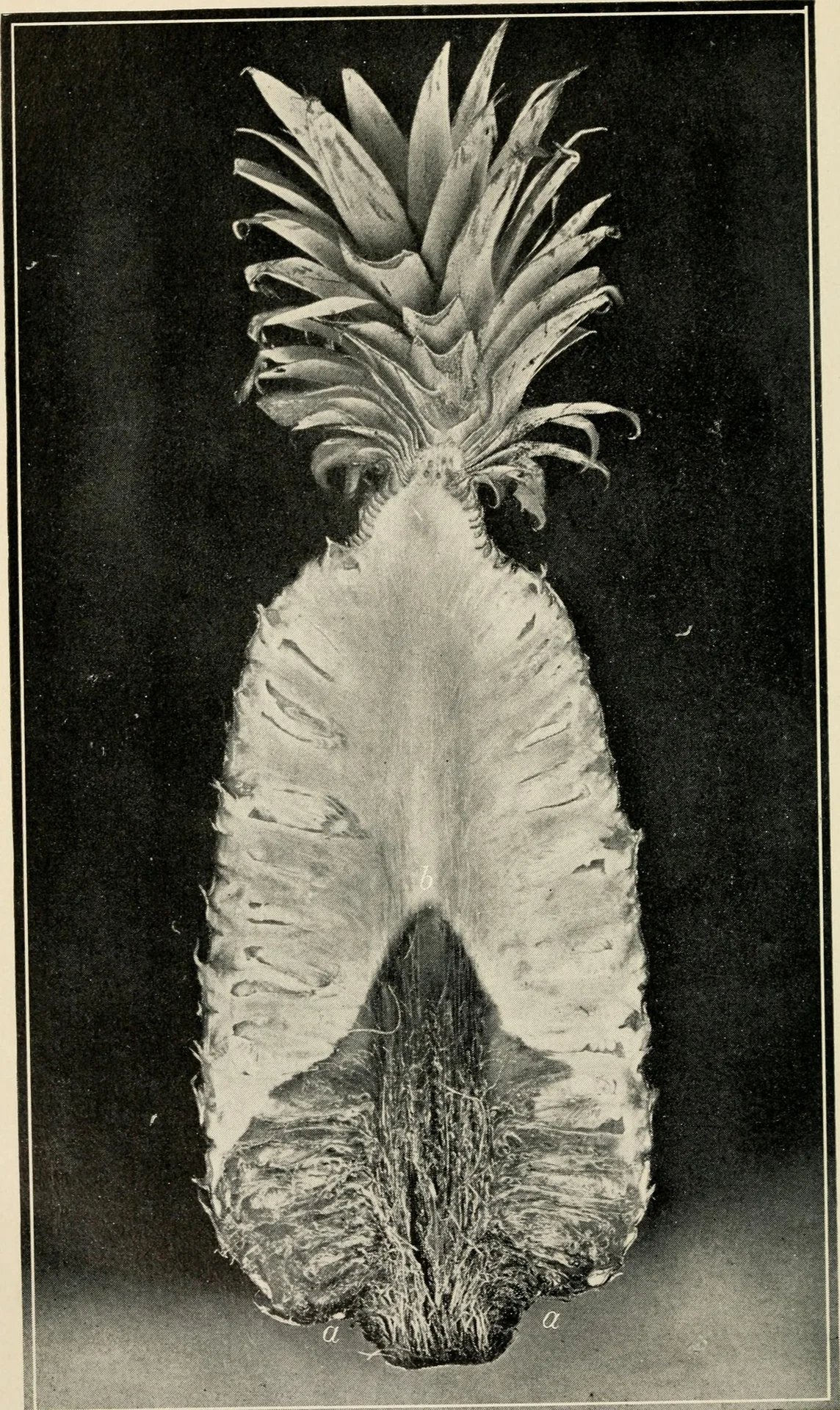
Photo: Hawaii. Board of Commissioners of Agriculture and Forestry · No restrictions
Pineapple base rot (also called butt rot or black rot) is a fungal disease caused by Thielaviopsis paradoxa. It is a wound rot: the fungus cannot break into a healthy, unbroken plant, but the moment you cut a sucker, slip or crown from the mother plant it can slip into the fresh, wet wound at the base. In warm, damp conditions it turns the cut base soft, watery and black, so the shoot never roots and simply rots away in the ground. Its spores live on in old pineapple trash and in the soil, waiting for the next fresh cut — and the same fungus rots bruised or cut fruit into a soft, dark 'water blister' after harvest.
Why it matters
Base rot strikes at the most expensive moment of the whole crop — the shoots you have just cut, carried and planted. Because it only needs a fresh wound and a little warm damp, a careless batch of uncured setts piled in the shade or pushed into wet soil can rot at the base and fail to root — up to half of them (50%) lost before the crop even starts. Every rotted sett is a gap in your block that you cannot fill in later, so the stand you lose now caps your harvest for the whole two-year crop. The good news is that this is one of the most preventable diseases you have: a healed, dry base and well-drained soil stop it almost completely.
When to act
pull and replace any newly-set shoot with a soft, blackening base that has not rooted; if more than about 1 in 10 setts (10%) are rotting at the base, stop planting from that batch, improve curing and drainage, and dip the bases before setting any more
This guidance is general, compiled from published agronomic references including FAO and CABI. Thresholds and timing shift with your crop, your variety and the season.
In much of the region a spray is simply called mushonga — medicine. But a chemical group you cannot name is one you cannot rotate, and a product you did not write down has no pre-harvest interval you can observe. Mushonga, and other farming words →
The full Pineapple base rot field guide
Identify it
The first thing you see
newly planted shoots that sit still and never root while their neighbours take. Pull one gently and the base comes away soft — the firm, pale cut has turned into a wet, watery, blackening rot.
On the setts before planting
if cut suckers, slips or crowns are left in a warm, damp heap, the cut base goes soft and dark, and it may grow a grey-black, soot-like dust (that is the fungus making spores). A healthy cured base is dry, hard and pale; a rotting one is wet, black, and gives way under your thumb.
How it smells
the rot is soft and watery, not dry and firm, and often carries a fermenting, sour, 'pineapple-wine' smell — a classic sign of this fungus. On bruised or cut fruit the same fungus makes a soft, dark, water-blister rot spreading out from the wound.
Don't confuse it
with heart rot, which starts in the centre of a growing plant — the middle leaves pull out easily and stink — not at the cut base of a young sett. Base rot is at the base (butt) of a freshly planted shoot and always follows a fresh cut. A shoot that simply toppled or dried out will also fail, but its base stays firm and dry, never soft and black.
Scout for it
When to look hardest
during curing and the first few weeks after planting — the establishment (INITIAL) stage. That is the only window this disease attacks, because it needs the fresh cut on your setts. Watch most closely in warm, wet weather (about 20–32 degrees C) and on any block where water stands after rain.
Check the setts before they go in
as you grade your suckers, slips and crowns, feel every base. Set aside any that are soft, wet, black, or smell sour — never plant a rotting sett, it will only fail and shed spores into your soil.
Check the young stand after planting
about 1–2 weeks after planting, and again a few weeks later, walk the block in a big loop across all four corners and the middle, and gently tug a sample of shoots — say 10 shoots at each of about 10 stops. A shoot that lifts easily with a soft black base has base rot; a rooting one holds firm.
The number that means act
pull and replace any single rotting sett the moment you find it. But once you count more than about 1 in 10 (10%) of your setts rotting at the base, treat the whole batch as at-risk — stop planting from it, fix your curing and drainage, and dip the bases before you set any more (see control).
Control it
Prevent it first
-
cure the setts (your single strongest tool):
after cutting suckers, slips or crowns, strip a few of the lowest leaves and lay them in the shade, base upward, for several days up to two weeks, until the cut base dries hard and heals over. 'Curing' just means letting the wound scab shut — a healed, dry base leaves the fungus no wet wound to get in through. Never plant a fresh, wet-cut sett straight into the ground.
-
keep setts cool, dry and airy:
never pile fresh-cut setts in a warm, damp heap or a closed bag — that is exactly the warm, wet wound the fungus wants. Spread them out in the shade with air moving through, and plant them out without long delays.
-
plant into well-drained soil:
set the shoots into free-draining, ridged or raised beds so the base never sits in water. Plant at the right depth so soil does not fall into the heart, and avoid bruising or snapping the base as you plant. Soggy soil around a fresh cut is what tips a sett into rot.
-
start clean:
the fungus survives on old pineapple trash and rotted setts left in the soil, so clear out and burn or bury old crop debris and any rotted shoots, and never take planting material from a sick, rotting mother block.
Act early — rogue out the rot:
the moment you find rotting setts, pull them and the rot-softened ones next to them and carry them right out of the field — burn or bury them, and never toss them back on the block or the sett pile, where they seed the soil with spores. Fill the gaps with healthy, cured shoots while the block is still young.
Chemical as a last resort — a fungicide base-dip:
if you must plant in a wet season, into risky ground, or a batch has already started rotting, dip the cut bases of your cured setts in a benzimidazole fungicide (such as thiabendazole or carbendazim) just before planting, to shield the fresh wound while it heals. It is a dip on the base, not a field spray, and it cannot cure a sett that is already rotten — it only protects sound ones, so curing and drainage still come first.
Use any chemical safely
wear gloves and cover your skin, eyes, nose and mouth while you mix and dip; keep the dip solution and the treated setts away from your drinking water, your food, children and animals; wash your hands afterwards, and rinse the container well away from any stream or well. Fight resistance — do not lean on the same fungicide season after season; rotate to a different fungicide group so the fungus cannot get used to it, and always treat the dip as a back-up to good curing, not a replacement for it.
If it keeps spreading →
if setts keep rotting even after you cure and dip them, the cause is almost always wet ground or already-infected planting material. Stop planting that batch, move to a better-drained site or higher ridges, source clean setts from a healthy block, and give the cut bases a longer, drier cure before you try again.
Catch Pineapple base rot before it costs you the harvest
This guide is the general answer. Divisi works out yours — the week to scout your own field for Pineapple base rot, and what to do the day you find it.


Crops it affects
Plan the crops it attacks

All planting calendars, country by country
Get Insights by email
A short digest of new Divisi articles. No email on quiet weeks.
Frequently asked questions
How do I identify Pineapple base rot?
The first thing you see. newly planted shoots that sit still and never root while their neighbours take. Pull one gently and the base comes away soft — the firm, pale cut has turned into a wet, watery, blackening rot.
When should I take action against Pineapple base rot?
pull and replace any newly-set shoot with a soft, blackening base that has not rooted; if more than about 1 in 10 setts (10%) are rotting at the base, stop planting from that batch, improve curing and drainage, and dip the bases before setting any more
How do I control Pineapple base rot?
Prevent it first — cure the setts (your single strongest tool):. after cutting suckers, slips or crowns, strip a few of the lowest leaves and lay them in the shade, base upward, for several days up to two weeks, until the cut base dries hard and heals over. 'Curing' just means letting the wound scab shut — a healed, dry base leaves the fungus no wet wound to get in through. Never plant a fresh, wet-cut sett straight into the ground.
Which crops are attacked by Pineapple base rot?
Among the crops covered here: Pineapple.