 Divisi
Potato virus
· Viral
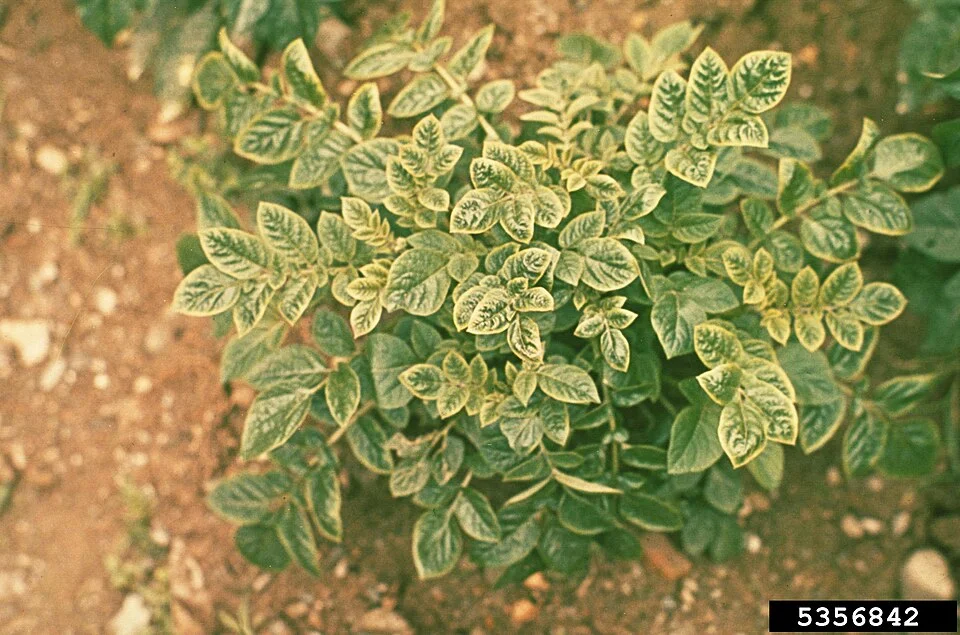
Photo: William M. Brown Jr., Bugwood.org · CC BY 3.0
Potato virus is a group of plant viruses of potato — mainly Potato virus Y (PVY) and Potato leafroll virus (PLRV) — carried from plant to plant by aphids (small soft-bodied sap-sucking insects) and passed down inside the seed tubers you save to replant. Because the virus lives inside the tuber, every time you replant your own saved seed the disease builds up and the crop "runs down" — it gets weaker and yields less each season.
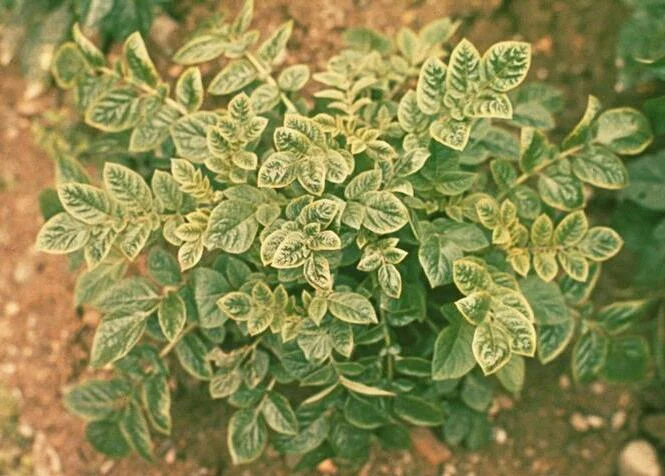
William M. Brown Jr., Bugwood.org · CC BY 3.0 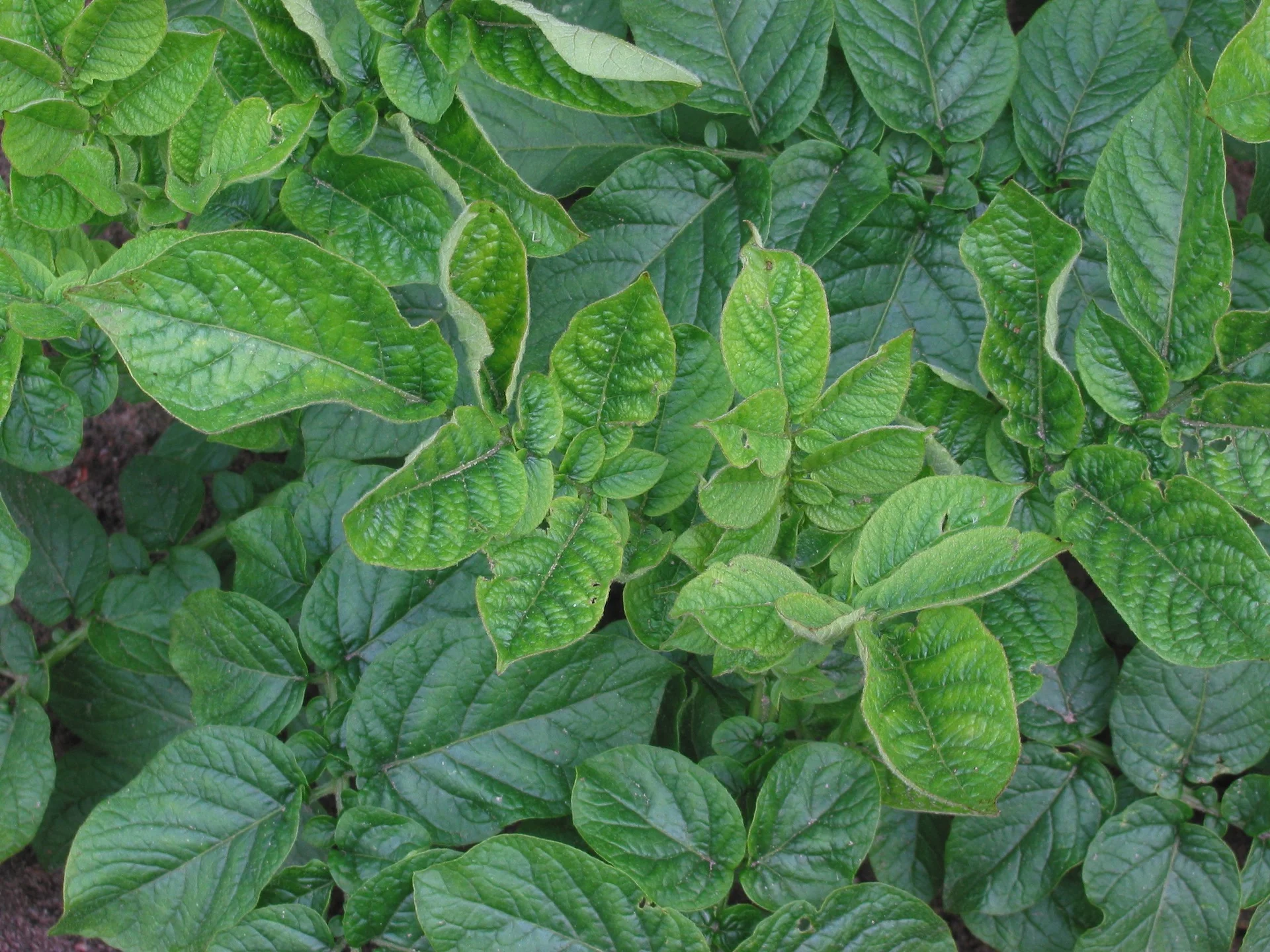
Rasbak · CC BY-SA 3.0
Why it matters
Once a potato plant catches a virus there is no cure and no spray that heals it — the virus lives inside the plant and inside the tubers it makes. A badly infected field can lose up to 80% of its yield, and worse, the sickness hides in the tubers you save for next year, so it comes back stronger every season you replant your own seed. That is why the whole battle is about keeping it out and pulling out sick plants early — you cannot treat your way out of it.
When to act
First plants with mosaic, leaf-roll or severe stunting, or rising aphid activity; rogue and manage vectors early (no cure)
This guidance is general, compiled from published agronomic references including FAO and CABI. Thresholds and timing shift with your crop, your variety and the season.
In much of the region a spray is simply called mushonga — medicine. But a chemical group you cannot name is one you cannot rotate, and a product you did not write down has no pre-harvest interval you can observe. Mushonga, and other farming words →
The full Potato virus field guide
Identify it
The first thing you see
is the leaves change colour and shape. Look for a mosaic — a patchy mix of light and dark green blotches on the leaf, like sun and shadow, instead of one even green. Leaves may also look mottled, crinkled or puckered, and you may see small dead brown flecks (this is the PVY virus).
With leafroll virus
the top leaves roll upward into tubes, like a rolled cigarette, and go stiff, dry and leathery — they crackle if you squeeze them. The whole plant often stands short and stunted, paler than its healthy neighbours.
Over the seasons
the give-away is the harvest itself: the plants get smaller and the tubers get fewer and smaller each year from the same saved seed. A run-down, weak, low-yielding crop is the disease showing its full cost.
Don't confuse it
with hunger or drought. A nitrogen-hungry plant goes evenly pale-yellow all over, not blotchy; drought or heat wilts the leaves but they recover in the cool evening. Virus mosaic stays patchy green-on-green and never recovers, and rolled virus leaves stay stiff and leathery even after rain — a thirsty plant's leaves go soft again once watered.
Scout for it
When to look
watch hardest from emergence through the fast-growing early and mid-season — while the plants are young and the vines are still bulking up. This is when aphids move in and when catching a sick plant early does the most good.
How to walk
every week walk a big "W" across the field so you cross all four corners and the middle — not just the row by the path. Make about 10 stops and check 10 plants at each stop.
What to check
at each plant look at the new top leaves for mosaic, mottling, crinkling or upward rolling, and note any plant that is short and stunted next to its neighbours. Pay special attention to plants grown from your own home-saved seed — that is where the virus hides.
Check for the carriers too
turn a few leaves over and look on the underside for aphids — tiny soft green, pink or black insects clustered on the veins. A yellow pan of water or a yellow sticky card in the field will catch flying aphids so you can see when they arrive.
The action number
because there is no cure, act on the very first plants you find. As soon as you see even 1 plant showing mosaic, rolled leaves or bad stunting — or you notice aphid numbers climbing — pull those plants out that same day and act on the aphids. Do not wait for a percentage; with virus, one sick plant is a seed store for the next.
Control it
Prevent first
-
start with clean seed (the strongest tool):
plant certified virus-free seed tubers rather than replanting your own saved seed year after year. This is the single biggest thing you can do — the virus travels inside the tuber, so clean seed breaks the chain. Renew your seed stock every season or two instead of always saving your own.
-
keep new crops away from old ones:
plant your new potato field well away from last season's potato, and from tomato, pepper and any old volunteer potatoes, because aphids carry the virus straight across from those sick plants. Pull out and destroy any self-sown "volunteer" potatoes that come up on their own.
-
grow a resistant variety:
where you can get them, choose potato varieties bred to resist the viruses common in your area. They still catch it less and carry on yielding better under pressure.
Act early — rogue the sick plants:
as soon as you spot a plant with mosaic, rolled leaves or stunting, pull the whole plant out, tubers and all, and remove it from the field (burn or bury it). This is called roguing. Doing it early, before aphids spread the virus off that plant, protects the rest of the crop — the healthy plants around it are what you are saving.
Chemical is a LAST resort and only hits the carrier, not the virus
an insecticide can knock down aphids, and a light mineral-oil spray on the leaves can slow the virus passing from aphid to plant — but no spray cures an infected plant or stops the disease on its own (it is the weakest tool here). If you do spray: cover your skin, eyes, nose and mouth, spray in the cool of morning or evening with the wind at your back, keep it away from food, water sources, children and bees, respect the pre-harvest interval (the number of days you must wait between spraying and digging, printed on the label), and wash yourself and your clothes after. Rotate to a different chemical group each time so the aphids don't build up resistance.
If it keeps spreading
step up roguing and aphid control, and accept that this crop cannot be un-infected. The most important move is to protect next season — do not save seed from an infected field. Buy fresh certified seed, plant it far from this year's ground, and if a field is badly run down, cut your losses on saved seed and start clean rather than carrying the sickness forward.
Catch Potato virus before it costs you the harvest
This guide is the general answer. Divisi works out yours — the week to scout your own field for Potato virus, and what to do the day you find it.


Crops it affects
Plan the crops it attacks

All planting calendars, country by country
Get Insights by email
A short digest of new Divisi articles. No email on quiet weeks.
Frequently asked questions
How do I identify Potato virus?
The first thing you see. is the leaves change colour and shape. Look for a mosaic — a patchy mix of light and dark green blotches on the leaf, like sun and shadow, instead of one even green. Leaves may also look mottled, crinkled or puckered, and you may see small dead brown flecks (this is the PVY virus).
When should I take action against Potato virus?
First plants with mosaic, leaf-roll or severe stunting, or rising aphid activity; rogue and manage vectors early (no cure)
How do I control Potato virus?
Prevent first — start with clean seed (the strongest tool):. plant certified virus-free seed tubers rather than replanting your own saved seed year after year. This is the single biggest thing you can do — the virus travels inside the tuber, so clean seed breaks the chain. Renew your seed stock every season or two instead of always saving your own.
Which crops are attacked by Potato virus?
Among the crops covered here: Irish potato.