 Divisi
Soybean mosaic virus
Soybean mosaic virus · Viral
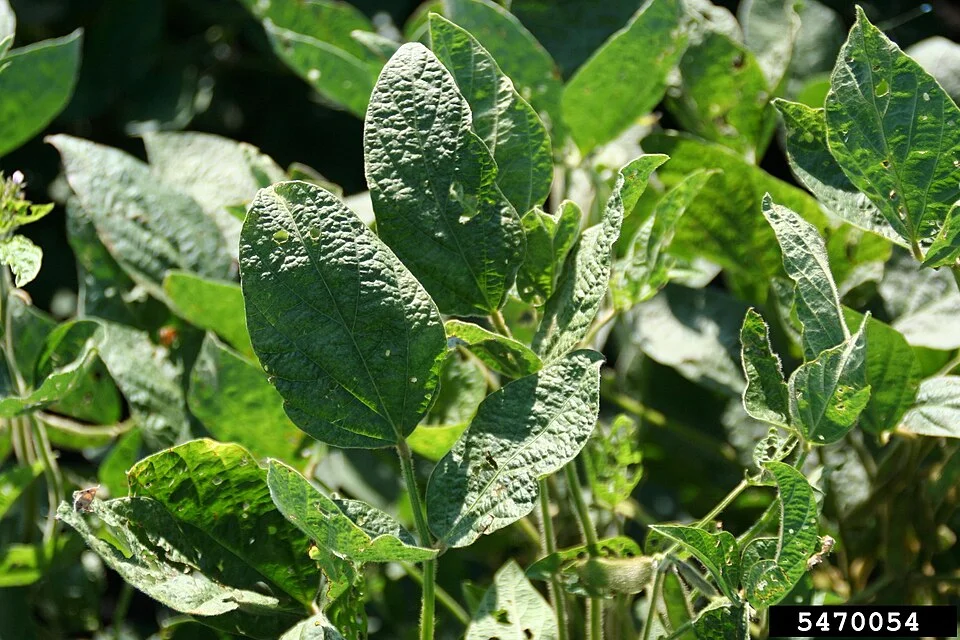
Photo: Daren Mueller, Iowa State University, Bugwood.org · CC BY 3.0 us
Soybean mosaic virus is a soybean disease you cannot spray away. It rides in on infected seed and is then carried plant to plant by aphids (small soft-bodied sap-sucking insects) as they probe for food. It spreads in a non-persistent way — an aphid picks it up and passes it on within seconds of tasting a plant — so by the time you see it, it is already moving. Early infection is the most damaging: it shrinks pods, cuts seed number and leaves mottled, discoloured seed you cannot sell or plant.
Why it matters
This is a virus, so there is no spray that cures it — once a plant is infected it stays infected for life. A bad outbreak can cost you up to 40% of your harvest: fewer pods, smaller seeds, and mottled discoloured grain that fetches a poor price and can carry the disease into next season if you save it. It is hard to fix because it hides in your seed and is spread by aphids in seconds, so the only real defence is stopping it before it gets into the field.
When to act
No curative treatment; act pre-emptively on clean seed and aphid pressure, especially where seed-borne infection and aphid vectors are high.
This guidance is general, compiled from published agronomic references including FAO and CABI. Thresholds and timing shift with your crop, your variety and the season.
In much of the region a spray is simply called mushonga — medicine. But a chemical group you cannot name is one you cannot rotate, and a product you did not write down has no pre-harvest interval you can observe. Mushonga, and other farming words →
The full Soybean mosaic virus field guide
Identify it
What you see first
on the young trifoliate leaves (the three-part leaves near the top), a patchwork of light-green and dark-green blotches — like a shadow pattern that will not wash off. This mottling is called mosaic, and it is the clearest early sign.
As it takes hold
infected leaves pucker, crinkle and curl downward, look narrower and more strap-like than healthy leaves, and the whole plant grows short and stunted. The mosaic pattern shows up strongest in cool weather.
At the end
infected plants set fewer pods, and when you open them the seed coat is often mottled, streaked or discoloured (dark bleeding lines running from the seed scar) instead of clean and even-coloured.
Don't confuse it with
feeding damage or fertiliser shortage. Aphid or spider-mite feeding gives yellow speckles or a sticky, sooty leaf, not a green-on-green pattern. A nitrogen shortage turns the whole older leaf evenly pale-yellow — mosaic is patchy light-and-dark-green on the young leaves, and it comes with puckering and stunting that hunger does not.
Scout for it
When to look
start walking the field from the development stage (once plants are growing fast and putting out new trifoliate leaves) and keep it up through mid-season (flowering and early pod-set) — these are the stages when infection costs you the most, so this is when to catch it.
How to walk
trace a big "W" across the field so you cross all four corners and the middle, not just the row by the path where you always look.
How many
make about 10 stops along the W and check 10 plants at each stop. At every plant look at the youngest top leaves for the light-and-dark-green mosaic, puckering and curling.
Watch the aphids too
turn a few leaves over and check the growing tips for aphids (small soft green or black insects clustered on the stem and under leaves). Hang a couple of yellow sticky traps or a yellow water pan at the field edge — heavy aphid catches mean the virus can move fast, so tighten your guard.
When to act
there is no rescue spray, so the trigger is different from an insect pest. If you find even 1 mosaic plant in your first 10 stops, or aphid numbers are climbing, act now — pull the sick plants and protect the rest. The earlier and the more infected plants you see, the more urgent it is.
Control it
Prevent
-
best defence (resistant variety):
plant a resistant or tolerant soybean variety where one is available for your area. This is the single strongest tool you have, stopping most of the disease before it starts — far more reliable than anything you can do once the crop is up.
-
clean seed:
plant certified virus-free seed and never save seed from a field that showed mosaic — the virus travels inside the seed and starts the whole cycle again. Clean seed each season is the cheapest insurance against a bad outbreak.
Act early — rogue and manage reservoirs:
as soon as scouting finds mosaic plants, pull them out (rogue them) and remove them while infected plants are still few, so aphids have less virus to pick up and carry. Clear weeds and volunteer legumes in and around the field, as these host the virus between crops.
Slow the aphids
where you can, lay reflective mulch (shiny material on the soil) or plant a tall border/barrier crop around the field — both confuse and deter aphids so fewer land and spread the virus.
Chemical is a LAST resort — and it barely works here:
because aphids spread this virus in seconds (non-persistent spread), an insecticide kills the aphid too late to stop infection and is rarely worth it for mosaic alone. If you ever do spray for another reason, protect yourself: cover your skin, eyes and nose, spray in the cool of morning or evening with the wind at your back, keep it away from food, water, children and bees, respect the pre-harvest interval (the days you must wait between spraying and harvest, printed on the label), wash well afterwards, and rotate to a different chemical group each time so aphids don't build resistance.
If it keeps spreading
keep roguing infected plants and controlling weeds and aphids to protect your healthy plants. If mosaic has spread through most of the field, accept the loss for this crop — do not save any seed from it — and next season come back stronger with a resistant variety and fresh certified seed, which is the only thing that reliably breaks the cycle.
Catch Soybean mosaic virus before it costs you the harvest
This guide is the general answer. Divisi works out yours — the week to scout your own field for Soybean mosaic virus, and what to do the day you find it.


Crops it affects
Plan the crops it attacks

All planting calendars, country by country
Get Insights by email
A short digest of new Divisi articles. No email on quiet weeks.
Frequently asked questions
How do I identify Soybean mosaic virus?
What you see first. on the young trifoliate leaves (the three-part leaves near the top), a patchwork of light-green and dark-green blotches — like a shadow pattern that will not wash off. This mottling is called mosaic, and it is the clearest early sign.
When should I take action against Soybean mosaic virus?
No curative treatment; act pre-emptively on clean seed and aphid pressure, especially where seed-borne infection and aphid vectors are high.
How do I control Soybean mosaic virus?
Prevent — best defence (resistant variety):. plant a resistant or tolerant soybean variety where one is available for your area. This is the single strongest tool you have, stopping most of the disease before it starts — far more reliable than anything you can do once the crop is up.
Which crops are attacked by Soybean mosaic virus?
Among the crops covered here: Soybean.