 Divisi
Stem rust
Puccinia graminis · Fungal
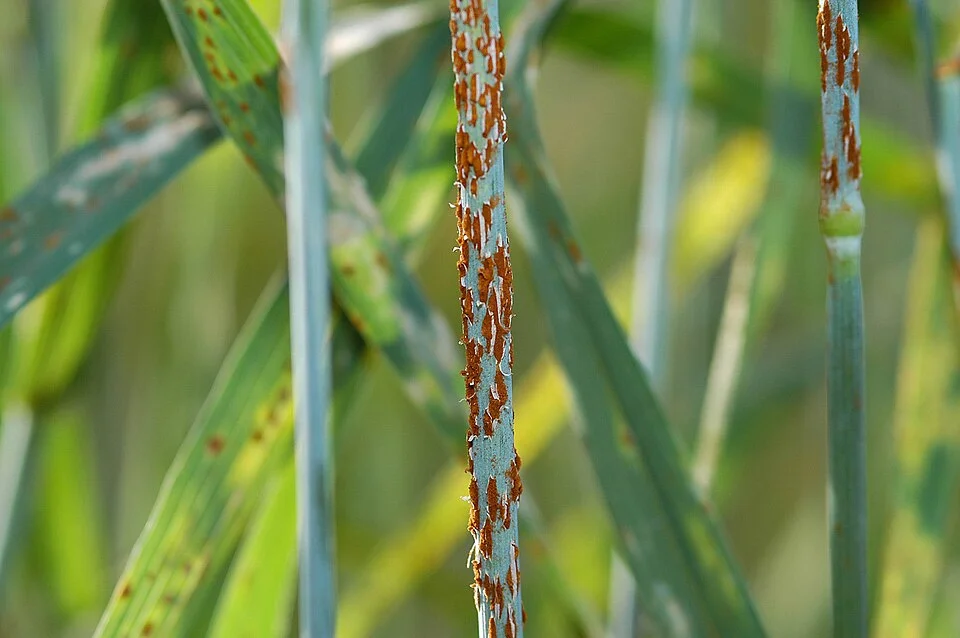
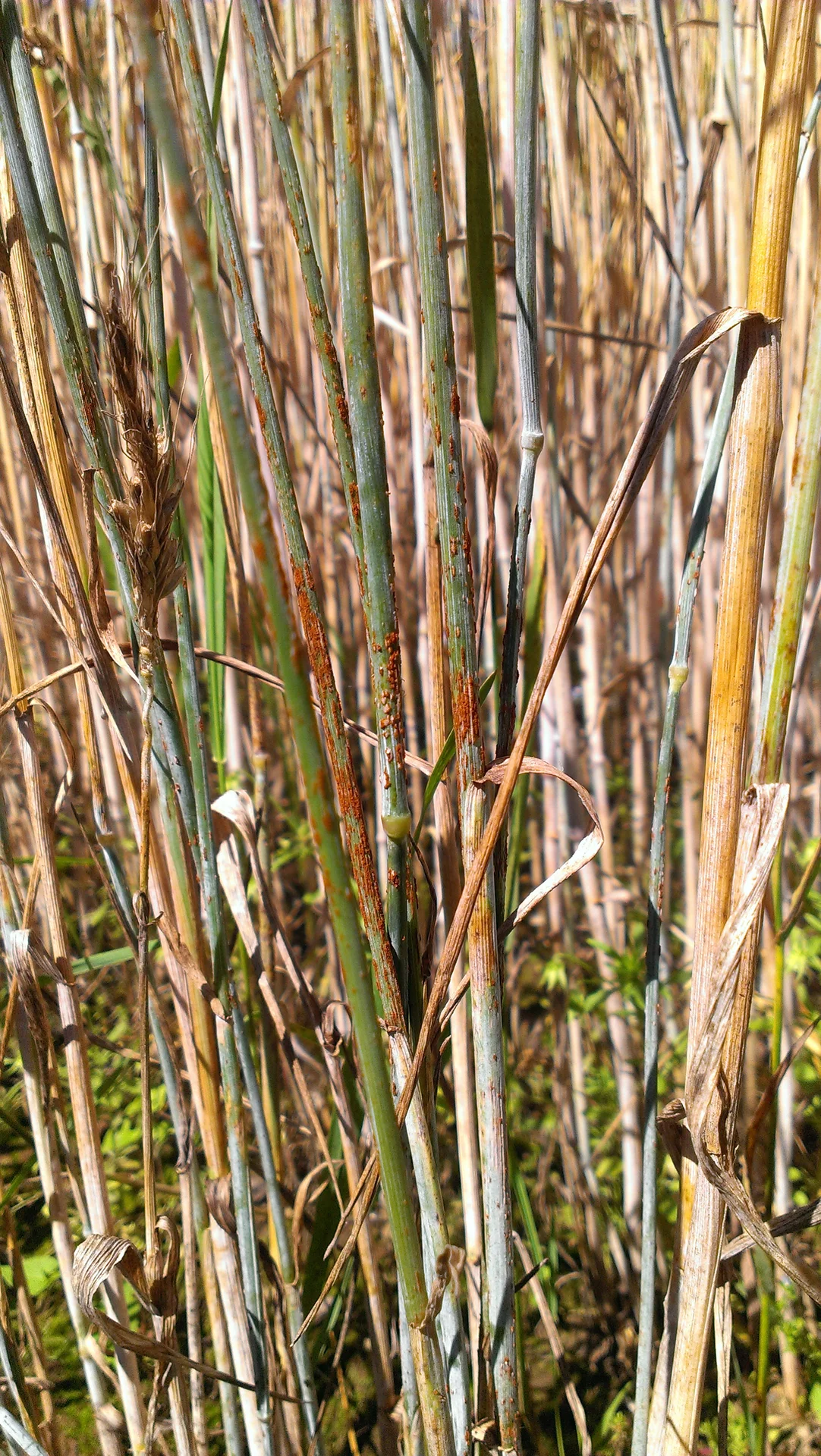
Stem rust (Puccinia graminis) is a wind-blown fungus of wheat and barley that erupts in brick-red, powdery blisters (pustules) breaking straight through the stem and leaf-sheath surface. Its rusty spores blow long distances and, in warm weather with dew or rain, multiply so fast that a clean field can be badly hit in a week or two. Bad infection ruptures the stem, chokes the flow of water and food to the grain, shrivels the seed and topples the crop. Aggressive new races such as Ug99 can attack varieties that were once resistant.
Brauna55 · CC BY-SA 4.0 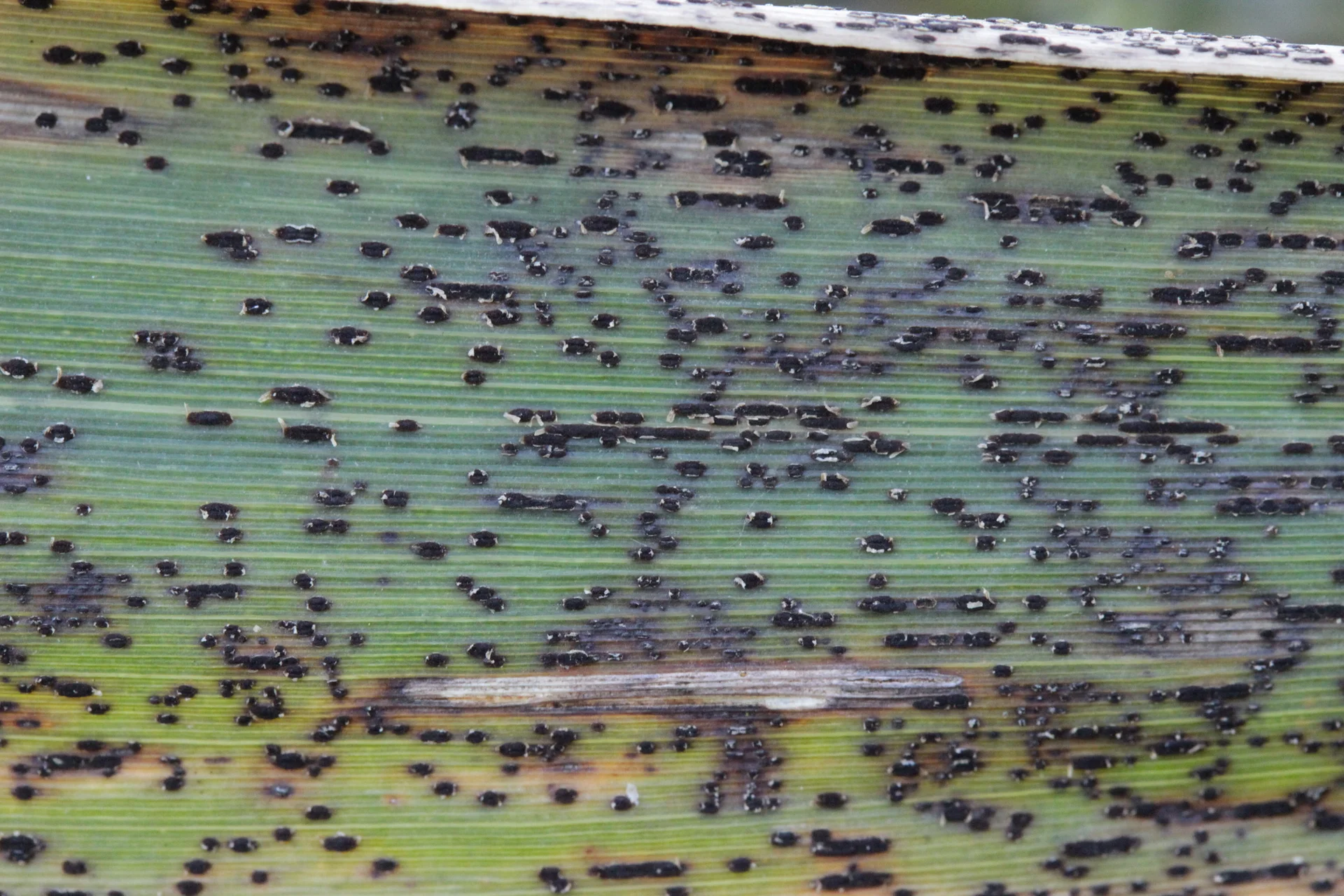
bjoerns (iNaturalist) · CC BY-SA 4.0
Why it matters
Stem rust is the most explosive of the cereal rusts on wheat and barley. In a warm, wet season a severe attack can take up to 70% of your grain — more than half your crop gone — because it bursts the stem, starves the head, shrivels the seed and knocks the plants flat so you cannot even harvest what is left. It is hard to stop once it takes hold: it spreads on the wind, doubles fast in warm damp weather, and by the time the whole field is rusty there is little left to save. Catching the very first pustules is everything.
When to act
First pustules found on stems or leaf sheaths, especially between stem elongation and heading; act quickly because stem rust can explode in warm wet weather.
This guidance is general, compiled from published agronomic references including FAO and CABI. Thresholds and timing shift with your crop, your variety and the season.
In much of the region a spray is simply called mushonga — medicine. But a chemical group you cannot name is one you cannot rotate, and a product you did not write down has no pre-harvest interval you can observe. Mushonga, and other farming words →
The full Stem rust field guide
Identify it
The first sign you notice
a rusty, reddish-brown powder on the stems and leaf sheaths that rubs off orange-brown on your fingers, clothes and hands as you walk through the crop — like brick dust or paprika.
The pustules (blisters)
look on the stems and leaf sheaths for raised, oval to long brick-red to reddish-brown blisters, roughly the size of a grain of rice, that have torn open the skin of the stem with ragged, ripped edges and shed the rusty powder. They feel rough and bumpy under your thumb.
As it ages
the pustules turn dark brown to black as the crop ripens, the infected stems weaken and bend or fall over (lodge), and the grain in the head comes out small, light and shrivelled.
Don't confuse it
with the other rusts: leaf rust makes smaller, round, orange spots mostly on the upper side of the leaf blade (not the stem) and barely tears the surface; stripe (yellow) rust makes bright yellow dots in neat lines/stripes between the leaf veins. Stem rust is the one that is on the stem and sheath, bigger, darker brick-red, and rips the stem skin open.
Scout for it
When to look
stem rust hits during the mid and late season — from stem elongation (jointing), through heading, into grain fill. Start checking as the stems begin to lengthen and keep checking through flowering and while the grain fills.
How often
check at least twice a week, and more often during warm days with heavy dew or rain — that is when rust explodes. Also find out from your extension officer or neighbours whether an aggressive race such as Ug99 is around, because it can hit varieties that used to be safe.
How to walk it
walk a large "W" pattern across the field so you cover all four corners and the middle — not just the edge by the path where you always pass.
What to check
at about 10 stops, bend down and look closely at the lower and middle stems, the leaf sheaths, and both sides of the leaves. Rub a suspect blister with your thumb — if rusty reddish-brown powder comes off, it is rust.
When to act (the threshold)
stem rust has no safe count — the moment you find even the FIRST rusty pustule on a stem or leaf sheath, between jointing and heading, act now. In warm wet weather one pustule becomes thousands within days, so do not wait for it to spread.
Control it
Prevent it first (your strongest tool)
-
plant a resistant variety:
grow a rust-resistant wheat or barley variety, and choose one bred to resist the locally dangerous races such as Ug99 if they are in your area. Ask your extension officer or seed dealer which resistant variety is recommended for your district — this is the single most effective defence.
-
good field habits (cultural control):
plant early so the crop passes the vulnerable heading stage before rust builds up late in the season; pull out and destroy volunteer cereals (self-sown wheat/barley) that carry the fungus between seasons; where it grows near you, remove the barberry bush (the alternate host — the other plant the fungus needs to complete its life cycle); and do not over-fertilise with nitrogen, because a thick, lush, dark-green canopy stays damp and rusts faster.
Chemical control — last resort, act at the first pustule:
if you find rust and the crop is still filling grain, spray a triazole fungicide (a systemic fungicide — one that is taken up inside the plant and protects it from within, unlike a contact spray that only coats the surface). Spray as soon as the first pustules appear, and if warm wet weather keeps the pressure up, spray again around heading.
Spray safely
cover your skin, eyes, nose and mouth; spray in the cool of the morning or evening with the wind at your back so it blows away from you; keep the spray off food, drinking water, children, animals and bees; and after spraying, wait the full pre-harvest interval (the number of days on the label between spraying and harvest) before you cut or graze the crop, then wash yourself and your clothes.
Guard against resistance
if you must spray more than once, rotate to a fungicide from a different chemical group each time (not just a different brand of the same triazole), so the fungus does not learn to survive the spray.
If it keeps spreading — cut your losses:
if rust has already spread through most of the field, the stems are turning black and starting to lodge, and it is too late in the season for spraying to save the grain, stop spending on chemicals. Instead harvest early, before the stems fall flat, or cut the crop for hay or livestock fodder to salvage some value — then next season start clean with a resistant variety, early planting, and no volunteer cereals so the rust has nowhere to survive.
Catch Stem rust before it costs you the harvest
This guide is the general answer. Divisi works out yours — the week to scout your own field for Stem rust, and what to do the day you find it.


Crops it affects
Plan the crops it attacks

All planting calendars, country by country
Get Insights by email
A short digest of new Divisi articles. No email on quiet weeks.
Frequently asked questions
How do I identify Stem rust?
The first sign you notice. a rusty, reddish-brown powder on the stems and leaf sheaths that rubs off orange-brown on your fingers, clothes and hands as you walk through the crop — like brick dust or paprika.
When should I take action against Stem rust?
First pustules found on stems or leaf sheaths, especially between stem elongation and heading; act quickly because stem rust can explode in warm wet weather.
How do I control Stem rust?
Prevent it first (your strongest tool) — plant a resistant variety:. grow a rust-resistant wheat or barley variety, and choose one bred to resist the locally dangerous races such as Ug99 if they are in your area. Ask your extension officer or seed dealer which resistant variety is recommended for your district — this is the single most effective defence.
Which crops are attacked by Stem rust?
Among the crops covered here: Wheat.