 Divisi
Pigeonpea sterility mosaic disease
Pigeonpea sterility mosaic virus · Viral
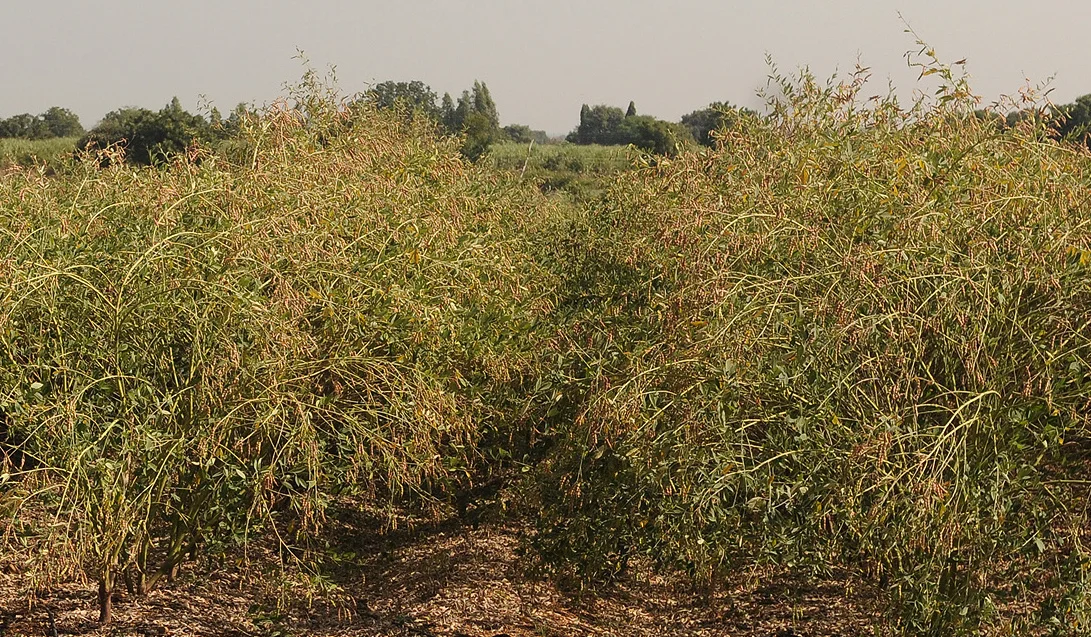
Photo: Ministry of Agriculture and Farmers' Welfare (Government of India) · GODL-India
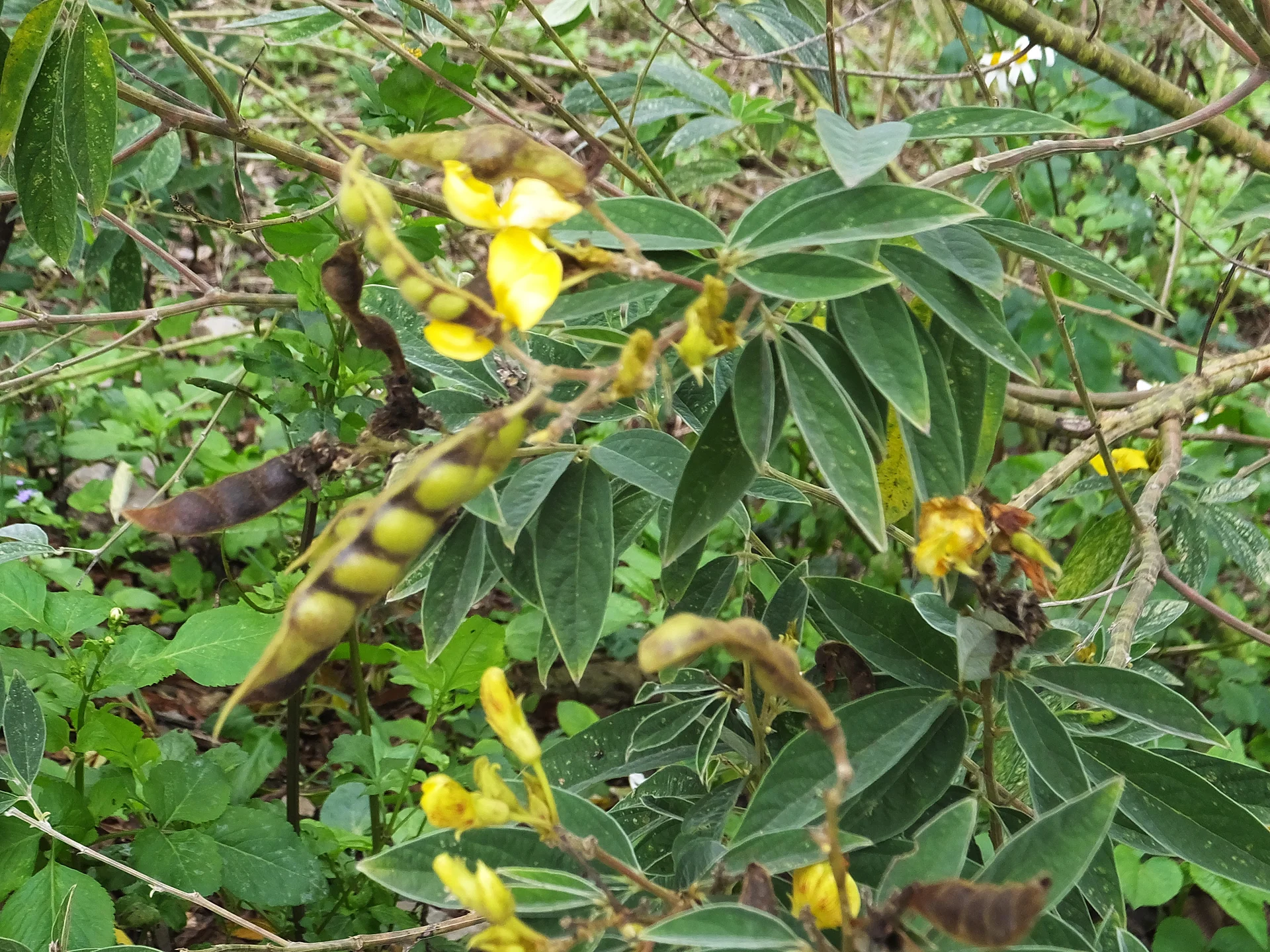
Pigeonpea sterility mosaic disease (SMD) is a virus spread from plant to plant by a tiny eriophyid mite (Aceria cajani) — far too small to see clearly without a hand lens. It does not kill the plant. Instead it turns pigeonpea pale, short and excessively bushy, and stops it flowering, so the plant lives on but sets few or no pods. Because it survives between seasons on live pigeonpea — old ratoon stumps, self-sown volunteers and infected fields nearby — it comes back year after year unless those reservoirs are cleaned out.
lienyuan lee · CC BY 3.0
Why it matters
Sterility mosaic is the "green plague" of pigeonpea: the plant stays green and alive but goes bushy and never flowers, so it makes few pods or none at all. A plant hit early can lose almost its whole harvest — up to 90% — while looking perfectly leafy. There is no cure once a plant is infected: a tiny mite carries the virus from sick plants to healthy ones, and the disease lives through the dry season on old pigeonpea stumps and stray seedlings, so it keeps coming back unless you stop it before it starts.
When to act
No curative treatment; act pre-emptively with resistant varieties and by removing infected and volunteer plants, as early infection causes near-total sterility.
This guidance is general, compiled from published agronomic references including FAO and CABI. Thresholds and timing shift with your crop, your variety and the season.
In much of the region a spray is simply called mushonga — medicine. But a chemical group you cannot name is one you cannot rotate, and a product you did not write down has no pre-harvest interval you can observe. Mushonga, and other farming words →
The full Pigeonpea sterility mosaic disease field guide
Identify it
The killer sign — no flowers, no pods:
the plant looks green, leafy and even healthy, but while its neighbours are covered in flowers and filling pods, this one stays bare. That barrenness ("sterility") is the whole point of the disease — a plant hit early may never flower at all.
The first thing you see — mottled young leaves:
on the fresh growth at the top, look for a pale green and yellow blotchy pattern (a "mosaic") on the leaves, and leaves that are smaller than normal. Hold a young leaf up to the light — the mottling shows as light and dark green patches.
As it spreads — pale and bushy:
the whole plant slowly turns pale, grows short (stunted) and throws out masses of small leaves and side-shoots, so it looks like a dense, over-branched broom instead of an open pigeonpea bush.
The mite that carries it (the vector — the pest that moves the virus from plant to plant):
the eriophyid mite is too small to see plainly — pale, cigar-shaped specks on the underside of the youngest leaves and buds, best seen with a hand lens. Do not expect to spot them; judge by the plant's look instead.
Don't confuse it with look-alikes
hunger (nutrient shortage) yellows the whole leaf evenly and does not make the plant bushy; drought makes leaves wilt, curl and go dry and crisp. Sterility mosaic keeps the leaves soft and green but blotchy, small, bushy — and flowerless. If a green, leafy plant simply refuses to flower, suspect this disease.
Scout for it
When to look
start walking the crop from the vegetative / branching stage through to flowering — this is when plants get infected and when the tell-tale bushiness and failure to flower first show. Watch hardest in cool, humid weather, which is when the mite vector multiplies fastest.
How to walk it
cross the field in a big "W" so you cover all four corners and the middle, not just the edge by the path. Make about 10 stops, and at each stop check the young top leaves of several plants for the pale mosaic mottling, small leaves and bushy stunting.
At flowering, check for barren plants
once neighbours are flowering, mark any plant that is green and leafy but not flowering or podding — that is your clearest sign of infection.
The threshold — act on even ONE:
there is no curative spray, so you do not wait for a percentage. A single infected plant is a virus factory feeding mites onto the healthy ones around it. So: find even 1 bushy, mottled or flowerless plant → pull it out and destroy it that same day, and keep walking to find the rest.
Control it
Prevent first
-
plant a resistant variety (your strongest tool):
grow sterility-mosaic-resistant or tolerant pigeonpea varieties and sow clean seed of those lines. This is by far the most reliable control — resistant plants shrug off the virus even when the mite is present. If SMD has hit your area before, do not plant a susceptible local variety again.
-
clean out the reservoirs (sanitation):
the virus survives the dry season on live pigeonpea, so before the new crop, dig out and destroy every old ratoon stump (regrowth from a cut-back pigeonpea), self-sown volunteer seedling and stray pigeonpea plant around the field. Do not plant your new crop right next to an old, infected stand — distance breaks the mite's bridge from last year's plants to this year's.
Act early — rogue and destroy (roguing = pulling out sick plants):
as soon as scouting finds an infected plant, uproot it and burn or bury it the same day, before the mites spread to its neighbours. Because there is no cure, removing the source early is the only way to protect the rest of the field — a plant left standing keeps infecting others.
Chemical — last resort, acaricide (a mite-killing spray), only partial help:
an acaricide can knock down the eriophyid mite vector and give partial protection in the nursery and on very young plants, but it is weak (it does not cure any plant that is already infected) and never replaces resistant varieties and roguing. If you do spray: cover your skin, eyes, nose and mouth, spray in the cool of morning or evening with the wind behind you, keep it off food, drinking water, children and bees, wait out the pre-harvest interval (the number of days the label says to leave between spraying and picking) before eating any pods, and wash yourself and your clothes afterwards. Rotate to a different chemical group each time so the mite does not build up resistance.
If it keeps spreading — cut your losses and reset for next season:
once many plants are infected early, the crop will not recover this season — a sterile plant will not flower no matter what you do. Pull out the worst plants (feed the green tops to livestock if you can), and plan next season around resistant varieties: clear every volunteer and ratoon, rotate the land out of pigeonpea for a season to starve the mite, and start clean with resistant seed well away from old infected fields.
Catch Pigeonpea sterility mosaic disease before it costs you the harvest
This guide is the general answer. Divisi works out yours — the week to scout your own field for Pigeonpea sterility mosaic disease, and what to do the day you find it.


Crops it affects
Plan the crops it attacks

All planting calendars, country by country
Get Insights by email
A short digest of new Divisi articles. No email on quiet weeks.
Frequently asked questions
How do I identify Pigeonpea sterility mosaic disease?
The killer sign — no flowers, no pods:. the plant looks green, leafy and even healthy, but while its neighbours are covered in flowers and filling pods, this one stays bare. That barrenness ("sterility") is the whole point of the disease — a plant hit early may never flower at all.
When should I take action against Pigeonpea sterility mosaic disease?
No curative treatment; act pre-emptively with resistant varieties and by removing infected and volunteer plants, as early infection causes near-total sterility.
How do I control Pigeonpea sterility mosaic disease?
Prevent first — plant a resistant variety (your strongest tool):. grow sterility-mosaic-resistant or tolerant pigeonpea varieties and sow clean seed of those lines. This is by far the most reliable control — resistant plants shrug off the virus even when the mite is present. If SMD has hit your area before, do not plant a susceptible local variety again.
Which crops are attacked by Pigeonpea sterility mosaic disease?
Among the crops covered here: Pigeon pea.