 Divisi
Sugarcane smut
Sporisorium scitamineum · Fungal
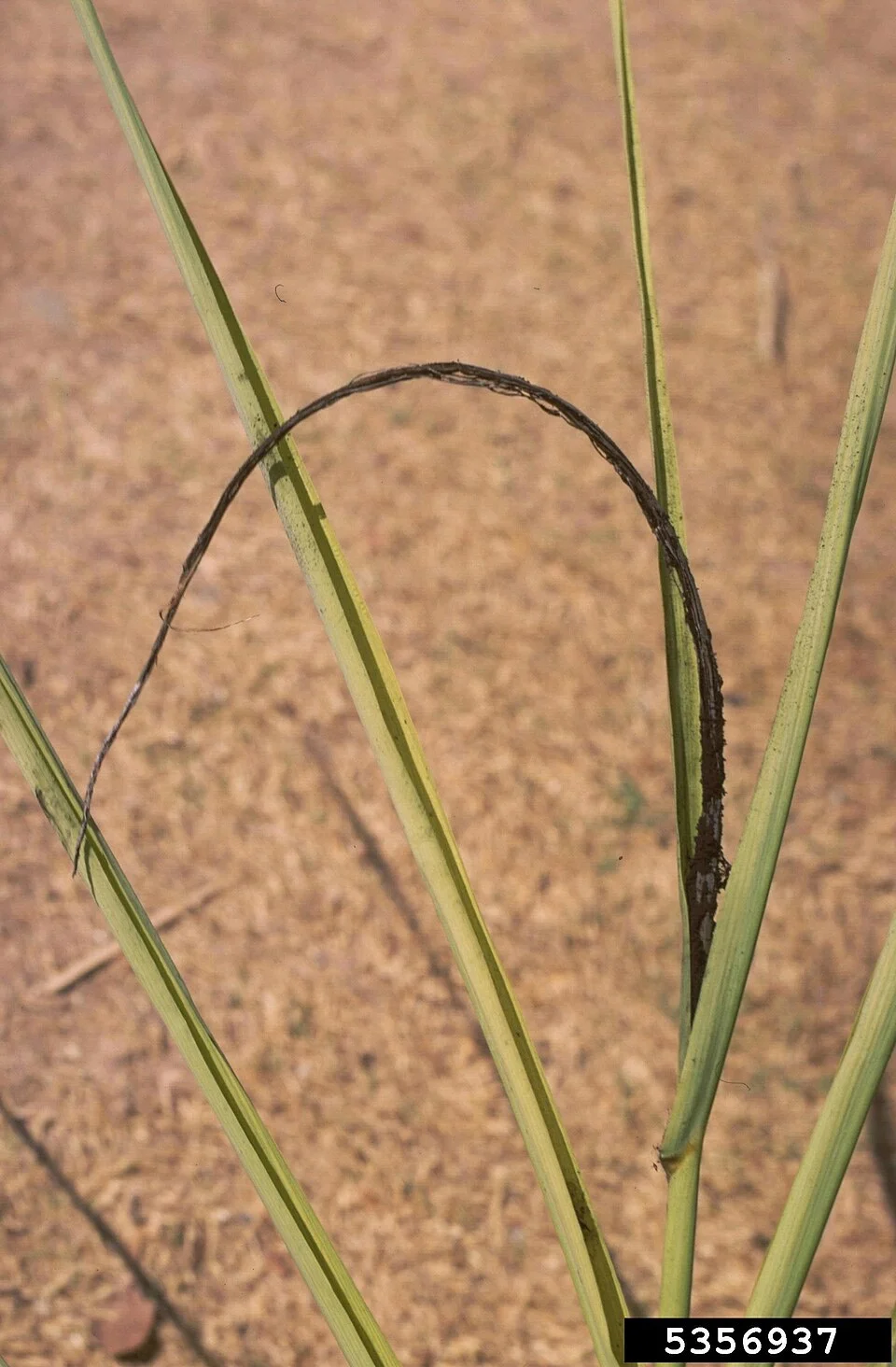
Photo: William M. Brown Jr., Bugwood · CC BY 3.0 us
Sugarcane smut is a fungal disease (Sporisorium scitamineum) carried in planting material (the setts, or seed-cane pieces you plant) and on wind-blown spores. It sneaks in through the buds, colonises the growing tip, and twists the shoot into a long black whip that pours out millions of dark spores. It gets worse every time you ratoon (leave the stumps to sprout again for another crop) an infected field, turning strong stools into thin, grassy, worthless clumps.
Why it matters
Smut can strip away up to 60% of your cane on a susceptible variety, and it comes back stronger with every ratoon crop off the same infected stools. Once a plant is infected there is no cure — no spray will save that stool — so it steals your yield quietly for the rest of the field's life. Worse, every black whip you leave standing dusts spores onto your healthy cane and into next season's setts, so a small problem this year becomes a ruined field in a few years.
When to act
Any smut whips seen; because there is no cure for infected stools, rogue them out at once and manage through resistant varieties and clean setts, especially in ratoon crops.
This guidance is general, compiled from published agronomic references including FAO and CABI. Thresholds and timing shift with your crop, your variety and the season.
In much of the region a spray is simply called mushonga — medicine. But a chemical group you cannot name is one you cannot rotate, and a product you did not write down has no pre-harvest interval you can observe. Mushonga, and other farming words →
The full Sugarcane smut field guide
Identify it
The first thing you notice
is a whole stool that looks wrong — instead of a few thick strong canes, you get many thin, spindly, grass-like shoots crowded together, short and stunted, with narrow pale leaves. This 'grassy' clump means the plant is sick inside even before the whip shows.
The sure sign
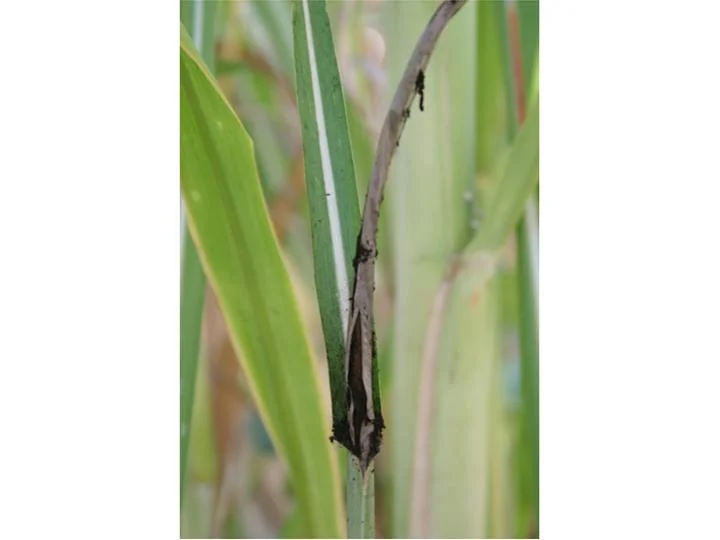
is the smut whip: a long, curved, black, whip-like shoot — like a thin black bootlace or a rat's tail, often as long as your arm — pushing straight up out of the top (growing point) of the cane. When young it has a thin silvery-white skin; once that skin breaks it turns sooty black and puffs out clouds of black powder (the spores) if you shake it or the wind blows.
Where to look
the whip comes from the very top of the shoot, from the central growing point. The affected canes stay thin and light and give little juice or sugar.
Don't confuse it
with normal flowering (the cane 'arrow', which is a feathery silver-grey plume, not a hard black whip) or with fall armyworm or borer damage (chewed leaves and holes, not a black whip). A black, powdery, whip shape from the growing tip is smut and nothing else looks like it.
Scout for it
Walk the field at least every two weeks from the fast-growing stage right through the tall cane stage
— these are the stages when whips push out and shed spores. Pay closest attention to ratoon (regrown) fields and any field you planted from cane of unknown health, which carry the most disease.
Walk a big "W" across the field so you cover all four corners and the middle, not just the edge by the road. Make about 10 stops, and at each stop look over roughly 10 stools.
At each stop, scan the tops of the shoots for the black curved whip, and look down at the base of the stool for crowded thin grassy shoots. Both are smut.
The threshold is simple: even ONE smut whip means act now
There is no 'safe' number — a single whip is already shedding spores onto the rest of your crop. The moment you see a whip, rogue it (see control). If you are counting many whipped stools, that field is heavily infected and should be ploughed out, not ratooned again.
Control it
Prevent it first — plant a resistant variety (your strongest tool)
Choosing a smut-resistant sugarcane variety is by far the most effective control. If smut is in your area, ask your extension officer or mill for the resistant varieties and switch to them — a resistant variety fights the fungus for you, season after season, at no extra cost.
Plant clean setts
Take your seed-cane (setts) only from healthy, disease-free plants or a clean nursery — never cut planting material from a field that has had whips. Do not carry cane from an infected field to a clean one; you will carry the spores with it.
Hot-water treat your setts before planting
where this is recommended: soaking the setts in hot water kills the fungus hiding inside the buds before it can start. Ask your mill or extension officer for the correct water temperature and soaking time.
Act early — rogue every whip the moment you see it
Before the whip breaks open and dusts spores, gently slip a bag or old sack over the black whip, cut the whole shoot low, and carry it out inside the bag so spores don't scatter on the way. Then burn or bury it deep well away from the field. Pull out the whole infected stool where you can — remember there is no cure, so the stool will only keep making whips.
Chemical is a last resort and only protects the SETTS, never a growing plant
The only chemical use is a seed-treatment fungicide: after hot-water treatment, dip the setts in a systemic fungicide (systemic means it soaks into the sett and works from the inside) before planting, to kill bud-borne infection. When handling any fungicide, cover your skin, eyes, nose and mouth, mix and dip in the cool of the day out of the wind, keep it away from food, drinking water, children and animals, and wash your hands and clothes well afterwards. Follow the label exactly. No spray will save cane that is already infected in the field.
If it keeps spreading
if whips keep coming back and many stools are grassy and whipped, stop ratooning that field — do not leave the stumps for another crop. Plough the whole field out and start again with a resistant variety and clean, treated setts on fresh ground. Cutting your losses and replanting clean is cheaper than nursing a heavily infected field that will only get worse and infect your other cane.
Catch Sugarcane smut before it costs you the harvest
This guide is the general answer. Divisi works out yours — the week to scout your own field for Sugarcane smut, and what to do the day you find it.


Crops it affects
Plan the crops it attacks

All planting calendars, country by country
Get Insights by email
A short digest of new Divisi articles. No email on quiet weeks.
Frequently asked questions
How do I identify Sugarcane smut?
The first thing you notice. is a whole stool that looks wrong — instead of a few thick strong canes, you get many thin, spindly, grass-like shoots crowded together, short and stunted, with narrow pale leaves. This 'grassy' clump means the plant is sick inside even before the whip shows.
When should I take action against Sugarcane smut?
Any smut whips seen; because there is no cure for infected stools, rogue them out at once and manage through resistant varieties and clean setts, especially in ratoon crops.
How do I control Sugarcane smut?
Prevent it first — plant a resistant variety (your strongest tool). Choosing a smut-resistant sugarcane variety is by far the most effective control. If smut is in your area, ask your extension officer or mill for the resistant varieties and switch to them — a resistant variety fights the fungus for you, season after season, at no extra cost.
Which crops are attacked by Sugarcane smut?
Among the crops covered here: Sugarcane.