 Divisi
Sweet potato virus disease
Sweet potato feathery mottle virus and Sweet potato chlorotic stunt virus · Viral
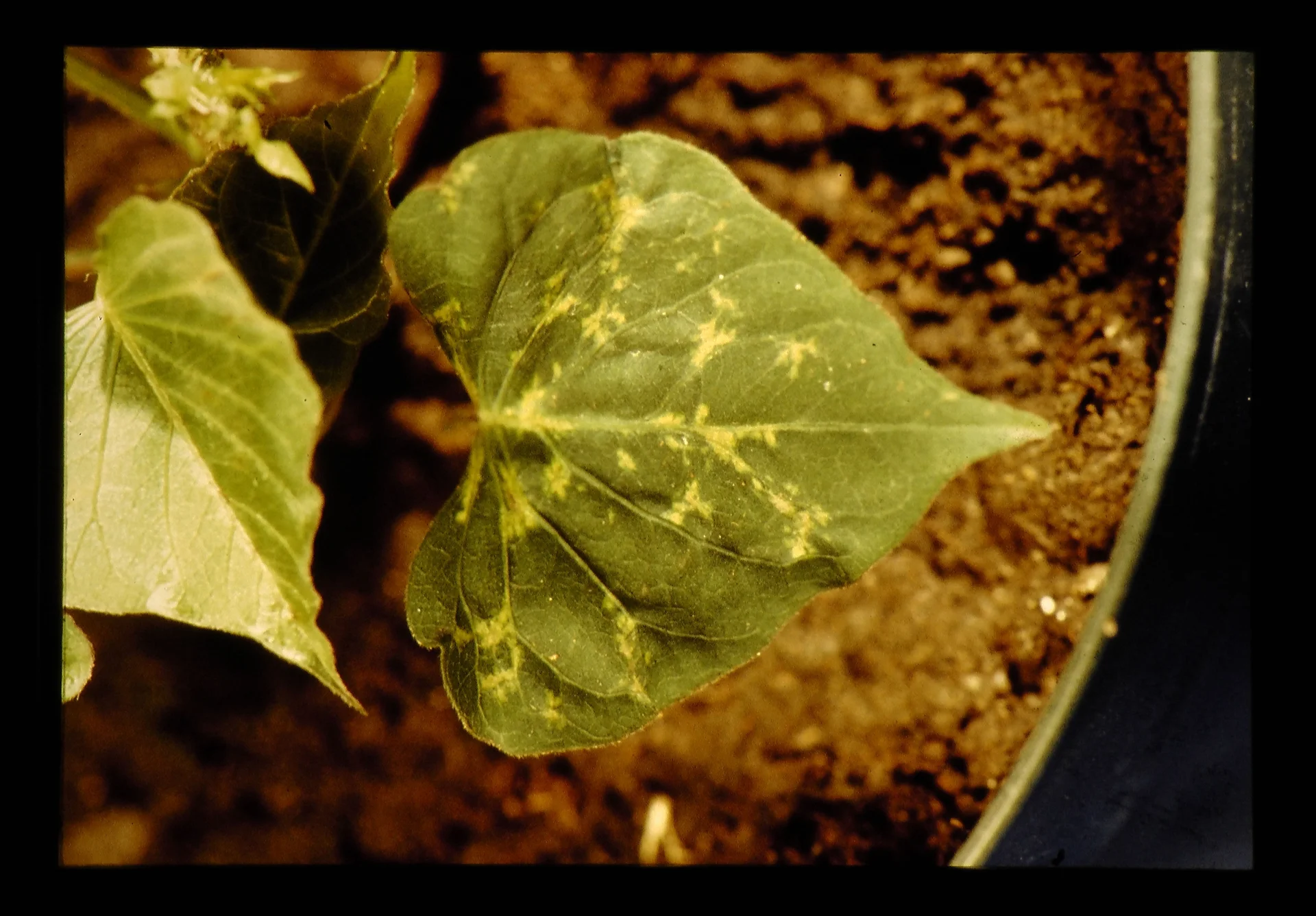
Photo: JIRCAS (Nakano Masaaki) · CC BY 2.0
Sweet potato virus disease is the severe illness that strikes when two viruses meet in the same plant: one spread by aphids (Sweet potato feathery mottle virus) and one spread by whiteflies (Sweet potato chlorotic stunt virus). Alone each does little harm, but together they cripple the plant. Both hide inside vine cuttings, so the disease travels mostly in the planting material you carry from field to field, then spreads further as tiny insects move it plant to plant.
JIRCAS (Nakano Masaaki) · CC BY 2.0
Why it matters
Sweet potato virus disease can wipe out up to 80% of your roots — turning a full harvest into a handful of small, stringy tubers not worth digging. It is dangerous because it hides inside the vines: an infected cutting looks healthy when you plant it, so you can spread the disease across your whole field without knowing. And once a plant is sick there is no cure and no spray that heals it — the virus lives in every part of the plant. Your only real weapons are clean planting material and pulling out sick plants early, before insects carry it further.
When to act
Rogue symptomatic plants as soon as they appear and control vectors; never take cuttings from a symptomatic mother plant.
This guidance is general, compiled from published agronomic references including FAO and CABI. Thresholds and timing shift with your crop, your variety and the season.
In much of the region a spray is simply called mushonga — medicine. But a chemical group you cannot name is one you cannot rotate, and a product you did not write down has no pre-harvest interval you can observe. Mushonga, and other farming words →
The full Sweet potato virus disease field guide
Identify it
The first thing you see
plants that just sit there and stay small and stunted while the healthy ones around them run and cover the ground. A sick plant looks weak and never fills out.
On the leaves
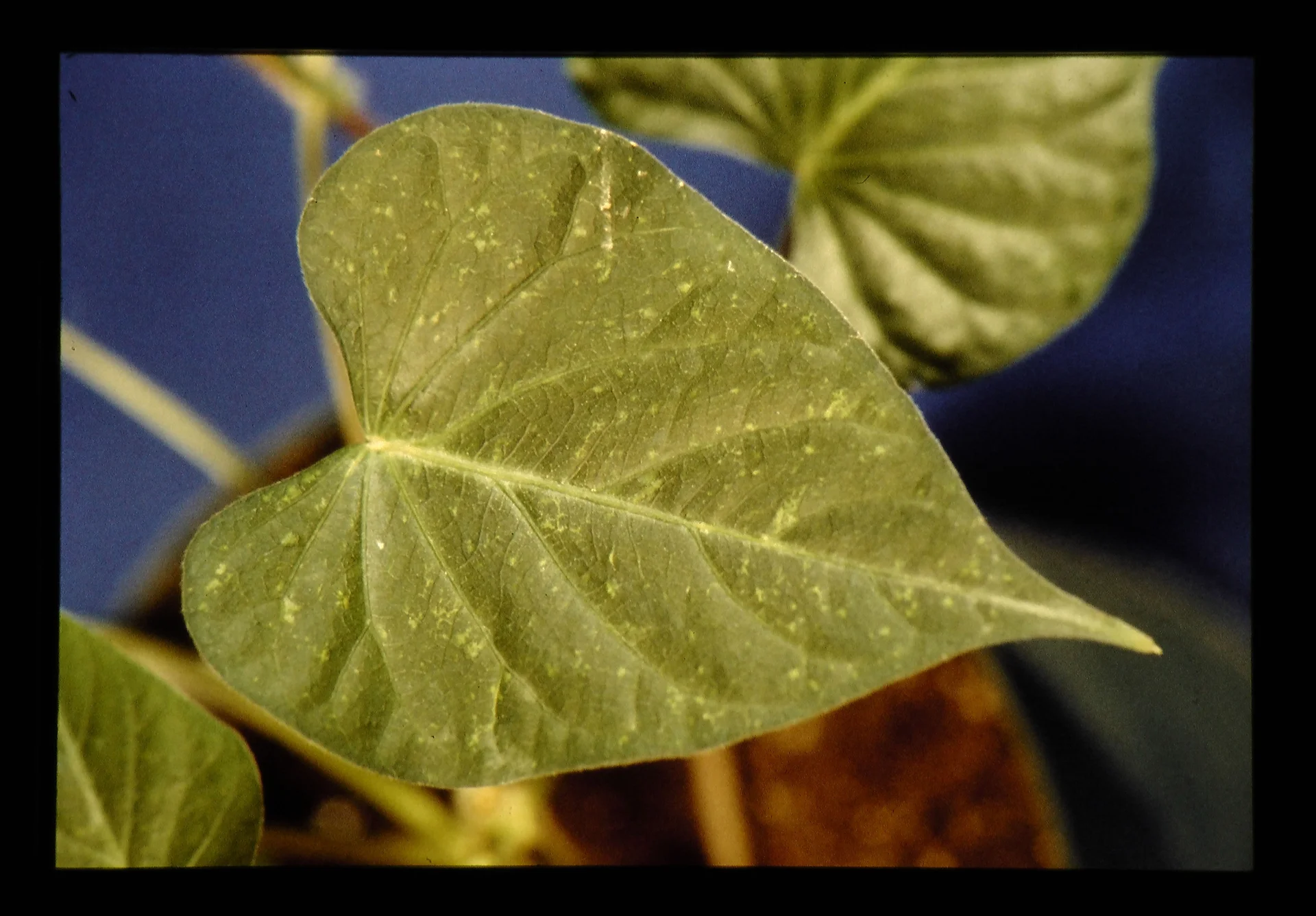
they turn small, crinkled and puckered (bunched up like a cloth pushed together), with a yellow (chlorotic) mottle — patches of yellow mixed with green. Hold a young leaf up to the light and you may see the veins standing out pale and clear ('vein-clearing'). Older leaves can go twisted, narrow, or flush purple.
Under the ground — the real loss:
when you lift a sick plant, the storage roots are few, small and thin instead of fat and plenty. That is where the disease costs you.
Tell it apart from look-alikes
yellowing spread evenly over the whole field is more likely hunger (poor soil, low nitrogen) — that greens up after feeding, virus does not. A single leaf with a dead brown spot is fungal, not this. Virus disease shows as scattered individual plants that are stunted AND mottled AND puckered together, while their neighbours grow fine — and it never recovers.
Look for who carries it
turn a leaf over and check the underside for aphids (soft, pear-shaped, pin-head size, green or black, in clusters on soft tips) and whiteflies (tiny white specks that fly up like dust when you shake the plant). Their build-up is what turns a mild case into the severe disease.
Scout for it
Start at planting and keep watching through the growing stages
— from when the vines take root, through the vine-run, into the time the roots are swelling and bulking underground. These are the stages the disease does its damage, so this is when your eyes matter most.
Walk a big "W" across the field
so you cross all four corners and the middle — not just the edge by the path where you always look.
Make about 10 stops
along the W. At each stop check a few plants: look for stunting, yellow mottle and puckered leaves, and turn 2–3 leaves over to check the undersides for aphid clusters and whitefly.
The rule to act on — don't wait for a count
Unlike a caterpillar, you do not wait for many. Even 1 stunted, mottled plant means act now: pull it that same day. And never, ever take a cutting from a plant that shows any symptoms — one bad mother plant can seed a whole field of disease.
Watch the insects too
if aphids and whiteflies are building up thick on the undersides, spread will speed up — check more often and be ready to knock the insects back.
Control it
Prevent
-
start clean (your strongest tool):
plant only virus-tested clean or certified vines, or sprouts you know are healthy. This is the single most effective thing you can do — it stops the disease before it ever enters your field. When you cut your own vines, positively select: take cuttings ONLY from strong, fast-growing, symptom-free mother plants, never from weak or mottled ones.
-
break the chain in the field:
keep new plantings well away from old, infected sweet potato fields, and leave a clean fallow break (a season with no sweet potato and no volunteer regrowth) between crops so the viruses and their insects have no bridge to the new crop. Grow a tolerant or resistant variety suited to your area where one is available — it carries the virus less and yields better under pressure.
Act early — rogue (pull out) sick plants:
as soon as a plant shows stunting and mottle, dig it out whole — roots and all — and remove it from the field (feed it to livestock, bury or burn it; do not toss it on the field edge where insects keep visiting). Rogueing early stops that plant becoming a source that infects the rest.
Knock back the insect carriers
aphids and whiteflies are what move the virus plant-to-plant, so keeping their numbers down slows the spread. Encourage the natural enemies (ladybirds, lacewings, tiny wasps) by not blanket-spraying, and remove weeds around the field that shelter them.
Chemical — last resort, and it does NOT cure:
a systemic insecticide (systemic = taken up inside the plant's sap, so it kills the insects that feed on it) can be used to manage aphids and whiteflies when they are heavy — but understand clearly: it kills insects, it does not heal a single infected plant. The virus stays. Use it only to protect a young, still-healthy crop from vector build-up, alongside clean planting and rogueing.
Spray safely if you must
cover your skin, eyes, nose and mouth; spray in the cool of morning or evening with the wind at your back; keep it off food, drinking water, children and bees; rotate to a different chemical group each time so the insects don't build resistance; respect the pre-harvest interval (the waiting days printed on the label between spraying and digging roots) so no poison reaches the people who eat them; and wash yourself and your clothes afterward.
If it keeps spreading → cut your losses cleanly
if much of the field is already stunted and mottled, no spray will bring those roots back. Harvest what you can, then destroy every remaining vine and volunteer regrowth so nothing carries the virus over. Do NOT save any vines from this crop for replanting. Next season, start fresh with certified clean planting material, in a different plot away from this one, after a proper fallow break — that is how you break the cycle for good.
Catch Sweet potato virus disease before it costs you the harvest
This guide is the general answer. Divisi works out yours — the week to scout your own field for Sweet potato virus disease, and what to do the day you find it.


Crops it affects
Plan the crops it attacks

All planting calendars, country by country
Get Insights by email
A short digest of new Divisi articles. No email on quiet weeks.
Frequently asked questions
How do I identify Sweet potato virus disease?
The first thing you see. plants that just sit there and stay small and stunted while the healthy ones around them run and cover the ground. A sick plant looks weak and never fills out.
When should I take action against Sweet potato virus disease?
Rogue symptomatic plants as soon as they appear and control vectors; never take cuttings from a symptomatic mother plant.
How do I control Sweet potato virus disease?
Prevent — start clean (your strongest tool):. plant only virus-tested clean or certified vines, or sprouts you know are healthy. This is the single most effective thing you can do — it stops the disease before it ever enters your field. When you cut your own vines, positively select: take cuttings ONLY from strong, fast-growing, symptom-free mother plants, never from weak or mottled ones.
Which crops are attacked by Sweet potato virus disease?
Among the crops covered here: Sweet potato.