 Divisi
Turcicum leaf blight
Exserohilum turcicum · Fungal
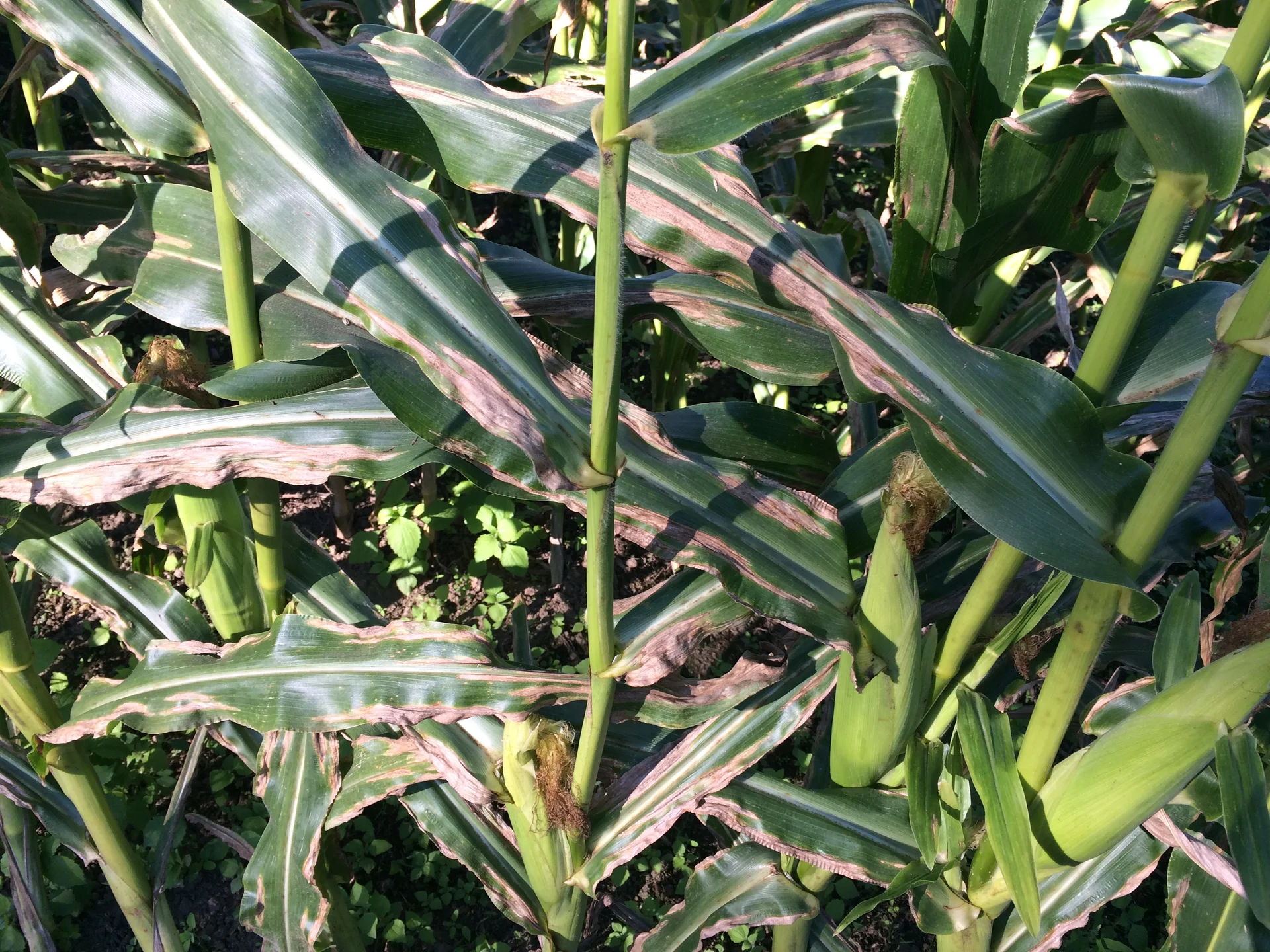
Photo: Chroanch · CC BY-SA 4.0
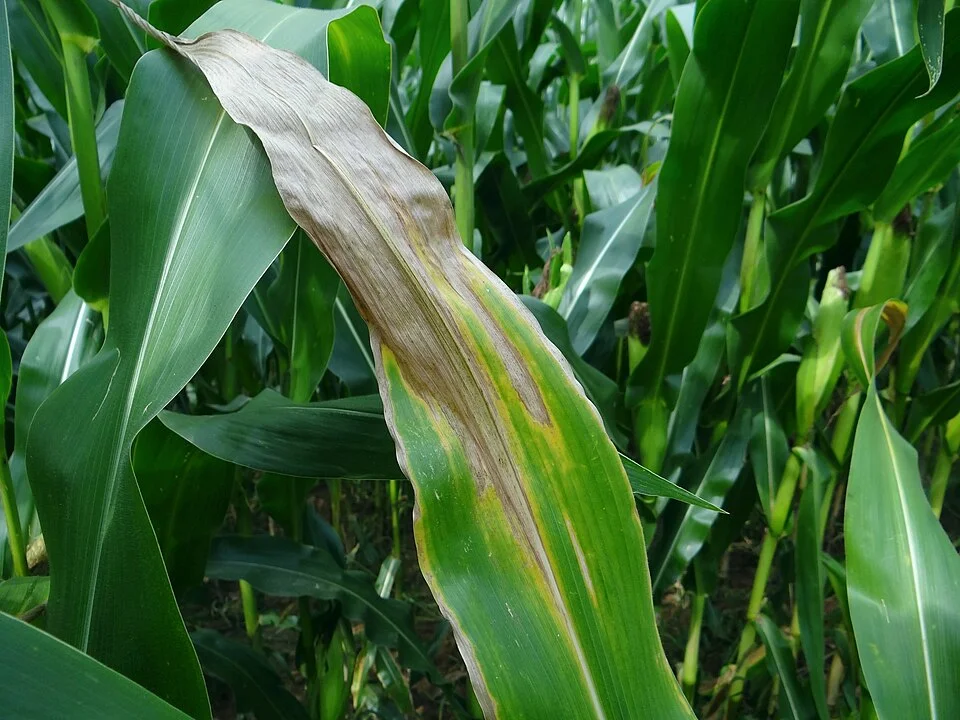
Turcicum leaf blight (also called northern corn leaf blight) is a fungal leaf disease of maize and sorghum. The fungus survives the dry season on old maize stalks and leaves lying in the field, then wind and rain-splash carry its spores onto the new crop. In cool, wet, humid weather (18-27C with long dews or drizzle) it spreads fast, killing the green leaves the plant needs to fill its grain.
Jerzy Opioła · CC BY-SA 4.0 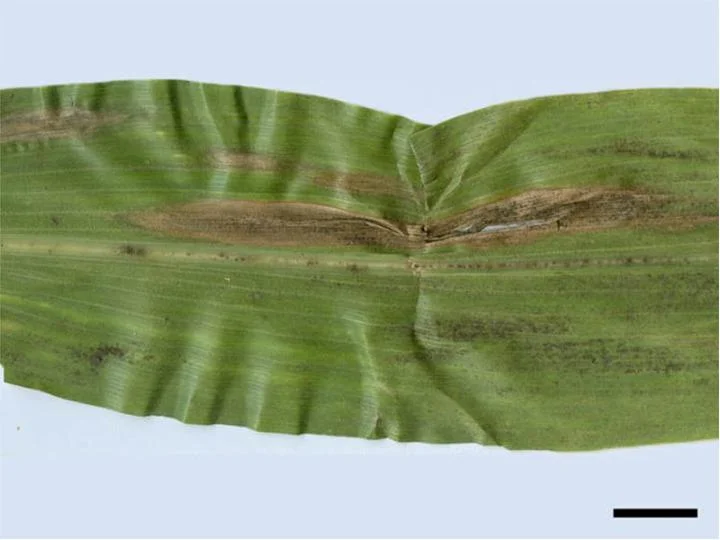
Wanich Khampanich, Department of Agriculture, Thailand · CC BY 3.0 au
Why it matters
This disease eats the green leaves that feed your grain, and once the plant is losing its leaves during cob-filling a heavy attack can cost you up to half your harvest (50%). It is hard to stop once it takes hold because the fungus is already living on old maize trash in your field, spores blow in from far away, and by the time the leaves look badly scorched the damage to your yield is largely done. Your best defence is set up before the disease is bad, not after.
When to act
Lesions appearing on leaves below the cob before or at tasselling, especially in a susceptible variety under wet weather.
This guidance is general, compiled from published agronomic references including FAO and CABI. Thresholds and timing shift with your crop, your variety and the season.
In much of the region a spray is simply called mushonga — medicine. But a chemical group you cannot name is one you cannot rotate, and a product you did not write down has no pre-harvest interval you can observe. Mushonga, and other farming words →
The full Turcicum leaf blight field guide
Identify it
The first thing you see
long, narrow spots on the leaves shaped like a cigar or a canoe — pointed at both ends, roughly the length of your finger (2-15 cm). They start grey-green and watery-looking, then dry to a pale tan or straw brown in the middle.
Where it starts and where it goes
the spots show up first on the lower, older leaves near the ground, then climb up the plant leaf by leaf. When many spots join together, whole leaves turn brown and dead, and from a distance the plant looks scorched or frost-burnt.
A close-up sign
in wet weather look at an old spot in the early morning — it may carry a fine greyish-black dust or fuzz (the fungus making new spores) on its surface, especially on the underside.
Don't confuse it
with grey leaf spot, whose marks are narrow rectangles boxed in by the leaf veins (straight-sided, not cigar-shaped). It is also not fall armyworm — that pest leaves ragged holes and moist droppings, while this disease leaves the leaf whole but dried and spotted, with no insect and no holes.
Scout for it
When to look hardest
from about knee-to-chest height right through tasselling and cob-filling — this is when the plant is most at risk. Step up your checks after a spell of cool, wet, humid weather with heavy morning dews, which is exactly what the fungus loves.
How to walk it
each week walk a big "W" shape across the whole field so you cover the four corners and the middle — not just the edge by the path. Look hardest in the damp, sheltered, shaded low spots where the leaves stay wet longest.
What to check
at about 10 stops bend down and inspect the lower and middle leaves — those below the cob — for the cigar-shaped grey-green to tan spots. These lower leaves show it first.
The number that means act now
if you start finding these lesions on the leaves below the cob at or just before tasselling — the peak danger point — treat this as your trigger to act, and act sooner and harder if the variety is a susceptible (non-resistant) one and the weather stays wet.
Control it
Prevent first
-
resistant variety (your strongest tool):
plant a resistant or tolerant maize hybrid wherever you can. This is the most reliable and cheapest protection, because the plant fights the fungus for you and you may never need to spray. Ask your seed dealer or extension officer which hybrids resist leaf blight in your area.
-
clean up and rotate:
after harvest, plough in, remove or burn the old maize stalks and leaves so the fungus has nowhere to survive the dry season. Rotate your field to a non-host crop (like beans or another legume) for a season instead of maize-after-maize, and avoid planting too thickly — a crowded, always-wet canopy helps the disease spread.
Act early — catch it while it's low:
if spots appear only on the lower leaves and the weather is drying out, good field hygiene and a resistant variety may be enough on their own. Keep scouting; the goal is to keep the disease from reaching the top leaves and the cob before the grain is filled.
Chemical — last resort, only if it pays:
on a high-value crop where spots are appearing below the cob at tasselling and the weather stays wet, a triazole fungicide can hold the disease back. A triazole is a systemic fungicide — meaning it is taken up into the leaf and works from inside, not just sitting on the surface — so it protects the new growth. Spray at the first lesions, before the disease climbs high; spraying late, once leaves are already scorched, wastes your money.
Spray safely
cover your skin, eyes, nose and mouth, spray in the cool of the morning or evening with the wind at your back, and keep the spray off food, drinking water, children, animals and bees. Wait the full pre-harvest interval (the number of days on the label between spraying and harvest) before you pick, and wash yourself and your clothes afterwards.
If you must spray again, rotate
don't use the same triazole every time — switch to a fungicide from a different chemical group on the next spray so the fungus doesn't build up resistance (stop being killed by that chemical).
If it keeps spreading
if lesions keep climbing up past the cob despite your efforts, focus on protecting next season — pick a resistant hybrid, clear every scrap of old maize residue, and rotate the field. If the top leaves are already dead and the grain is nearly filled, stop spending on sprays: the loss for this crop is set, so cut your losses, harvest what you can, and put your effort into a clean start next year.
Catch Turcicum leaf blight before it costs you the harvest
This guide is the general answer. Divisi works out yours — the week to scout your own field for Turcicum leaf blight, and what to do the day you find it.


Crops it affects
Plan the crops it attacks


All planting calendars, country by country
Get Insights by email
A short digest of new Divisi articles. No email on quiet weeks.
Frequently asked questions
How do I identify Turcicum leaf blight?
The first thing you see. long, narrow spots on the leaves shaped like a cigar or a canoe — pointed at both ends, roughly the length of your finger (2-15 cm). They start grey-green and watery-looking, then dry to a pale tan or straw brown in the middle.
When should I take action against Turcicum leaf blight?
Lesions appearing on leaves below the cob before or at tasselling, especially in a susceptible variety under wet weather.
How do I control Turcicum leaf blight?
Prevent first — resistant variety (your strongest tool):. plant a resistant or tolerant maize hybrid wherever you can. This is the most reliable and cheapest protection, because the plant fights the fungus for you and you may never need to spray. Ask your seed dealer or extension officer which hybrids resist leaf blight in your area.
Which crops are attacked by Turcicum leaf blight?
Among the crops covered here: Maize, Sorghum.