 Divisi
Yam mosaic virus
Yam mosaic virus · Viral
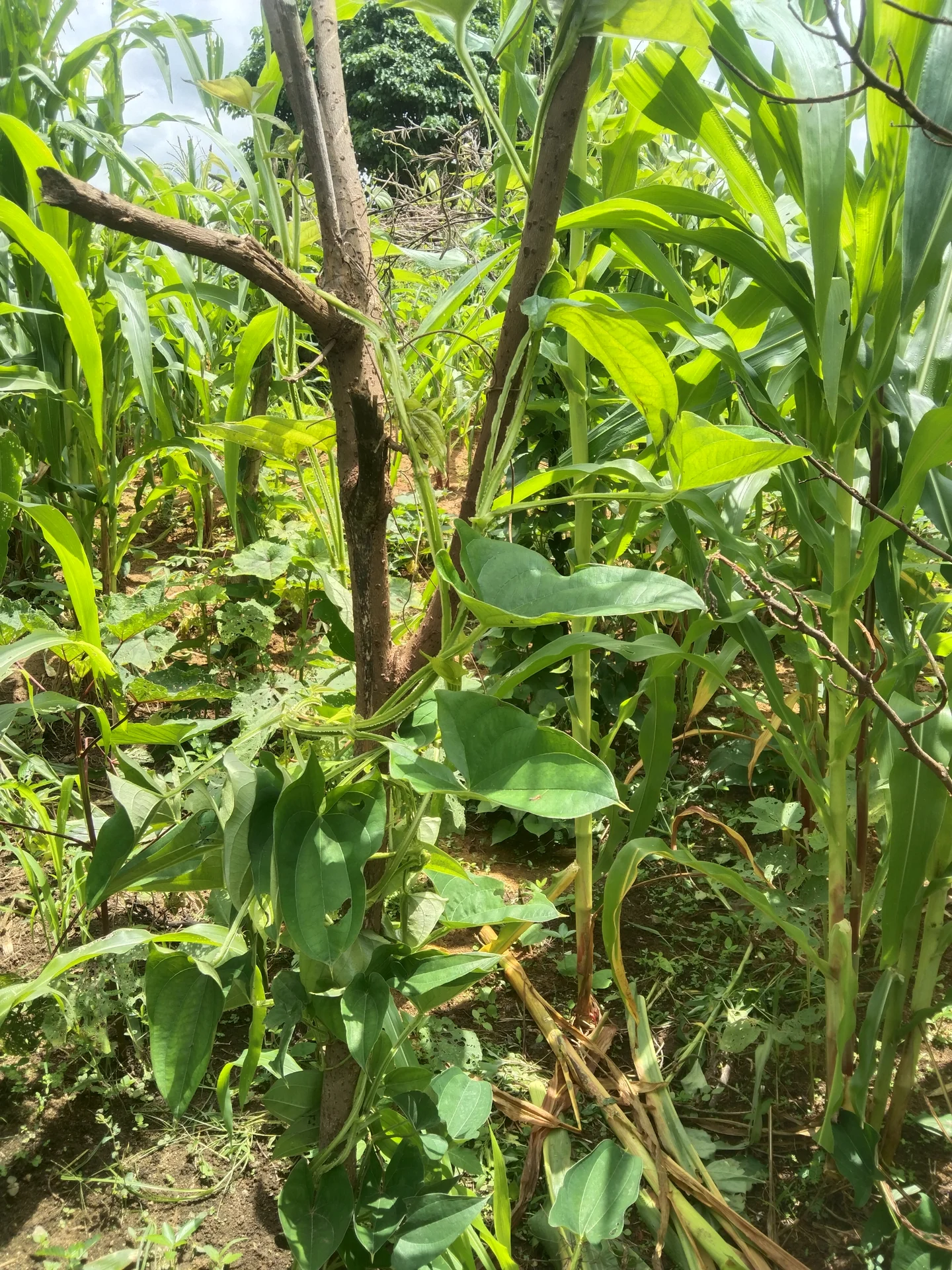
Photo: Andikan Efiok Eduok, CC BY-SA 4.0, via Wikimedia Commons · CC BY-SA 4.0
Yam mosaic virus (YMV) is the most damaging virus of yam, hitting white and water yam hardest. It is a potyvirus: it hides inside infected setts (the seed tubers you plant) and is carried plant-to-plant by aphids. Because it lives inside the plant, no spray can cure it — and every season you save seed from sick plants, the disease builds up and your yields fall further.
Why it matters
Yam mosaic virus is a hidden thief. A bad infection can steal up to 60% of your tuber harvest — you dig up small, few tubers from vines that never grew strong. The worst part: once a plant is infected there is no cure and no spray that fixes it, because the virus lives inside the plant. And because it travels inside the seed tubers (setts) you save and replant, it gets worse every year you recycle seed from sick fields. Your only real weapons are clean planting material and pulling out sick plants early.
When to act
Mosaic symptoms on young vines, or aphid activity in a crop grown from unselected setts; rogue symptomatic plants early.
This guidance is general, compiled from published agronomic references including FAO and CABI. Thresholds and timing shift with your crop, your variety and the season.
In much of the region a spray is simply called mushonga — medicine. But a chemical group you cannot name is one you cannot rotate, and a product you did not write down has no pre-harvest interval you can observe. Mushonga, and other farming words →
The full Yam mosaic virus field guide
Identify it
The first sign — the leaf pattern:
look at the young leaves. A healthy yam leaf is one even green. An infected leaf shows a mosaic — patches of light green and dark green mixed together like a shadow map, or a cloudy mottling you notice most when you hold the leaf up to the light.
As it spreads
the sick leaves become twisted and puckered (crinkled, not flat), sometimes narrower or crumpled at the edges. The veins darken into bands (dark lines against paler leaf), and the whole plant looks stunted — short vines that never climb the stake properly.
Below ground it costs you tubers
an infected plant makes fewer and smaller tubers, even though nothing looks rotten. The plant is simply weak from the start of the season to the end.
Don't confuse it with other problems
yellowing from hunger (poor soil / lack of nitrogen) is an even, all-over pale colour with no mosaic pattern and no puckering — feed the plant and it greens up. Drought or sun scorch dries leaf edges brown. Yam mosaic shows that patchy light-and-dark mosaic and leaf distortion that stays no matter how well you water or feed — that is the tell.
Scout for it
When to look
watch hardest while the crop is young — through sprouting and early vine growth. This is when the virus does the most damage and when you can still pull out sick plants before they seed the whole field.
How to walk the field
every week or two, walk a big "W" shape across the plot so you cover all four corners and the middle — not just the row nearest the path. Make about 10 stops along the way.
What to check at each stop
look closely at the young, newly-opened leaves of a few plants (they show the mosaic first). Turn a leaf over and check the undersides and growing tips for aphids — tiny soft insects, often pale green or black, clustered in groups. An aphid (a small sap-sucking insect) is the vector — the living carrier that moves the virus from a sick plant to a healthy one.
The action number — act on the FIRST signs, not a big count:
because there is no cure, the threshold is low. If you find even 1 plant in your 10 stops showing the mosaic pattern, mark it and pull it out (rogue it) that same day. "Rogue" means uproot and remove the whole sick plant so it can't infect its neighbours.
Also act on aphids in risky seed
if you planted setts from an unselected or bought-in source you're not sure about and you see aphids active on the crop, treat the field as high-risk — scout more often and be ready to rogue at the first mosaic leaf.
Control it
PREVENT
-
this is where you win (start clean):
the strongest tool you have is clean seed. Select and plant setts only from healthy, vigorous, symptom-free vines you watched last season — never save seed from a plant that showed mosaic. Where you can get it, plant certified clean or tissue-cultured seed yam (lab-grown, virus-free planting material). Starting clean is far more powerful than anything you can do once the crop is sick.
-
grow a variety that fights back:
where they are available locally, plant tolerant or resistant yam varieties. These carry the virus with less damage, so even if aphids bring it in, your tubers suffer less. Ask your extension officer or seed supplier which local varieties hold up best.
ACT EARLY — rogue sick plants the day you see them:
at the very first mosaic leaf, uproot the whole plant and carry it out of the field (don't just cut the vine — the tuber and roots stay infected). Every sick plant you remove early is one less source of virus for the aphids to spread. Also clear weeds in and around the plot: some weeds are hidden reservoirs that keep the virus and the aphids alive between crops.
ABOUT SPRAYS — know the truth so you don't waste money:
there is no chemical cure for this virus, and no spray is recommended against it. No spray can remove a virus from an infected plant. Insecticides also do a poor job of stopping this virus, because the aphids pass it on in seconds of feeding (non-persistent spread) — faster than a poison can kill them, and killing an aphid after it has already probed does not un-infect the plant. Spend your effort and money on clean seed and roguing, not on chemicals that will not fix a virus.
IF IT KEEPS SPREADING — cut your losses and reset for next year:
if mosaic is showing on many plants and roguing can no longer keep up, accept this season's loss on the worst plants and focus on protecting your seed supply. Harvest and eat or sell the tubers from clearly sick plants — do NOT keep any of them as setts. Mark your few remaining clean, strong vines and save only those for next year's planting, or start fresh next season with certified clean seed. Breaking the sick-seed cycle is the one move that stops the disease getting worse year after year.
Catch Yam mosaic virus before it costs you the harvest
This guide is the general answer. Divisi works out yours — the week to scout your own field for Yam mosaic virus, and what to do the day you find it.


Crops it affects
Plan the crops it attacks

All planting calendars, country by country
Get Insights by email
A short digest of new Divisi articles. No email on quiet weeks.
Frequently asked questions
How do I identify Yam mosaic virus?
The first sign — the leaf pattern:. look at the young leaves. A healthy yam leaf is one even green. An infected leaf shows a mosaic — patches of light green and dark green mixed together like a shadow map, or a cloudy mottling you notice most when you hold the leaf up to the light.
When should I take action against Yam mosaic virus?
Mosaic symptoms on young vines, or aphid activity in a crop grown from unselected setts; rogue symptomatic plants early.
How do I control Yam mosaic virus?
PREVENT — this is where you win (start clean):. the strongest tool you have is clean seed. Select and plant setts only from healthy, vigorous, symptom-free vines you watched last season — never save seed from a plant that showed mosaic. Where you can get it, plant certified clean or tissue-cultured seed yam (lab-grown, virus-free planting material). Starting clean is far more powerful than anything you can do once the crop is sick.
Which crops are attacked by Yam mosaic virus?
Among the crops covered here: Yam.