 Divisi
Yellow rust
Puccinia striiformis · Fungal
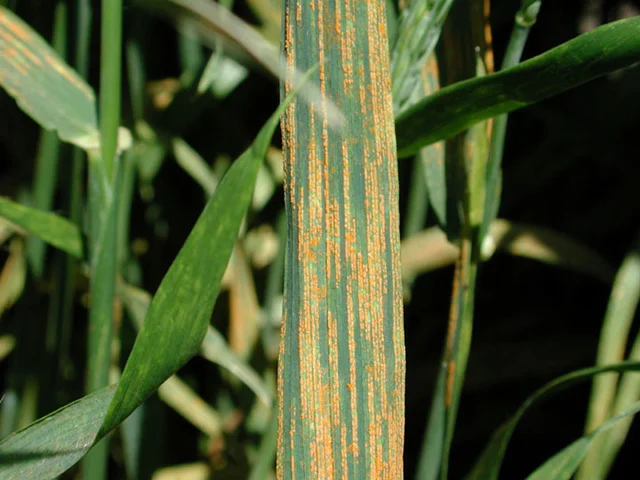
Yellow rust (also called stripe rust) is a wind-blown fungal disease of wheat and barley. Its spores blow in on the wind from far away and, in cool, damp weather, settle on the leaves and grow into lines of bright yellow-orange powder that run along the leaf. This powder is millions of new spores that blow on to the next plant, so a few spots can become a whole field in a couple of weeks.
Why it matters
Yellow rust eats the green off your wheat leaves — and green leaf is what fills the grain. A bad, unchecked attack can take up to 70% of your harvest, leaving thin, shrivelled grain that weighs little and sells for less. It is hard to stop once it takes hold because it spreads on the wind and doubles fast in cool, damp weather, so by the time the whole field looks yellow it is usually too late. The battle is won by catching the first few stripes early — before the disease climbs to the top leaf that feeds the head.
When to act
First yellow pustule stripes found on leaves in a susceptible variety under cool, moist weather; treat before it spreads up to the flag leaf.
This guidance is general, compiled from published agronomic references including FAO and CABI. Thresholds and timing shift with your crop, your variety and the season.
In much of the region a spray is simply called mushonga — medicine. But a chemical group you cannot name is one you cannot rotate, and a product you did not write down has no pre-harvest interval you can observe. Mushonga, and other farming words →
The full Yellow rust field guide
Identify it
The first sign
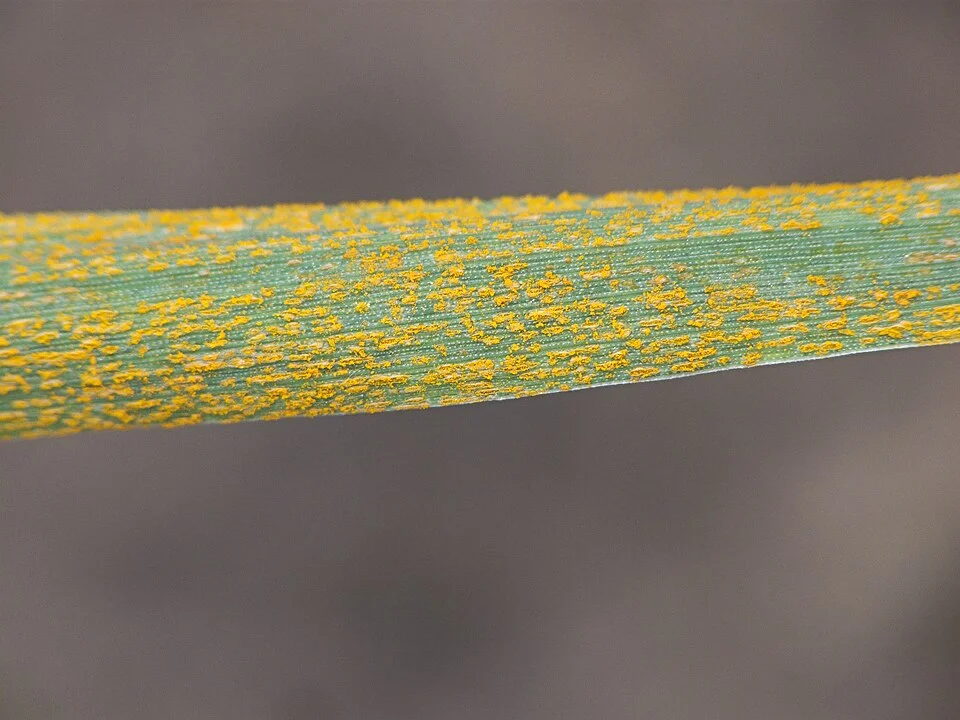
bright yellow-to-orange powdery stripes running in straight lines along the leaf, following the veins. Rub a stripe with your finger — a rusty orange dust comes off and stains your skin or clothes. That dust is the spores.
As it spreads
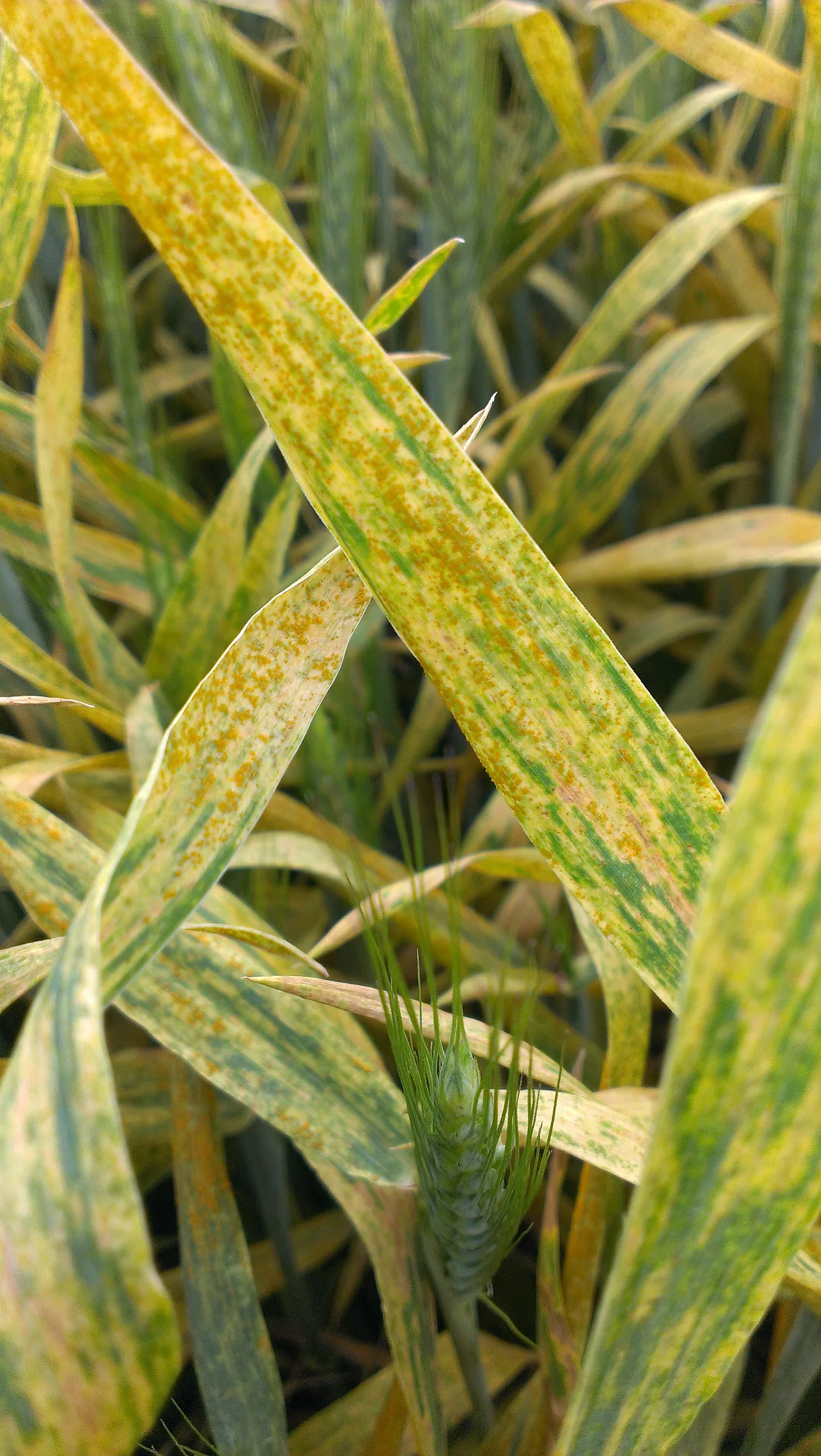
the stripes join up, the leaf yellows and dries from the tip, and the disease climbs upward from the lower leaves to the mid leaves, then to the flag leaf (the top leaf, just below the head, that feeds the grain) and even on to the heads — where it shrivels the grain.
It loves cool, damp weather
cool days of about 7-15C with heavy dew, light rain or fog. It builds fastest on a susceptible variety and on a "green bridge" of self-sown volunteer wheat (see scout and control).
Don't confuse it
with leaf rust (round, scattered orange-brown dots, NOT neat stripes), with plain nutrient or drought yellowing (a soft, even yellow with no powder and nothing that rubs off), or with stem rust (reddish-brown blisters mostly on the stems, in warmer weather). Yellow rust is the one that makes yellow-orange dust in stripes.
Scout for it
When to look
start once the crop is stem-extending and growing tall (the development stage) and keep going right through mid-season heading — these are the stages yellow rust hits hardest. Look every week, and look extra hard during any cool, moist spell (dews, drizzle, fog), because that is when it explodes.
Where to walk
walk a large "W" across the field so you cover all four corners and the middle — not just the edge by the path. Make about 5 stops along the W and check 10 plants at each stop (about 50 plants).
What to check
look at the lower and middle leaves first — rust usually starts low and climbs — then always check the flag leaf at the top. Turn leaves over and look along the veins for the yellow-orange stripes; rub one to confirm the orange dust.
When to act — lead with the number:
on a susceptible variety in cool, moist weather, act as soon as you find the very first stripes on even 1 or 2 plants. Yellow rust has almost no "safe" level — once it is present it multiplies fast, so the trigger is first stripes found = act now, before it reaches the flag leaf.
Control it
Prevent first
-
plant a resistant variety (your strongest tool):
choose a wheat or barley variety bred to resist yellow rust — this is the single most effective step, cutting the disease by around 70%. Mix or rotate the varieties you grow from season to season so the fungus cannot easily beat a single one, because new races of yellow rust appear often.
-
cut the green bridge and time your sowing:
destroy volunteer wheat (self-sown plants from last season's spilled grain) in and around the field — this "green bridge" keeps the fungus alive between crops. Avoid sowing susceptible types very early, when young leaves meet the cool, damp weather the disease loves.
Last resort — a triazole fungicide spray:
if stripes appear and are climbing, a triazole foliar fungicide (a systemic spray — one that soaks into the leaf and works from inside, glossed here so you know it protects new growth too) applied at the first pustules protects the flag leaf. It gives about 70% control when timed early. Safety: cover your skin, eyes, nose and mouth, spray in the cool of the day with the wind at your back, keep it off food, water, children and bees, wait out the pre-harvest interval (the minimum number of days the label says you must wait between spraying and harvest) before you cut, and wash well afterward. Rotate to a different fungicide group each time so the fungus does not build resistance.
If it keeps spreading — or it is too late:
if a first spray does not hold it and the weather stays cool and damp, a second triazole spray of a different group may still save a green flag leaf. But once the flag leaf and heads are already yellow and dried and the crop is past flowering, spraying will not pay — cut your losses: harvest as soon as the grain is ready to save what has filled, do not keep seed from a rusted crop, and plan a resistant variety for next season.
Catch Yellow rust before it costs you the harvest
This guide is the general answer. Divisi works out yours — the week to scout your own field for Yellow rust, and what to do the day you find it.


Crops it affects
Plan the crops it attacks

All planting calendars, country by country
Get Insights by email
A short digest of new Divisi articles. No email on quiet weeks.
Frequently asked questions
How do I identify Yellow rust?
The first sign. bright yellow-to-orange powdery stripes running in straight lines along the leaf, following the veins. Rub a stripe with your finger — a rusty orange dust comes off and stains your skin or clothes. That dust is the spores.
When should I take action against Yellow rust?
First yellow pustule stripes found on leaves in a susceptible variety under cool, moist weather; treat before it spreads up to the flag leaf.
How do I control Yellow rust?
Prevent first — plant a resistant variety (your strongest tool):. choose a wheat or barley variety bred to resist yellow rust — this is the single most effective step, cutting the disease by around 70%. Mix or rotate the varieties you grow from season to season so the fungus cannot easily beat a single one, because new races of yellow rust appear often.
Which crops are attacked by Yellow rust?
Among the crops covered here: Wheat.