 Divisi
Banana weevil
Cosmopolites sordidus · Insect
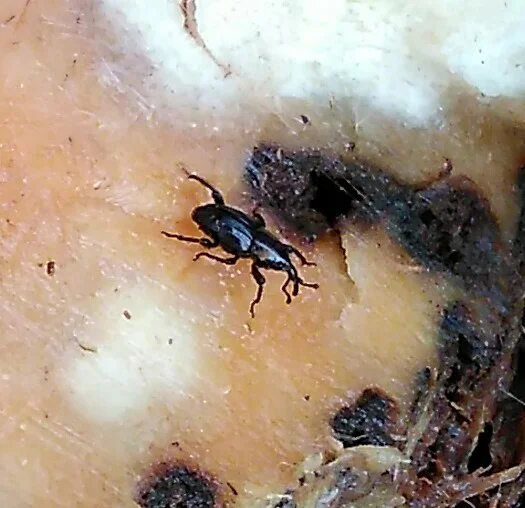
Photo: Coliner · CC BY-SA 4.0
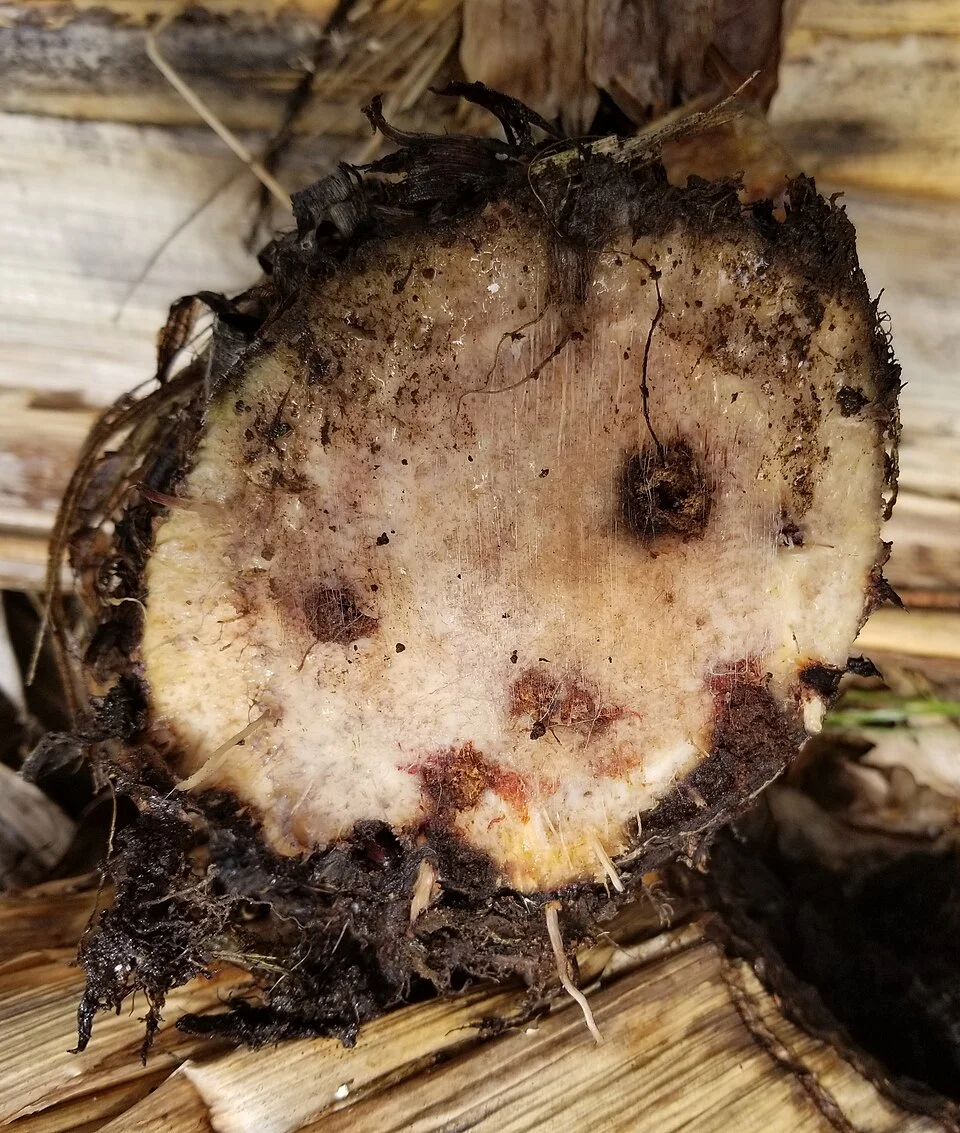
Banana weevil (Cosmopolites sordidus) is a hard-shelled, dull-black, night-active beetle of banana and plantain. Adults barely fly and hide by day in damp litter and crevices around the base of the mat, so they spread mostly by walking — and by hitching a ride inside infested suckers. The real harm is done underground by the creamy-white grubs, which bore a dense network of tunnels through the corm (the underground stem) and the base of the false trunk. Damage builds up quietly over the plant's perennial life and is worst in old, poorly managed mats, where weakened plants throw small bunches and topple at the base.
Plant pests and diseases · CC0 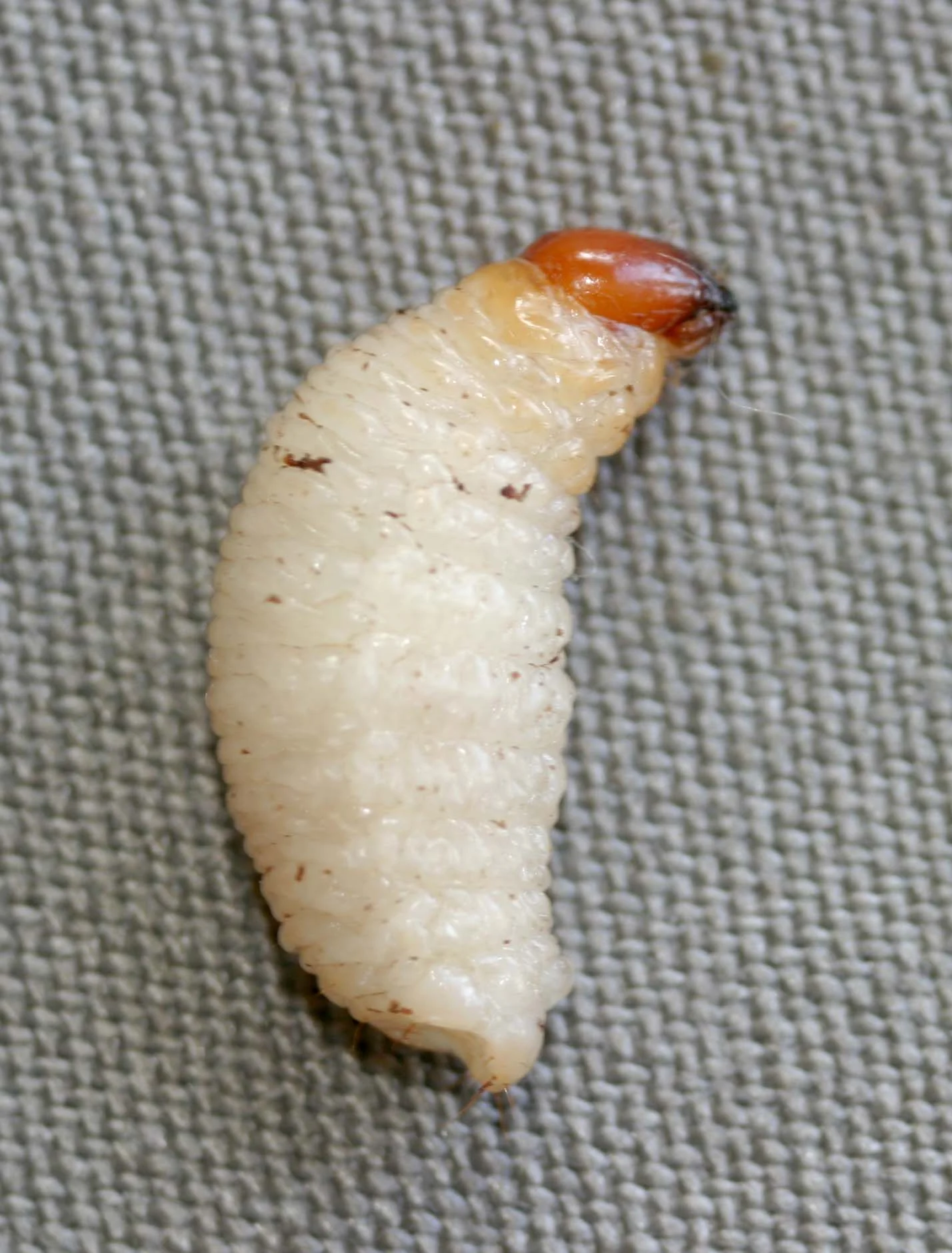
Plant pests and diseases · CC0
Why it matters
Banana weevil is a slow, hidden thief. Its grubs tunnel through the corm — the underground stem that anchors the plant and feeds the bunch — so plants grow weak, carry small bunches, and finally snap off and topple at the base, often just as the bunch fills out. A bad, long-standing attack can cost you up to 60% of your harvest. It is so hard to beat once it takes hold because the grubs live sealed inside the corm where no spray or hand can reach them, the pest quietly builds up in an old mat year after year, and it rides into your clean fields hidden inside infested suckers. That is why the whole battle is won before you plant — with clean material — and by trapping the adults early, long before the mat is riddled.
When to act
Average of more than about 5 weevils per split-pseudostem or disc-on-stump trap per week, or fresh tunnelling seen in the corm at planting or harvest.
This guidance is general, compiled from published agronomic references including FAO and CABI. Thresholds and timing shift with your crop, your variety and the season.
In much of the region a spray is simply called mushonga — medicine. But a chemical group you cannot name is one you cannot rotate, and a product you did not write down has no pre-harvest interval you can observe. Mushonga, and other farming words →
The full Banana weevil field guide
Identify it
The damage you see first
plants that grow weak and stunted, throw small, poorly-filled bunches, and then snap off or topple over at the base — often just as the bunch gets heavy or a strong wind comes through. Slice open the underground stem (the corm) and you will find it riddled with dark tunnels about the width of a pencil, sometimes with a soft, rotten smell where the tunnels have let rot creep in.
The grub that does the damage
down inside those tunnels lives a fat, legless, creamy-white grub (the larva) with a hard reddish-brown head, curled in a C-shape, up to about 1 cm long. This is the only stage that eats the corm — find it and you have found your culprit.
The adult weevil
a hard-shelled, dull-black beetle about 1–1.5 cm long — roughly the length of a maize grain, only darker and harder (young ones are reddish-brown before they harden to black). Like all weevils it has a curved snout at the front. It comes out only at night, hides by day in damp leaf litter and crevices at the base of the mat (the clump of banana plants growing together), barely flies, and plays dead — folding its legs and lying stiff and still — the moment you disturb it.
Don't confuse it
toppling and yellowing can also come from nematodes (tiny root worms) or from Panama wilt disease. The test is to cut the corm open. Banana weevil leaves open tunnels with a soft white grub inside. Nematodes leave reddish-brown flecks and lesions but no tunnels and no grub. Panama wilt shows red-brown streaks running up the inside of the stem, again with no tunnels and no grub.
Scout for it
When to look
begin watching from the day you plant and right through the young and growing stages — the first months while a sucker is establishing, then as it builds up towards flowering. This is when a clean plant either stays clean or gets colonised. Keep checking through the whole life of the mat, because the weevil creeps up in numbers quietly over the years.
Set simple traps to find them
Cut a piece of pseudostem (the juicy trunk-like false stem) from a felled or harvested plant, split it lengthwise and lay the cut face down on the soil right against a mat — this is a split-pseudostem trap. Or, after cutting a plant, leave a low stump and set a thick disc of pseudostem cut-face-down on top of it — a disc-on-stump trap. The night-active weevils crawl underneath to shelter, and you catch them there in the morning.
Walk a big "W" across the plantation
so you cover all four corners and the middle, not just the edge by the path, and place a trap at about 10 mats spread along that W. Lift each trap once a week, count the weevils hiding underneath, and collect them.
Act when your traps average more than 5 weevils each in a week
Lead with that number — more than 5 weevils per trap per week means the population is high enough to be eating into your crop, so start control now. Also act the moment you cut a corm at planting or at harvest and find fresh, moist tunnels, even if the traps have been quiet.
Control it
Prevent it — start clean
The weevil rides into new fields hidden inside infested suckers, so never plant a sucker straight from an old, infested mat. Use tissue-culture plantlets, or pare your suckers — trim off all the roots and the outer skin of the corm with a knife until the flesh is clean and white, cutting out any tunnels or grubs you uncover. For extra safety, dip the pared suckers in hot water (about 50–55°C — hot but not boiling) for 15–20 minutes to kill any hidden eggs and grubs before you plant. This is your strongest single defence.
Deny it a home
After you harvest a plant, dig out and chop up the old corm and pseudostem and spread the pieces to dry in the sun — never leave whole wet stumps and residue lying around the mat, because that is exactly where weevils breed and shelter. You may mulch the mat to hold moisture, but don't pile rotting debris against the stem bases. And feed and water your plants well: a vigorous plant shrugs off far more tunnelling than a starved one.
Act early — trap them down
Turn your scouting traps into a weapon. Set many split-pseudostem and disc-on-stump traps across the field and collect and kill the weevils every week — drop them into soapy water or crush them. Steady trapping over the months pulls the adult numbers right down before they can lay the next generation of grubs.
Bring in natural killers
Dust or spread Beauveria bassiana — an entomopathogen, meaning a natural fungus that infects insects and makes them sicken and die — onto your traps and the base of the mat, so sheltering weevils pick it up and carry the infection to others. Keep the dust off your face: cover your nose and mouth while you apply it. And protect the ants — predatory ants hunt weevil eggs and grubs for free, so don't wipe them out with broad poisons.
Chemicals — only as a last resort
If damage stays severe despite clean planting and steady trapping, treat the base of the mat and the planting holes with a registered insecticide. Protect yourself every time: cover your skin, eyes, nose and mouth, apply in the cool of the day with the wind at your back, and keep it well away from food, water, children and bees. Wash yourself and your clothes afterwards, and respect the pre-harvest interval — the set number of days you must wait after treating before the fruit is safe to harvest. Rotate to a different chemical group each time so the weevils don't build up resistance — stop being killed by a product you keep using.
If it keeps spreading — cut your losses and reset
Because the grubs live sealed inside the corm where nothing can reach them, a badly tunnelled old mat cannot be rescued. When toppling and tunnelling keep rising despite trapping, uproot the whole infested mat, dig out and chop up every last piece of corm (that is the weevils' nursery), and let the ground rest or grow a different crop for a season. Then start a fresh planting somewhere else with clean tissue-culture or hot-water-treated material — replanting clean is the only true reset.
Catch Banana weevil before it costs you the harvest
This guide is the general answer. Divisi works out yours — the week to scout your own field for Banana weevil, and what to do the day you find it.


Crops it affects
Plan the crops it attacks

All planting calendars, country by country
Get Insights by email
A short digest of new Divisi articles. No email on quiet weeks.
Frequently asked questions
How do I identify Banana weevil?
The damage you see first. plants that grow weak and stunted, throw small, poorly-filled bunches, and then snap off or topple over at the base — often just as the bunch gets heavy or a strong wind comes through. Slice open the underground stem (the corm) and you will find it riddled with dark tunnels about the width of a pencil, sometimes with a soft, rotten smell where the tunnels have let rot creep in.
When should I take action against Banana weevil?
Average of more than about 5 weevils per split-pseudostem or disc-on-stump trap per week, or fresh tunnelling seen in the corm at planting or harvest.
How do I control Banana weevil?
Prevent it — start clean. The weevil rides into new fields hidden inside infested suckers, so never plant a sucker straight from an old, infested mat. Use tissue-culture plantlets, or pare your suckers — trim off all the roots and the outer skin of the corm with a knife until the flesh is clean and white, cutting out any tunnels or grubs you uncover. For extra safety, dip the pared suckers in hot water (about 50–55°C — hot but not boiling) for 15–20 minutes to kill any hidden eggs and grubs before you plant. This is your strongest single defence.
Which crops are attacked by Banana weevil?
Among the crops covered here: Banana & plantain.