 Divisi
Burrowing nematode
Radopholus similis · Nematode
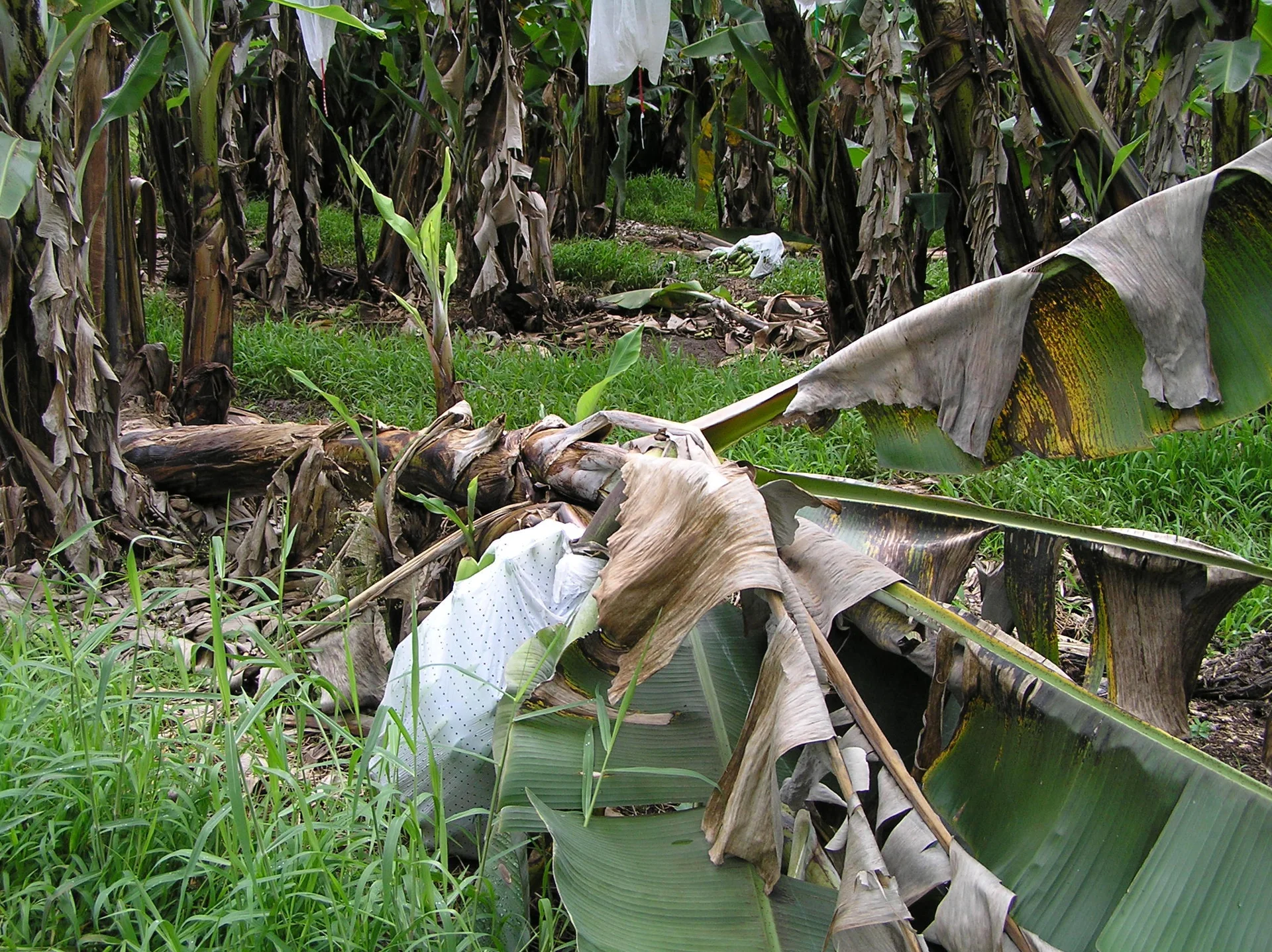
Photo: Plant pests and diseases · CC0
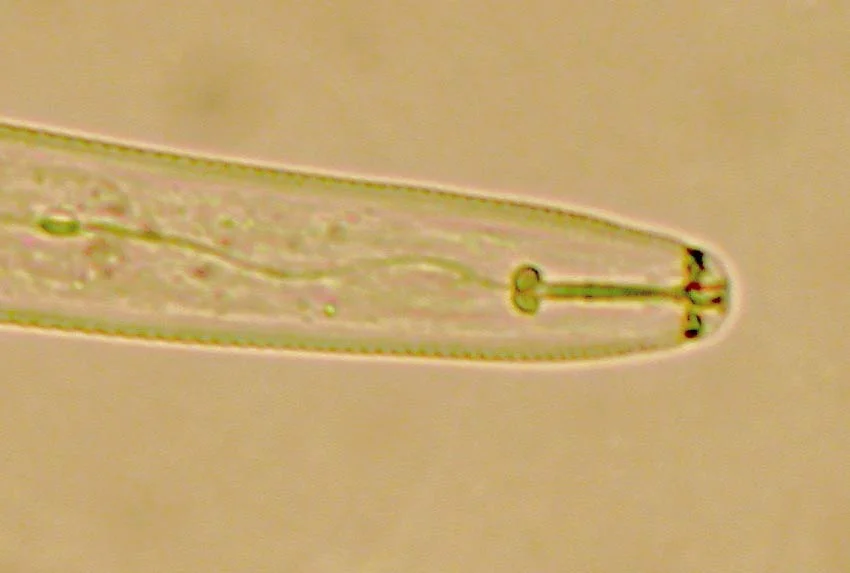
Burrowing nematode (Radopholus similis) is a microscopic, thread-like worm that lives inside the roots and corm (the underground stem) of banana, plantain, citrus and black pepper. It burrows through the tissue, leaving reddish-brown lesions that girdle and rot the root system until the plant can no longer anchor or feed itself — the classic result is 'blackhead toppling disease', where plants fall over under wind or the weight of a filling bunch. It spreads mainly inside infected planting material (suckers and corms) and in soil carried on tools and boots, and once it is established in a field you cannot spray it out.
Scot Nelson · CC0 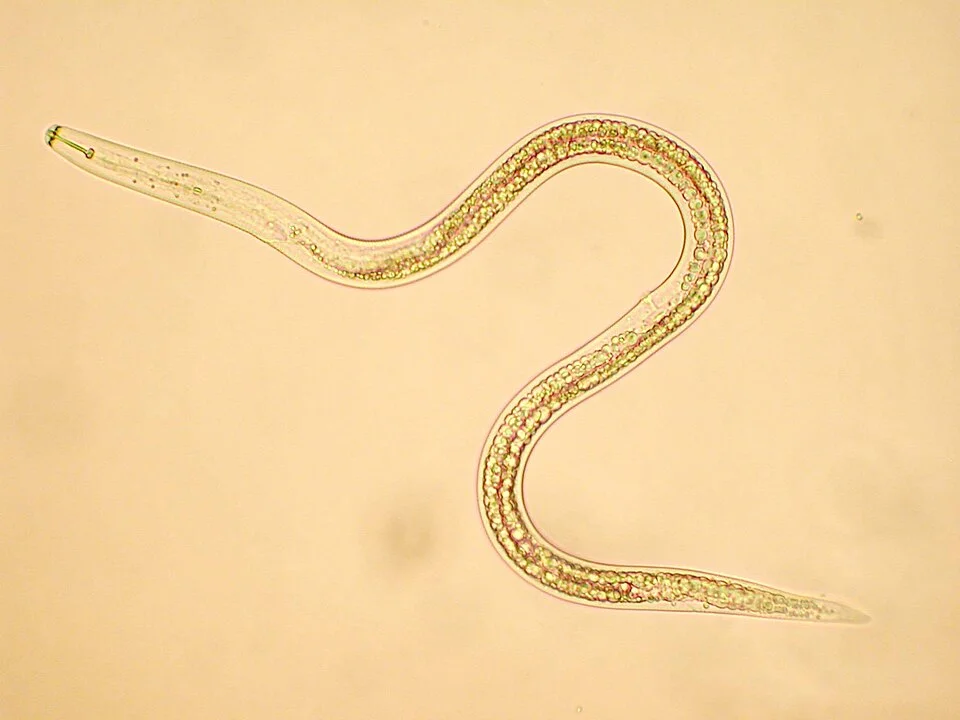
Scot Nelson · CC0
Why it matters
You will never see this pest with your own eyes — it is a worm so small and thin it needs a microscope, and it lives hidden inside your banana roots and corm, eating away the root system that anchors and feeds the plant. A bad attack rots the roots so badly that the plant topples over, often just as the heavy bunch is filling — so you lose the whole bunch, up to 60% of your crop. Because it hides inside the roots and in the soil, no spray can reach it once it is established, and it rides into clean fields inside infected suckers. That is why clean planting material is your only real defence — once it is in your soil, you cannot get it back out.
When to act
toppling plants, poor anchorage or reddish root lesions found when checking roots
This guidance is general, compiled from published agronomic references including FAO and CABI. Thresholds and timing shift with your crop, your variety and the season.
In much of the region a spray is simply called mushonga — medicine. But a chemical group you cannot name is one you cannot rotate, and a product you did not write down has no pre-harvest interval you can observe. Mushonga, and other farming words →
The full Burrowing nematode field guide
Identify it
The first thing you notice is a plant leaning or toppling over
A big, healthy-looking plant — often one carrying a filling bunch — suddenly falls, its corm (the underground stem) twisting up out of the ground while the leaves are still green. Before that, plants are stunted, with smaller bunches that take longer to come. This falling-over is called 'blackhead toppling disease'.
Dig up a sick plant and cut into the roots and corm
Healthy roots are white and firm; infested ones show reddish-brown to black streaks and tunnels running through them, and rot away until only a few stringy, blackened roots are left. Slice into the corm and you find dark reddish cavities eaten through the flesh.
You cannot see the pest itself
— it is a thread-thin worm far too small for the naked eye; you would need a laboratory microscope. So you recognise it by its damage — the reddish tunnels in the roots and the toppling plants — not by finding the animal. A lab or extension root/soil test confirms it where you can reach one, but the field signs are enough to act.
Tell it apart from look-alikes
The banana weevil also tunnels the corm, but it bores wide holes and you can find its fat, legless white grubs with brown heads inside — nematode tunnels are fine, reddish and have no grubs. Panama disease (a wilt) turns leaves yellow and makes them fold down around the stem, but the plant usually stays standing and shows reddish-brown strands running up the cut pseudostem (the trunk), not rotted anchor roots. Toppling plus rotten reddish roots and no grubs points to burrowing nematode.
Scout for it
When to check
start as the plant is growing and building its root system (development stage), and check most closely from when the bunch forms right through to harvest (mid- to late-season) — a heavy bunch sitting on weak, rotted roots is exactly when plants topple. Most important of all, inspect every sucker before you plant it, because the pest arrives hidden inside planting material.
How to walk the field
walk a large "W" across the block so you cover all four corners and the middle, not just the edge by the path. Make about 10 stops.
At each stop, test the anchorage first
push the pseudostem (the trunk) with your hand — a healthy plant stands firm, an infested one rocks or lifts at the base. On any plant that rocks, and on a few random healthy-looking plants, dig beside the base and shave into the roots and corm with your knife and look for the reddish-brown tunnels and rotten, sparse roots.
Act on the very first signs — the threshold is 1
If even one plant has toppled or rocks loose when you push it, or you find reddish lesions on the roots of even one plant you dig up, the nematode is already here and spreading. Do not wait for it to reach many plants — by the time a lot of plants are toppling, the whole block is heavily infested and it is too late to save.
Control it
Prevent it
-
clean planting material is everything (your single strongest tool)
Never take suckers from a field that has toppling or root-rot. Instead plant tissue-culture plants — clean plantlets grown in a laboratory and sold nematode-free — or, if you use suckers, pare the corm (peel off the outer skin and all the old roots down to clean white tissue) and dip it in hot water at about 50°C for around 15 minutes to kill the nematodes hiding inside before you plant.
-
starve the soil and keep plants strong
Establish new bananas on land that has been fallowed or grown non-host crops (anything that is not banana, plantain, citrus or black pepper) for a season or more, so nematodes left in the soil die out with nothing to feed on. After harvest, dig out and dry or burn old corms so they cannot harbour the pest. Feed plants with manure and mulch — a vigorous plant withstands far more root damage. And never carry soil, tools or suckers from an infested block to a clean one.
Plant a tolerant variety where you can
Some banana and plantain types are tolerant — they still get infected but topple less and yield better despite the pest. Ask your extension officer which adapted tolerant varieties are available in your area, and use them together with clean planting material rather than on their own.
At planting, add a bionematicide to the hole
A bionematicide is a natural, living product — helpful fungi or bacteria (such as Paecilomyces or Trichoderma), or neem cake — that you mix into the planting hole to attack nematodes in the soil. It is a support to prevention, not a rescue (on its own it only helps so much), so use it on top of clean material and rotation. Even though it is natural, handle it safely: wear gloves, keep it out of your eyes, nose and mouth, keep children and animals away, follow the rate on the label, and wash your hands after.
There is no rescue spray — do not look for one
Chemical nematicides that kill nematodes in the soil are highly poisonous to people, water and soil life and are not part of this plan — and in any case you cannot spray a nematode out of your roots or soil once it is established. Do not waste money or risk your health on them. Prevention is the only thing that works, which is exactly why the clean-planting-material steps above matter so much.
If plants keep toppling — cut your losses on that block
Once the soil is heavily infested, that planting cannot be saved. Harvest whatever bunches you can, then dig out and destroy every corm — dry them hard in the sun or burn them, and never replant suckers from them. Rest the land under a non-host crop or bare fallow for a season or two, then replant with clean tissue-culture plants. Keep the infested block separate: scrape the soil off your tools and boots before moving on, and never carry suckers or soil from it into your healthy fields, so you do not seed the pest across the rest of your farm.
Catch Burrowing nematode before it costs you the harvest
This guide is the general answer. Divisi works out yours — the week to scout your own field for Burrowing nematode, and what to do the day you find it.


Crops it affects
Plan the crops it attacks

All planting calendars, country by country
Get Insights by email
A short digest of new Divisi articles. No email on quiet weeks.
Frequently asked questions
How do I identify Burrowing nematode?
The first thing you notice is a plant leaning or toppling over. A big, healthy-looking plant — often one carrying a filling bunch — suddenly falls, its corm (the underground stem) twisting up out of the ground while the leaves are still green. Before that, plants are stunted, with smaller bunches that take longer to come. This falling-over is called 'blackhead toppling disease'.
When should I take action against Burrowing nematode?
toppling plants, poor anchorage or reddish root lesions found when checking roots
How do I control Burrowing nematode?
Prevent it — clean planting material is everything (your single strongest tool). Never take suckers from a field that has toppling or root-rot. Instead plant tissue-culture plants — clean plantlets grown in a laboratory and sold nematode-free — or, if you use suckers, pare the corm (peel off the outer skin and all the old roots down to clean white tissue) and dip it in hot water at about 50°C for around 15 minutes to kill the nematodes hiding inside before you plant.
Which crops are attacked by Burrowing nematode?
Among the crops covered here: Banana & plantain.