 Divisi
Sesame capsule borer
Antigastra catalaunalis · Insect
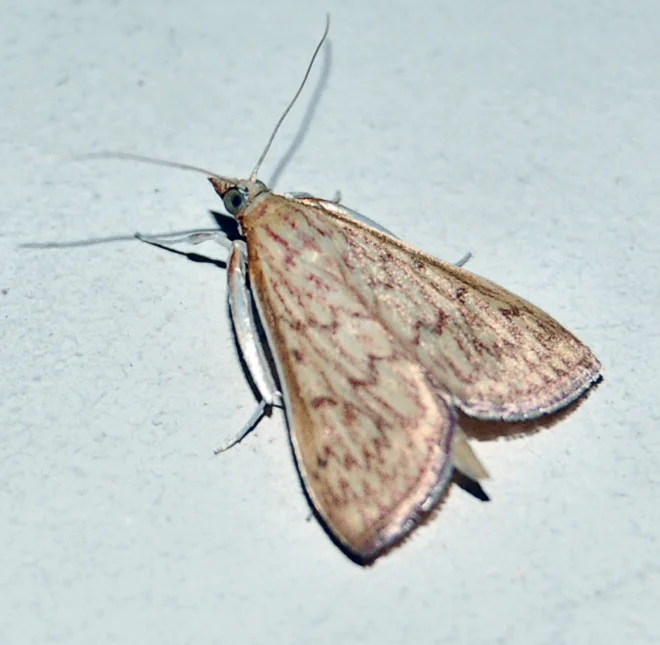
Photo: Ravi Vaidyanathan · CC BY 3.0
The sesame capsule borer (also called the sesame leaf webber) is the main insect pest of sesame. Its small green caterpillar spins the top leaves and growing tips together with silk and feeds inside, then bores into the flowers and green capsules to eat the developing seed. Because sesame flowers and sets capsules over many weeks, overlapping generations keep attacking right through the flowering and pod-filling period, hurting both how much seed you harvest and its quality.
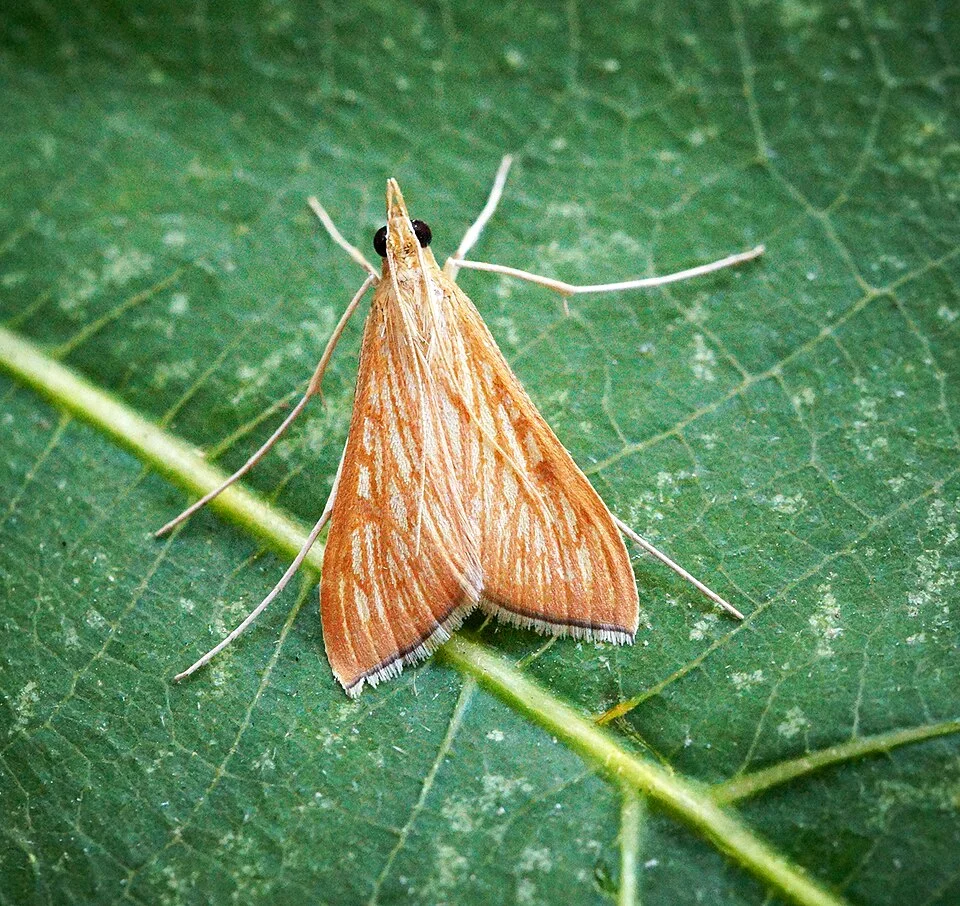
Ben Sale from UK · CC BY 2.0 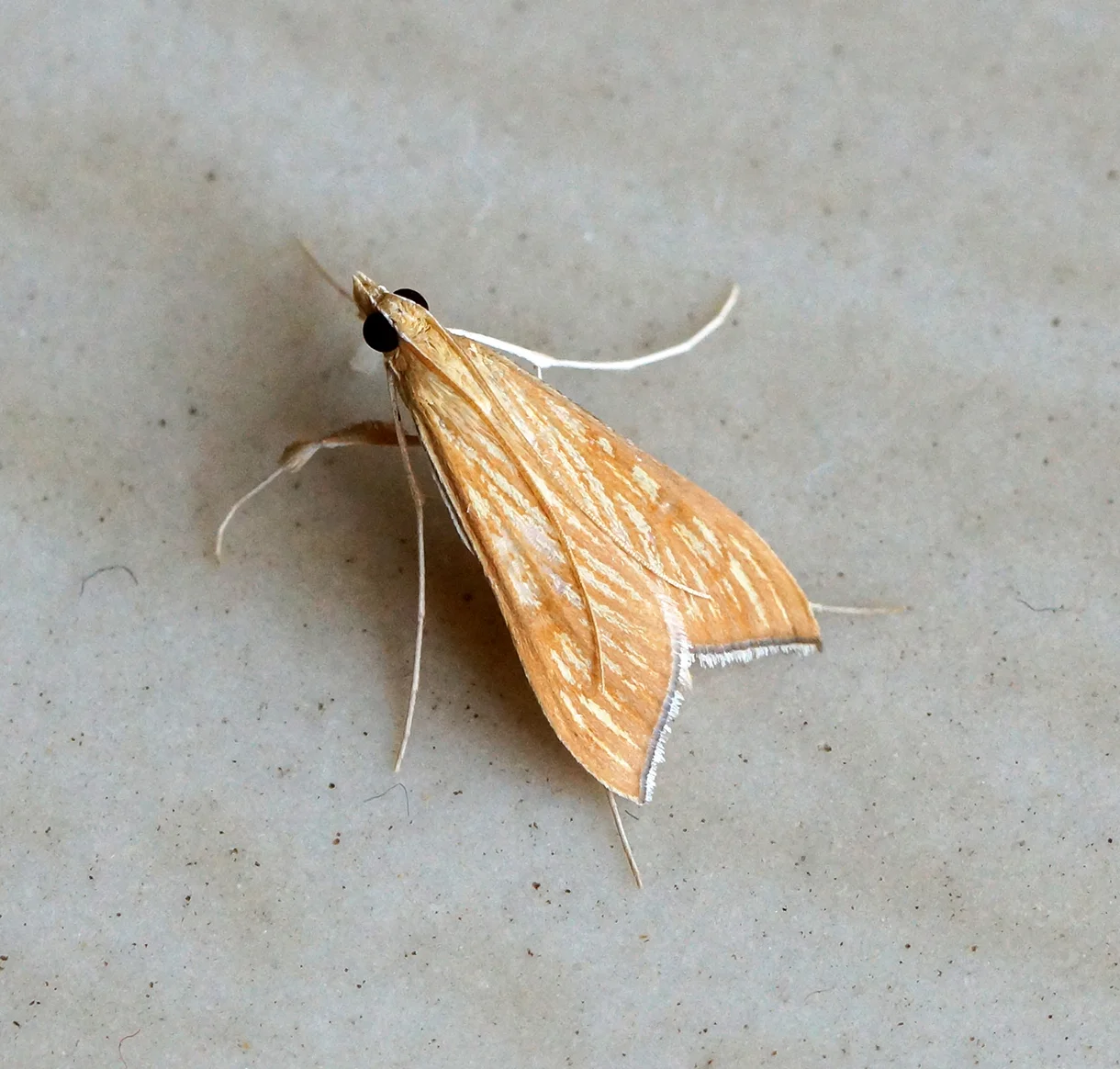
Ben Sale from UK · CC BY 2.0
Why it matters
The sesame capsule borer is the number-one insect pest of sesame, and a bad attack can cost you up to half your seed (50%) — the caterpillar eats the very parts you sell: the flowers and the seeds inside the capsules. It is hard to beat once it takes hold, because the caterpillars hide inside webbed shoot tips, flowers and capsules where sprays cannot reach them, and because sesame keeps flowering for weeks, fresh generations keep coming. That is why catching it early — while the caterpillars are still small and out in the open on the tips — matters so much.
When to act
webbed shoot tips or bored flowers/capsules on scouting; larvae found in growing tips
This guidance is general, compiled from published agronomic references including FAO and CABI. Thresholds and timing shift with your crop, your variety and the season.
In much of the region a spray is simply called mushonga — medicine. But a chemical group you cannot name is one you cannot rotate, and a product you did not write down has no pre-harvest interval you can observe. Mushonga, and other farming words →
The full sesame capsule borer field guide
Identify it
The first sign — webbed, dying tips:
look at the top of the plant. The youngest leaves and the growing tip get spun together with fine silk webbing, and the shoot tip droops, browns and dies. Tease the webbing apart and you'll see crumbly droppings (frass) and often the caterpillar itself inside.
On the flowers and capsules
attacked flowers get holed and drop before they can set seed. On the young green capsules (the pods that hold the seed) you'll find a small round entry hole with brown, sawdust-like frass beside it; split one open and the seeds inside are eaten, hollow or bound in silk.
The caterpillar itself
small and slender — only about a fingernail long when fully grown (up to roughly 1.5–2 cm), pale green to greenish-brown with a darker head and a row of small dark spots down its back. It hides inside a webbed tip, a flower or a capsule — never out feeding in the open. The adult is a small, straw- to orange-brown moth that flies at night and rests hidden under the leaves by day.
Don't confuse it
with the bollworm / pod borer (Helicoverpa), a much bigger, boldly striped caterpillar that chews a large ragged hole in the capsule with its rear end hanging out and does not web the shoot tips. And a webbed, dead tip is not drought wilt or a die-back disease — those show no silk, no frass and no caterpillar inside.
Scout for it
When
start as soon as the plants begin to branch and push out tender top shoots (the development stage) and keep going right through flowering and capsule-filling (mid-season) — sesame flowers for many weeks, so this is a long watch. Check at least once a week, and more often in warm, dry spells (around 24–33°C), when the borer builds up fastest.
How to walk it
don't just look at the edge by the path. Walk a big "W" shape across the field so you cover all four corners and the middle, stopping about 5 times along the way.
What to check at each stop
pick about 10 plants and look at the growing tips and top leaves for silk webbing, frass and drooping dead tips — part the webbing to find the caterpillar. On flowering plants, also open a few flowers and young green capsules to check for entry holes, frass and larvae inside.
Fresh or old?
Green, moist webbing with a live caterpillar inside means the attack is happening right now — act on it. Old, dry brown webbing over an empty, dead tip with no caterpillar and no fresh frass is a past attack — don't spend a spray chasing that.
When to act — act on the first sign
Out of every 10 plants, if even 1 shows fresh webbed or dead tips, a holed flower, a bored capsule, or a live caterpillar in the tips → act now. Don't wait for the numbers to build: once the caterpillars bore inside, no spray can reach them, and new generations keep coming.
Control it
Prevent it first (cultural)
sow early and all at once — ideally at the same time as your neighbours — so the crop passes its tender flowering-and-podding stage before borer numbers build up; avoid staggered or late plantings that keep feeding the pest. Where one is available, grow a tolerant variety.
Break the cycle with sanitation
right after harvest, pull and burn or plough in the old sesame stalks and leftover capsules, where caterpillars and pupae shelter to carry the attack into next season. Protect the natural enemies — the wasps, ants, spiders and birds that eat the caterpillars — by not reaching for broad poisons that kill them too.
Act early, while they're exposed (biological — Bt):
from the very start of flowering, spray Bt (Bacillus thuringiensis — a natural bacterium that kills caterpillars but is harmless to people, bees and natural enemies) or neem, aimed straight at the growing tips and flowers. Do it while the caterpillars are young and out in the open, before they bore into the capsules where no spray can reach. Sesame flowers for a long time, so repeat as new tips and flowers keep appearing.
Chemical only as a last resort (insecticide)
if webbing and boring keep climbing past the threshold despite Bt, use a recommended insecticide, timed at the onset of flowering / when the threshold is reached — before the larvae bore into the capsules. Stay safe: read the label; cover skin, eyes, nose and mouth; spray in the cool, calm of early morning or evening with the wind behind you; keep it off food, water, children, animals and bees (spray late, once bees have stopped working); wash yourself and your clothes afterwards; and respect the pre-harvest interval — the set number of days you must wait between the last spray and harvest so no poison stays on the seed. Rotate to a different chemical group each spray so the borer doesn't build resistance (the survivors passing on the ability to shrug off that poison).
If it keeps spreading → break the cycle instead of chasing it
Because the caterpillars are protected inside webbed tips, flowers and capsules, late sprays won't bring back seed that's already been eaten. Keep protecting the new tips and flowers, harvest promptly as the capsules ripen so borers destroy less, and the moment you're done, destroy the residues. Where most of a plant's tips and capsules are already bored out and empty, don't waste spray on it — cut your losses and set up next season with an earlier, uniform sowing and a tolerant variety to break the borer's cycle.
Catch sesame capsule borer before it costs you the harvest
This guide is the general answer. Divisi works out yours — the week to scout your own field for sesame capsule borer, and what to do the day you find it.


Crops it affects
Plan the crops it attacks

All planting calendars, country by country
Get Insights by email
A short digest of new Divisi articles. No email on quiet weeks.
Frequently asked questions
How do I identify sesame capsule borer?
The first sign — webbed, dying tips:. look at the top of the plant. The youngest leaves and the growing tip get spun together with fine silk webbing, and the shoot tip droops, browns and dies. Tease the webbing apart and you'll see crumbly droppings (frass) and often the caterpillar itself inside.
When should I take action against sesame capsule borer?
webbed shoot tips or bored flowers/capsules on scouting; larvae found in growing tips
How do I control sesame capsule borer?
Prevent it first (cultural). sow early and all at once — ideally at the same time as your neighbours — so the crop passes its tender flowering-and-podding stage before borer numbers build up; avoid staggered or late plantings that keep feeding the pest. Where one is available, grow a tolerant variety.
Which crops are attacked by sesame capsule borer?
Among the crops covered here: Sesame.