 Divisi
Cashew stem and root borer
Plocaederus ferrugineus · Insect
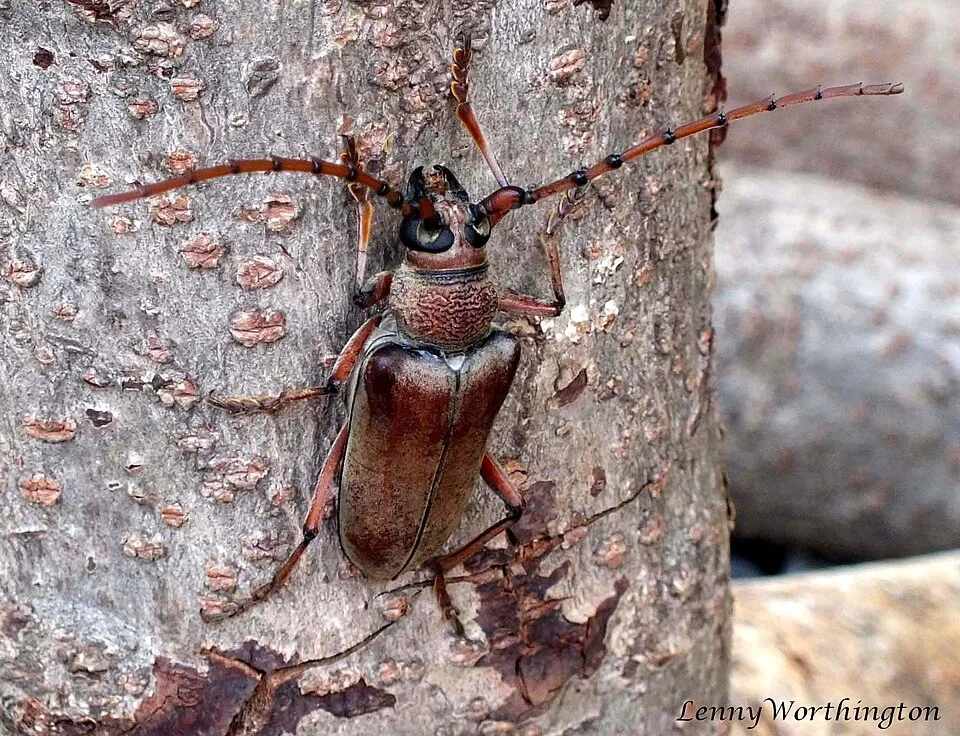
Photo: Len Worthington · CC BY-SA 2.0
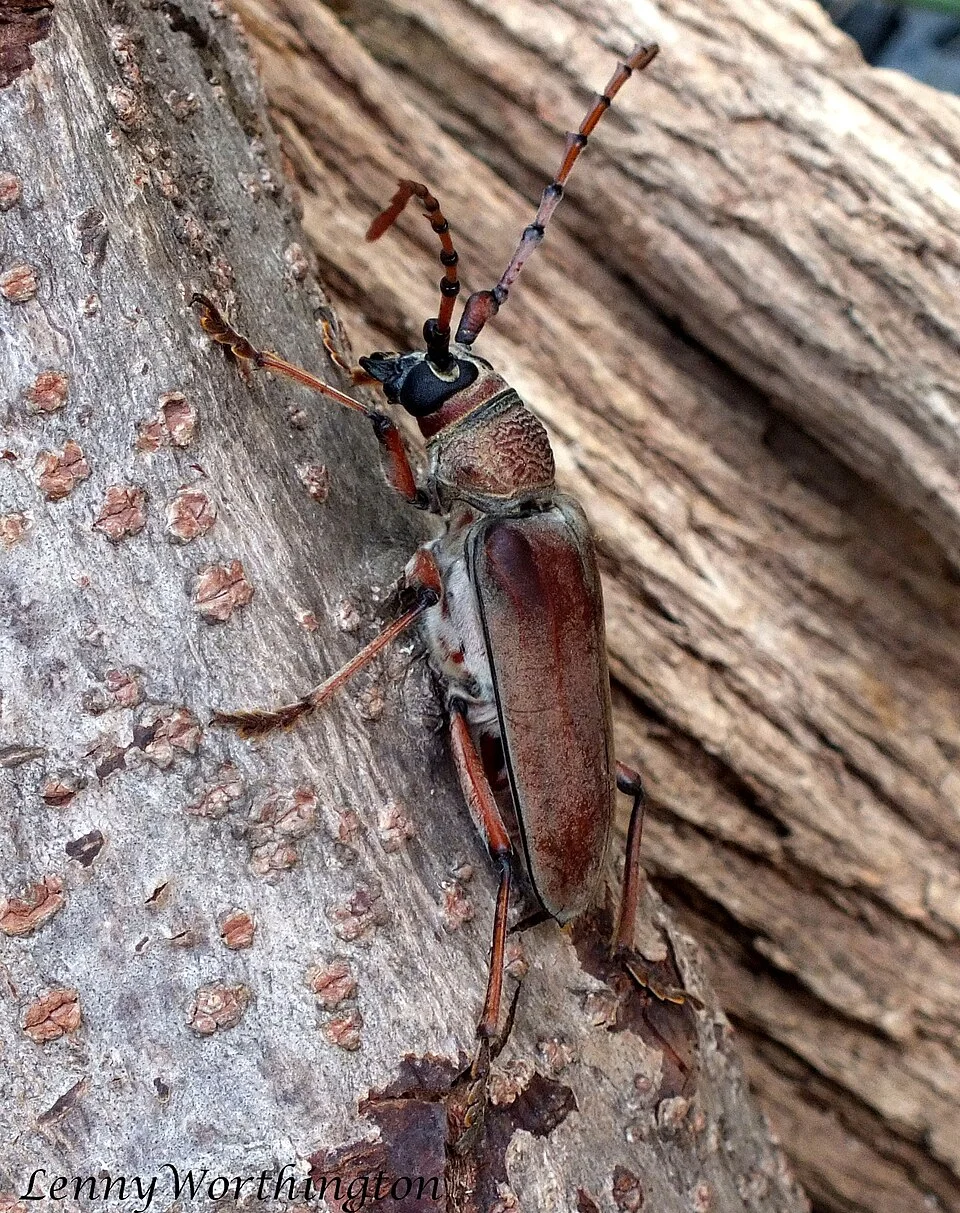
The cashew stem and root borer is the grub of a large reddish-brown longhorn beetle (Plocaederus ferrugineus). The beetle lays its eggs in bark cracks at the base of cashew trees; the grubs then tunnel into the collar (where the trunk meets the ground), the trunk base and the main roots, chewing through the living layer just under the bark that carries the tree's food and water. The damage stays hidden inside the wood until the leaves yellow and the branches die back — and a single grub can kill a full-grown, bearing tree. Stressed, neglected orchards, where dead trunks are left standing as beetle nurseries, suffer worst.
Len Worthington · CC BY-SA 2.0
Why it matters
The stem and root borer is a tree-killer, not just a leaf-nibbler. Its grubs eat hidden inside the base and roots of your cashew, ring-cutting the very pipes that carry the tree's food and water, and a single grub can kill a full-grown, bearing tree. In a bad outbreak it can take more than half your trees (up to 60%), and each tree it kills is gone for good, along with all the years of nuts it would have given. Worst of all, by the time the leaves yellow and the tree wilts the grub is deep in the wood where no spray can reach — so catching it early, at the first gum and sawdust, is your only real chance.
When to act
any tree with fresh frass, gum ooze or bore holes at the trunk base or collar
This guidance is general, compiled from published agronomic references including FAO and CABI. Thresholds and timing shift with your crop, your variety and the season.
In much of the region a spray is simply called mushonga — medicine. But a chemical group you cannot name is one you cannot rotate, and a product you did not write down has no pre-harvest interval you can observe. Mushonga, and other farming words →
The full cashew stem and root borer field guide
Identify it
The first sign is at the foot of the tree, not the leaves
Look at the collar — where the trunk meets the ground — for blobs of sticky gum (resin) oozing out and little piles of reddish-brown, sawdust-like frass (the chewed wood and droppings the grub pushes out as it tunnels). You will also see bore holes in the bark, often with frass spilling from them.
Then the top of the tree tells on it
leaves turn yellow and wilt, branches die back from the tips, and a tree that looked healthy can suddenly collapse and die — because the hidden grub has ring-barked (girdled) the trunk from the inside, cutting the tree's food-and-water pipes.
The grub itself
is a fat, creamy-white, legless maggot with a hard brown head and strong jaws, curled in a C-shape in the tunnels under the bark at the base and roots — a big one is as long and thick as your thumb. The adult is a reddish-brown longhorn beetle about 4–5 cm long (finger-length), with feelers (antennae) as long as its whole body; it comes out at night in the rains and may be found resting on trunks.
Don't confuse it
with gummosis disease, which also oozes gum but leaves no sawdust frass and no bore holes — frass plus holes always means borer. The muddy earth tubes that termites plaster on the bark are not the same as frass being pushed out of a round hole. And remember this borer works at the trunk base and roots: the tea mosquito bug and shoot borers instead damage the tender shoots, flowers and nuts up in the canopy.
Scout for it
Check your mature, bearing trees hardest — the borer hits trees in their fruiting and after-harvest (mid- to late-season) months, and steps up in the warm, wet part of the year (about 24–34°C) when the beetles fly and lay their eggs. Give stressed, neglected or drought-hit trees extra attention: they are the ones it goes for first.
Because one grub can kill a whole tree, check every tree, not just a sample. Walk the orchard row by row (or weave a big "W" if the trees are scattered) so you pass close to every trunk — corners and middle included, not just the trees along the path.
At each tree, bend down to the collar and exposed roots — brush away loose soil and leaf litter — and look for fresh gum, fresh reddish frass and bore holes. Then tap the trunk base with your knuckles or a stick: a hollow sound means the wood is already tunnelled inside.
The threshold here is one tree, not a percentage: even a single tree with fresh gum, fresh frass or a bore hole means act on that tree now. Fresh, wet gum and moist frass mean the grub is still alive and feeding; old, dry, crumbling frass with no new gum is a past attack.
Mark every affected tree
— tie a rag on it or paint the trunk — so you can treat and re-check it, and inspect the trees around any tree that died before, because a dead trunk left standing breeds the next batch of beetles.
Control it
Prevent it — keep trees strong and the orchard clean
A vigorous, well-watered, well-fed tree shrugs the borer off; a stressed, neglected one invites it. Mulch and water in dry spells and feed your trees, and never leave a dead or dying tree standing — a dead trunk is a beetle nursery. Cut out and burn dead and badly-infested trees to wipe out the breeding sites (this is your strongest, highest-success control).
Protect the trunk from wounds
The beetle lays its eggs in cracks and injuries at the base, so don't gash the trunk with hoes or machetes while weeding, and whitewash or paint the trunk base to stop the sun cracking the bark. Inspect the collar every time you pass a tree.
Act early — dig the grub out by hand
On a tree with fresh frass and holes, scrape the soil away from the base, open up the tunnels, and hook the grubs out with a stiff bent wire, then kill them. Getting the grub out while the tunnels are still shallow can save the tree.
Last resort — insecticide on the trunk
For a tree caught early, swab or drench the collar and trunk base with an insecticide, and after hooking out the grubs plug the treated bore holes (with mud or putty) to seal the poison inside and kill any grubs left in the tunnels. Treat only the trunk base — never the nuts or leaves.
Stay safe with any chemical
cover your skin, eyes, nose and mouth and wear gloves; work in the cool of the day with the wind at your back; keep children, animals and bees well away; keep it off the nuts, food and water; and wash yourself and your clothes afterwards. Respect the pre-harvest interval — the number of days on the label between the last treatment and picking, so the poison breaks down before you harvest the nuts — and if you treat again, rotate to a different insecticide group so the pest can't build up resistance.
If the tree keeps failing → cut your losses
Once the leaves are yellowing and whole branches are dying back, the grub is too deep and the tree usually cannot be saved. Cut it down and burn the trunk, stump and roots to destroy the grubs inside before they turn into beetles that attack your healthy trees — then tighten up on the rest of the orchard: keep every tree strong, clear away all dead wood, and check the collars.
Catch cashew stem and root borer before it costs you the harvest
This guide is the general answer. Divisi works out yours — the week to scout your own field for cashew stem and root borer, and what to do the day you find it.


Crops it affects
Plan the crops it attacks

All planting calendars, country by country
Get Insights by email
A short digest of new Divisi articles. No email on quiet weeks.
Frequently asked questions
How do I identify cashew stem and root borer?
The first sign is at the foot of the tree, not the leaves. Look at the collar — where the trunk meets the ground — for blobs of sticky gum (resin) oozing out and little piles of reddish-brown, sawdust-like frass (the chewed wood and droppings the grub pushes out as it tunnels). You will also see bore holes in the bark, often with frass spilling from them.
When should I take action against cashew stem and root borer?
any tree with fresh frass, gum ooze or bore holes at the trunk base or collar
How do I control cashew stem and root borer?
Prevent it — keep trees strong and the orchard clean. A vigorous, well-watered, well-fed tree shrugs the borer off; a stressed, neglected one invites it. Mulch and water in dry spells and feed your trees, and never leave a dead or dying tree standing — a dead trunk is a beetle nursery. Cut out and burn dead and badly-infested trees to wipe out the breeding sites (this is your strongest, highest-success control).
Which crops are attacked by cashew stem and root borer?
Among the crops covered here: Cashew.