 Divisi
Citrus psyllid
Trioza erytreae · Insect
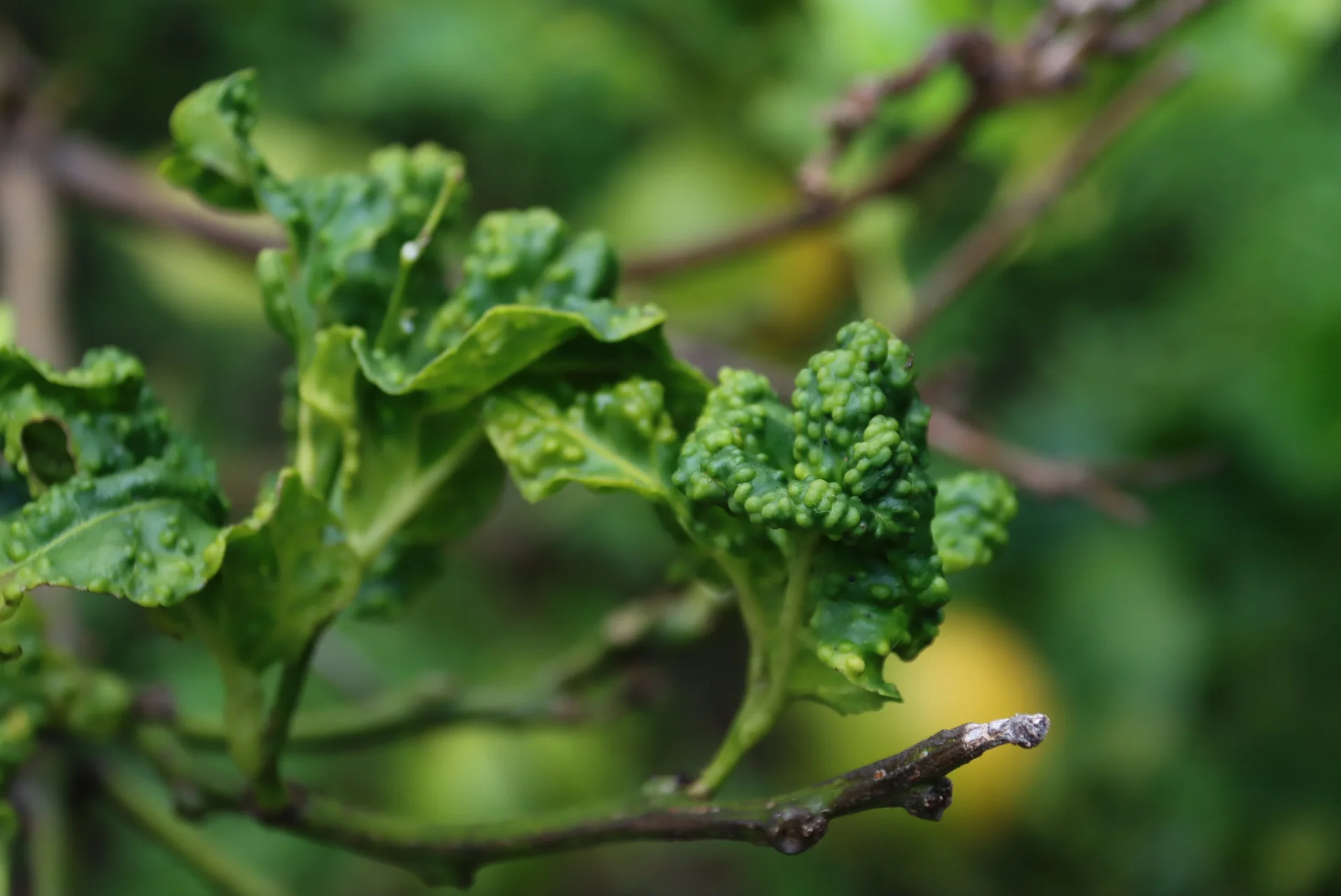
Photo: Tony Rebelo (iNaturalist) · CC BY-SA 4.0
The African citrus psyllid (Trioza erytreae) is a tiny sap-sucking insect — about the size of a grain of rice — that breeds only on the soft new leaves (the flush) of citrus: orange, lemon and lime. Its own feeding does little lasting harm; the real danger is that it is the African carrier of citrus greening (also called Huanglongbing, or HLB), an incurable bacterial disease that slowly starves and kills citrus trees. It thrives in cool, moist highland country, and wherever it meets fresh flush it can quietly turn a healthy orchard into a dying one.
Kristopher Brand (iNaturalist) · CC0 1.0 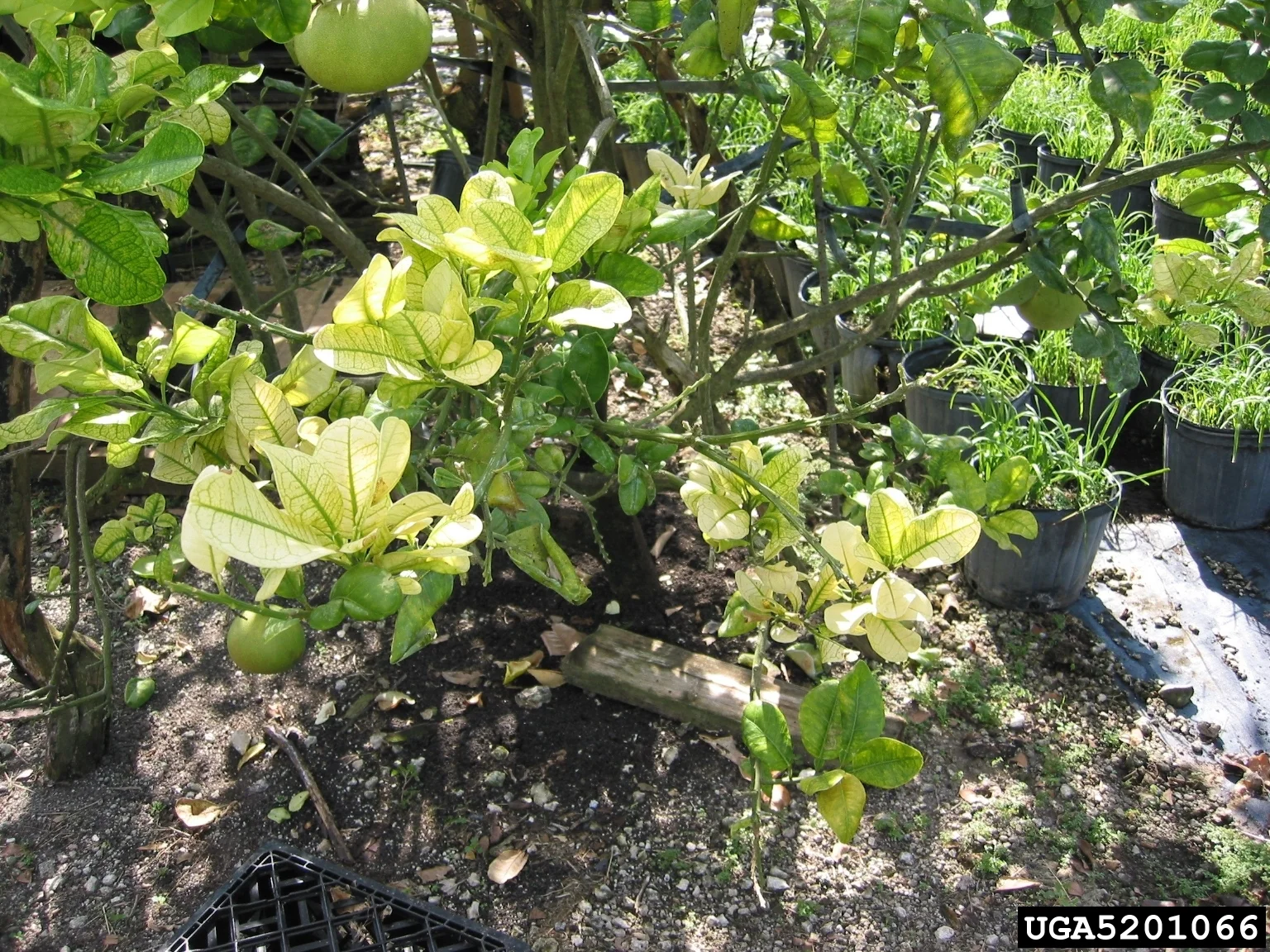
Florida Division of Plant Industry Archive, Florida Department of Agriculture and Consumer Services, Bugwood.org · CC BY 3.0 us
Why it matters
On its own, this little insect barely dents your trees. The real danger is what it carries: citrus greening, an incurable disease it passes from tree to tree the way a mosquito passes malaria. Once greening takes hold, your fruit turns small, lopsided and bitter, branches die back, and a badly hit orchard can lose up to 40% of its harvest before the trees slowly die. There is no medicine — you cannot cure a sick tree, you can only stop healthy ones from being infected — which is why catching the insect early, on the new flush (the soft young leaves), is everything.
When to act
Any psyllids or open-pit galls found on new flush warrant action because of the greening (HLB) disease risk; there is effectively zero tolerance near young trees.
This guidance is general, compiled from published agronomic references including FAO and CABI. Thresholds and timing shift with your crop, your variety and the season.
In much of the region a spray is simply called mushonga — medicine. But a chemical group you cannot name is one you cannot rotate, and a product you did not write down has no pre-harvest interval you can observe. Mushonga, and other farming words →
The full citrus psyllid field guide
Identify it
The first thing you notice
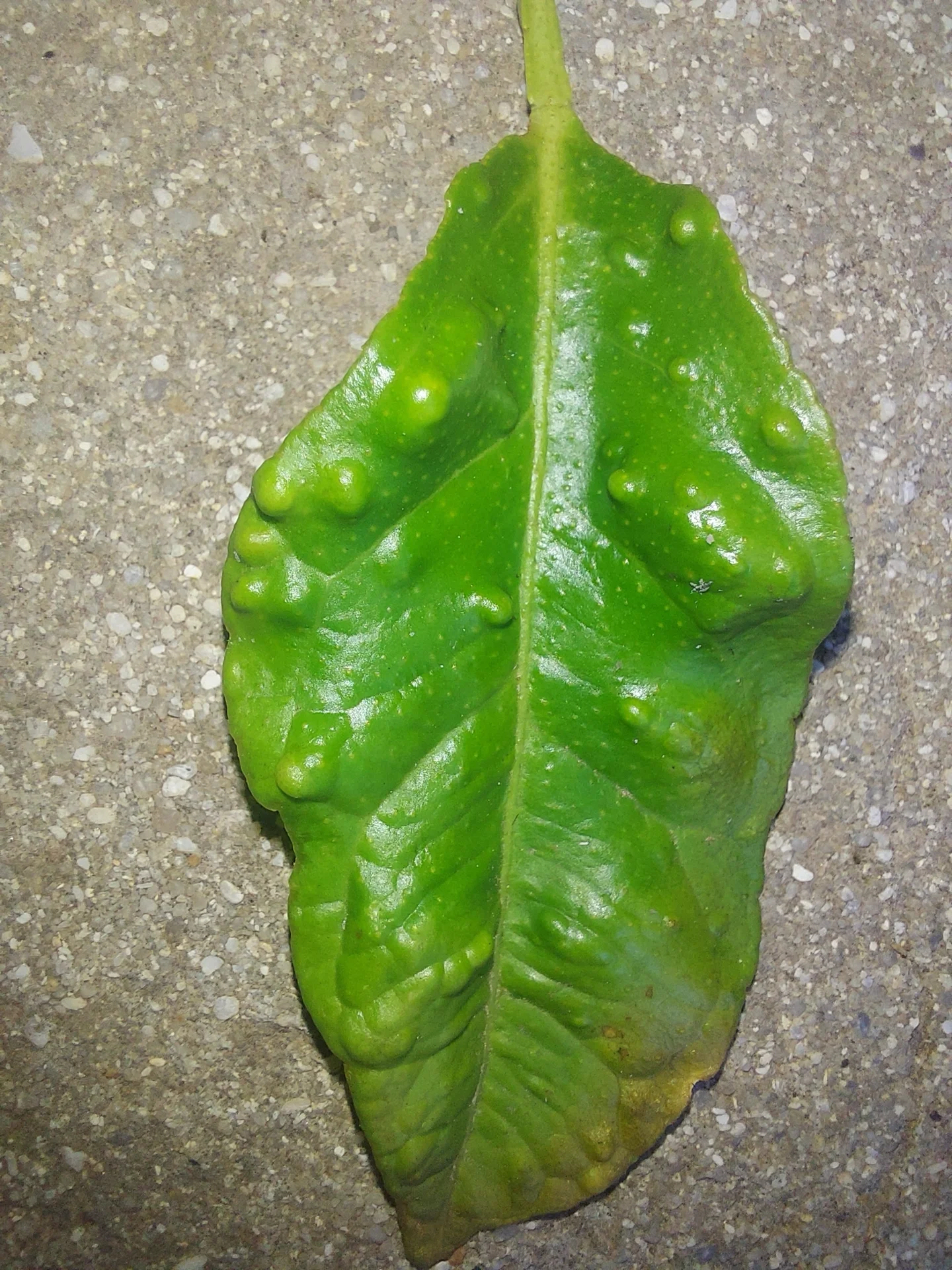
is damage on the soft new growth — the tender, pale or reddish young leaves the tree keeps pushing out (the flush). The psyllid's feeding raises little cup- or crater-shaped bumps called pit galls, so the leaf looks like it has goose-bumps or blisters with an open pit underneath; the leaves also curl, pucker and yellow. A sticky honeydew (the insect's sugary droppings) coats the leaves and later turns black with sooty mould.
The insect itself is tiny
Adults are about 4 mm long — smaller than a grain of rice, brownish and aphid-like, but they perch tail-up at an angle to the leaf and jump or fly off the instant you disturb them, like miniature cicadas. On the new leaves, look for yellow-orange eggs stood on end along the leaf edge like a tiny fringe, and flat, scale-like young ones (the nymphs) sitting dead-still in the pit galls, often trailing fine white waxy threads.
The greening disease it spreads looks different again
Leaves show a blotchy, uneven yellow mottle that does NOT match from one side of the midrib to the other, and the fruit stays small, lopsided and part-green — colouring unevenly on one side — with a bitter, off taste. Don't confuse greening's lopsided mottle with a zinc or manganese shortage, which makes a neat, matching pattern on both halves of the leaf; greening is always lopsided and random.
Don't mistake the psyllid for two common look-alikes
Aphids are soft and pear-shaped, cluster on shoot tips, don't jump and leave no galls. Whiteflies are snow-white and flutter up in a little cloud when you shake the shoot. Only the citrus psyllid jumps like a tiny cicada, and only the psyllid leaves the tell-tale cup-shaped pit galls on the flush.
Scout for it
Scout every time the trees push new flush
That soft new growth is the only thing the psyllid can breed on, so that is exactly when it arrives — check weekly while the flush is still soft. Watch young and newly-planted trees hardest — they flush again and again and are the most worth protecting — and step up your checks in cool, damp highland weather, which the psyllid loves.
Walk a big “W” or zig-zag across the block so you cover all four corners and the middle, not just the row beside the path. Stop at about 10 trees. At each tree, pick two or three new flush shoots and turn the tender young leaves over to look underneath, where the eggs and young ones hide.
On each shoot, check the four tell-tales: adults that jump when you tap the shoot, yellow eggs fringing the leaf edge, flat nymphs sitting in the pit galls, and the cup-shaped galls themselves. Hang a few yellow sticky traps in the canopy as well — the adults are drawn to yellow and stick fast, giving you the earliest warning.
Even ONE psyllid — or a single leaf with fresh pit galls — anywhere in the orchard means act now
Unlike a leaf-chewing pest you can tolerate a little of, here there is zero tolerance: one infected insect can inject incurable greening in a single feed. The rule is strictest of all right next to young trees, which flush the most and have the most life to lose.
Control it
Start clean and stay clean — this is your strongest protection
Only plant certified disease-free nursery trees; greening most often arrives hidden inside infected young stock. Then walk your orchard, and any citrus next door, for sick trees (blotchy lopsided mottle, small bitter fruit, branch dieback) and remove and burn them promptly, along with any abandoned or neglected citrus nearby — every infected tree is a well the psyllids draw greening from and carry to your healthy trees. Where you can, push your trees to flush together in one short burst rather than a trickle all year, so the psyllid gets a smaller window to breed.
Do it together with your neighbours
The psyllid flies from farm to farm, so clean stock and infected-tree removal only hold if the whole area acts at once — one neglected, greening-sick tree down the road can re-infect everyone's orchard.
Protect the natural enemies that work for free
Tiny parasitoid wasps (such as Tamarixia) — harmless to you and your trees — lay their eggs inside the psyllid nymphs and kill them from within, and ladybirds, lacewings and hoverflies eat them too. Avoid blanket poison sprays that wipe out these helpers along with the pest and leave you worse off. Keep those yellow sticky traps up as well — they both warn you early and catch adults before they breed.
Only if psyllids keep turning up on the flush
, reach for a systemic insecticide — “systemic” means the plant draws the chemical up into its own sap, so the sap-sucking psyllid is poisoned from the inside as it feeds. Aim it at the new flush and the young trees, where it matters most. Stay safe every single time: cover your skin, eyes, nose and mouth, spray in the cool of the day with the wind at your back, keep it off any fruit you will eat, off open water, and away from children and bees, respect the pre-harvest interval (the required wait between spraying and picking the fruit), and wash yourself and your clothes afterwards. To stop the psyllid becoming immune, rotate to a different chemical group each time instead of using the same one over and over — that build-up of immunity is what “resistance” means.
If greening is already inside a tree, there is no cure
Don't waste money nursing it — remove and burn the infected tree quickly so it stops feeding the disease to the rest of the orchard, guard your remaining and young trees with clean stock and steady psyllid control, and replant the gap with certified healthy trees. When many trees are far gone, cut your losses on those and rebuild from clean stock — saving the orchard matters far more than saving one dying tree.
Catch citrus psyllid before it costs you the harvest
This guide is the general answer. Divisi works out yours — the week to scout your own field for citrus psyllid, and what to do the day you find it.


Crops it affects
Plan the crops it attacks


All planting calendars, country by country
Get Insights by email
A short digest of new Divisi articles. No email on quiet weeks.
Frequently asked questions
How do I identify citrus psyllid?
The first thing you notice. is damage on the soft new growth — the tender, pale or reddish young leaves the tree keeps pushing out (the flush). The psyllid's feeding raises little cup- or crater-shaped bumps called pit galls, so the leaf looks like it has goose-bumps or blisters with an open pit underneath; the leaves also curl, pucker and yellow. A sticky honeydew (the insect's sugary droppings) coats the leaves and later turns black with sooty mould.
When should I take action against citrus psyllid?
Any psyllids or open-pit galls found on new flush warrant action because of the greening (HLB) disease risk; there is effectively zero tolerance near young trees.
How do I control citrus psyllid?
Start clean and stay clean — this is your strongest protection. Only plant certified disease-free nursery trees; greening most often arrives hidden inside infected young stock. Then walk your orchard, and any citrus next door, for sick trees (blotchy lopsided mottle, small bitter fruit, branch dieback) and remove and burn them promptly, along with any abandoned or neglected citrus nearby — every infected tree is a well the psyllids draw greening from and carry to your healthy trees. Where you can, push your trees to flush together in one short burst rather than a trickle all year, so the psyllid gets a smaller window to breed.
Which crops are attacked by citrus psyllid?
Among the crops covered here: Lemon, Lime.