 Divisi
Enset root mealybug
Cataenococcus ensete · Insect
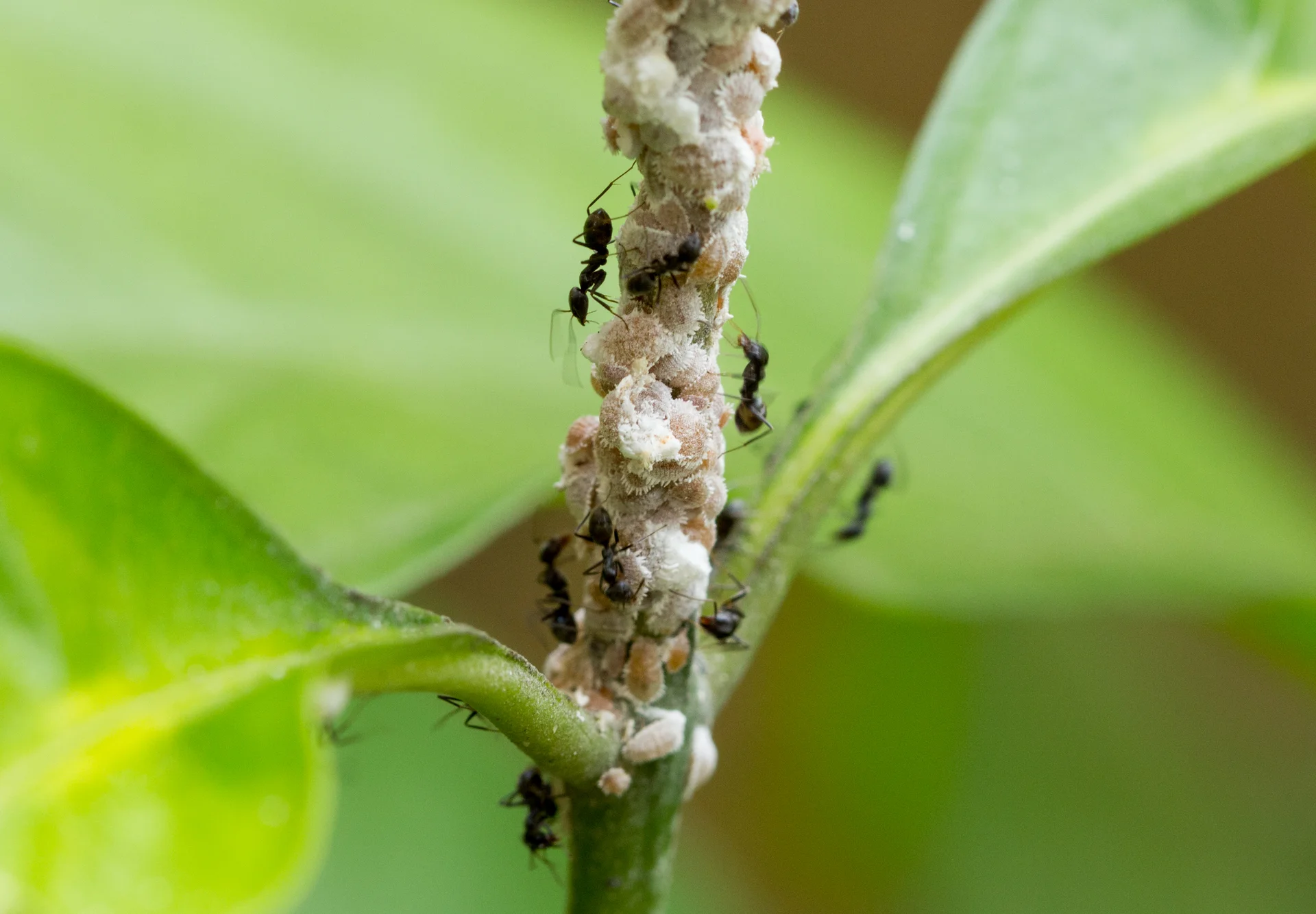
Photo: Crisco 1492, via Wikimedia Commons · CC BY-SA 3.0
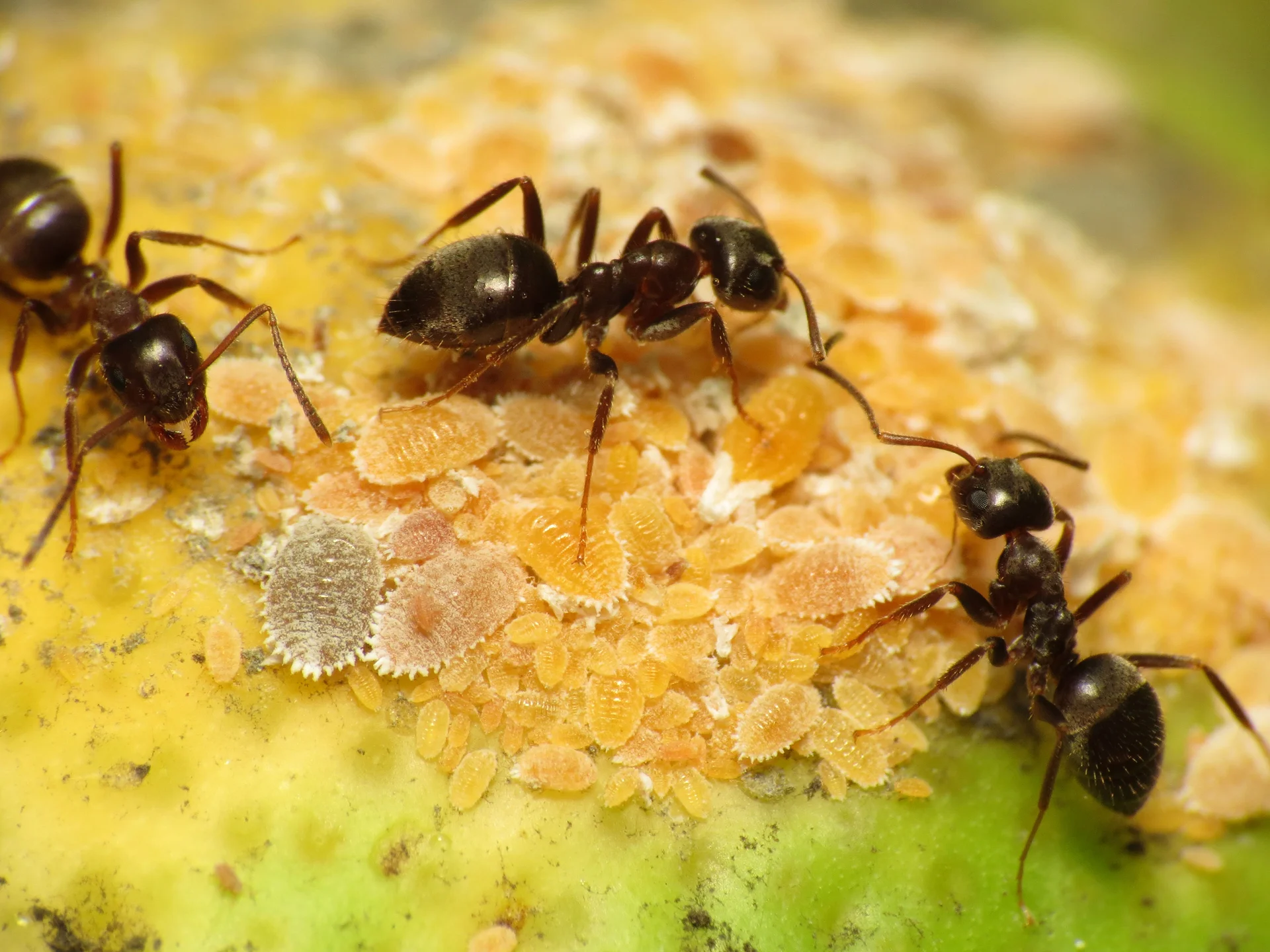
The enset root mealybug (Cataenococcus ensete) is a small, soft, sap-sucking insect that lives underground on the roots and corm base of enset (false banana) and banana. Its colonies coat the roots in a tell-tale white, waxy powder, like flour or mould. It spreads mainly on infested suckers and corms carried between gardens, and is tended and moved root-to-root by ants that feed on its sugary waste. By draining sap from the roots it slowly starves the plant, so growth stalls and the corm and pseudostem you harvest stay small.
Katja Schulz, via Wikimedia Commons · CC BY 2.0
Why it matters
The enset root mealybug hides underground on the roots and corm — the very part you grow enset to harvest and eat — so it does its damage where you cannot see it. A bad infestation can cost you up to half your crop (50%), leaving plants pale, wilting and stunted with small, poor corms. It is hard to beat because it travels hidden on the suckers you plant and is carried root-to-root by ants, so by the time a plant looks sick the colony is already large. And because enset stands in the same ground for years, once the pest is in your soil and planting material it is very hard to drive out — which is why clean suckers matter more than any spray.
When to act
Inspect suckers and roots at transplanting and rogue infested planting material; act when white waxy colonies are found on roots or corm base.
This guidance is general, compiled from published agronomic references including FAO and CABI. Thresholds and timing shift with your crop, your variety and the season.
In much of the region a spray is simply called mushonga — medicine. But a chemical group you cannot name is one you cannot rotate, and a product you did not write down has no pre-harvest interval you can observe. Mushonga, and other farming words →
The full enset root mealybug field guide
Identify it
The first sign (above ground)
scattered plants lose their deep green and turn pale and yellow, the leaves wilt and droop even when the soil isn't bone-dry, and growth slows and stunts. The plant loses its vigour and the corm stays small — and the trouble shows worst in the dry season. A sick plant looks like it is slowly starving.
The pest itself (below ground)
scrape the soil away from the corm base and the top roots and look for white, waxy, powdery colonies — as if the roots have been dusted with flour or ash, or wrapped in white cotton or mould. The insects under the wax are tiny, soft and oval, the size of a rice grain or smaller, whitish to pink, slow-moving and wingless. You will often see ants running to and from the colonies.
Don't confuse it
with plain drought or hungry (poor) soil, which yellow and wilt plants too — but those hit the whole patch evenly and leave the roots clean. Root mealybug hits scattered plants and always shows the white powder and ants on the roots. Root-knot nematodes make knots and swellings on the roots but no white powder; and root mould is fine, still threads, while mealybugs are insects in white wax that move, usually with ants around them.
Scout for it
When to look
check at the two moments that matter most — every time you lift or plant a sucker (at transplanting), and whenever a standing plant starts to yellow, wilt or stunt through its long growing and maturing years. The pest builds up most in the dry season and on drier soils, so scout harder then.
How to walk the patch
walk a big "W" across your enset so you cover all four corners and the middle, not just the plants beside the path. Make about 10 stops, and choose the sickest-looking (yellow or stunted) plants to check first.
What to check at each stop
with a stick or hand hoe, scrape the soil from the corm base and top roots and look for the white waxy colonies and for ant trails running down to the base. To check a sucker, peel back the outer sheath and look at its base and root buds.
When to act — go by the sign, not a big count:
this pest spreads so easily that even ONE plant or ONE sucker with white waxy colonies means act now — don't wait for many. Never plant a sucker that carries any white powdery colonies, and mark every infested standing plant so you can pull it out.
Control it
Prevent it first — clean planting material is your strongest tool:
plant only clean, inspected suckers taken from healthy gardens with no history of this pest. Never carry suckers or soil from a sick garden to clean ground — moving infested planting material is the main way the mealybug travels.
Treat suckers and corms before planting
pare (trim away) the outer layers and old roots from the corm, then dip or hot-water-treat the cleaned suckers and corms to kill any mealybugs hiding on them before they go in the ground. Follow your local extension officer's guidance for the safe hot-water method.
Act early — rogue, break the ants, rest the land:
rogue (dig out and destroy) heavily infested plants — burn or bury them far away, corm and roots and all, so they can't reinfest. Because ants protect and carry the mealybug (they feed on its sugary waste, called honeydew), break up their nests and trails around the corm base. On badly infested ground, fallow (rest the land with no enset) or rotate to another crop for a season or more to starve the pest out.
Chemical — only as a last resort, where infestation is severe:
you can dip suckers or drench the corm base with an approved systemic insecticide — systemic means the plant draws the product up inside its own sap, so it can reach the mealybugs feeding hidden on the roots (a plain surface spray cannot). Safety: wear gloves and cover your skin, eyes, nose and mouth; keep the product and the treated material away from food, drinking water, children, animals and bees; wash your hands and clothes afterwards; and follow the label dose and the pre-harvest interval (the number of days you must wait between treating and harvesting so the chemical has faded). To slow resistance (the pest slowly stops dying to a poison used again and again), rotate to a different chemical group each time instead of using the same one.
If it keeps spreading — cut your losses cleanly:
stop taking any suckers from that garden, and start your next planting on clean, rested land with clean, treated suckers from a healthy garden. When a plant is too far gone — badly stunted and mostly dead — dig it out completely and destroy it rather than leaving it as a source, and don't move its soil or suckers to healthy ground. Rebuilding from clean material on clean land beats fighting a pest already deep in the soil.
Catch enset root mealybug before it costs you the harvest
This guide is the general answer. Divisi works out yours — the week to scout your own field for enset root mealybug, and what to do the day you find it.


Crops it affects
Plan the crops it attacks

All planting calendars, country by country
Get Insights by email
A short digest of new Divisi articles. No email on quiet weeks.
Frequently asked questions
How do I identify enset root mealybug?
The first sign (above ground). scattered plants lose their deep green and turn pale and yellow, the leaves wilt and droop even when the soil isn't bone-dry, and growth slows and stunts. The plant loses its vigour and the corm stays small — and the trouble shows worst in the dry season. A sick plant looks like it is slowly starving.
When should I take action against enset root mealybug?
Inspect suckers and roots at transplanting and rogue infested planting material; act when white waxy colonies are found on roots or corm base.
How do I control enset root mealybug?
Prevent it first — clean planting material is your strongest tool:. plant only clean, inspected suckers taken from healthy gardens with no history of this pest. Never carry suckers or soil from a sick garden to clean ground — moving infested planting material is the main way the mealybug travels.
Which crops are attacked by enset root mealybug?
Among the crops covered here: Enset.