 Divisi
Golden apple snail
Pomacea canaliculata · Mollusk
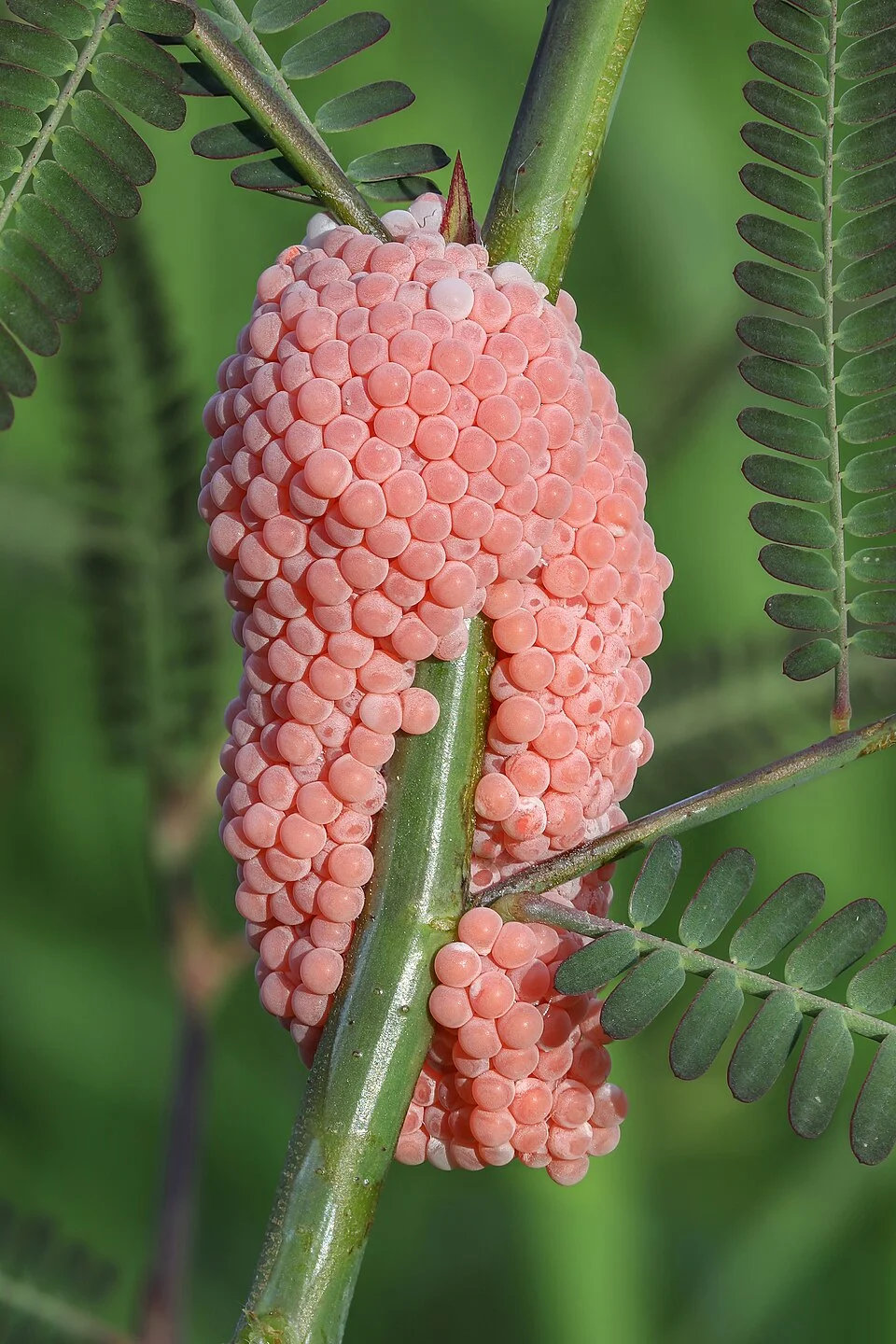
Photo: Basile Morin · CC BY-SA 4.0
The golden apple snail (Pomacea canaliculata) is a large, round, golden-brown water snail and one of the most destructive pests of paddy rice. It feeds at night, rasping young rice seedlings off at the base and pulling them under the water, and breeds explosively in warm standing water — laying unmistakable bright pink egg masses just above the waterline. Because it can survive the dry season buried in the mud, once it is in a paddy it comes back year after year, which is why keeping the water shallow and catching it early matter so much.
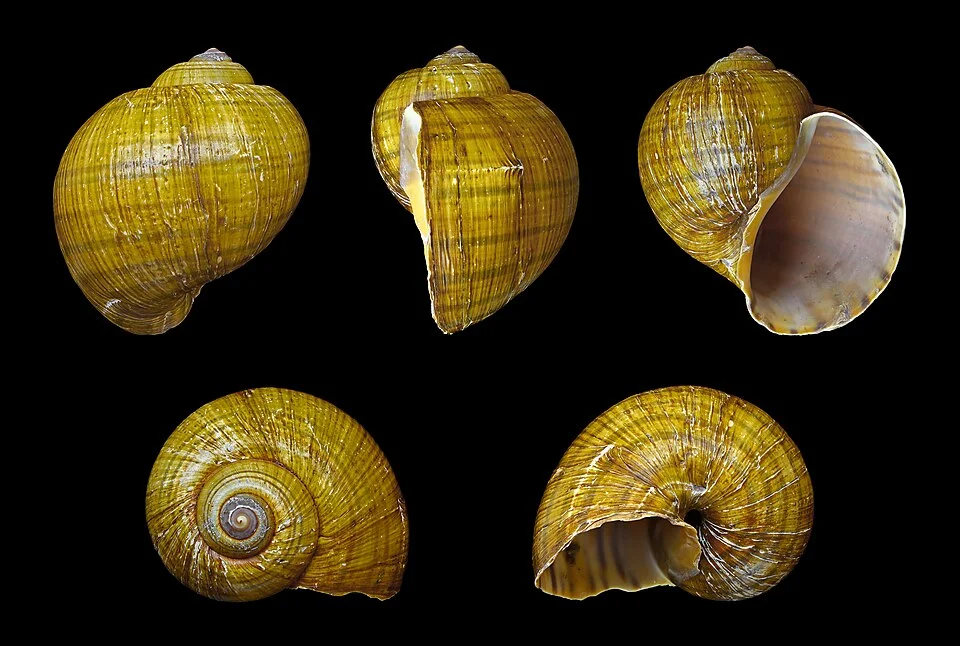
H. Zell · CC BY-SA 3.0 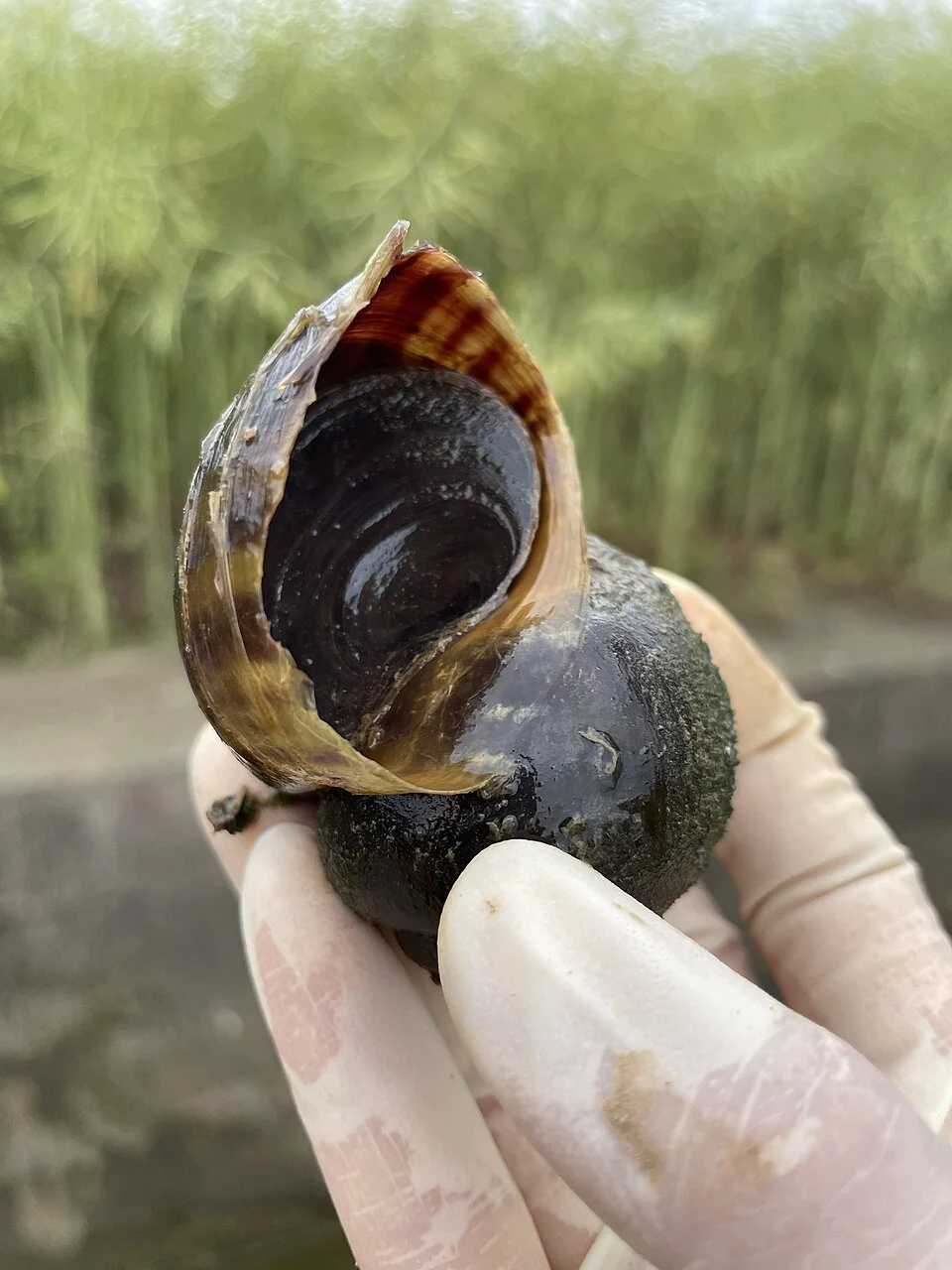
FlyingBatt · CC BY-SA 4.0
Why it matters
The golden apple snail eats your rice while you sleep, cutting the young seedlings off at the base and leaving bare gaps in the paddy. In a newly planted field a bad attack can take up to half your crop (50%). It is hard to be rid of because it breeds fast in warm standing water and survives the dry season buried in the mud, so it returns season after season — which is why keeping the water shallow and catching it early, in the first weeks after planting, is everything.
When to act
in transplanted rice, about 1 or more snails per square metre, or the first missing hills in newly established paddies
This guidance is general, compiled from published agronomic references including FAO and CABI. Thresholds and timing shift with your crop, your variety and the season.
In much of the region a spray is simply called mushonga — medicine. But a chemical group you cannot name is one you cannot rotate, and a product you did not write down has no pre-harvest interval you can observe. Mushonga, and other farming words →
The full golden apple snail field guide
Identify it
The damage
in a newly planted paddy you find young rice cut off at the base and floating, with bare gaps and missing hills (the planted clumps of seedlings), so the stand looks patchy and thin. The snails feed at night, so the cut seedlings appear overnight.
The bright pink eggs — the surest sign:
look for clusters of bright pink to red eggs, like a clump of tiny pink pearls or raspberry grains, stuck just above the water on rice stems, weeds, sticks and the bunds (the raised earth walls around the paddy). No other paddy pest lays pink eggs above the water — this alone tells you it is golden apple snail.
The snail itself
a big, round snail with a golden-brown to olive shell, anywhere from grape-size to as big as a golf ball or small apple, the soft body often grey-to-orange. Find them in the water and on the mud at dusk and dawn, gathered in the low wet spots and near the water inlets.
Don't confuse it
with harmless native snails — those are usually smaller, and their eggs are white or jelly-like and laid under the water, never bright pink above it. Crabs and rats also cut seedlings, but they leave burrows in the bunds, not pink eggs and empty shells lying in the water.
Scout for it
Start the day you plant
The danger window is the first 2 to 4 weeks after transplanting or seeding — from establishment through early tillering (the young growth stages), while the rice is short and soft enough for a snail to cut. Check every day or two, best in the early morning or at dusk when the snails are up and moving in the cool.
Walk the bunds all the way round, then wade a big "W" across the paddy so you cover the middle and all four corners, not just the edge by the path. Look hardest in the deep low spots and around the water inlets, where snails collect.
At about 10 stops, mark out one square metre (about one big step each way) and count the snails you can see in the water and on the mud; at the same time scan the stems, weeds and bunds above the water for pink egg clusters, and check the seedlings for fresh cuts.
Act as soon as you find 1 or more snails in a square metre
, or the moment you spot the first missing hills in a young paddy. In tender new rice even a few snails do fast damage — don't wait for the numbers to build.
Control it
Prevent it
-
take away their deep water:
for the first 2 to 3 weeks after planting, drain the paddy and keep the water below 2 cm (about a finger deep). Snails need deeper water to swim and feed; in a shallow film they are stranded and can barely move to reach your seedlings. This is your single strongest tool — here, keeping the water low beats any spray.
-
plant tough and shut the gate:
transplant older, sturdier seedlings (about 25 to 30 days old) with stems too tough to cut easily, rather than tender direct-seeded rice. Screen every water inlet with fine mesh or a bamboo/wire screen so snails cannot float in from the canals, and level the field so there are no deep pools where water and snails collect. Dig a few shallow collection channels across the paddy — when you drain, the snails slide into them where you can scoop them out.
Act early — pick them and smash the eggs:
every morning handpick the snails (concentrate on the channels, low spots and inlets) and crush them. Scrape the pink egg clusters into the water or crush them — eggs knocked under water cannot hatch — before they become hundreds of new snails. Lay papaya, cassava or banana leaves on the mud in the evening as bait: snails gather on them overnight, so you collect a heap at dawn. Push a few sticks into the paddy to give the snails one place to lay their pink eggs where you can find and destroy them. Once the rice is 10 to 14 days established and strong, herd ducks through the paddy — they love to eat the small snails.
Chemical — only as a last resort:
if snails stay at or above 1 per square metre despite draining and picking, use a registered molluscicide — a snail-killing product approved for rice; where you can, start with a gentler plant-based type such as tea-seed cake (a natural saponin) before reaching for a harsh chemical one. Apply it in shallow water so the dose stays concentrated where the snails are, and spot-treat only the wet low patches and inlets where they gather, not the whole field. Molluscicides kill fish and other water life — keep them out of fish ponds, streams and drinking water, and never use one in a rice-and-fish paddy. Cover your skin, eyes, nose and mouth, apply in the cool of the day with the wind behind you, keep children, animals and bees well away, wash yourself and your tools afterwards, and respect the pre-harvest interval (the number of days the label says to wait between treating and harvesting). If you must treat more than once, rotate to a different molluscicide so the snails don't build resistance (stop being killed by it).
If it keeps spreading
when a young paddy is badly hit and the hills are gone, don't lose the stand — replant the bare gaps with older seedlings straight away while keeping the water shallow; young rice recovers well if you gap-fill fast. And because these snails survive the dry season buried in the mud and return every year, clean up after harvest: collect the snails, crush the pink eggs, then drain, dry and plough the field, and screen your inlets again next season — that is how you stop them coming back.
Catch golden apple snail before it costs you the harvest
This guide is the general answer. Divisi works out yours — the week to scout your own field for golden apple snail, and what to do the day you find it.


Crops it affects
Plan the crops it attacks

All planting calendars, country by country
Get Insights by email
A short digest of new Divisi articles. No email on quiet weeks.
Frequently asked questions
How do I identify golden apple snail?
The damage. in a newly planted paddy you find young rice cut off at the base and floating, with bare gaps and missing hills (the planted clumps of seedlings), so the stand looks patchy and thin. The snails feed at night, so the cut seedlings appear overnight.
When should I take action against golden apple snail?
in transplanted rice, about 1 or more snails per square metre, or the first missing hills in newly established paddies
How do I control golden apple snail?
Prevent it — take away their deep water:. for the first 2 to 3 weeks after planting, drain the paddy and keep the water below 2 cm (about a finger deep). Snails need deeper water to swim and feed; in a shallow film they are stranded and can barely move to reach your seedlings. This is your single strongest tool — here, keeping the water low beats any spray.
Which crops are attacked by golden apple snail?
Among the crops covered here: Rice.