 Divisi
Jute semilooper
Anomis sabulifera · Insect
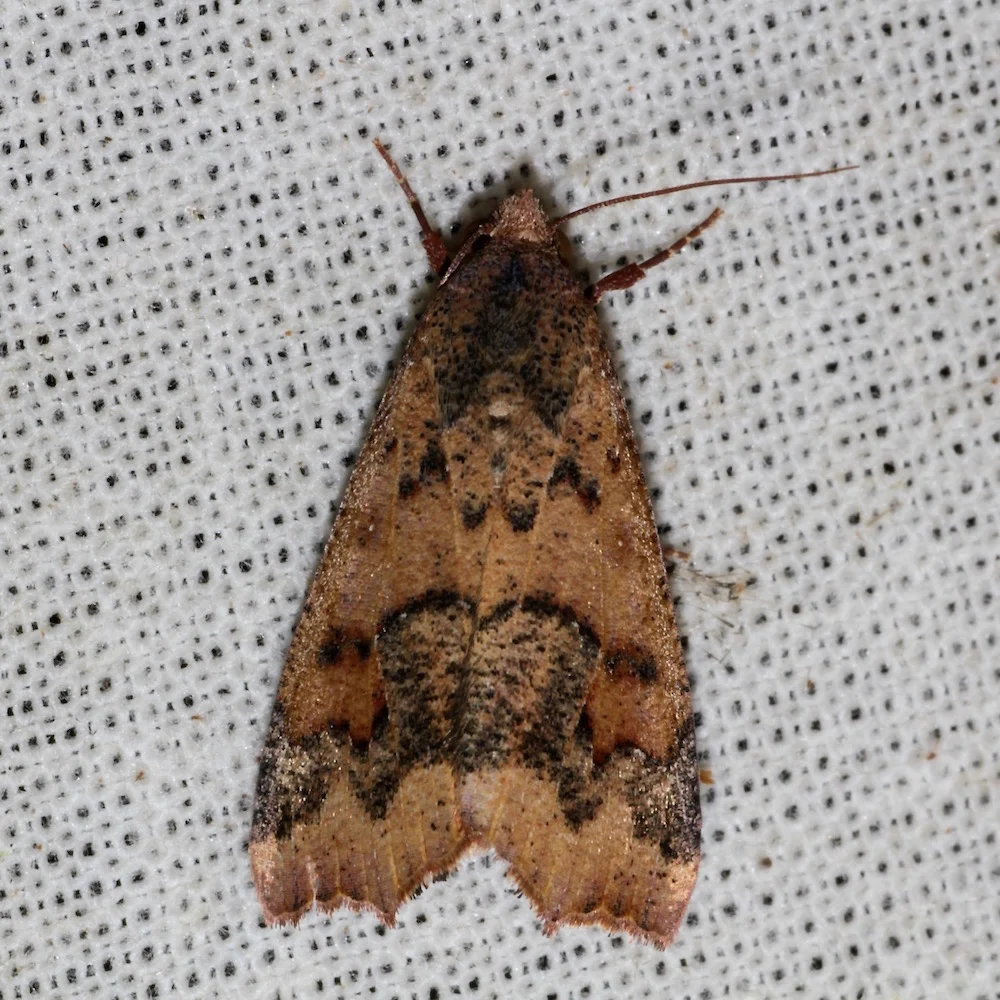
Photo: Alexey Yakovlev · CC BY-SA 4.0
The jute semilooper is the caterpillar (the young, worm stage) of a small straw-coloured moth, and it is the main leaf-eating pest of jute. The green caterpillars chew the leaves and, worst of all, bite off the soft growing tip at the top of the plant. Because jute is grown for the long fibre in its single main stem, losing that tip makes the plant split into side branches and ruins both the amount and the grade of fibre. It flares up in warm, humid weather and can strip whole plants bare.
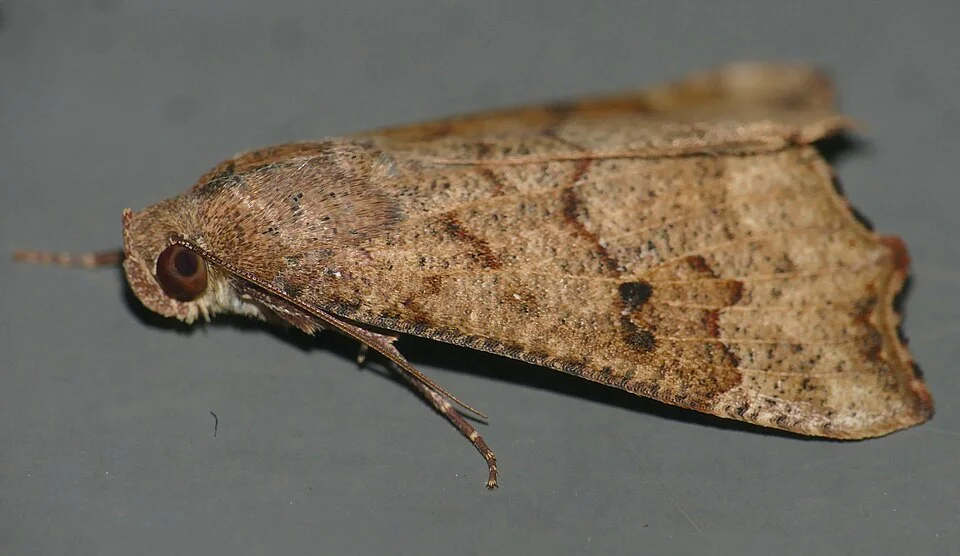
Bernard DUPONT from FRANCE · CC BY-SA 2.0 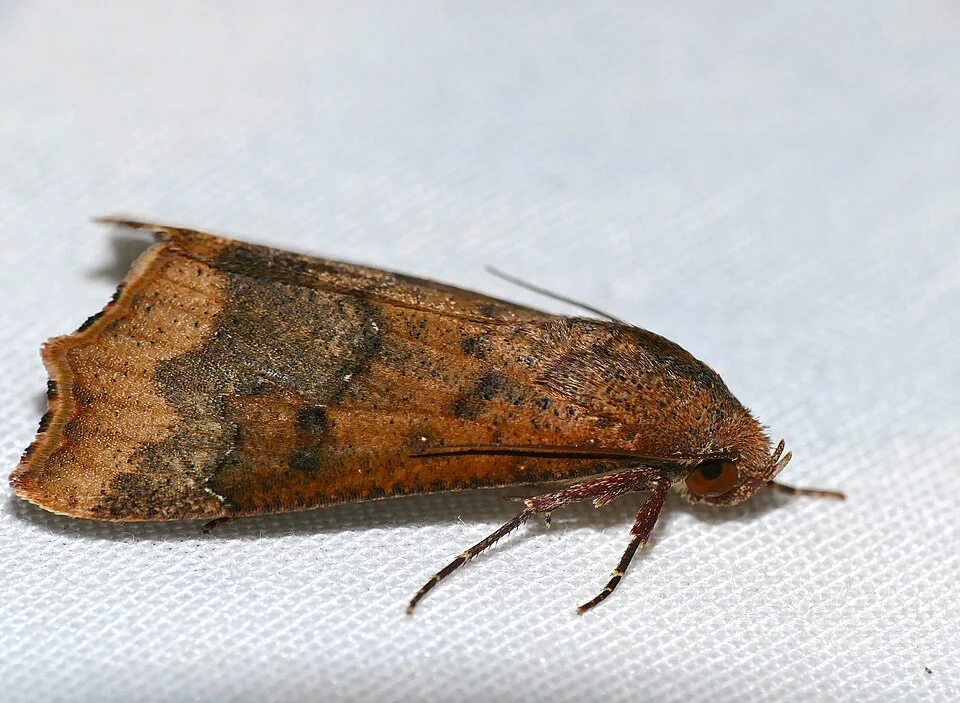
Bernard DUPONT from FRANCE · CC BY-SA 2.0
Why it matters
The jute semilooper is the worst leaf-eater of jute, and in a bad attack it can take up to 40% of your fibre. The real damage comes when it bites off the soft growing tip at the top of the plant: once that tip is gone the plant splits into side branches, and your fibre comes out short, knotty and low-grade instead of one long, clean strand. That harm to the fibre cannot be undone, and in warm, muggy weather the caterpillars multiply fast — so the whole job is stopping them before they reach the tips.
When to act
Around 2 to 3 caterpillars per plant or noticeable defoliation and biting of the top growing shoots on young to mid-stage jute.
This guidance is general, compiled from published agronomic references including FAO and CABI. Thresholds and timing shift with your crop, your variety and the season.
In much of the region a spray is simply called mushonga — medicine. But a chemical group you cannot name is one you cannot rotate, and a product you did not write down has no pre-harvest interval you can observe. Mushonga, and other farming words →
The full jute semilooper field guide
Identify it
The damage (what you see first)
ragged, chewed holes and torn edges on the young upper leaves. As numbers build the leaves get skeletonised — eaten away until only the veins are left — and whole plants can be stripped bare. The most costly sign is right at the top: the soft growing tip is bitten off and dies, and the plant answers by throwing out side branches instead of one tall, straight stem.
The caterpillar
a smooth grass-green caterpillar, the same colour as the leaf, so you must look closely — up to about 4 cm long (roughly the length of your finger), with faint pale lines running down its back. It gives itself away by the way it moves: it arches the middle of its body into a loop, then reaches forward, as if measuring the leaf — this looping walk is why it is called a semilooper (a looping caterpillar). Look for them on the top leaves and around the growing tips, feeding most in the cool of morning and evening.
Don't confuse it
with the jute hairy caterpillar, which is brown, covered in hairs, crawls flat (no looping) and feeds in crowds on the undersides of the lower leaves. Your semilooper is smooth, green, moves alone, and loops as it walks — and it is the one that goes for the growing tips at the top.
Scout for it
When to look
start checking once the crop is growing tall and leafy (from about a month after sowing) and keep it up right through mid-season, while the plant is building the long stem you harvest for fibre — this is exactly when the tender tips are most at risk. Check more often in warm, muggy weather after rain, because humid heat is when the caterpillars multiply fastest.
How to walk the field
cross it in a big "W" shape so you cover the four corners and the middle, not just the row next to the path. Make about 10 stops along the way.
What to check at each stop
look over the top leaves and the growing tip of a few plants, and turn some leaves to check underneath — you are hunting green looping caterpillars, fresh chewed holes, and any biting or wilting of the tender top shoot.
When to act — the count:
act now if you find about 2 to 3 caterpillars on a plant, or if you can already see the growing tips being bitten and the leaves noticeably stripped. Don't wait past that — tip damage is what costs you fibre length and grade.
Control it
Prevent it first (cultural)
sow at the recommended time and spacing so the whole crop grows fast and evenly and passes the tender young stage quickly, and keep the field weed-free. Weeds and odd late-sown plants give the moths a steady supply of soft leaves to feed and lay eggs on, which keeps the pest going from one patch to the next.
Act early — handpick and protect your helpers:
while numbers are still low, handpick the green caterpillars in the cool of the morning and drop them in soapy water — it costs nothing and works well in a small plot. And leave your natural helpers — birds, ants, and the tiny wasps that lay their eggs inside the caterpillars — to do their work by not spraying broad poisons early; they hold the pest down for free.
Biological spray — Bt (reach for this first):
at threshold, while the caterpillars are still small, spray Bt (Bacillus thuringiensis, a natural germ that sickens only caterpillars and harms nothing else). Wet the top leaves and growing tips well, and spray in the cool of the day. It is safe for you, your family, bees and your natural helpers, so it is the first spray to try before any poison.
Chemical — only as a last resort:
if the caterpillars keep building past threshold, use a registered insecticide (a shop-bought chemical spray cleared for use on the crop), aimed at the small caterpillars on the upper leaves. Protect yourself: cover your skin, eyes, nose and mouth, spray in the cool of the day with the wind behind you, and keep it off people, food, drinking water, children and bees. Wash yourself and your clothes straight afterwards. Because jute is cut for fibre, respect the pre-harvest interval — the set number of days you must wait between your last spray and cutting the crop. And rotate to a different chemical group each time, so the pest doesn't build resistance (stop being killed by that chemical).
If it keeps spreading — or it's already too late:
if the growing tips are already widely bitten and the plants have branched, no spray will bring the fibre length back — accept the lower grade on that patch and spot-treat only the worst hotspots to save the rest. If the crop is close to fibre maturity, it is better to harvest early than to keep fighting. After harvest, clear away and destroy the crop trash, so hiding caterpillars and pupae don't carry the problem over into your next jute crop.
Catch jute semilooper before it costs you the harvest
This guide is the general answer. Divisi works out yours — the week to scout your own field for jute semilooper, and what to do the day you find it.


Crops it affects
Plan the crops it attacks

All planting calendars, country by country
Get Insights by email
A short digest of new Divisi articles. No email on quiet weeks.
Frequently asked questions
How do I identify jute semilooper?
The damage (what you see first). ragged, chewed holes and torn edges on the young upper leaves. As numbers build the leaves get skeletonised — eaten away until only the veins are left — and whole plants can be stripped bare. The most costly sign is right at the top: the soft growing tip is bitten off and dies, and the plant answers by throwing out side branches instead of one tall, straight stem.
When should I take action against jute semilooper?
Around 2 to 3 caterpillars per plant or noticeable defoliation and biting of the top growing shoots on young to mid-stage jute.
How do I control jute semilooper?
Prevent it first (cultural). sow at the recommended time and spacing so the whole crop grows fast and evenly and passes the tender young stage quickly, and keep the field weed-free. Weeds and odd late-sown plants give the moths a steady supply of soft leaves to feed and lay eggs on, which keeps the pest going from one patch to the next.
Which crops are attacked by jute semilooper?
Among the crops covered here: Jute mallow.