 Divisi
Mango seed weevil
Sternochetus mangiferae · Insect
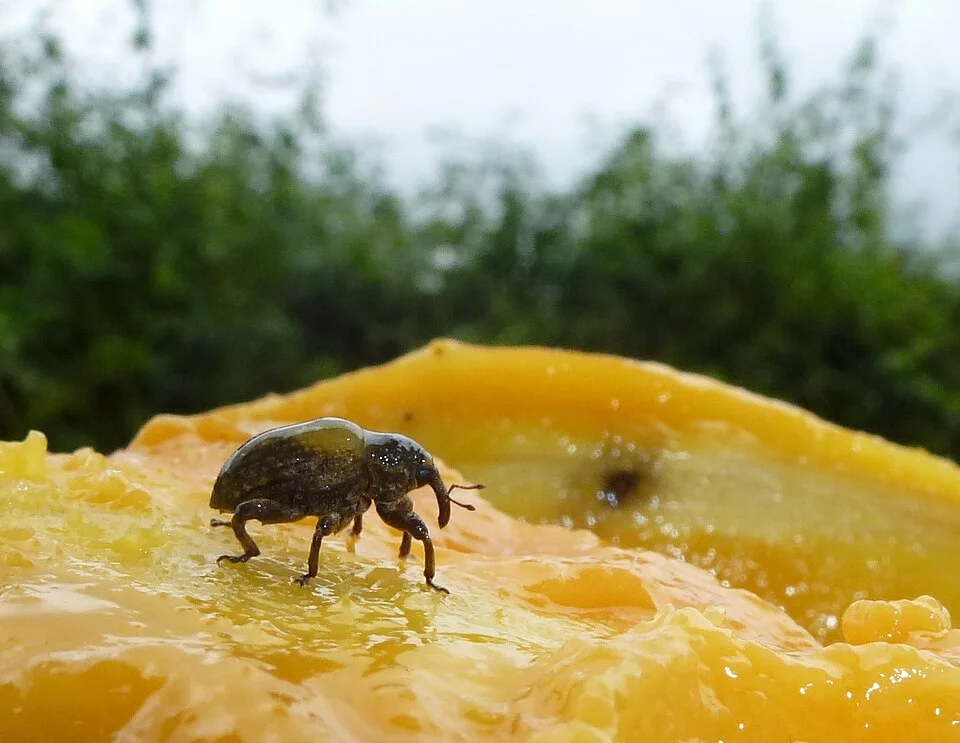
Photo: PJeganathan · CC BY-SA 3.0
The mango seed weevil (Sternochetus mangiferae) is a small, dark, snouted beetle — a weevil is simply a beetle with a long snout — that attacks mango and nothing else. It spends most of the year hidden in bark cracks and leaf litter, then comes out when the tree fruits to feed on the tender new leaf flush and lay its eggs on the young fruit. The grub that hatches tunnels through the flesh and buries itself in the hard stone, where it feeds, grows up and shelters — sealed inside the seed — until the next season. Because it lives hidden inside the fruit, you almost never see it until you cut a fruit open.
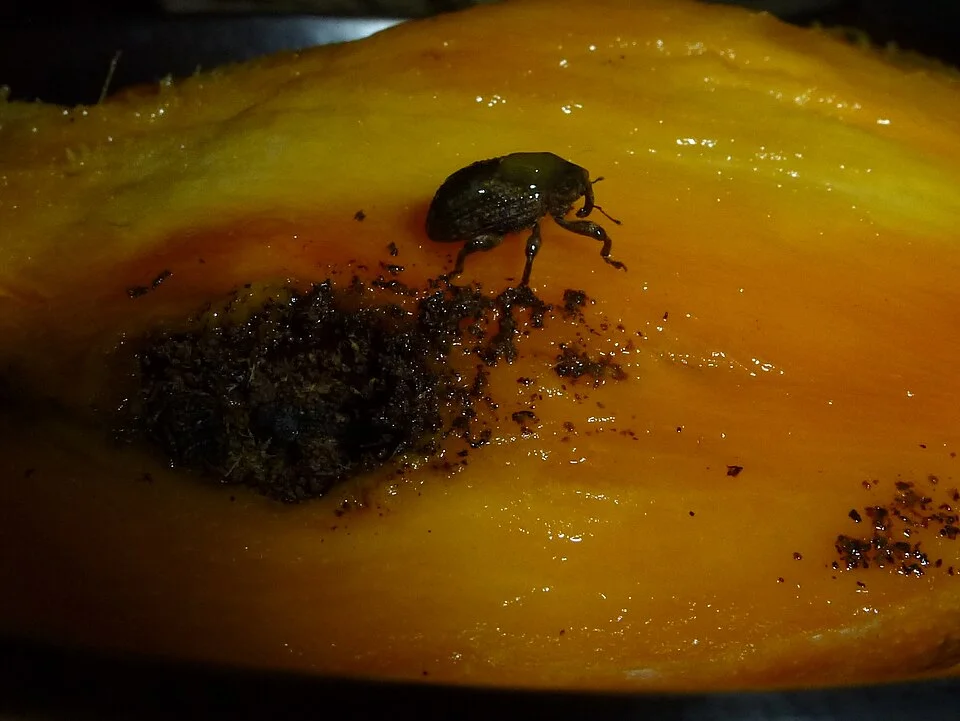
PJeganathan · CC BY-SA 3.0
Why it matters
Left alone, this weevil can spoil up to 3 in every 10 fruit (30%) — but the harder blow is that it is a quarantine pest: the kind export inspectors ban outright, so if they find even one, they can reject your whole load and lock you out of the best-paying markets. It is so hard to beat because the grub lives sealed inside the stone, where no spray can ever reach it, and the adult can live more than a year hiding in your orchard. Once it settles in, it comes back season after season unless you break its cycle by hand.
When to act
Any weevil emergence holes or infested seeds found when cutting a sample of fallen and harvested fruit; a quarantine pest, so tolerance is near zero for export.
This guidance is general, compiled from published agronomic references including FAO and CABI. Thresholds and timing shift with your crop, your variety and the season.
In much of the region a spray is simply called mushonga — medicine. But a chemical group you cannot name is one you cannot rotate, and a product you did not write down has no pre-harvest interval you can observe. Mushonga, and other farming words →
The full mango seed weevil field guide
Identify it
From the outside, an infested fruit looks almost normal — that is the trap
On young, still-green fruit you might catch only a tiny egg-laying scar or a hardened bead of dried sap where the female sealed her egg, and here and there a fruit that drops early for no clear reason. The real damage is hidden inside, so the skin alone will never tell you.
Cut a fruit right through to the stone to be sure
Inside you will find a brown tunnel running through the flesh into the seed, and in the hard stone either a fat, legless, creamy-white grub (the young stage, called the larva) or the adult weevil — dark grey-brown and mottled like tree bark, about the size of a coffee bean (7-9 mm), with the long curved snout every weevil carries. A neat round hole in the stone is where a grown weevil chewed its way out.
Tell it apart from the mango fruit fly
Fruit-fly maggots rot the flesh — soft, weeping, sunken patches full of small white maggots that flick and jump — while the seed weevil leaves the flesh mostly firm and ruins the seed instead. And black, sunken spots on the skin are anthracnose, a fungus, not this insect at all.
Scout for it
Start looking when the fruit has set and is growing
(from marble- to egg-sized) — this mid-season window is when the adults come out to lay. Walk a big "W" across the orchard so you cover the whole block, not just the trees beside the path, and stop at about 10 trees.
At each tree, check a few developing fruit for fresh egg-laying scars and sap beads, and look on the ground underneath for dropped fruit — every fallen fruit is a weevil nursery.
As the fruit matures and at harvest (late season), do the cut test — it is the only sure check
Gather at least 20-30 fruit — a mix of windfalls off the ground and picked fruit, from several trees — and slice each one right through the stone, looking for a tunnel, a grub, an adult, or a round exit hole.
Even 1 infested seed in your whole sample means act now
This is a quarantine pest with near-zero tolerance — you do not wait for a percentage. One find is your signal to start full control across the orchard.
Control it
Prevent it with ruthless orchard sanitation — your single best tool
Every week during and after fruiting, gather every fallen fruit off the ground and burn it or bury it deep. Each dropped fruit is a nursery where the grub and the long-lived adult survive inside the seed to re-infest next season. Rake up prunings too, and clear windfalls before they rot into the soil.
Never carry the weevil onto clean ground
Do not move mango seed or un-cut fruit from an infested orchard into a clean area, and start any new trees only from certified clean planting material — remember, the adult travels hidden inside the seed.
Shorten the weevil's laying window
Where you can, bag each young fruit (slip a paper or net bag over it once it sets) so the female cannot land on it to lay, and pick fruit as soon as it is mature rather than letting it hang or drop — the longer fruit stays on or under the tree, the more eggs it collects.
Only if you must, use a *pyrethroid* spray — and timing is everything
A pyrethroid is a contact poison (it kills only the weevil it directly lands on and does not travel inside the fruit), so it can kill adults only, and only before they lay. Time cover sprays (spraying the whole canopy) to fruit set and early fruit growth — once the grub is sealed inside the seed, no spray on earth can reach it, so a late spray is wasted money.
Spray safely
Cover your skin, eyes, nose and mouth; spray in the cool of the day with the wind at your back; and keep it off food, water and children. Pyrethroids are deadly to bees, so never spray a tree in flower — mango needs bees to set fruit in the first place. Respect the pre-harvest interval (the number of days you must leave between the last spray and picking so the fruit is safe to eat), and wash yourself and your clothes afterwards. Don't lean on the same spray every year: rotate to a different chemical group where one is available so the weevil never builds resistance (stops being killed by the poison), and let sanitation do most of the work.
If it keeps spreading
, the cause is almost always fallen fruit left as a breeding reservoir — tighten your weekly clean-up across the whole orchard, and ask neighbours to do the same, because the adults stay local and a dirty orchard next door will quietly re-seed yours. When it's too late and fruit is already infested at harvest, accept that that load cannot go for export or for seed: sell only sound-fleshed fruit for immediate local eating or processing, destroy every cull seed so it can't breed next year's weevils, and commit to sanitation plus a well-timed spray before the next fruit set.
Catch mango seed weevil before it costs you the harvest
This guide is the general answer. Divisi works out yours — the week to scout your own field for mango seed weevil, and what to do the day you find it.


Crops it affects
Plan the crops it attacks

All planting calendars, country by country
Get Insights by email
A short digest of new Divisi articles. No email on quiet weeks.
Frequently asked questions
How do I identify mango seed weevil?
From the outside, an infested fruit looks almost normal — that is the trap. On young, still-green fruit you might catch only a tiny egg-laying scar or a hardened bead of dried sap where the female sealed her egg, and here and there a fruit that drops early for no clear reason. The real damage is hidden inside, so the skin alone will never tell you.
When should I take action against mango seed weevil?
Any weevil emergence holes or infested seeds found when cutting a sample of fallen and harvested fruit; a quarantine pest, so tolerance is near zero for export.
How do I control mango seed weevil?
Prevent it with ruthless orchard sanitation — your single best tool. Every week during and after fruiting, gather every fallen fruit off the ground and burn it or bury it deep. Each dropped fruit is a nursery where the grub and the long-lived adult survive inside the seed to re-infest next season. Rake up prunings too, and clear windfalls before they rot into the soil.
Which crops are attacked by mango seed weevil?
Among the crops covered here: Mango.