 Divisi
Millet head miner
Heliocheilus albipunctella · Insect
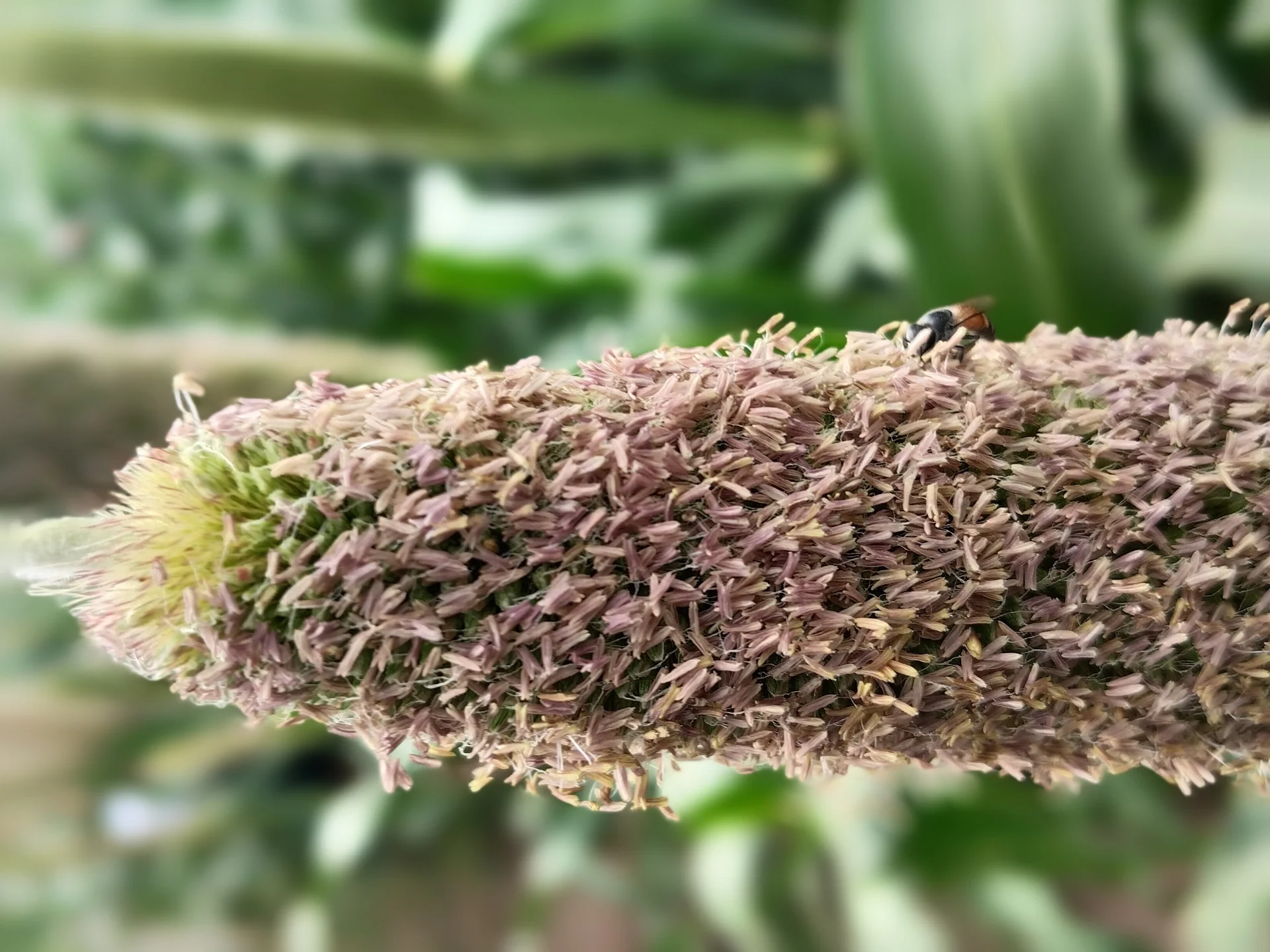
Photo: Janarthananvk, CC BY 4.0, via Wikimedia Commons · CC BY 4.0
The millet head miner (Heliocheilus albipunctella) is a night-flying moth whose caterpillar attacks only pearl millet. It has just one generation a year: the moths rise out of the soil with the first good rains, lay their eggs on the young heads as they push out, and each caterpillar then tunnels in a slow spiral down the head, cutting off the tiny flowers before they can fill with grain. When the season ends the grown caterpillars drop to the ground and sleep buried in the soil until the next rains — which is why last year's field becomes next year's source.
Why it matters
The head miner strikes at the worst possible moment — just as your millet is making grain — and a bad attack can cost you up to half your harvest (50%). It does its damage hidden inside the head, spiralling down and cutting the flowers before they fill, so you often don't notice until you thresh light, chaffy heads that hold almost no grain. Once the caterpillar is inside, no spray can reach it, and it gets only one chance a year — so everything depends on stopping it before and as the heads emerge, not after.
When to act
Presence of young larvae on emerging panicles during heading, or spiral mining seen when opening a sample of heads.
This guidance is general, compiled from published agronomic references including FAO and CABI. Thresholds and timing shift with your crop, your variety and the season.
In much of the region a spray is simply called mushonga — medicine. But a chemical group you cannot name is one you cannot rotate, and a product you did not write down has no pre-harvest interval you can observe. Mushonga, and other farming words →
The full millet head miner field guide
Identify it
The damage — a spiral scar down the head
The clearest and earliest sign is a winding spiral line of cut and missing grain running down the millet head (the candle-shaped grain spike at the top of the plant). Along that track the tiny flowers — the florets, which should each swell into a grain — are eaten away, so the head turns half-empty, chaffy and light in your hand, often with dry droppings caught among the florets.
The caterpillar itself
Peel open an affected head and you'll find one or a few caterpillars the size of your thumbnail up to your first thumb-joint (about 1–2 cm long) — pinkish-brown to greenish, with faint darker bands and a dark head — curled among the florets where they feed. The adult is a small, drab straw-coloured moth that flies only at night, so you will almost never see it: hunt for the caterpillar and its spiral, not the moth.
Tell it apart from look-alikes
A head emptied by drought or heat is bare evenly, all over, with no spiral track and no grub. Birds such as quelea strip grain from the outside, leaving ragged, pecked heads — again no spiral and no caterpillar. Grain smut or mould leaves dark, dusty or discoloured grain but keeps the head's normal shape and has no tunnel. Only the head miner leaves that neat spiral of cut florets with a caterpillar still at work inside.
Scout for it
When to look: from the moment the heads start pushing out (heading) and right through grain-fill
This is the danger window — the night-flying moths lay their eggs exactly as the heads emerge, especially in the days after a good rain. Start checking when the first heads show, and keep going every few days while the heads are still soft and filling.
Walk a big letter 'W' across the whole field
, not just the edge nearest the path, so you cross all four corners and the middle. Make about 5 stops along the W.
At each stop, check 10 heads (about 50 heads in all). Look closely at the emerging heads, and gently open a few of the softest, newest ones — search among the florets for young caterpillars and for the first sign of a fresh spiral channel.
Find even 1 young caterpillar — or 1 fresh spiral — in 10 heads during heading, and act now
With only one generation a year and the grub hidden inside, there is no 'wait and see': the moment you confirm it on the emerging heads, move to control and start planning to break the cycle for next season.
Control it
Prevent it — plant early and all at once
Sow with the first good rains, at the same time as your neighbours, so your heads push out and pass the tender stage before the moths are flying in numbers. Late or staggered planting is the head miner's best friend: it keeps offering fresh young heads for the moths to lay on just as their flight peaks.
Choose an escaping variety and clean the field after harvest
Where you can, grow a shorter-cycle or less-preferred local millet that heads early and dodges the main moth flight. After harvest, plough or dig the field over to turn up and destroy the resting stage — the pupae sleeping in the soil — so far fewer moths rise on your land next year.
Bring in the helper wasp — the strongest treatment you have
A tiny parasitoid wasp (Habrobracon hebetor — a natural enemy that lays its eggs on the head-miner caterpillars; its young then feed on and kill them) is the most effective control in the Sahel. Farmers release these wasps during heading, usually from simple release bags or stations supplied through extension services or a farmer group — ask your extension officer or group how to get them. Protect the wild ones already living in your field by not spraying broad poisons that would wipe them out.
Don't count on a spray — and here's why
There is no reliable insecticide for this pest: once the caterpillar is spiralling inside the head, no spray can reach it, and a broad poison only kills the bees and the helper wasps that are on your side. If you are ever tempted to spray anyway, treat it as a true last resort and handle it safely — cover your skin, eyes, nose and mouth; spray in the cool of morning or evening with the wind at your back; keep it well away from food, drinking water, children and beehives; wait the full pre-harvest interval (the set number of days between spraying and harvest so no poison is left on the grain); and wash yourself and your sprayer afterwards. And never spray the same product again and again — rotate between different chemical groups so the pest can't build resistance (stop being killed by a poison that is used too often).
If it keeps spreading — or you caught it too late
If the heads are already heavily mined and empty, nothing this season will bring the grain back: harvest whatever has filled and cut your losses. Then break the cycle for next year — plough in the stubble to bury the resting pupae, plant early and all together next season, and arrange a wasp release with your neighbours so the whole area heads early and starves the moths at once. Because this pest carries over in the soil and flies in from around you, beating it works best when the whole community acts together.
Catch millet head miner before it costs you the harvest
This guide is the general answer. Divisi works out yours — the week to scout your own field for millet head miner, and what to do the day you find it.


Crops it affects
Plan the crops it attacks

All planting calendars, country by country
Get Insights by email
A short digest of new Divisi articles. No email on quiet weeks.
Frequently asked questions
How do I identify millet head miner?
The damage — a spiral scar down the head. The clearest and earliest sign is a winding spiral line of cut and missing grain running down the millet head (the candle-shaped grain spike at the top of the plant). Along that track the tiny flowers — the florets, which should each swell into a grain — are eaten away, so the head turns half-empty, chaffy and light in your hand, often with dry droppings caught among the florets.
When should I take action against millet head miner?
Presence of young larvae on emerging panicles during heading, or spiral mining seen when opening a sample of heads.
How do I control millet head miner?
Prevent it — plant early and all at once. Sow with the first good rains, at the same time as your neighbours, so your heads push out and pass the tender stage before the moths are flying in numbers. Late or staggered planting is the head miner's best friend: it keeps offering fresh young heads for the moths to lay on just as their flight peaks.
Which crops are attacked by millet head miner?
Among the crops covered here: Pearl millet.