 Divisi
Noorda budworm
Noorda moringae · Insect
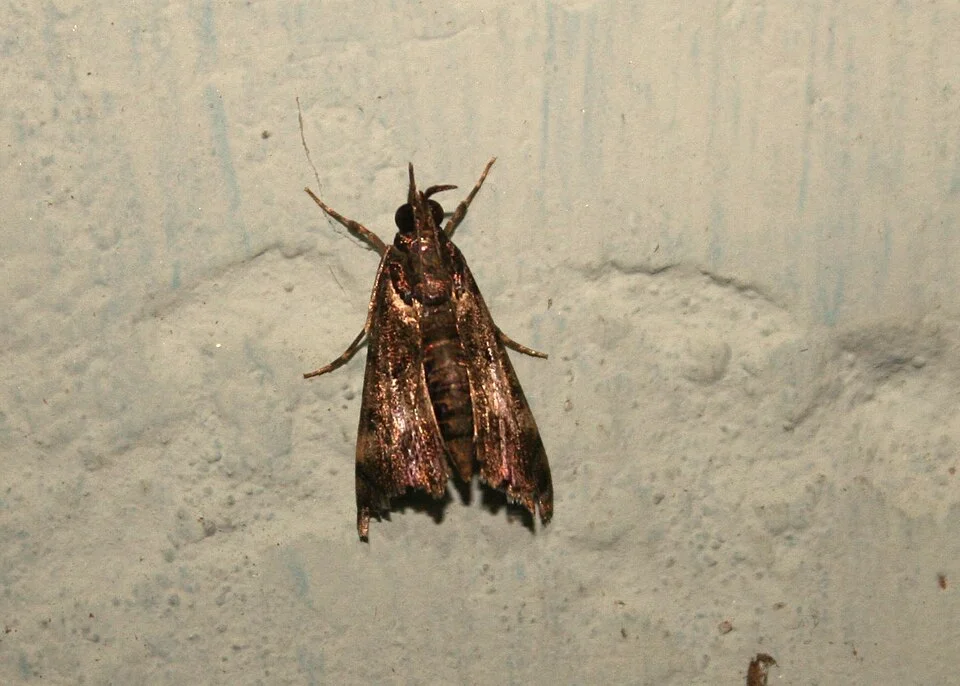
Photo: Gihan Jayaweera · CC BY-SA 4.0
The Noorda budworm (Noorda moringae) is a small, dull grey-brown, night-flying moth whose caterpillars bore into the flower buds, flowers and young pods of the moringa (drumstick) tree. In the dry season the moths lay their eggs on and around the flowering clusters, and the caterpillars that hatch tunnel straight into the buds and pods, feeding hidden inside so the buds blacken, dry and drop before they can set pods. Because this flowering flush is exactly when the tree makes its drumsticks, a heavy attack at this moment can wipe out most of the pod crop. The caterpillars then pupate in the soil and in the fallen litter under the tree, ready to strike the next flush.
Why it matters
The budworm attacks your moringa tree at its most important moment — while it is flowering and setting its drumstick pods — and a heavy attack can cost you up to 60% of your pods. The trouble is that within a day or two of hatching the caterpillar bores inside the bud or young pod, and once it is tucked in there no spray can reach it. So the flowers you were counting on simply blacken and drop, and by the time you notice the bare tree the crop is already lost. Your one real chance is to catch it in the first days of flowering, before the caterpillars get inside.
When to act
Fresh larval boring in flower buds or young pods during flowering and pod set; act at first bud damage, as larvae quickly bore inside.
This guidance is general, compiled from published agronomic references including FAO and CABI. Thresholds and timing shift with your crop, your variety and the season.
In much of the region a spray is simply called mushonga — medicine. But a chemical group you cannot name is one you cannot rotate, and a product you did not write down has no pre-harvest interval you can observe. Mushonga, and other farming words →
The full Noorda budworm field guide
Identify it
The first sign is on the flowers
Buds that should be creamy-white instead turn black, dry up and drop, leaving bare flower stalks on the cluster. Look closely at a spoiled bud or a young pod and you'll find a tiny entry hole with a plug of moist, sawdust-like droppings — called frass (the caterpillar's droppings) — at its mouth. That hole-plus-frass is the sure sign a caterpillar has bored inside.
On the young pods (the drumsticks)
you'll see pin-sized holes, dark sunken patches, and crooked, deformed tips. Split one open and you'll find the tunnel running through it — and often the caterpillar still feeding inside, packed around with frass.
The caterpillar itself is small
— from the length of a grain of rice when young up to a fingernail when full-grown — soft, and pale green to pinkish-brown. You'll almost always find it curled up inside a bud or pod, never out in the open. The moth is small and dull grey-brown, about the size of your thumbnail, and flies at dusk and after dark; by day it hides under the leaves, so you'll rarely catch sight of it.
Don't confuse it
with the moringa leaf caterpillar — a close relative that webs and skeletonises the leaves, not the buds — or with ordinary flower-drop from heat and dry wind, where the buds fall clean, with no hole and no frass. The budworm's tell is always the hole plus wet frass in the bud or pod.
Scout for it
Start the moment the tree begins to flower, and keep checking right through pod-set
This flowering-and-podding window is exactly when the budworm strikes. It peaks in the dry flowering season, so in warm, dry weather (around 22–34°C) the moths are breeding hard — step up your checks then.
Walk your trees twice a week
Zig-zag across the plot in a big "W" so you cover the trees in the middle and on every side, not just the ones by the path. Stop at about 5 trees, and on each tree check 4 flowering clusters — roughly 20 clusters in all. If you have only a tree or two, walk right around each one and check clusters on every side.
At each cluster, check the buds and young pods for fresh entry holes and moist frass, and gently open one or two blackened buds to look for a caterpillar inside. Fresh, wet frass means a caterpillar is still feeding; dry, crumbly frass in an empty tunnel is an old attack — don't spray for that.
Act at the very first fresh damage — do not wait for a big count
If even 1–2 buds or pods out of your 20 clusters show a fresh hole with wet frass during flowering, treat now. Because the caterpillars bore inside within a day or two of hatching, waiting even a few days means the spray can no longer reach them.
A trap warns you before the damage starts
Hang a pheromone or light trap near the trees — a pheromone trap uses the female moth's own scent as bait to draw in the males. A rising nightly catch of moths tells you egg-laying, and boring, is about to begin, so you can be ready to spray right at bud break.
Control it
Prevent it — keep the tree clean
As soon as you spot bored, blackened buds or pods, pick them off and destroy them (burn them, or bury them deep), and rake up and carry away everything that has dropped under the tree. The caterpillars and their pupae hide in this fallen material, so clearing it away breaks the cycle before the next flush of flowers.
Dodge the moth with your pruning, and protect the tree's helpers
Moringa flowers again after it is pruned, so prune to stagger the flowering flush and time the tender bud stage to fall outside the peak of moth flights (watch your trap to judge when that peak is). And spare the tree's natural allies — the tiny parasitic wasps and predators that attack the eggs and young caterpillars — by not drenching the tree in harsh poisons that kill them too.
Act early with a soft spray
At the first sign of flowering buds, before the caterpillars have bored in, spray Bt (Bacillus thuringiensis — a natural bacterium that kills only caterpillars and nothing else), wetting the flower clusters well. It strikes the young caterpillars while they are still on the outside, and it is safe for you, for bees, and for the parasitic wasps. Repeat as the label directs while new buds keep opening. Even with a soft spray, still cover up and spray in the cool of the day.
Only if it keeps beating you, reach for a chemical insecticide — as a true last resort
Choose a selective insecticide (one that targets this pest while sparing bees and helpful insects, rather than a broad poison that kills everything) and spray at early flowering, before the caterpillars get inside — once they are boring, no spray will reach them. Safety is not optional: cover your skin, eyes, nose and mouth; spray in the cool of morning or evening with the wind at your back; and keep the spray off food, water, children and bees (spray when bees are not working the flowers). Because moringa leaves and pods are eaten, you must respect the pre-harvest interval — the number of days the label sets between spraying and safely picking leaves or pods — and wash yourself and your clothes well afterwards. And to stop the pest getting used to the poison (resistance), rotate to a different chemical group each time rather than using the same one over and over.
If it keeps spreading
tighten your sanitation (strip and destroy every infested bud and all the fallen litter), keep the soft Bt spray going at each new bud break, and rotate your chemical group so the pest can't adapt. If a flush is already lost — most buds blackened and dropped, caterpillars deep inside the pods — accept that this flush is gone: cut and destroy the spoiled flowering wood, clear all the litter beneath the tree, and put your effort into protecting the next flush by spraying at bud break, instead of chasing caterpillars you can no longer reach.
Catch Noorda budworm before it costs you the harvest
This guide is the general answer. Divisi works out yours — the week to scout your own field for Noorda budworm, and what to do the day you find it.


Crops it affects
Plan the crops it attacks

All planting calendars, country by country
Get Insights by email
A short digest of new Divisi articles. No email on quiet weeks.
Frequently asked questions
How do I identify Noorda budworm?
The first sign is on the flowers. Buds that should be creamy-white instead turn black, dry up and drop, leaving bare flower stalks on the cluster. Look closely at a spoiled bud or a young pod and you'll find a tiny entry hole with a plug of moist, sawdust-like droppings — called frass (the caterpillar's droppings) — at its mouth. That hole-plus-frass is the sure sign a caterpillar has bored inside.
When should I take action against Noorda budworm?
Fresh larval boring in flower buds or young pods during flowering and pod set; act at first bud damage, as larvae quickly bore inside.
How do I control Noorda budworm?
Prevent it — keep the tree clean. As soon as you spot bored, blackened buds or pods, pick them off and destroy them (burn them, or bury them deep), and rake up and carry away everything that has dropped under the tree. The caterpillars and their pupae hide in this fallen material, so clearing it away breaks the cycle before the next flush of flowers.
Which crops are attacked by Noorda budworm?
Among the crops covered here: Moringa (drumstick tree).