 Divisi
Rice bugs
Leptocorisa oratorius · Insect
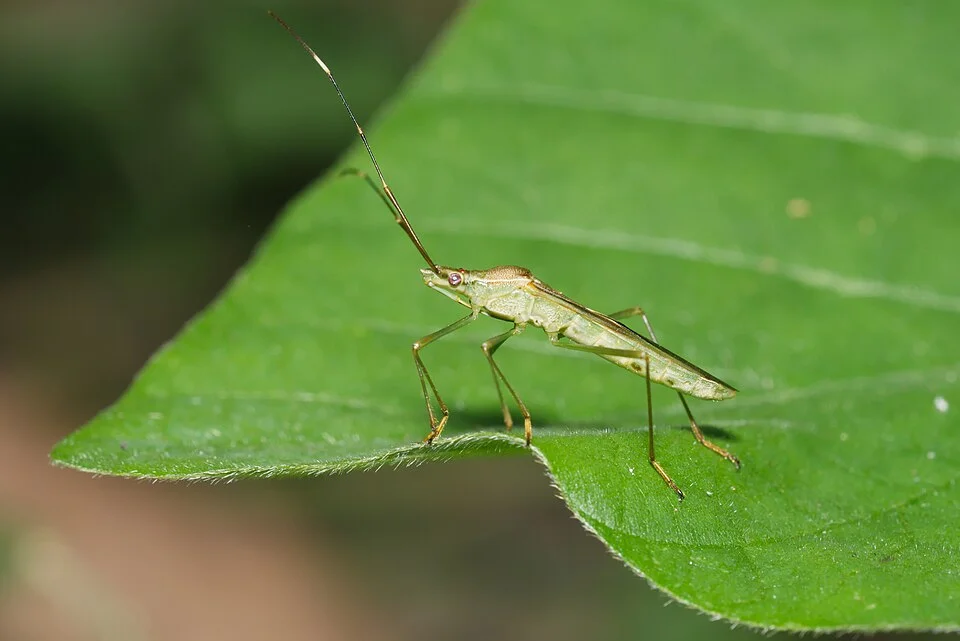
Photo: Jeevan Jose, Kerala, India · CC BY-SA 4.0
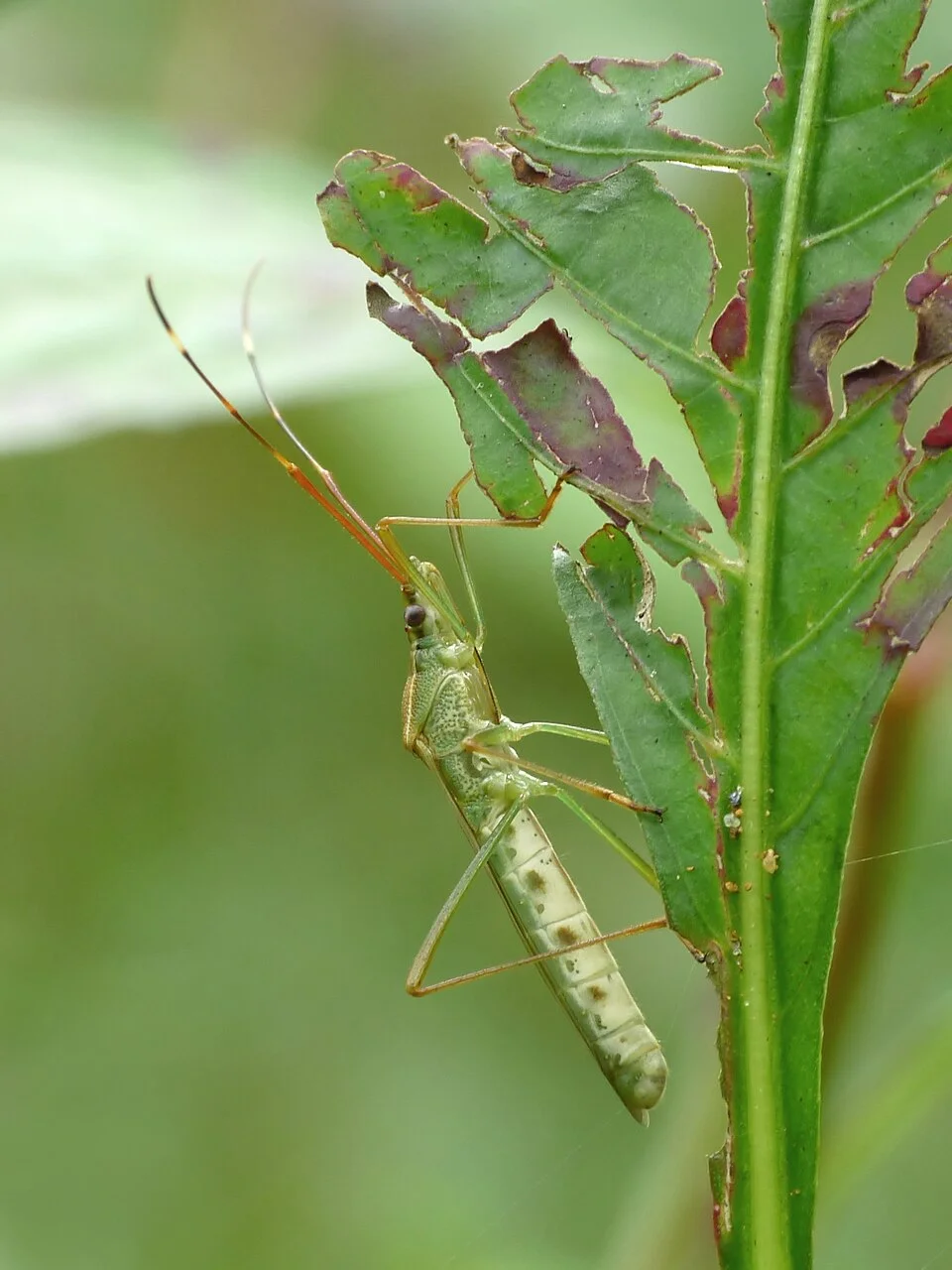
Rice bugs (Leptocorisa oratorius) are slender, grass-green to straw-brown sucking insects — about 1.5 cm long, with very long thread-like legs and antennae — that attack rice from heading through the soft, milky-grain stage. Both the wingless green young (nymphs) and the winged adults pierce the filling grains and suck out the milky contents, leaving empty, shrivelled or brown-spotted 'pecky' grain. Disturb them and they give off a sharp, foul stink — often the quickest way to know they are in your field.
Jeevan Jose, Kerala, India · CC BY-SA 4.0 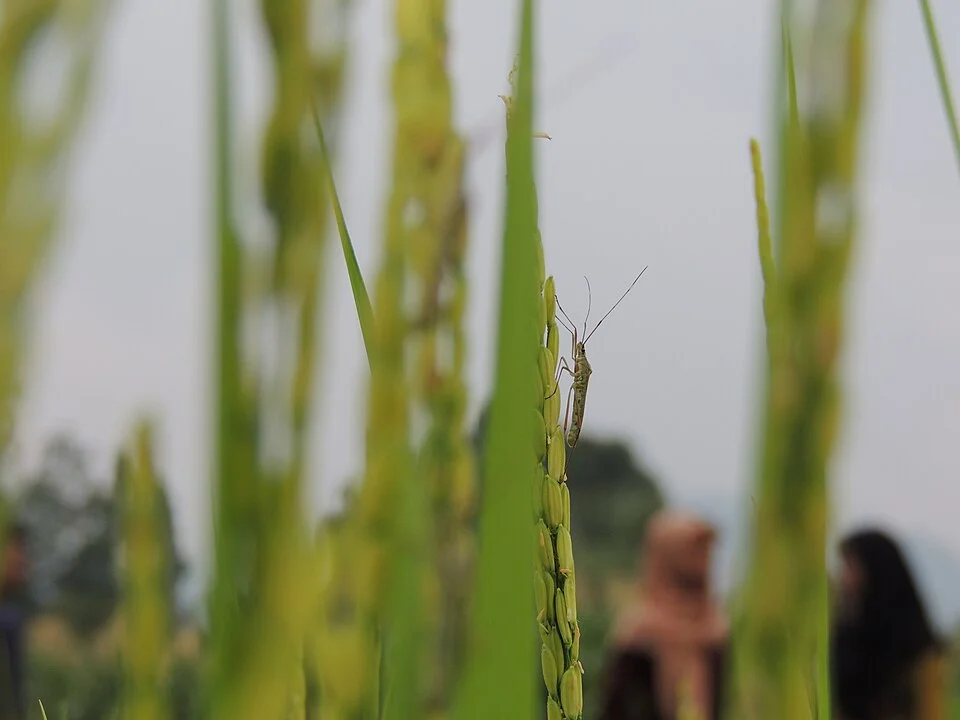
Maulidya Fachra · CC BY-SA 4.0
Why it matters
Rice bugs feed at the exact moment your grain is filling, so their damage goes straight into your harvest — a bad infestation can take up to 40% (nearly half) of your yield. They don't only empty the grains; the shrivelled, brown-spotted 'pecky' grains that survive fetch a lower price at market. And because the bugs breed on grassy weeds and fly in from neighbouring fields, once they build up across the area they keep re-invading — so it is far easier to stop the build-up early than to chase them once the heads are full.
When to act
about 1 bug per hill (or 5 bugs per 10 sweeps) during heading to milk stage
This guidance is general, compiled from published agronomic references including FAO and CABI. Thresholds and timing shift with your crop, your variety and the season.
In much of the region a spray is simply called mushonga — medicine. But a chemical group you cannot name is one you cannot rotate, and a product you did not write down has no pre-harvest interval you can observe. Mushonga, and other farming words →
The full Rice bugs field guide
Identify it
The damage shows first — look at the grain heads
At the top of the plant the panicle (the head that carries the flowers and grains) fills with empty or half-empty grains that stand upright instead of bowing over with weight. The grains that do fill carry brown or black spots and stained, shrivelled kernels — farmers call this 'pecky' rice. A sharp, foul smell hanging over the crop is often the very first clue, before you even spot a bug.
The bug itself
a slender green or straw-brown insect about 1.5 cm long — a little longer than a grain of paddy — with very long, thin legs and antennae, so it looks like a tiny walking blade of grass or a thin twig. The young ones (nymphs — the wingless early stage) are bright green and look like smaller, thinner adults. They cling to the grain heads, most active in the early morning and late afternoon, and drop or fly off the moment you disturb them, giving off that foul stink. Look too for the eggs: tiny dark reddish-brown discs laid in a neat row along the top of a leaf blade.
Don't confuse it
with the broad, flat, shield-shaped stink bugs — rice bugs are slim and stick-like, not wide and flat — or with grasshoppers, which chew ragged holes in the leaves and give off no smell. The slender shape, the long legs, the stink, and the fact that it feeds on the grain, not the leaves, are what mark out the rice bug.
Scout for it
Start the day the grain heads emerge
Rice bugs only matter once grain is forming, so scout from heading (when the grain heads push out of the stem) through flowering and the milk stage (when a squeezed grain oozes white liquid) until the grain firms up. This is your crop's most vulnerable window — miss it and the damage is already done.
Go in the early morning, while it is still cool
The bugs sit openly on the heads then and move slowly; by the midday heat they drop down low and hide, and you will undercount them. Walk a big 'W' shape across the field so you cover the four corners and the middle, not just the strip beside the path — and check the edges next to grassy weeds first, because that is where the bugs invade from.
Make about 10 stops
At each stop, either look closely at the grain heads on 10 hills (a 'hill' is one clump of rice plants that grew from a single planting point) for bugs and fresh spotting, or take a sweep net — a cloth bag on a hoop of wire — and swing it 10 times through the tops of the plants, then count what you caught. Use your nose too: a strong stink over the crop means they are already there in numbers.
Act at 1 bug per hill
Count the bugs on your 10 hills — about 10 bugs in total, one per clump, means spray now. With a sweep net, 5 bugs in 10 sweeps is the same warning level. Below that, keep watching every few days: in warm, humid weather (around 24–32 °C at flowering and grain fill) their numbers can climb fast.
Control it
Prevent the build-up — this is your strongest tool
Agree with your neighbours to plant the same variety at the same time, so every field flowers and fills grain together. Staggered or late planting gives the bugs a long, moving buffet and lets their numbers explode; synchronised planting keeps the vulnerable window short and shared across the whole area, so no single field is left standing as the last green target.
Starve them between crops
Keep the bunds (the raised earth walls and paths between the paddies) and field margins cut and free of grassy weeds — those weeds are where rice bugs shelter and breed before they move onto your rice. Harvest promptly and don't leave late, half-filled patches standing, which become a bug nursery for every field around you.
Protect the bugs' natural enemies
Tiny parasitoid wasps (harmless wasps that lay their own eggs inside the rice bug's eggs, killing them before they hatch), together with spiders and predatory bugs, quietly destroy eggs and young nymphs for free. Don't spray broad poisons that wipe these helpers out too — that only makes the next outbreak worse.
Knock the numbers down by hand — act early
In the cool of early morning, while the bugs are still sluggish, sweep them off the heads with a net or a leafy branch and destroy what you catch. A traditional trick is to hang something foul-smelling — rotting snails, crab or fish — on sticks at the field edge; it lures the bugs away from the grain to where you can gather and kill them.
Chemical — only as a last resort, only at threshold
If you reach 1 bug per hill (or 5 in 10 sweeps) during heading to milk stage, spray a registered pyrethroid (a common group of contact insecticides — they kill only the bugs they land on or that walk over the treated heads, so cover the panicles well). Spray in the cool of early morning or late afternoon, with the wind at your back; cover your skin, eyes, nose and mouth; keep it well away from food, drinking water, children and bees; and wash yourself and your clothes afterwards. Because you are spraying so close to harvest, respect the pre-harvest interval (PHI — the least number of days the label says you must wait between your last spray and cutting the crop) so no unsafe residue reaches the grain. To stop the bugs becoming resistant (surviving a chemical used so often that it no longer kills them), rotate to a different chemical group each time instead of spraying the same one over and over.
If it keeps spreading → go community-wide
you cannot win field-by-field when bugs keep flying in from staggered neighbouring fields, so take it to the whole community to plant and harvest together next season and to clear the shared weedy margins. When it is too late → cut your losses: once the grain has firmed past the soft-dough stage the bugs can no longer feed on it, so stop spraying (you would only add cost and residue) and harvest as soon as it is ready. Cut and thresh badly pecked patches separately so the stained grain does not drag down the price of your clean harvest.
Catch Rice bugs before it costs you the harvest
This guide is the general answer. Divisi works out yours — the week to scout your own field for Rice bugs, and what to do the day you find it.


Crops it affects
Plan the crops it attacks

All planting calendars, country by country
Get Insights by email
A short digest of new Divisi articles. No email on quiet weeks.
Frequently asked questions
How do I identify Rice bugs?
The damage shows first — look at the grain heads. At the top of the plant the panicle (the head that carries the flowers and grains) fills with empty or half-empty grains that stand upright instead of bowing over with weight. The grains that do fill carry brown or black spots and stained, shrivelled kernels — farmers call this 'pecky' rice. A sharp, foul smell hanging over the crop is often the very first clue, before you even spot a bug.
When should I take action against Rice bugs?
about 1 bug per hill (or 5 bugs per 10 sweeps) during heading to milk stage
How do I control Rice bugs?
Prevent the build-up — this is your strongest tool. Agree with your neighbours to plant the same variety at the same time, so every field flowers and fills grain together. Staggered or late planting gives the bugs a long, moving buffet and lets their numbers explode; synchronised planting keeps the vulnerable window short and shared across the whole area, so no single field is left standing as the last green target.
Which crops are attacked by Rice bugs?
Among the crops covered here: Rice.