 Divisi
Sorghum shoot fly
Atherigona soccata · Insect
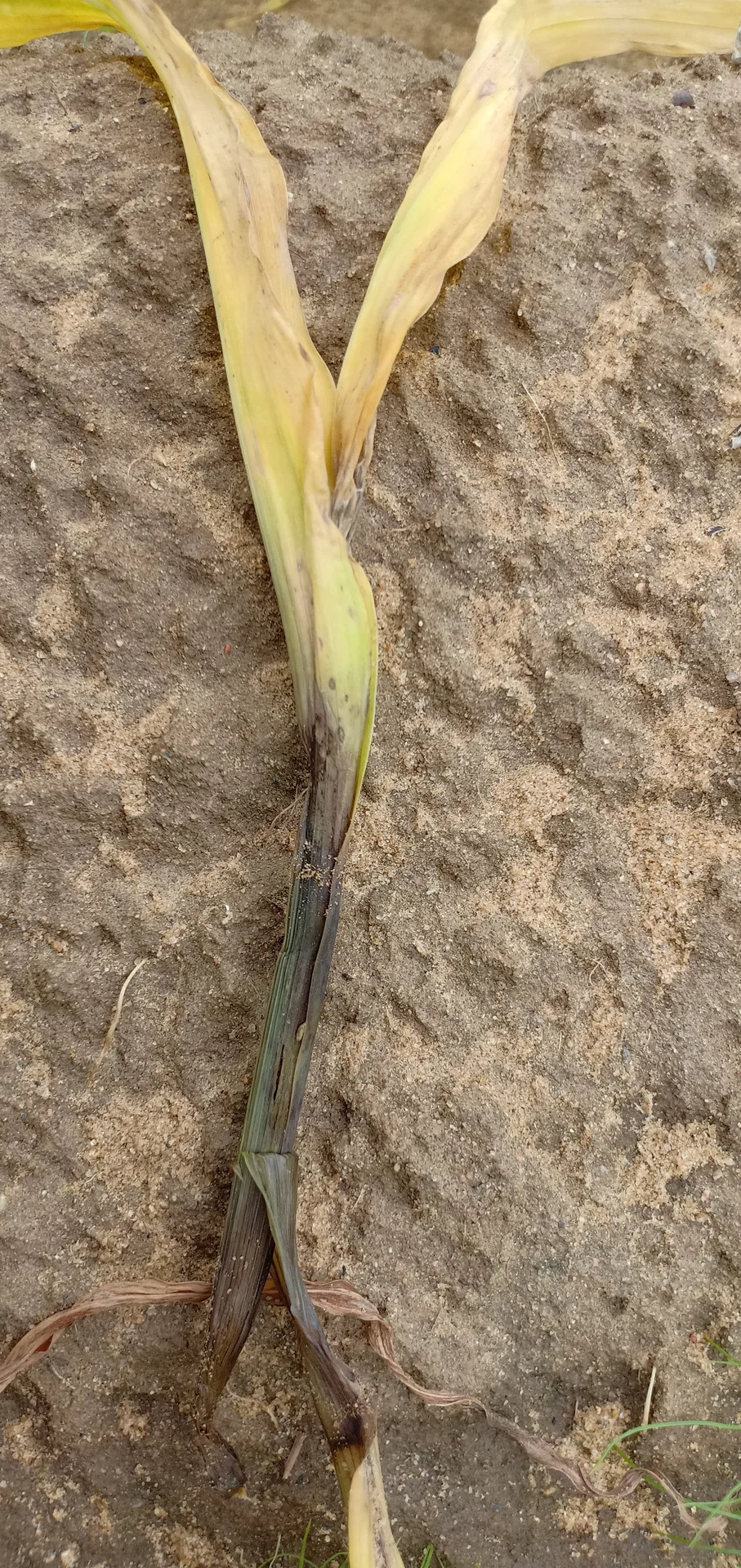
Photo: Digvijaysinh Padhiyar · CC BY-SA 4.0
Sorghum shoot fly (Atherigona soccata) is a small ash-grey fly, a little smaller than a housefly, whose maggot is the enemy of young sorghum and pearl-millet. In the first three weeks after the crop emerges, the maggot bores into the base of a seedling and cuts the central growing shoot, so the youngest leaf wilts and dies — the classic 'dead-heart'. The danger is confined to the seedling stage: late-sown, slow-growing crops sit in the firing line longest and suffer most, and although a struck plant may sprout side-tillers, it never recovers a full head.
Why it matters
Sorghum shoot fly strikes at your crop's most helpless moment — the first three weeks after the seedlings come up — and can take up to half your harvest before the plants are knee-high. Its maggot cuts the central growing shoot and kills the main stem: the plant may throw out weak side-shoots but never carries a full grain head, so the stand ends up thin and patchy. Once a seedling shows a dead-heart the harm is already done — you cannot un-cut the shoot — and on a late-sown, slow crop the fly can work through the whole field in those few early weeks. The whole fight is won or lost early: you protect the seedlings in the first three weeks, or not at all.
When to act
More than about 10 percent of seedlings showing dead-hearts within the first three weeks after emergence.
This guidance is general, compiled from published agronomic references including FAO and CABI. Thresholds and timing shift with your crop, your variety and the season.
In much of the region a spray is simply called mushonga — medicine. But a chemical group you cannot name is one you cannot rotate, and a product you did not write down has no pre-harvest interval you can observe. Mushonga, and other farming words →
The full Sorghum shoot fly field guide
Identify it
The damage (a 'dead-heart')
in the first few weeks after your sorghum comes up, the central youngest leaf — the spike in the middle of the whorl — wilts, dries and turns straw-brown while the outer leaves are still green. Give it a gentle tug: a dead-heart slides out easily, like pulling a straw from a bundle, and the soft base smells rotten. That dead central shoot is the surest sign.
The pest
the culprit is a small ash-grey fly, a bit smaller than a housefly (about half a centimetre), that you will see flitting low over the young seedlings in the cool of the early morning. The real damage is done by its maggot — the fly's young, legless grub — pale and no bigger than a grain of rice — which you find if you split open the base of a dead-heart shoot.
Don't confuse it
drought or heat wilt droops the whole plant, not just the central leaf, and the shoot won't pull out or smell rotten. The stalk borer attacks bigger, older plants and leaves neat rows of shot-holes across the leaves — shoot fly hits only young seedlings and leaves the outer leaves whole. A tip nipped by a bird or goat looks torn and ragged; a dead-heart is whole on the outside but dead and rotten inside. Later, struck plants turn bushy and stunted, throwing many weak side-tillers instead of one strong stem.
Scout for it
When to look
the danger window is short and early. Start the day your seedlings emerge and keep checking every 2–3 days through the first 3–4 weeks (up to about 30 days after emergence). After that the plants are big enough to be safe and you can stop. Watch late-sown fields hardest — they stay in danger the longest.
How to walk it
cross the field in a big "W" shape so you cover all four corners and the middle, not just the edge by the path. Make about 5 stops along the W and check 20 seedlings at each stop — 100 seedlings in all.
What to check
at each plant look into the centre of the whorl — is the youngest central leaf green and standing, or wilted and brown? Tug any suspect central shoot; if it slides out and smells rotten, that is a dead-heart. Also look for the small grey flies resting on the seedlings in the early morning, and for tiny white, cigar-shaped eggs laid singly on the underside of the young leaves — both mean dead-hearts are on the way.
The number that means act
count the dead-hearts. If more than 1 in every 10 seedlings (more than 10 out of 100) shows a dead-heart in these first three weeks, you have crossed the line — act now. Every day you wait, more shoots are cut and the chance to save the stand slips away.
Control it
Prevent
-
sow early:
sow with the very first rains so your seedlings race through the risky 3-week window before fly numbers build up. Late sowing sows straight into trouble. Use a higher seed rate than usual so that even if some seedlings are lost you still keep a full, even stand.
-
grow a tolerant variety:
where you can, plant a shoot-fly-tolerant sorghum — a variety bred to shrug off attack and grow away fast. This is the strongest non-chemical shield you have: choose varieties known for vigorous, quick early growth that push seedlings past the danger stage sooner.
-
clean up the hosts:
before and around your crop, clear away volunteer sorghum (self-sown plants that came up on their own from last season's dropped grain) and wild grasses — these keep the fly alive between seasons and feed the first wave. Once damage starts, pull out and destroy dead-heart plants (bury, burn or feed them to livestock) so the maggots inside cannot hatch into a second attack, and thin down to the healthy plants.
Protect from the start — treated seed:
the most reliable protection, especially if you must sow late, is a systemic-insecticide seed treatment — seed coated with the chemical before you sow. Systemic means the young plant draws the chemical up inside its own sap, so the maggot boring into the shoot is poisoned from within, where an outside spray can never reach. Treated seed is poison, and is dyed a warning colour — never eat it or feed it to animals, keep it well away from food and children, and wash your hands after handling it.
Last resort — a seedling spray:
only if you still cross the threshold (more than 1 in 10 seedlings with dead-hearts), spray the seedlings with a systemic insecticide. Handle it safely: cover your skin, eyes, nose and mouth, spray in the cool of morning or evening with the wind at your back, and keep it away from food, drinking water, children and bees. Wash yourself and your clothes afterwards, respect the pre-harvest interval (the wait-days printed on the label between your last spray and harvest), and rotate to a different chemical group each season so the fly never gets used to one poison — that build-up of immunity is called resistance.
If it keeps spreading — or it is too late:
once seedlings pass about 30 days / the 4–5 leaf stage they have grown out of danger — the shoot fly cannot hurt an established plant, so stop spraying then. If a patch is thin but the rains still allow, gap-fill or re-sow the bare spots quickly and let survivors tiller (send up side-shoots) to close the gaps. If a whole late-sown field is wiped out at the seedling stage, cut your losses and put your effort into a fresh, early sowing — with this pest, sowing time is the real medicine.
Catch Sorghum shoot fly before it costs you the harvest
This guide is the general answer. Divisi works out yours — the week to scout your own field for Sorghum shoot fly, and what to do the day you find it.


Crops it affects
Plan the crops it attacks


All planting calendars, country by country
Get Insights by email
A short digest of new Divisi articles. No email on quiet weeks.
Frequently asked questions
How do I identify Sorghum shoot fly?
The damage (a 'dead-heart'). in the first few weeks after your sorghum comes up, the central youngest leaf — the spike in the middle of the whorl — wilts, dries and turns straw-brown while the outer leaves are still green. Give it a gentle tug: a dead-heart slides out easily, like pulling a straw from a bundle, and the soft base smells rotten. That dead central shoot is the surest sign.
When should I take action against Sorghum shoot fly?
More than about 10 percent of seedlings showing dead-hearts within the first three weeks after emergence.
How do I control Sorghum shoot fly?
Prevent — sow early:. sow with the very first rains so your seedlings race through the risky 3-week window before fly numbers build up. Late sowing sows straight into trouble. Use a higher seed rate than usual so that even if some seedlings are lost you still keep a full, even stand.
Which crops are attacked by Sorghum shoot fly?
Among the crops covered here: Pearl millet, Sorghum.