 Divisi
Sweetpotato weevil
Cylas puncticollis · Insect
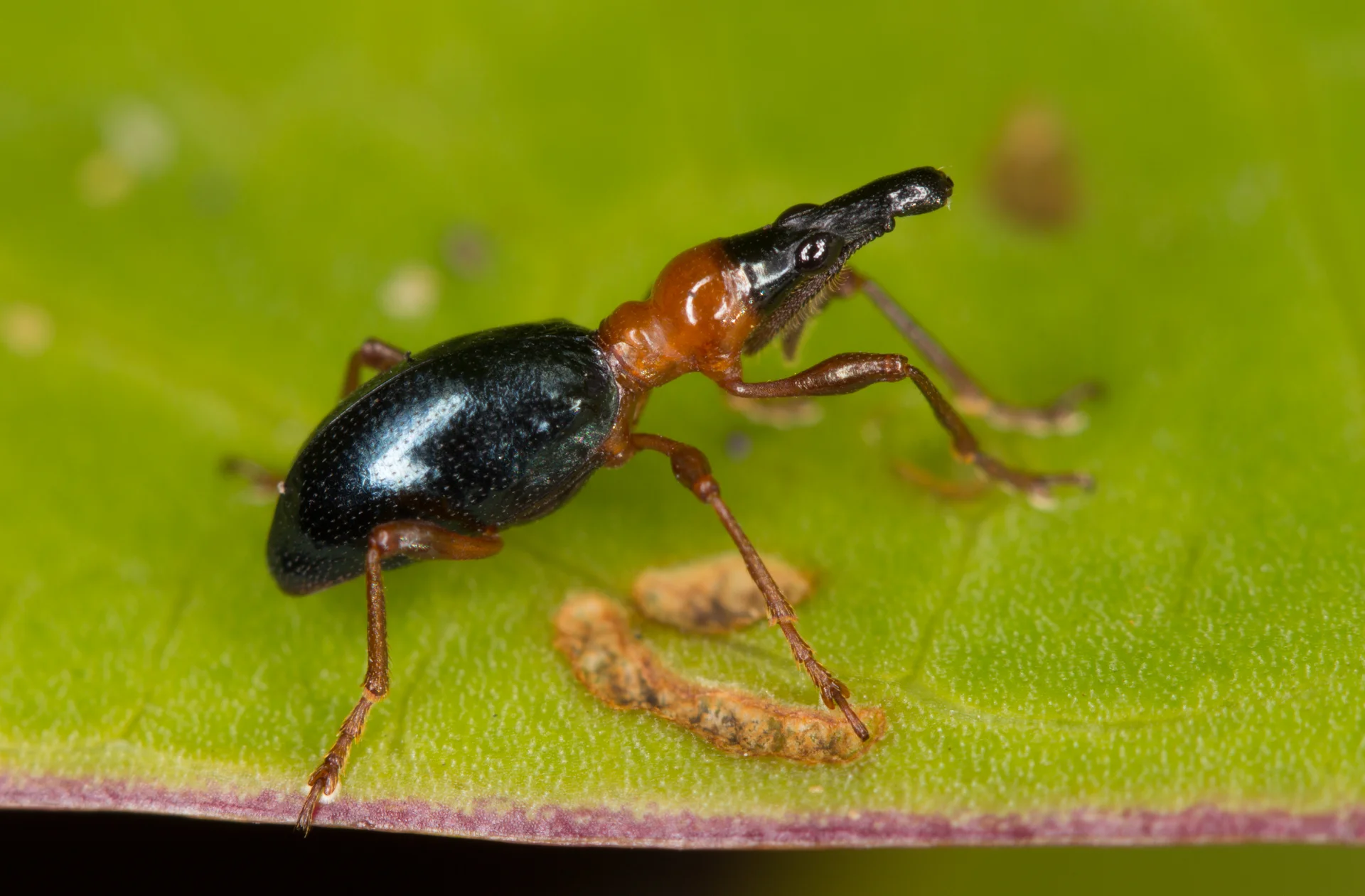
Photo: Graham Wise from Brisbane, Australia · CC BY 2.0
The sweetpotato weevil (Cylas puncticollis) is the single most destructive pest of sweet potato. The adult is a small, slender, ant-like black weevil with a long down-curved snout that feeds on the vines and lays its eggs in stems and in any storage root the soil leaves exposed. Its pale, legless grubs then tunnel unseen through the roots, and the plant fights back by filling even lightly-attacked roots with bitter, foul-smelling terpenes (natural defence oils) that make them unfit to eat or sell. Because the grubs work hidden inside the root and keep breeding after harvest, a light-looking attack in the field can become a ruined crop in the store.
Why it matters
Sweetpotato weevil is the most damaging pest of sweet potato — a bad attack can destroy up to 9 out of every 10 roots (90%), and it doesn't stop at harvest: the weevils keep breeding inside your stored roots. The worst part is that even a little feeding turns the whole root bitter and foul-smelling, so it can't be eaten or sold — a single grub can spoil a good root. And because the grubs work hidden inside the roots underground, by the time you see the damage the crop is already lost. That is why weevils are almost impossible to cure once they are established — your only real defence is to stop them ever reaching the roots.
When to act
Act on the first sign of adults, vine tunnelling or exposed cracking roots; because larvae feed hidden inside roots, low visible numbers already mean serious damage.
This guidance is general, compiled from published agronomic references including FAO and CABI. Thresholds and timing shift with your crop, your variety and the season.
In much of the region a spray is simply called mushonga — medicine. But a chemical group you cannot name is one you cannot rotate, and a product you did not write down has no pre-harvest interval you can observe. Mushonga, and other farming words →
The full sweetpotato weevil field guide
Identify it
The damage you see first
cut open a suspect root and look for dark, winding tunnels packed with wet, sawdust-like droppings (frass) and small pale grubs inside. Even before you cut, the smell and taste give it away — weevil-damaged roots turn bitter with a sharp, turpentine-like odour, while a good root is sweet and clean. On the vines, look for rough, corky feeding scars and swollen, cracked stem bases, with the plants above them wilting, yellowing and stunted.
The weevil itself
the adult is small — about the size of a grain of rice (5-6 mm) — slender, shiny black, with a long down-curved snout and bent (elbowed) feelers. It looks a lot like a small ant, but it moves slowly and, when you disturb it, it "plays dead" and drops off instead of scurrying away. It feeds at night and hides by day in soil cracks, under leaves and at the base of the vines, so you rarely catch it in the open.
The grub and the look-alikes
the young stage is a small, slender, legless, creamy-white grub with a pale brown head, found only inside the tunnels in the root — never loose in the soil. Don't confuse it with the fatter, C-shaped white grubs (beetle larvae) that have three pairs of legs and chew the outside of roots from the soil. And don't confuse the bitter, frass-filled tunnels with ordinary soft rot, which smells sour and slimy but has no grubs and no dry frass inside.
Scout for it
When to look
start once the crop reaches mid-season and the storage roots begin to swell, and keep going right up to harvest (mid-to-late season) — this is when the roots are in the ground where the weevil can reach them. Look hardest in hot, dry spells, when the soil dries and cracks, because those cracks are the doorway the weevil uses to get to the roots.
How to walk it
once a week, walk a big "W" across the field so you cover all four corners and the middle — not just the edge nearest the path. Make about 10 stops, and at each stop check 2-3 plants — around 20-25 plants in all.
What to check at each stop
part the soil at the base of the vines and look for the slender black weevils and their feeding scars; brush the soil off any storage root that is poking out and look for pin-holes and dark tunnels; and now and then lift or cut one root to check inside for tunnels and grubs.
Set a trap to catch them early
hang a pheromone trap (a lure that gives off the female weevil's natural scent to draw in the males) at the field edge and check it each week. It tells you the weevils have arrived before any damage shows on the roots.
The number that means act
with this pest there is no safe number to wait for — because the grubs feed hidden and even a little feeding ruins the root, treat just ONE find as your signal: 1 adult, 1 tunnelled vine, 1 pin-holed root, or any catch in the trap → act now. Don't wait for a count; by the time the damage is obvious, the roots are already spoiling.
Control it
Prevent it — start clean:
the weevil rides into a new field on infested cuttings. Take your vine cuttings only from a clean, weevil-free field, and take them from the tips (the weevil lives lower down, near the old roots). Better still, get cuttings from a nursery well away from last season's sweet potato.
Break the cycle — rotate and clean up:
the weevil is a weak flier and eats only sweet potato, so it survives between crops in old roots, volunteer plants and vine trash. Rotate — don't plant sweet potato on the same land, or right next to last year's field, two seasons running — and after harvest dig out and destroy every leftover root, volunteer and vine so nothing is left for it to breed in.
Keep the roots buried — this is the big one:
the weevil reaches the roots through cracks in dry soil. Earth up (hill) the ridges with soil every few weeks to keep the swelling roots covered, and water in dry spells to close the cracks where you can. Never leave the shoulders of the roots poking out in the sun.
Harvest on time — don't leave roots in the ground:
damage climbs fast the longer mature roots sit in warm, dry soil. Lift the crop as soon as it is ready, harvest the whole field at once, and don't leave a few plants standing as a bridge for the weevil into the next crop.
Act early — knock the numbers down without poison:
once you catch weevils, put out more pheromone traps for mass-trapping — many traps across the field pull in and drown the males so fewer eggs get laid. Where grubs and adults are in the soil, you can also drench the root zone with a biological agent — either Beauveria bassiana (a natural fungus that infects and kills the weevil) or beneficial nematodes (tiny worms that hunt soil grubs). These are safe for you, your family and bees.
Chemical — only as a last resort:
where a field is badly hit, you can dip the cuttings before planting and drench the base of the vines with an approved insecticide (a chemical that kills insects). Remember the grubs are sealed inside the roots where no spray can reach them, so chemicals mostly hit the adults and give only partial control. If you must spray: cover your skin, eyes, nose and mouth; spray in the cool of the day with the wind at your back; keep it away from food, water sources, children and bees; wait the full number of days the label says before harvest (the pre-harvest interval — the safe gap between spraying and eating); and wash yourself and your clothes afterwards. Rotate to a different chemical group each time so the weevils don't become resistant (stop being killed by a chemical they have met too often).
If it keeps spreading — or it's too late:
if traps and drenches aren't holding it and roots are already turning bitter, harvest early and salvage whatever clean roots you can rather than letting them spoil further. Sort carefully — never put damaged roots into store, because the weevil breeds on in storage and ruins the rest. Then treat that land as infested: clear away every root and vine and rest it from sweet potato for at least one or two seasons to starve the weevil out before you plant there again.
Catch sweetpotato weevil before it costs you the harvest
This guide is the general answer. Divisi works out yours — the week to scout your own field for sweetpotato weevil, and what to do the day you find it.


Crops it affects
Plan the crops it attacks

All planting calendars, country by country
Get Insights by email
A short digest of new Divisi articles. No email on quiet weeks.
Frequently asked questions
How do I identify sweetpotato weevil?
The damage you see first. cut open a suspect root and look for dark, winding tunnels packed with wet, sawdust-like droppings (frass) and small pale grubs inside. Even before you cut, the smell and taste give it away — weevil-damaged roots turn bitter with a sharp, turpentine-like odour, while a good root is sweet and clean. On the vines, look for rough, corky feeding scars and swollen, cracked stem bases, with the plants above them wilting, yellowing and stunted.
When should I take action against sweetpotato weevil?
Act on the first sign of adults, vine tunnelling or exposed cracking roots; because larvae feed hidden inside roots, low visible numbers already mean serious damage.
How do I control sweetpotato weevil?
Prevent it — start clean:. the weevil rides into a new field on infested cuttings. Take your vine cuttings only from a clean, weevil-free field, and take them from the tips (the weevil lives lower down, near the old roots). Better still, get cuttings from a nursery well away from last season's sweet potato.
Which crops are attacked by sweetpotato weevil?
Among the crops covered here: Sweet potato.