 Divisi
Taro beetle
Papuana · Insect
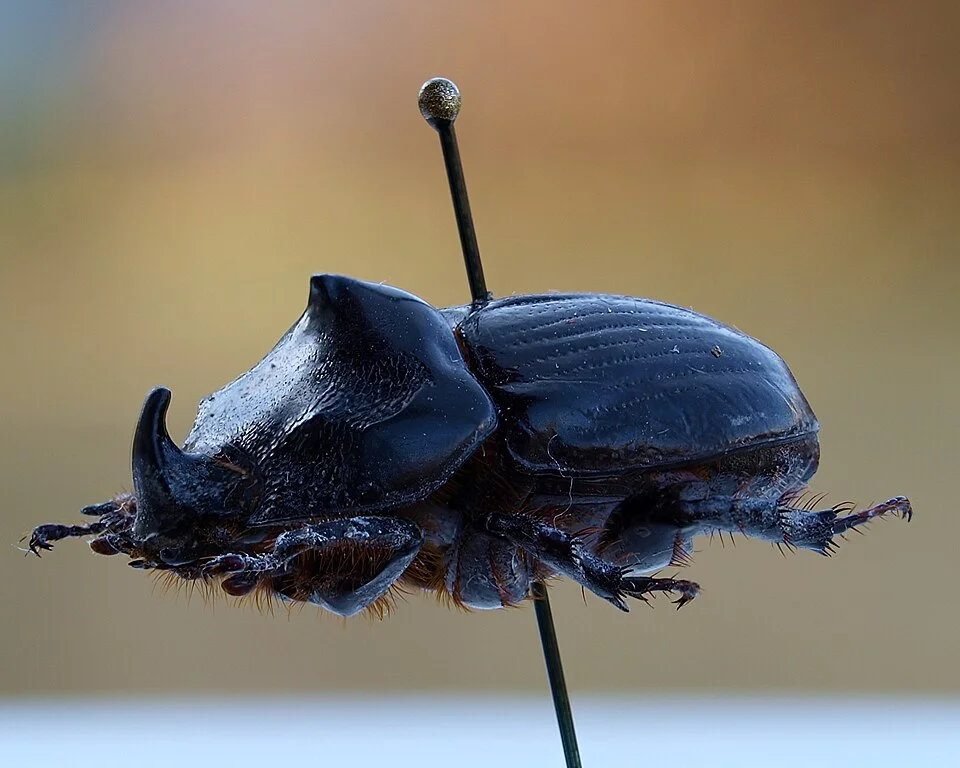
Photo: JohnSka · CC BY-SA 3.0
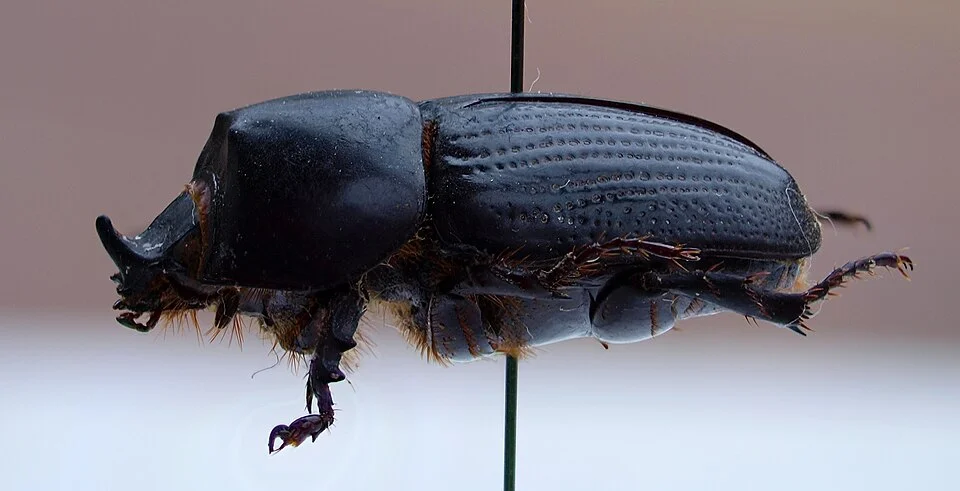
The taro beetle (Papuana) is a stout, shiny-black scarab beetle about the size of your thumb-tip, and it is the grown-up adult beetle — not a caterpillar or grub — that ruins your crop. The beetles shelter in the soil by day and come out at night, especially after rain, to burrow down and tunnel into taro corms. Their young (white grubs) never touch the crop at all: they breed in rotting compost, manure, grassland and swampy ground around the garden, and the adults simply fly in from there to feed. Because the damage happens underground and out of sight, an attack is often only discovered when you dig — by which time the corm may already be holed and rotten.
Why it matters
The taro beetle attacks the corm — the very part you dig up to eat and to sell. A bad infestation can destroy up to 9 in every 10 corms (90%), and even a single beetle can bore through and ruin a whole corm, leaving it holed, rotten and worthless. It is hard to beat because the grubs do not live in your crop at all — they breed in the grass, swamps and compost heaps around your garden, and the adults fly in at night to attack underground where you cannot see them until you dig. Once a corm is tunnelled the damage is done, so the whole fight is about denying the beetles their breeding grounds and catching the adults before they ever reach the corm.
When to act
Act as soon as adults or fresh tunnels are found; a single beetle can ruin a corm, so any established infestation near breeding sites warrants control.
This guidance is general, compiled from published agronomic references including FAO and CABI. Thresholds and timing shift with your crop, your variety and the season.
In much of the region a spray is simply called mushonga — medicine. But a chemical group you cannot name is one you cannot rotate, and a product you did not write down has no pre-harvest interval you can observe. Mushonga, and other farming words →
The full taro beetle field guide
Identify it
The damage you see first
healthy taro suddenly starts to wilt, yellow and stunt, and whole plants may lean over or topple as the roots and corm below are eaten away. The real proof is underground — dig up a suspect plant and you will find the corm (the swollen underground stem you harvest and eat) riddled with round tunnels and holes, with hollow cavities inside and secondary rot that turns it soft, foul-smelling and unsellable.
The beetle itself
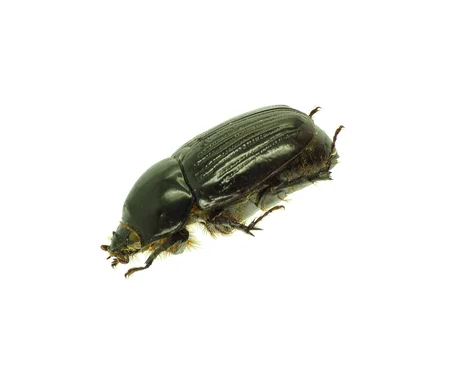
a stout, shiny-black beetle about the size of your thumb-tip (a large bean), with a hard, rounded shell like a dung beetle; some have a short horn on the head. It is the adult that does the damage — there is no caterpillar to find. By day it hides down in the soil right against the plant base; it comes out to feed at night, especially after rain.
Don't confuse it
the many black beetles crawling in your compost or manure heaps are mostly harmless — the taro beetle is the one you find bored into the corm or in the soil hard against the plant base. And a corm that is soft and wet-rotten but has no clean round tunnels is more likely a rot disease, not this beetle.
Scout for it
When to look
start once the corm begins to form and swell — from a few months after planting right through to harvest (the development, mid-season and late-season stages), because that is the whole time a corm sits in the ground for beetles to tunnel into. Check most often after heavy rain, and check hardest if your garden sits next to grassland, swamp, or compost and manure heaps — the beetles' breeding grounds.
How to walk it
cross the plot in a big "W" so you cover all four corners and the middle, making about 10 stops. Give extra attention to the rows closest to grassland, swamp or compost, because that is the edge the beetles fly in from.
What to check
at each stop pick a plant — especially any that is wilting or leaning — and gently scrape back the soil at its base to look for the stout black beetles and for fresh tunnels boring into the corm. After dark or after rain, walk the plot with a torch and look for the beetles out on the plant bases and soil surface.
Set a trap and know your number
place pheromone traps (traps baited with a scent lure that draws the beetles in) near the breeding grounds and plot edges to catch adults and show when a beetle flight is on. The threshold here is strict — even ONE beetle or ONE fresh tunnel means act now. A single beetle can ruin a whole corm, so do not wait for numbers to build: any adults in the traps, or any fresh tunnels near a breeding site, → start control immediately.
Control it
Prevent it — starve the breeding grounds (your strongest tool):
the grubs do not live in your crop, they breed in rotting matter, so clear the grass around the garden, drain swampy, waterlogged ground, and turn over or cart away compost and manure heaps near the plot. Deny the beetles a nursery and far fewer adults ever reach your corms.
Plant clean and keep it clean
plant only clean setts (the leafy corm-tops or small cormels you use for planting, free of tunnels and grubs) into well-prepared soil, keep the plot weed-free, and rotate and fallow — never grow taro on the same ground season after season, which only builds beetle numbers. Where you can, do not plant new taro right up against grassland, swamp or compost.
Act early
-
hand-collect and trap:
go out at night or after rain with a torch and pick the beetles off the plant bases by hand, dropping them into a tin of water and ash. Run pheromone traps near the breeding grounds and edges to mass-trap large numbers of adults before they reach the corms.
-
use a natural killer fungus:
treat the breeding sites (compost heaps, damp soil, grassy edges) with an entomopathogen — a natural fungus (sold as Metarhizium) that infects and kills both the grubs and the adult beetles. It is biological and safe for you and your family; keep it cool and out of the sun, follow the label, and wash your hands after handling.
Chemical — only as a last resort:
where beetle pressure stays high despite all the above, treat the planting holes or the plant base with an approved soil insecticide (a poison placed in the soil to kill beetles as they burrow). Handle it with full care: cover your skin, eyes, nose and mouth, apply in the cool of the day with the wind behind you, and keep it well away from food, drinking water, children, animals and bees — taro is often grown near water, so guard the water especially. Wash yourself and your clothes afterwards, respect the pre-harvest interval (the number of days you must wait between treating and digging or eating the corm), and rotate to a different chemical group each time so the beetles do not build resistance (survive the poison because it has been overused).
If it keeps spreading
beetles fly in from next door, so one garden alone cannot win — walk the wider area, find and clear the unchecked breeding site (an untended swamp, grass patch or compost heap), and get your neighbours to clean up their breeding grounds too. When it is too late this season and corms are already riddled, harvest early to salvage what you can, then cut out and burn or bury the infested corms — never throw them on the compost, which only breeds the next generation. Finally, rest the ground and rotate to a non-taro crop before you plant taro there again.
Catch taro beetle before it costs you the harvest
This guide is the general answer. Divisi works out yours — the week to scout your own field for taro beetle, and what to do the day you find it.


Crops it affects
Plan the crops it attacks

All planting calendars, country by country
Get Insights by email
A short digest of new Divisi articles. No email on quiet weeks.
Frequently asked questions
How do I identify taro beetle?
The damage you see first. healthy taro suddenly starts to wilt, yellow and stunt, and whole plants may lean over or topple as the roots and corm below are eaten away. The real proof is underground — dig up a suspect plant and you will find the corm (the swollen underground stem you harvest and eat) riddled with round tunnels and holes, with hollow cavities inside and secondary rot that turns it soft, foul-smelling and unsellable.
When should I take action against taro beetle?
Act as soon as adults or fresh tunnels are found; a single beetle can ruin a corm, so any established infestation near breeding sites warrants control.
How do I control taro beetle?
Prevent it — starve the breeding grounds (your strongest tool):. the grubs do not live in your crop, they breed in rotting matter, so clear the grass around the garden, drain swampy, waterlogged ground, and turn over or cart away compost and manure heaps near the plot. Deny the beetles a nursery and far fewer adults ever reach your corms.
Which crops are attacked by taro beetle?
Among the crops covered here: Cocoyam / Taro.