 Divisi
Teff shoot fly
Atherigona · Insect
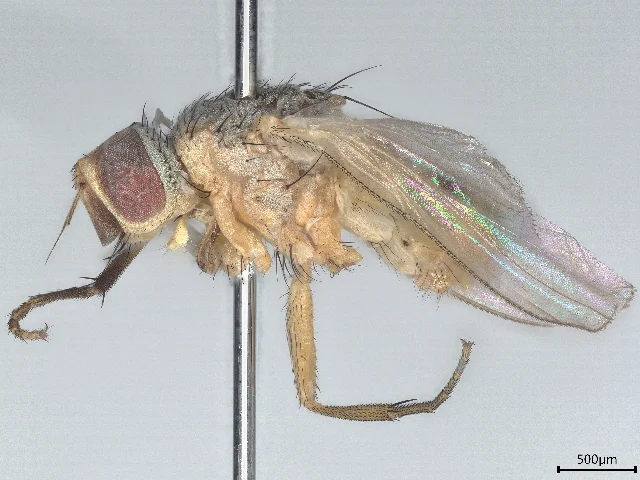
Photo: Khan, Kakar & Kamran (2024) · CC BY 4.0
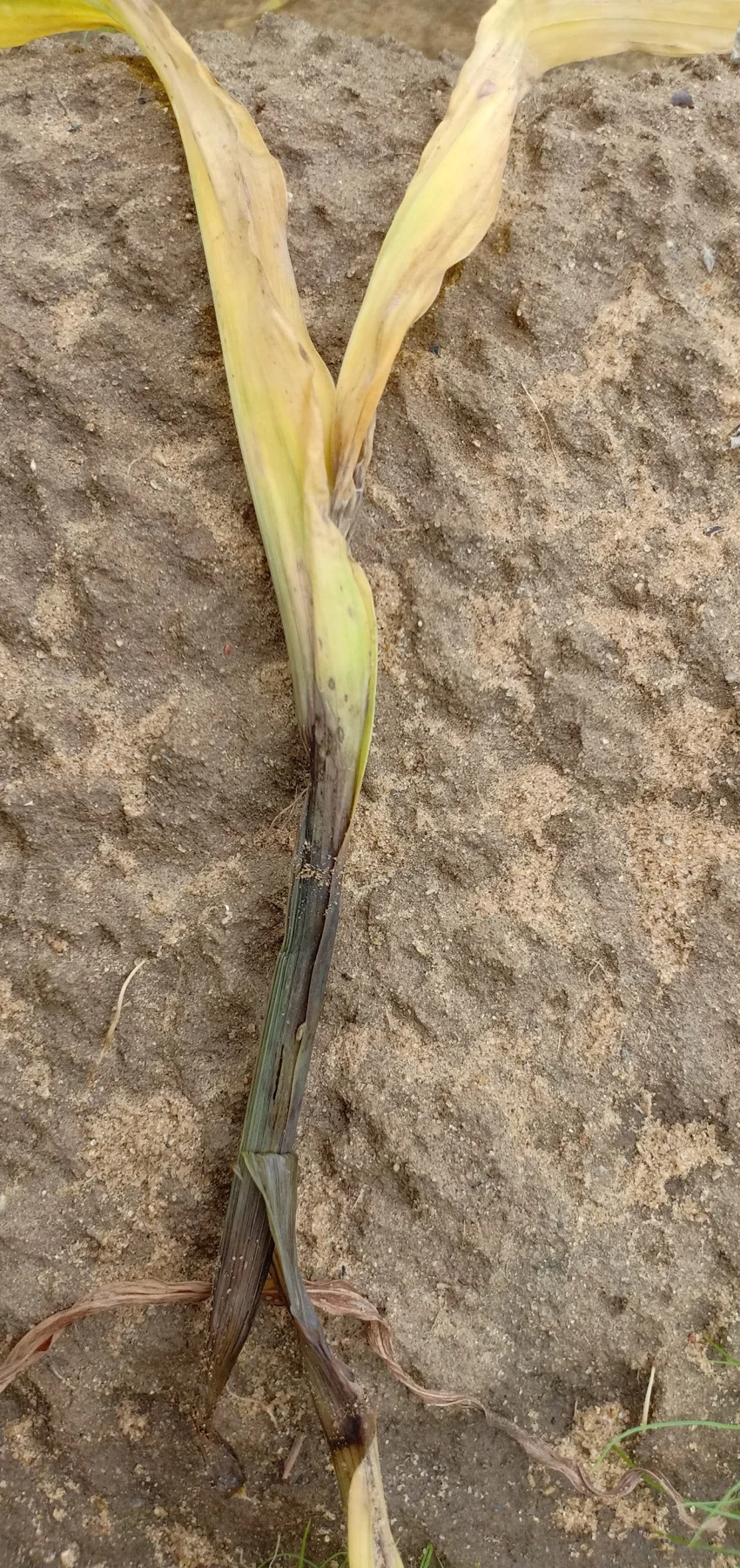
Teff shoot fly is a small grey fly, a little smaller than a common housefly, whose maggots attack teff only in its first few weeks. The adult lays tiny eggs on young seedling leaves; the maggot hatches, crawls down inside the leaf sheath and bores into the central growing shoot, cutting it. The killed central leaf — the deadheart — turns yellow, dries and pulls out easily while the outer leaves stay green. Hit seedlings either die or throw out a bush of weak, unproductive side-shoots. It bites hardest on late-planted, thin or slow-growing teff in warm weather.
Digvijaysinh Padhiyar · CC BY-SA 4.0 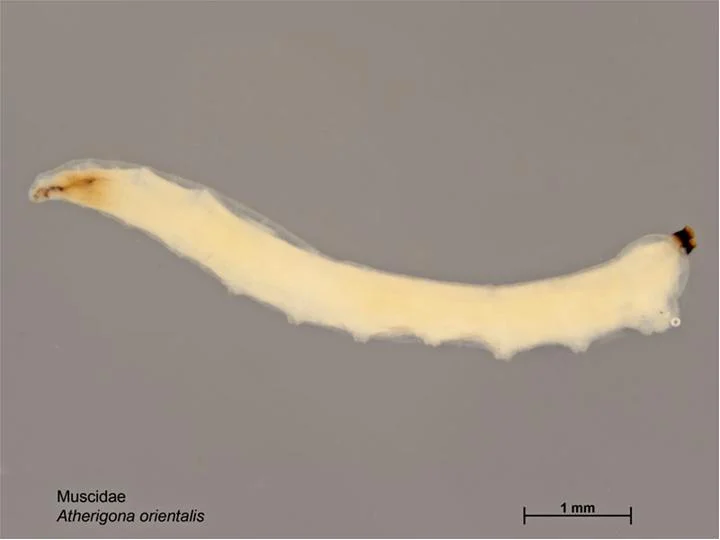
Caroline Harding, MAF · CC BY 3.0 au
Why it matters
Teff shoot fly strikes your crop at its weakest moment — the tiny seedling — and a bad attack can wipe out up to half your teff (50%) before it ever forms a head. Once a maggot has bored into a seedling's heart and killed it, that plant is finished: no spray can bring back a dead central shoot. That is why this pest is beaten by stopping it early and growing a strong, fast stand, not by trying to rescue plants after the damage is done.
When to act
Act when about 10 percent of seedlings show deadheart or shoot-fly adults are active during the vulnerable seedling-to-tillering window.
This guidance is general, compiled from published agronomic references including FAO and CABI. Thresholds and timing shift with your crop, your variety and the season.
In much of the region a spray is simply called mushonga — medicine. But a chemical group you cannot name is one you cannot rotate, and a product you did not write down has no pre-harvest interval you can observe. Mushonga, and other farming words →
The full Teff shoot fly field guide
Identify it
The first and clearest sign is 'deadheart'
on a young seedling the innermost central leaf turns yellow, then brown, dries out, and slides out easily when you pull it gently — while the outer leaves around it stay green. ('Deadheart' just means the growing heart of the shoot has been killed.) The little base you pull out is often soft, rotten and bad-smelling.
Around the deadhearts you'll see stunted, off-colour seedlings, gaps and thin bare patches in the stand, and hit plants throwing out a bush of many weak, thin side-shoots (tillers) that never make good grain heads.
The fly itself
is small and grey — smaller than a common housefly, the colour of ash — and you'll catch it resting on or running over the young leaves in the warm part of the day. It lays tiny white eggs, like slivers of rice, on the seedling leaves.
The maggot
is the real culprit: a tiny pale, legless grub, shorter than a grain of rice, found down inside the leaf sheath or in the rotten base of a deadheart when you split the little stem open.
Don't confuse deadheart with drought or hunger
Dry-weather wilting droops the whole seedling and the central leaf will not pull out cleanly; a nitrogen shortage yellows the older, outer leaves evenly right across the field. Only shoot-fly deadheart kills just the central leaf, lets it slide out easily, and leaves a rotten, smelly base — often with a maggot inside.
Scout for it
Watch from the day the seedlings show above ground until the crop finishes tillering
— roughly the first three to five weeks, which is its whole vulnerable window. This is when a maggot can still reach and kill the central shoot; once the stems start to lengthen, the crop has grown out of danger.
Look hardest in warm weather (about 20–32°C) and on any late or thin stand
— that is when the flies are busiest and your seedlings are most exposed.
Walk a big "W" across the field so you check the middle and all four corners, not just the edge by the path. Make about five stops.
At each stop, look closely at about 20 seedlings: pull gently on the central leaf of any stunted or off-colour one to test for deadheart, and split open a few weak stems at the base to hunt for the pale maggot.
Act as soon as you find about 1 deadheart in every 10 seedlings (10%)
— or when you see the little grey flies busy over the young stand on a warm day. At that level the pest is building and your youngest seedlings need protecting now.
Control it
Prevent it — grow a fast, strong stand (your best defence):
plant early, before the warm-weather flies build up, and at the recommended higher seed rate so the crop comes up thick and races through the tender seedling stage. Use a firm, well-prepared, moist seedbed and enough nitrogen for quick, vigorous early growth. A dense, vigorous stand simply outgrows the fly, and the extra plants make up for any that are lost.
Starve the fly out
clear away volunteer teff and grassy weeds in and around the field — these are the fly's hideouts and alternate homes where it breeds up. And sow your whole field at once, not in dribs and drabs; staggered planting keeps handing the fly a fresh supply of young seedlings to breed on.
Only if the fly is a known problem in your area, or the young stand is under heavy attack, reach for chemicals — as a last resort
Before sowing, treat the seed with an approved systemic seed treatment ('systemic' means the chemical is taken up inside the plant and protects the seedling from within for its first weeks), or spray an approved insecticide on the seedlings early, while they are still in the vulnerable stage. A spray cannot reach or revive a maggot already sealed inside a dead central shoot, so early timing is everything.
Handle any chemical with care
cover your skin, eyes, nose and mouth; spray in the cool of the morning or evening with the wind at your back; keep it well away from food, drinking water, children, animals and bees; respect the pre-harvest interval (the set number of days the label tells you to leave between the last spray and cutting the crop); and wash yourself and your clothes afterwards. Treated seed is poison — never eat it or feed it to animals, mark the bags clearly, and keep it from children. To stop the fly building resistance, rotate to a different chemical group rather than using the same one season after season.
If deadheart keeps climbing → lean on the survivors, don't chase the dead
You cannot save a seedling whose heart is already killed, so keep the weeds down and the nitrogen up to push the healthy plants and their side-tillers to close the gaps. If a patch is badly thinned and the season is still young, re-sow or gap-fill it now while there is still time. And once the crop is past tillering and the stems are lengthening, it has grown out of danger — stop spending on sprays, let it finish, and plan to plant earlier and treat your seed from the start next season.
Catch Teff shoot fly before it costs you the harvest
This guide is the general answer. Divisi works out yours — the week to scout your own field for Teff shoot fly, and what to do the day you find it.


Crops it affects
Plan the crops it attacks

All planting calendars, country by country
Get Insights by email
A short digest of new Divisi articles. No email on quiet weeks.
Frequently asked questions
How do I identify Teff shoot fly?
The first and clearest sign is 'deadheart'. on a young seedling the innermost central leaf turns yellow, then brown, dries out, and slides out easily when you pull it gently — while the outer leaves around it stay green. ('Deadheart' just means the growing heart of the shoot has been killed.) The little base you pull out is often soft, rotten and bad-smelling.
When should I take action against Teff shoot fly?
Act when about 10 percent of seedlings show deadheart or shoot-fly adults are active during the vulnerable seedling-to-tillering window.
How do I control Teff shoot fly?
Prevent it — grow a fast, strong stand (your best defence):. plant early, before the warm-weather flies build up, and at the recommended higher seed rate so the crop comes up thick and races through the tender seedling stage. Use a firm, well-prepared, moist seedbed and enough nitrogen for quick, vigorous early growth. A dense, vigorous stand simply outgrows the fly, and the extra plants make up for any that are lost.
Which crops are attacked by Teff shoot fly?
Among the crops covered here: Teff.