 Divisi
Tomato leafminer
Phthorimaea absoluta · Insect
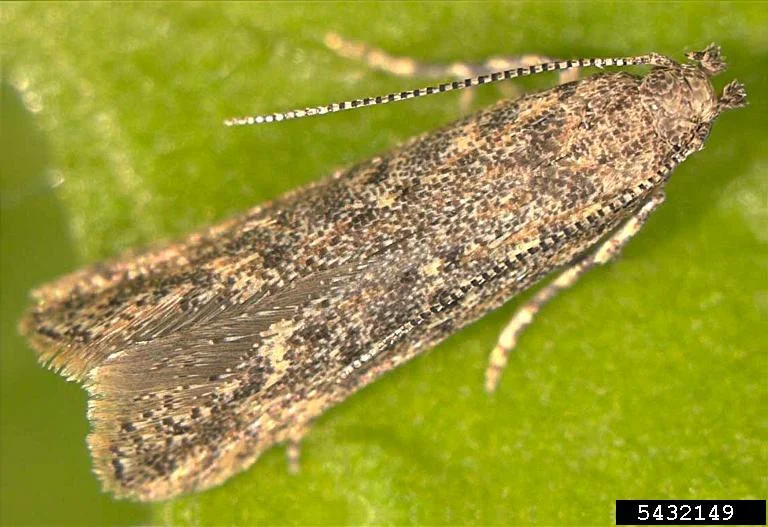
Photo: Marja van der Straten, NVWA Plant Protection Service, Bugwood.org · CC BY 3.0 us
The tomato leafminer (Phthorimaea absoluta, also called Tuta absoluta) is a tiny silvery-grey-brown moth whose caterpillars are one of the most destructive pests of tomato in the world. The moth lays eggs on the leaves, stems and growing tips; the grubs then tunnel inside the leaves, bore into stems and shoots, and burrow into the fruit — always feeding where sprays cannot easily reach. It also attacks potato and pepper, breeds very fast with many overlapping generations a year, and quickly stops responding to chemicals, so it can wreck a whole crop in a single season.
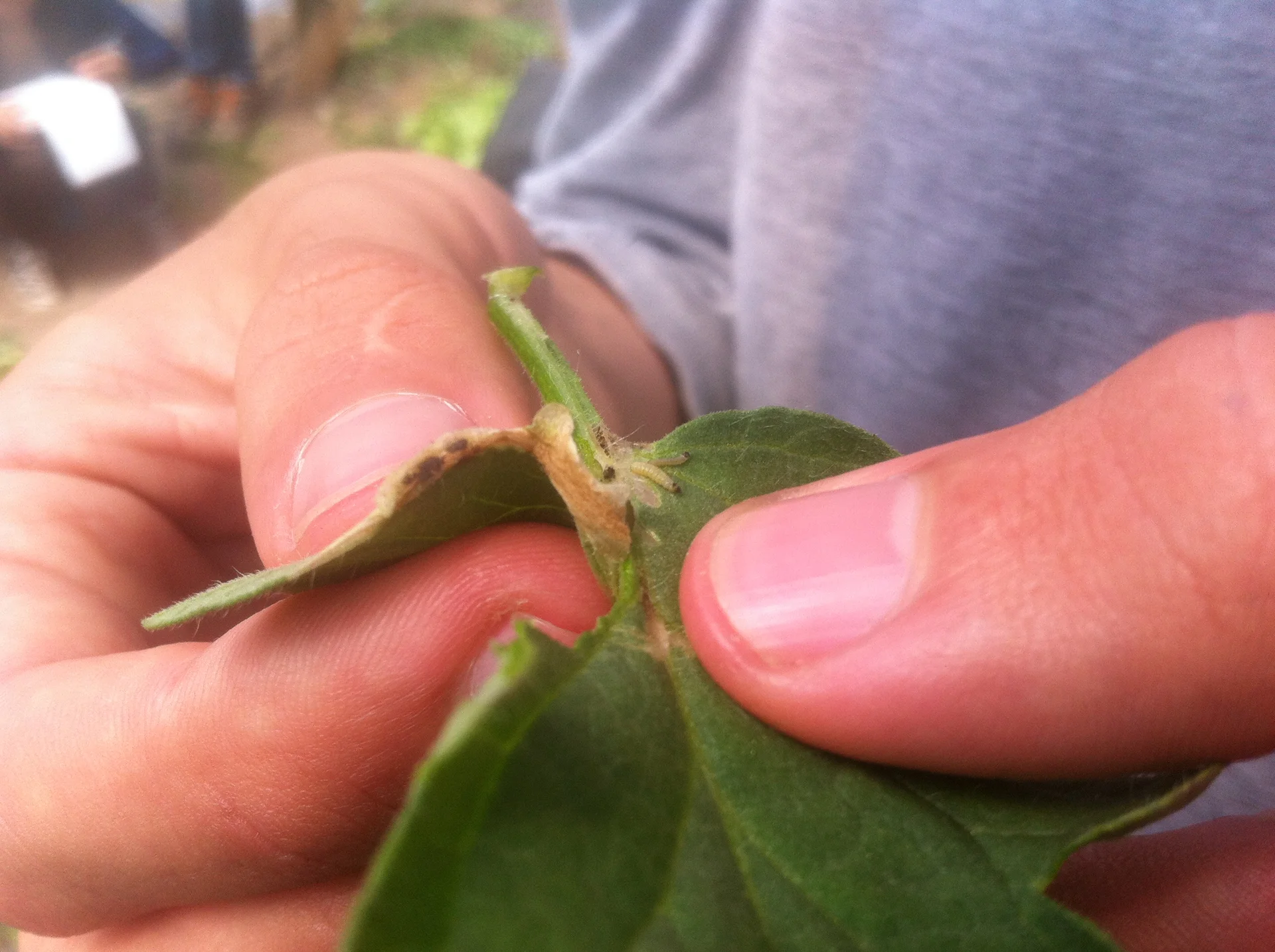
Astronatas · CC BY-SA 4.0 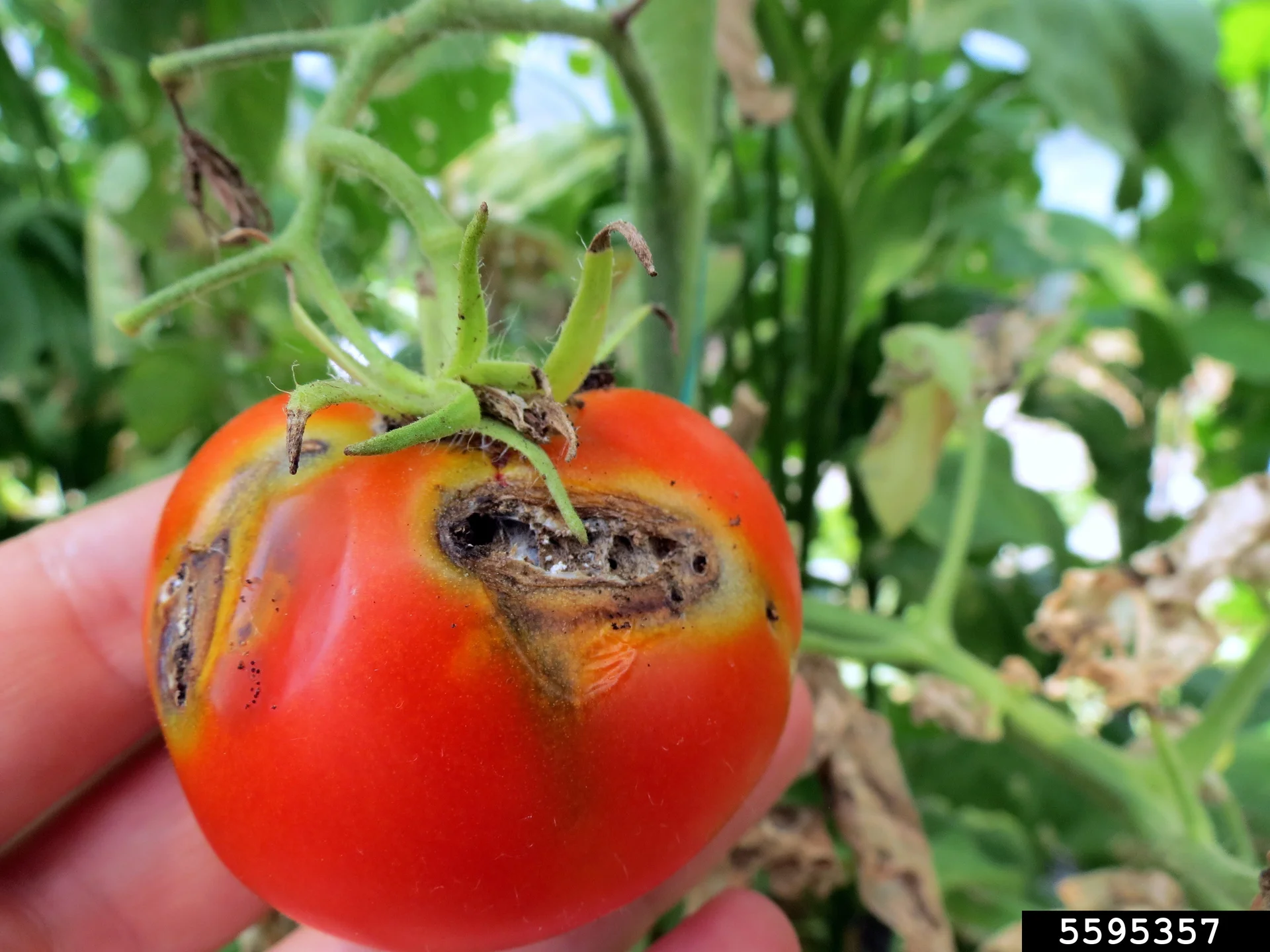
Metin Gulesci, Leaf Tobacco, Bugwood.org · CC BY 3.0 us
Why it matters
Tomato leafminer is the most dangerous pest of tomato — a bad attack can take almost your whole crop (up to 90%) and leave the fruit tunnelled and unsellable. The grubs feed hidden inside the leaves, stems and fruit, where sprays struggle to reach them, and they breed so fast that they soon stop dying to the chemicals you use. Once it settles into a field it is very hard to clear, so your best chance is to catch it at the very first sign and never let its numbers build.
When to act
Act on the first fresh mines or the first males caught in pheromone traps; because generations are fast and damage escalates quickly, do not wait for heavy mining.
This guidance is general, compiled from published agronomic references including FAO and CABI. Thresholds and timing shift with your crop, your variety and the season.
In much of the region a spray is simply called mushonga — medicine. But a chemical group you cannot name is one you cannot rotate, and a product you did not write down has no pre-harvest interval you can observe. Mushonga, and other farming words →
The full tomato leafminer field guide
Identify it
The first thing you'll see
is pale, see-through blotches or blisters on the leaves. A mine is a hollow the grub eats inside the leaf, between its two skins. Hold a leaf up to the light: a fresh mine looks like a translucent window with tiny dark grains inside — that grit is frass, the grub's droppings. As the mine ages the leaf patch turns brown, dry and papery.
Check the growing tips and stems for tunnels too, and — once fruit forms — the fruit itself. You'll find tiny pinholes near the green cap (the calyx, the star-shaped part where the fruit joins the stem), often ringed with dark frass, with galleries just under the skin. These holes let in rot, so the fruit blackens and cannot be sold — this is where the pest hurts you most.
The grub
is a small caterpillar no longer than a grain of rice (up to about 8 mm), cream to greenish, with a dark band just behind its head. The moth is about the size of a rice grain, silvery grey-brown, with thread-like antennae and faint black speckles on its wings; it hides in the leaves by day and flies at dusk and after dark.
Don't confuse it
the common leafminer fly makes a thin, winding, snake-like white line with a legless maggot inside — tomato leafminer makes a broad, irregular blotch with a true caterpillar. A fungal leaf spot is a solid brown patch (often with rings) with no grub and no dark grains — a mine is a see-through window with frass inside. And on fruit, the bollworm chews one big hole, while leafminer leaves several tiny pinholes near the green cap.
Scout for it
Start scouting as soon as the plants take off after transplanting, and keep going right through flowering, fruiting and up to harvest. Leafminer attacks the whole life of the crop, and the worst loss comes late, once it gets into the fruit — so never stop checking. Pressure is highest in warm weather (around 20–30 °C) and under tunnels or greenhouses, where it breeds all year.
Hang pheromone traps the day you transplant. These are baited with the scent the female moth gives off, so they lure and catch the male moths and warn you the flight has arrived. Check them twice a week.
Twice a week, walk a large "W" across the field so you cover all four corners and the middle — not just the row beside the path. Make about 10 stops and check several plants at each, at least 10 plants across the field.
At each stop, turn over the young upper leaves and hold them to the light for fresh mines, check the growing tips and stems for tunnels, and — once fruiting — check the fruit around the green cap for pinholes and frass.
Only fresh, active mines count: pale and see-through, moist, with fresh dark frass and a live grub inside. An old mine is brown, dry and empty — that's a past attack, not a reason to spray again.
Act on even ONE fresh mine
on your walk, or the first moths caught in your trap — whichever comes first. Because the pest breeds so fast and the damage escalates so quickly, do not wait for heavy mining: by the time leaves are covered it is already inside the stems and fruit, and far harder to stop.
Control it
Start clean
plant healthy seedlings from a screened, insect-proof nursery — never carry in seedlings that already have mines. Where you can, grow under insect-proof netting to keep the moths off the crop in the first place.
Break the cycle
don't grow tomato on the same land season after season. Rotate to a crop that is NOT in the tomato family — remember potato and pepper are also hosts, so following tomato with potato does not break the cycle. Pull out self-sown "volunteer" tomatoes (plants that come up on their own from last crop) and tomato-family weeds such as black nightshade, and after harvest pull and destroy all plant remains promptly — bury or burn them, don't leave a heap of mined stalks beside your next planting.
Knock numbers down early
hang many pheromone traps — this is mass trapping, enough traps to actually cut the moth numbers, not just count them. As you scout, pick off and destroy every mined leaf, tunnelled shoot and holed fruit; carry a bag and take them out of the field, don't drop them on the ground where the grub simply finishes growing.
Use the living helpers
small natural enemies — the predatory bug Nesidiocoris and the tiny egg-parasite wasp Trichogramma — attack the eggs and grubs, so avoid broad poisons that wipe them out too. And spray Bt (Bacillus thuringiensis), a natural bacterial spray that only harms caterpillars and is safe for people, bees and helpful insects, onto the young grubs while they are still small and near the leaf surface, in the cool of the morning or evening, before they tunnel deep.
Chemical only as a last resort
if it keeps escalating, use a diamide (a family, or group, of insecticide) at the first mines — spray early, because once the grub is sealed inside the leaf, stem or fruit, a contact spray (one that kills only what it directly lands on) can't reach it. Safety every time: cover your skin, eyes, nose and mouth; spray in the cool of morning or evening with the wind at your back; keep it well away from food, drinking water, children, animals and bees; and respect the pre-harvest interval — the set number of days you must wait after spraying before it is safe to pick (this matters greatly on tomato, because you harvest again and again). Wash yourself and change your clothes afterwards. And rotate groups: never spray the same group twice in a row — leafminer builds resistance (stops dying to a spray you keep using) very fast, so switch to a different insecticide group each time and lean on traps and Bt so you spray less often.
If it keeps spreading despite all this
— mines everywhere, fruit riddled, sprays no longer working — strip out and destroy the worst plants, harvest any clean fruit early before it is lost, and then at the end of the season pull up and destroy the whole crop and every plant remnant, clear all volunteers and tomato-family weeds, and take a host-free break (no tomato, potato or pepper for a season) so you don't hand the pest straight to your next planting.
Catch tomato leafminer before it costs you the harvest
This guide is the general answer. Divisi works out yours — the week to scout your own field for tomato leafminer, and what to do the day you find it.


Crops it affects
Plan the crops it attacks

All planting calendars, country by country
Get Insights by email
A short digest of new Divisi articles. No email on quiet weeks.
Frequently asked questions
How do I identify tomato leafminer?
The first thing you'll see. is pale, see-through blotches or blisters on the leaves. A mine is a hollow the grub eats inside the leaf, between its two skins. Hold a leaf up to the light: a fresh mine looks like a translucent window with tiny dark grains inside — that grit is frass, the grub's droppings. As the mine ages the leaf patch turns brown, dry and papery.
When should I take action against tomato leafminer?
Act on the first fresh mines or the first males caught in pheromone traps; because generations are fast and damage escalates quickly, do not wait for heavy mining.
How do I control tomato leafminer?
Start clean. plant healthy seedlings from a screened, insect-proof nursery — never carry in seedlings that already have mines. Where you can, grow under insect-proof netting to keep the moths off the crop in the first place.
Which crops are attacked by tomato leafminer?
Among the crops covered here: Tomato.