 Divisi
Bacterial spot
Xanthomonas spp. · Bacterial
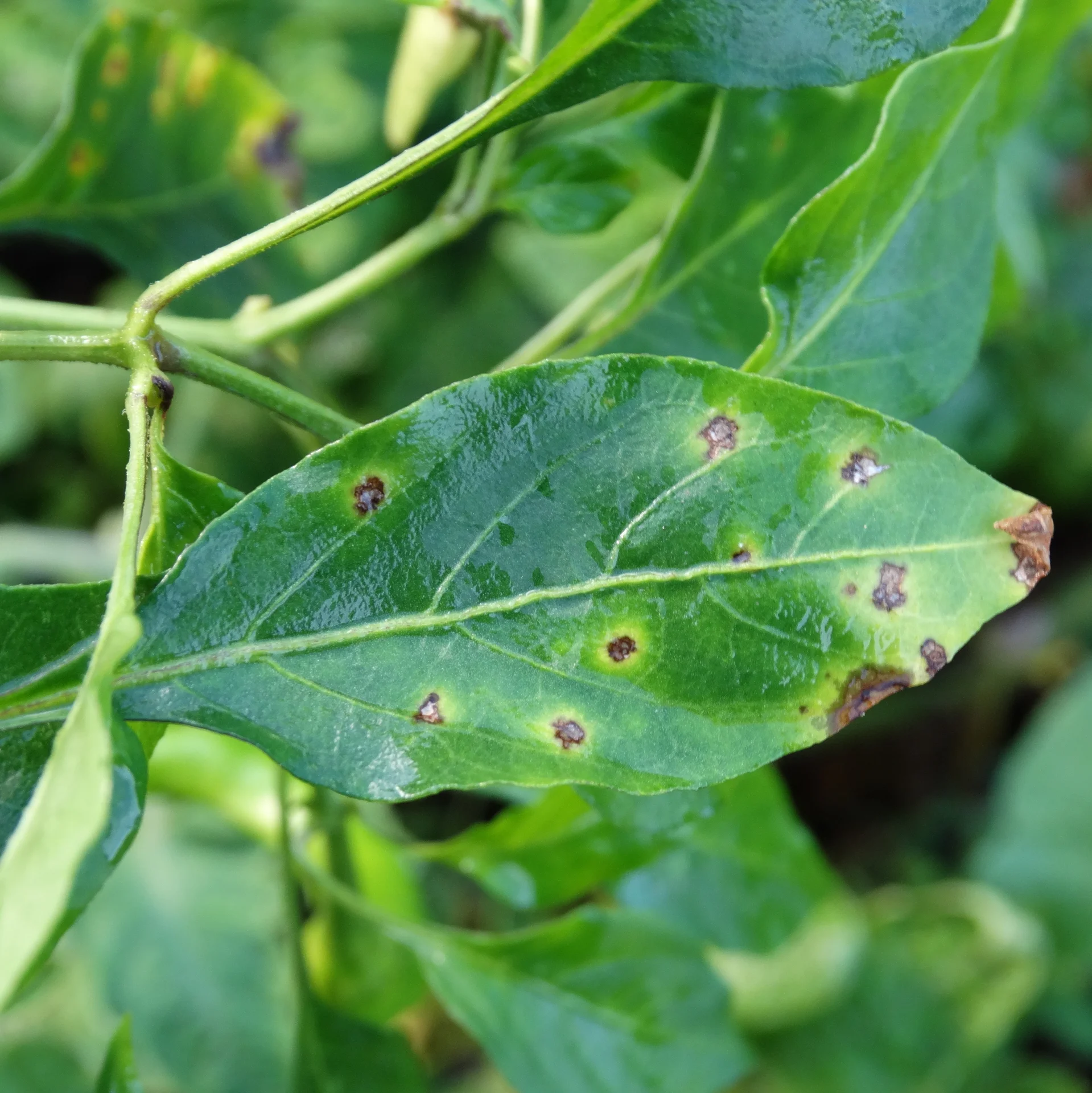
Photo: Scot Nelson · CC0
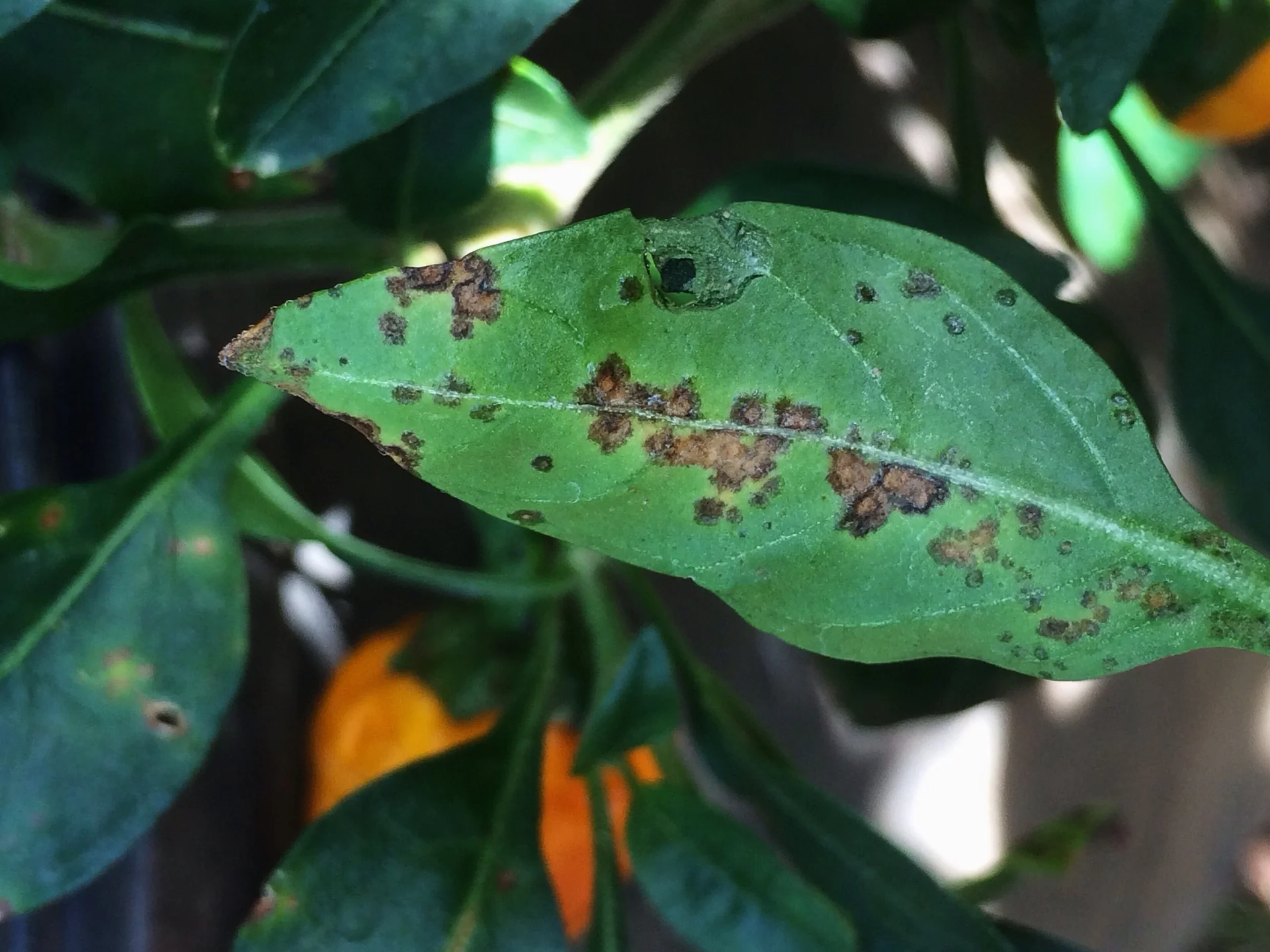
Bacterial spot is a warm-weather bacterial disease of tomato, pepper and chili. The germ rides in on infected seed and seedlings, then splashes from plant to plant in rain and overhead watering, thriving in warm, wet, humid weather. It shows as small dark greasy spots on the leaves and rough, scabby spots on the fruit — and once it is in your field it cannot be cured, only slowed.
Scot Nelson · CC0 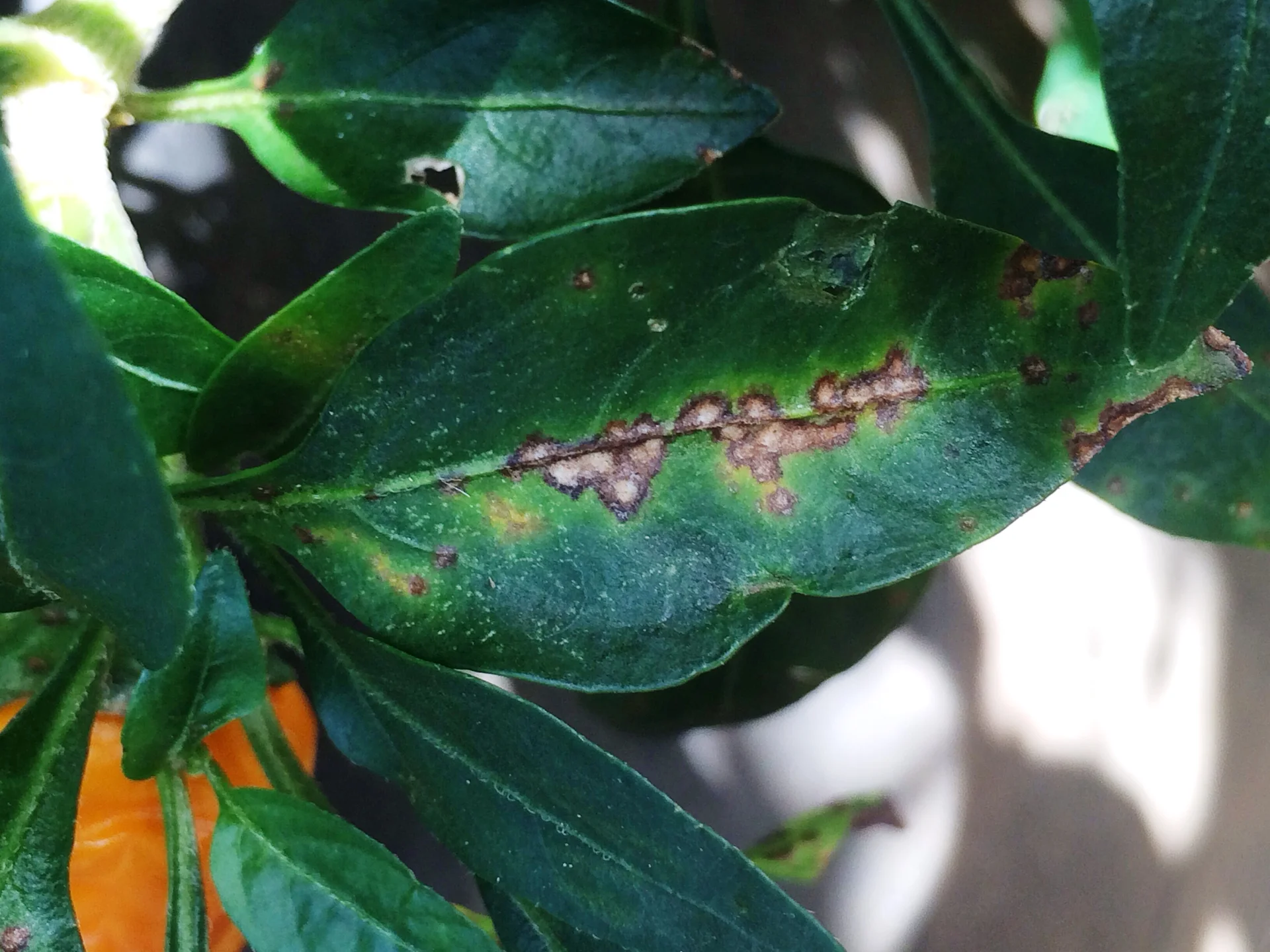
Scot Nelson · CC0
Why it matters
Bacterial spot can take up to half your crop. It scabs the fruit so you can't sell it, and strips the leaves so the sun scorches whatever fruit is left. The hardest part: once it is in your field there is no cure — copper and clean habits only protect the leaves and fruit that are still healthy, so stopping it early is everything.
When to act
Start copper protection when small dark water-soaked spots first appear on leaves or fruit in warm wet weather, since the disease cannot be cured once established.
This guidance is general, compiled from published agronomic references including FAO and CABI. Thresholds and timing shift with your crop, your variety and the season.
In much of the region a spray is simply called mushonga — medicine. But a chemical group you cannot name is one you cannot rotate, and a product you did not write down has no pre-harvest interval you can observe. Mushonga, and other farming words →
The full Bacterial spot field guide
Identify it
The first thing you see — leaf spots:
tiny dark spots on the leaves, smaller than a match-head, that look wet and greasy. Hold a spotted leaf up to the light and the spot looks see-through — this greasy, water-soaked look is the giveaway. Each spot is dark brown to black with a yellow ring (halo) around it. Look first on the lower and inner leaves, and in the early morning when there is dew, when the spots stand out most.
As it spreads
the spots join up, whole leaves turn yellow and drop off, and dark streaks appear on the stems and leaf-stalks. On the fruit you get small, raised, rough scabby spots — like tiny warts or scabs that crack open — and this is what makes the fruit unsellable. Bare, leafless plants also let the sun scorch the exposed fruit.
Tell it apart from look-alikes
early blight makes bigger brown spots with rings inside them, like a target or bullseye, dry and papery on the older lower leaves — not small, wet and greasy. Septoria spots are small too but have pale grey centres dotted with tiny black specks. Bacterial spot spots stay small, dark, greasy-looking with a yellow halo, and the rough scabs on the fruit are its clearest fingerprint.
Scout for it
When to look
check every week from the time the plants are pushing out leaves and setting fruit — the development, fruiting and late-fruit stages — and always within a day or two after rain or overhead watering. Look hardest during warm, muggy spells (around 24-30°C and very humid), because warm wet weather is when it explodes.
Start clean — check the seedlings first:
the germ rides in on the seed and the young transplants (it is 'seed- and transplant-borne'), so inspect your nursery plants before you plant them out. Throw away any seedling with even one dark greasy spot — never plant a spotted seedling, or you carry the disease straight into a clean field.
How to walk the field
walk a big 'W' so you cover all four corners and the middle, not just the row by the path. Make about 10 stops and check 5 plants at each (about 50 plants). At each plant look at the lower and inner leaves, the leaf undersides, the stems and any fruit — go early while the dew is still on, when the greasy spots are easiest to see.
The trigger to act
the moment you find even ONE plant with fresh, wet-looking spots during a warm wet spell → start copper protection across the whole field now. Because the disease cannot be cured, there is no 'wait until 20%' like with a pest — the first spots are your signal, and every day you wait it spreads further on the splashing rain.
Control it
Prevent it
-
resistant variety + a clean start:
grow a resistant or tolerant variety if you can get one matched to your area (this is one of your strongest tools). Start with certified clean seed and healthy transplants — the disease comes in on infected seed and seedlings, so clean planting material is how you keep it out of the field in the first place.
-
rotation + clean-up:
rotate away from the tomato-pepper family (the solanaceous crops — tomato, pepper, chili, eggplant, potato) for 2-3 years, and don't plant right beside last season's plot. After harvest, pull out and burn or bury all old plants, fallen leaves and self-sown 'volunteer' seedlings, where the germ survives to infect the next crop.
-
keep it dry, don't carry it on your hands:
water at the base with a can or drip line, not from overhead — splashing water is exactly how it jumps from plant to plant. Stake and space plants so the leaves dry fast after rain. Never work among wet plants — the germ rides on your hands, clothes and tools; wait until the leaves are dry and wash your hands between plots.
Act early — at the very first spots:
in dry weather, snap off and carry away the worst spotted leaves and pull the worst plants (drop them in a bag, not on the ground). Then start copper straight away. There is no biological spray or handpicking that cures this disease — keeping the field dry and beginning protection early is the 'act early' step.
Chemical, last resort — copper (the one spray):
copper (the one recommended spray, often mixed with mancozeb) is protective, not curative — it coats healthy leaves and fruit so new spots can't take hold, but it cannot heal spots already there. Start at the first sign and repeat every 7-10 days while the weather stays warm and wet. Safety: cover your skin, eyes, nose and mouth; spray in the cool of morning or evening with the wind behind you; keep it off food, drinking water, children and bees; respect the pre-harvest interval (the wait, printed on the label, between your last spray and picking); and wash yourself and your clothes afterwards. Resistance: don't lean on copper alone — the bacteria can get used to copper — so keep up the clean-seed, rotation and dry-watering habits and rotate or tank-mix as the label allows.
If it keeps spreading → cut your losses cleanly
if it spreads despite copper, accept that you cannot cure it — keep the field as dry as you can, stop overhead watering completely, remove the worst plants to protect the rest, and pick the clean fruit early before it scabs. When a field is badly hit late in the season, cut your losses: harvest what you can, then pull and destroy every plant and all the debris, do not save seed from infected plants, and come back next season with a resistant variety, clean seed and a fresh, rotated plot.
Catch Bacterial spot before it costs you the harvest
This guide is the general answer. Divisi works out yours — the week to scout your own field for Bacterial spot, and what to do the day you find it.


Crops it affects
Plan the crops it attacks


All planting calendars, country by country
Get Insights by email
A short digest of new Divisi articles. No email on quiet weeks.
Frequently asked questions
How do I identify Bacterial spot?
The first thing you see — leaf spots:. tiny dark spots on the leaves, smaller than a match-head, that look wet and greasy. Hold a spotted leaf up to the light and the spot looks see-through — this greasy, water-soaked look is the giveaway. Each spot is dark brown to black with a yellow ring (halo) around it. Look first on the lower and inner leaves, and in the early morning when there is dew, when the spots stand out most.
When should I take action against Bacterial spot?
Start copper protection when small dark water-soaked spots first appear on leaves or fruit in warm wet weather, since the disease cannot be cured once established.
How do I control Bacterial spot?
Prevent it — resistant variety + a clean start:. grow a resistant or tolerant variety if you can get one matched to your area (this is one of your strongest tools). Start with certified clean seed and healthy transplants — the disease comes in on infected seed and seedlings, so clean planting material is how you keep it out of the field in the first place.
Which crops are attacked by Bacterial spot?
Among the crops covered here: Sweet pepper, Tomato.