 Divisi
Bacterial wilt
Ralstonia solanacearum · Bacterial
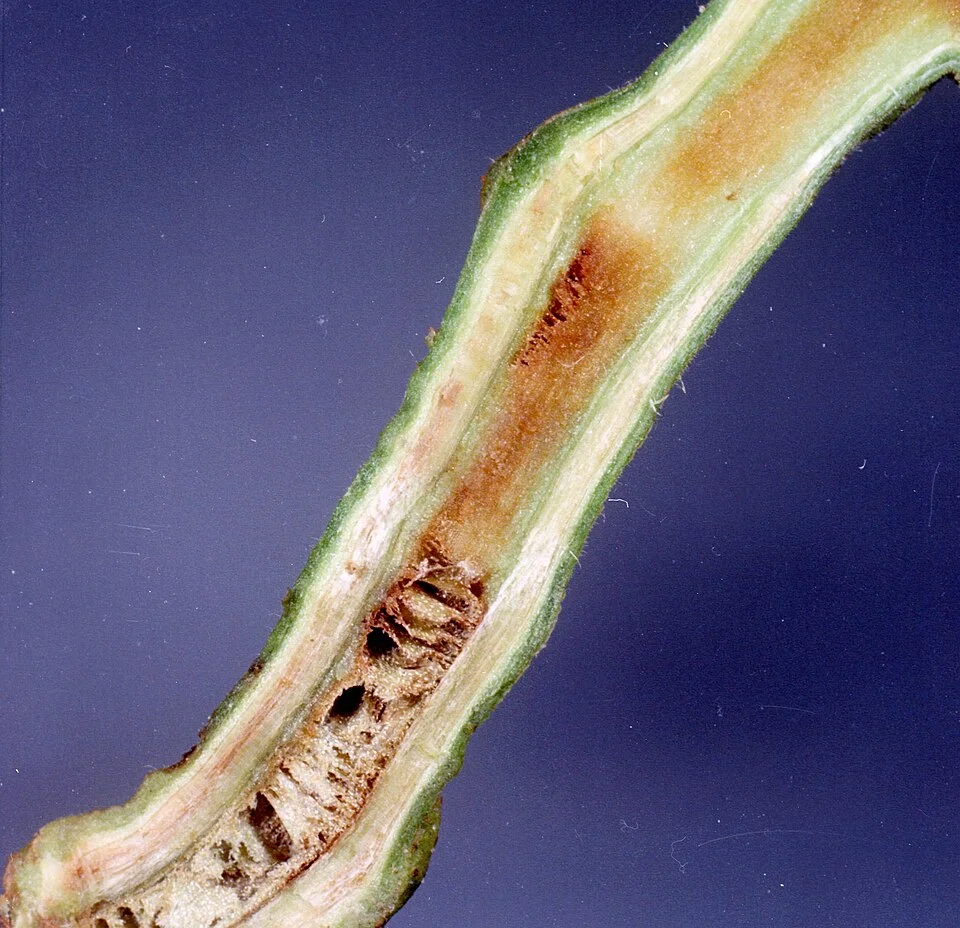
Photo: Clemson University - USDA Cooperative Extension Slide Series, , Bugwood.org · Public domain
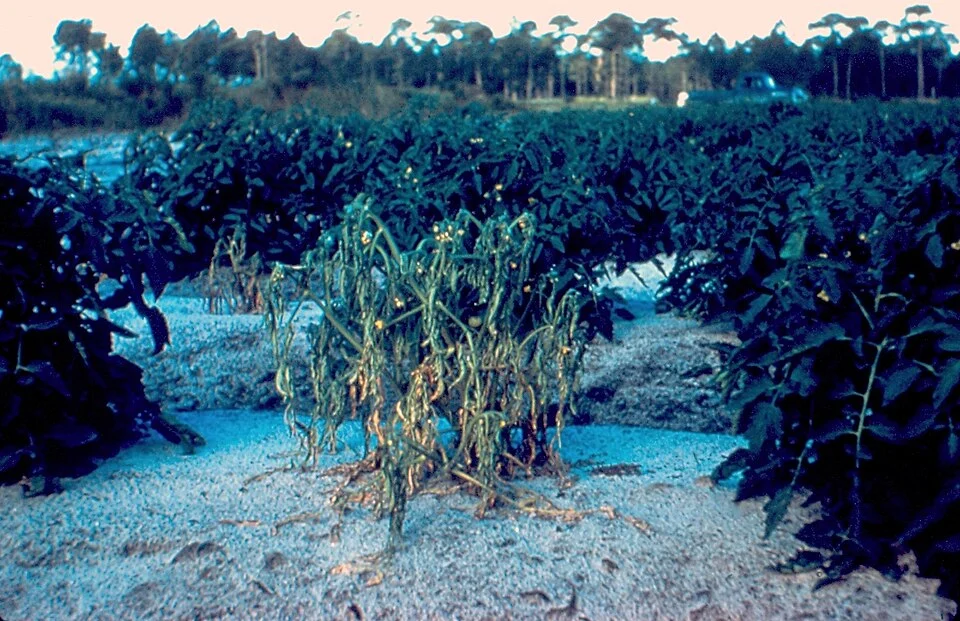
Bacterial wilt is a soil- and water-borne disease caused by the bacterium Ralstonia solanacearum. It slips in through the roots and plugs the plant's water pipes (the tiny tubes that carry water up the stem), so the plant suddenly flops and dies while its leaves are still green. It attacks tomato, potato, pepper, eggplant, groundnut and banana, and survives for seasons in the soil, in leftover infected debris and volunteers (self-sown plants left from a past crop), and in irrigation and drainage water — spreading on tools, boots and running water.
Scot Nelson · CC0 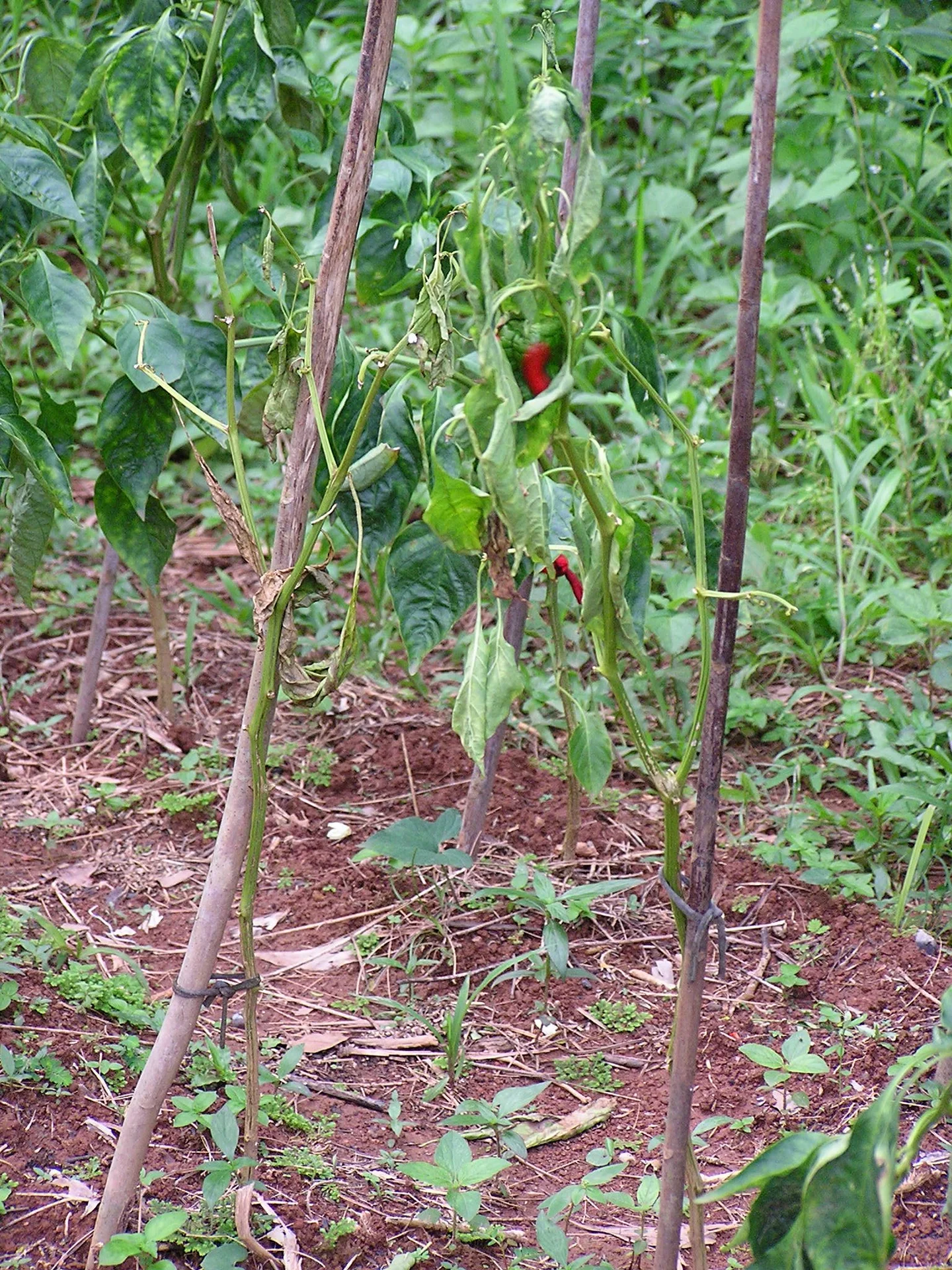
Scot Nelson · CC0
Why it matters
Bacterial wilt can take your whole crop — up to 100% — and it does it fast: a healthy-looking plant can wilt and die within a day or two. Once the bacteria are inside a plant there is no spray or medicine that cures it, and they live on for seasons in the soil, in leftover plants and in drainage water, ready to strike your next crop. That is why everything rests on keeping it out — clean planting material, dry well-drained soil, and pulling up the very first sick plant before it seeds the whole field.
When to act
Act on the first wilting plants that do not recover overnight; rogue them immediately, as there is no chemical cure once plants are infected.
This guidance is general, compiled from published agronomic references including FAO and CABI. Thresholds and timing shift with your crop, your variety and the season.
In much of the region a spray is simply called mushonga — medicine. But a chemical group you cannot name is one you cannot rotate, and a product you did not write down has no pre-harvest interval you can observe. Mushonga, and other farming words →
The full Bacterial wilt field guide
Identify it
The first sign — sudden wilting while still green:
in the heat of the day one plant flops over as if it is thirsty — but its leaves are still green, not yellow. Early on it may perk up a little at night, then within a day or two it wilts for good and does not stand back up in the morning, even after rain or watering.
The tell-tale test — milky threads in water:
cut the wilted plant's stem near the base and hang the cut piece in a clear glass or jar of clean water. Within a few minutes you will see milky-white threads streaming down from the cut, like smoke or milk in the water. Healthy plants give clear water — this milky streaming is bacterial wilt, and you need no lab to see it.
Inside the stem
slice the lower stem open lengthways and the ring just under the skin is browned and slimy — those are the water pipes, plugged with bacteria — instead of clean and pale. On potato, cut tubers show a browned ring and grey ooze, often with soil stuck to the eyes.
Don't confuse it with look-alikes
a plant short of water recovers overnight once you water it — bacterial wilt does not. Fungal wilts (like Fusarium) turn leaves yellow and kill slowly from the bottom up, and the water test stays clear — no milky threads. Root-knot nematode also wilts plants, but when you dig them up you find knotty swellings (galls) on the roots, and again no ooze.
Scout for it
Act on the very first plant
Even 1 wilted plant that is still green and has not recovered by the next morning is your trigger to act — pull it now. There is no cure, so you cannot 'wait and see': one plant left standing seeds the whole field.
When to look
start once plants are established and growing well (a few weeks after transplanting) and keep checking right through flowering and fruiting — the disease bites hardest from mid-growth to late season. Look hardest in hot, wet weather and after heavy rain or irrigation, when warm, waterlogged soil wakes the bacteria up.
How to walk it
cross the field in a big "W" so you cover all four corners and the middle, with at least 10 stops. Do it in the heat of the afternoon, when sick plants show the wilt most clearly, and give extra attention to low, wet patches and ground downhill where water collects.
What to check
at each stop look for any plant wilting while its neighbours stand firm. Mark it, check it again next morning, and if it is still down, confirm with the cut-stem-in-water test before you act. Then check the plants just downhill of it too — the bacteria travel in drainage water.
Control it
Prevent it — start with resistant seed:
where you can get them, plant resistant varieties (seed bred to shrug off the disease) or seedlings grafted onto resistant roots (a top plant joined onto tough, disease-fighting roots). This is your single strongest defence against a disease that has no cure.
Plant clean, and keep dry feet
use certified clean seed, seed potatoes and transplants from a trusted source — never save cuttings, tubers or seedlings from a field that has wilted. Plant on ridges or raised beds so roots never sit in water, because the bacteria thrive in warm, waterlogged soil.
Rotate to starve it out
don't grow tomato, potato, pepper, eggplant, groundnut or banana on the same land two seasons running. Rotate to cereals or grasses (maize, sorghum, millet) — crops the disease cannot attack — for several seasons. Avoid carrying soil or irrigation water from an infested field onto clean land, and try not to wound roots when weeding, since wounds are the door in.
Act early — rogue the first sick plants:
the moment a plant fails the overnight-recovery test, pull it up with the soil around its roots and destroy it — burn it or bury it deep, away from the field and water. Never leave it standing, compost it, or throw it in the drainage furrow. (To rogue means to remove and kill the whole plant so it cannot spread.)
Work clean so you don't spread it yourself
handle sick plants and wet, low patches last, then disinfect your tools, hands and boots — wash them and dip the blade in a bleach solution or pass it through flame — before you touch healthy plants. Block any water so it cannot run from the sick patch into healthy rows, because the bacteria swim in drainage water.
There is no spray that cures it
no chemical, fungicide or antibiotic will save an infected plant — do not waste money on them (fungicides fight fungi, not this bacterium). Your only 'treatment' is fast roguing plus clean water, clean tools and clean seed.
If it keeps spreading — cut your losses:
if plants keep collapsing despite roguing, stop replanting host crops on that land. Put it under a cereal or grass rotation for several seasons, keep improving the drainage, and only bring tomato, potato or pepper back with a resistant variety and certified-clean planting material. Starving the soil of host plants is the only way to bring the bacteria down.
Catch Bacterial wilt before it costs you the harvest
This guide is the general answer. Divisi works out yours — the week to scout your own field for Bacterial wilt, and what to do the day you find it.


Crops it affects
Plan the crops it attacks
-
 When to plant Eggplant in Kiuaba-N'Zoji (Cuaba Nzogo)
 -
 When to plant Groundnut in Songo
 -
 When to plant Tomato in Goma
All planting calendars, country by country
Get Insights by email
A short digest of new Divisi articles. No email on quiet weeks.
Frequently asked questions
How do I identify Bacterial wilt?
The first sign — sudden wilting while still green:. in the heat of the day one plant flops over as if it is thirsty — but its leaves are still green, not yellow. Early on it may perk up a little at night, then within a day or two it wilts for good and does not stand back up in the morning, even after rain or watering.
When should I take action against Bacterial wilt?
Act on the first wilting plants that do not recover overnight; rogue them immediately, as there is no chemical cure once plants are infected.
How do I control Bacterial wilt?
Prevent it — start with resistant seed:. where you can get them, plant resistant varieties (seed bred to shrug off the disease) or seedlings grafted onto resistant roots (a top plant joined onto tough, disease-fighting roots). This is your single strongest defence against a disease that has no cure.
Which crops are attacked by Bacterial wilt?
Among the crops covered here: Eggplant, Groundnut, Tomato.