 Divisi
Black shank
Phytophthora nicotianae · Fungal
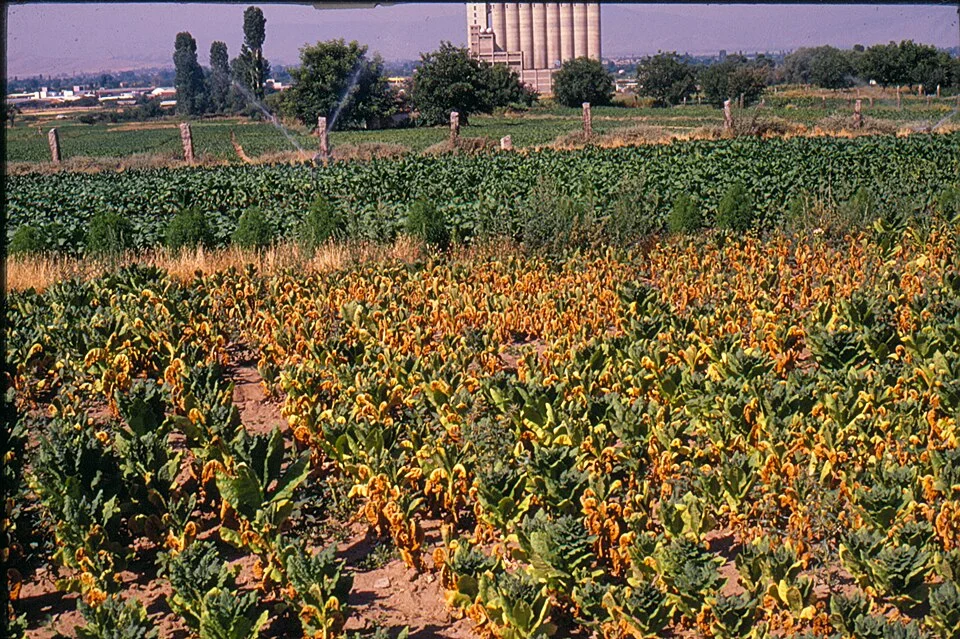
Photo: Tashkoskip · CC BY-SA 4.0
Black shank is a soil-borne water-mould (Phytophthora nicotianae) that rots the roots and the base of the stalk in tobacco, and causes heart rot and root rot in pineapple. It thrives in warm, waterlogged, poorly-drained soil, survives for years in the ground as tough resting spores, and spreads in run-off and irrigation water, on soil-caked tools and boots, and in infested transplants — which makes it far easier to keep out than to cure.
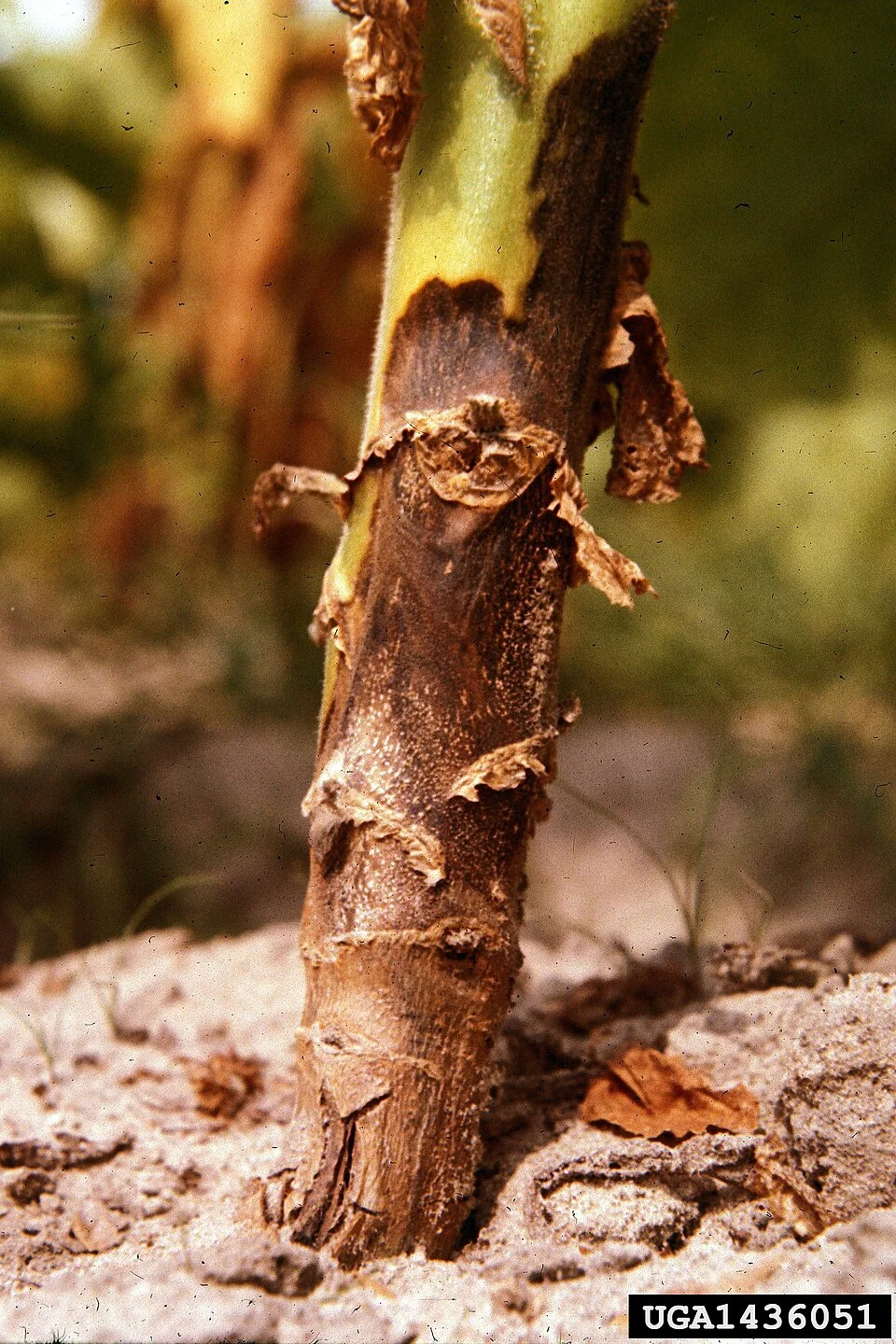
Clemson University - USDA Cooperative Extension Slide Series , Bugwood.org · CC BY 3.0 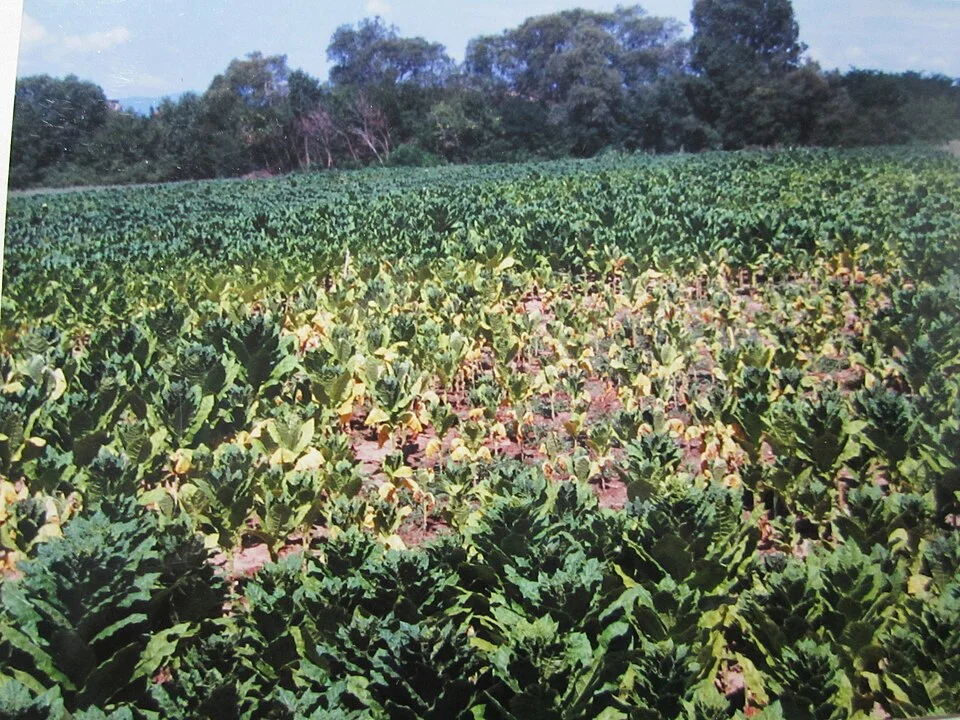
Tashkoskip · CC BY-SA 4.0
Why it matters
Black shank is a rot that lives in the soil and attacks the roots and the base of the stem. A bad outbreak can kill up to 9 in 10 plants (90%) — nearly your whole crop. The hard part: once this mould is in your ground it survives there for years, as tough resting specks (spores) that you cannot dig out or spray away, so it strikes again every time you plant tobacco or pineapple on that land. It spreads fastest in warm, waterlogged soil and rides from plant to plant in run-off water and on muddy tools and boots — which is why the whole battle is keeping it out and pulling the first sick plants fast, because once a stem turns black there is no cure.
When to act
Manage by prevention; wilting plants with blackened stem bases indicate established soil infection and must be rogued to slow spread.
This guidance is general, compiled from published agronomic references including FAO and CABI. Thresholds and timing shift with your crop, your variety and the season.
In much of the region a spray is simply called mushonga — medicine. But a chemical group you cannot name is one you cannot rotate, and a product you did not write down has no pre-harvest interval you can observe. Mushonga, and other farming words →
The full Black shank field guide
Identify it
Sudden wilting is the first thing you notice
a plant flops and its leaves hang limp as if starved of water — often in the heat of the afternoon — but unlike thirst, it does not perk up after rain or watering. The lower leaves turn yellow while the plant slowly dies.
The tell-tale black 'shank'
look at the very base of the stalk, right at the soil line. It turns black and rotten — a dark, inky band that girdles the stem (rings all the way around it) and creeps upward. This blackened stem base is what gives the disease its name.
Cut a sick stalk open to be sure
slice a wilted plant's stem down the middle. Inside, the soft core (the pith) is browned and dried into a stack of dark disks, like a pile of coins with gaps between them — no other tobacco problem does this. Pull the plant up and the roots are black and rotted, not white and firm.
On pineapple it shows as heart rot
the young leaves in the centre turn yellow to red and lift out with a gentle pull, and the base is a soft, foul-smelling rot.
Don't confuse it
with ordinary drought wilt (that plant has a firm, healthy green stem base and revives after watering) or with bacterial (Granville) wilt (cut its stem and it oozes milky slime, and its pith is wet, not dry disks). Black shank's giveaway is the black stem base and the dry, disked pith.
Scout for it
Look hardest through the danger window
— from transplanting right through mid-season — and step up your checks after warm, heavy rain and in any low, waterlogged patch, because this mould explodes in warm, soaked ground (around 24-30°C). In the wet season, walk the field at least twice a week.
Walk a big 'W'
across the field so you cover all four corners and the middle, not just the edge by the path — about 10 stops. Give extra attention to low spots, wet hollows and row-ends where water pools; the disease starts in the wettest ground.
At each stop, hunt for the odd wilting plant
— one drooping or yellowing while its neighbours stand healthy. Check its stem base at the soil line for the black, rotten girdle, and if you are unsure, split one stalk to look for the dry, disked pith inside.
Act on the very first one — there is no 'wait and see' number
Even a single wilted plant with a blackened stem base means the mould is already established in your soil. Rogue it (pull it out and destroy it) that same day — every infected plant is pumping spores into the water that carry to the rest of the field.
Watch the pattern
dead plants appearing in a run that follows the water — downhill or along a wet row, worst in the soggiest ground — is a sure sign of black shank spreading in surface water, not a scattered problem.
Control it
PREVENT
-
plant a resistant variety (your single strongest tool):
choose a tobacco variety bred to resist black shank and matched to the strain common in your area (your extension officer or seed supplier can point you to it). A resistant crop shrugs off the mould that would wipe out an ordinary one — nothing else you do matters as much.
-
rotate and drain to starve and dry out the mould:
never grow tobacco (or pineapple) on the same land year after year — that only builds up the spores. Rotate 2-3 years to a non-host crop such as a cereal or grass, and improve drainage with ridges, raised beds and channels so water never sits, because the mould needs wet soil to move and multiply.
-
start clean and stay clean:
raise or buy healthy transplants from a clean seedbed or float-tray (never from a bed that has had black shank), wash all soil off tools, boots and wheels before moving from a sick field to a clean one, and never let run-off or irrigation water flow from an infected field into a healthy one. The mould travels in muddy soil and water — block those paths and you block the disease.
ACT EARLY — rogue every sick plant the day you see it:
lift the wilted, black-based plant together with the ball of soil around its roots, carry it out of the field in a bag (so soil does not drop along the row), and burn or bury it far from the field and away from any water. Never put it on the compost or leave it lying in the row. Removing it fast is the one thing that slows the spread — wash your hands and tools straight afterwards.
LAST RESORT — chemical, only as a back-up:
on badly infested land a soil-applied metalaxyl (also sold as mefenoxam) fungicide can supplement a resistant variety and rotation — it does not replace them, and it cannot save an already-black plant. Follow the label rate exactly. Safety: cover your skin, eyes, nose and mouth; mix and spray in the cool of the day with the wind at your back; keep it well away from food, drinking water, children, animals and bees; wash yourself and your clothes afterwards; and respect the pre-harvest interval — the number of days the label says you must wait between the last treatment and harvest so no unsafe residue is left on the leaf. Resistance: this mould learns to beat metalaxyl quickly if you over-use it, so never make it your only defence, don't repeat it season after season, and rotate to a different fungicide group when you must treat again.
IF IT KEEPS SPREADING — cut your losses:
if plants keep collapsing across a block despite roguing, accept that patch is lost for this season. Pull and destroy the dead plants so they cannot seed more spores, and do not replant tobacco or pineapple there. Rest that land under a non-host rotation for at least 2-3 years, fix the drainage, and return only with a resistant variety — chasing a dying crop with more fungicide just wastes money and breeds resistance.
Catch Black shank before it costs you the harvest
This guide is the general answer. Divisi works out yours — the week to scout your own field for Black shank, and what to do the day you find it.


Crops it affects
Plan the crops it attacks


All planting calendars, country by country
Get Insights by email
A short digest of new Divisi articles. No email on quiet weeks.
Frequently asked questions
How do I identify Black shank?
Sudden wilting is the first thing you notice. a plant flops and its leaves hang limp as if starved of water — often in the heat of the afternoon — but unlike thirst, it does not perk up after rain or watering. The lower leaves turn yellow while the plant slowly dies.
When should I take action against Black shank?
Manage by prevention; wilting plants with blackened stem bases indicate established soil infection and must be rogued to slow spread.
How do I control Black shank?
PREVENT — plant a resistant variety (your single strongest tool):. choose a tobacco variety bred to resist black shank and matched to the strain common in your area (your extension officer or seed supplier can point you to it). A resistant crop shrugs off the mould that would wipe out an ordinary one — nothing else you do matters as much.
Which crops are attacked by Black shank?
Among the crops covered here: Pineapple, Tobacco.