 Divisi
Botrytis neck rot
Botrytis allii · Fungal
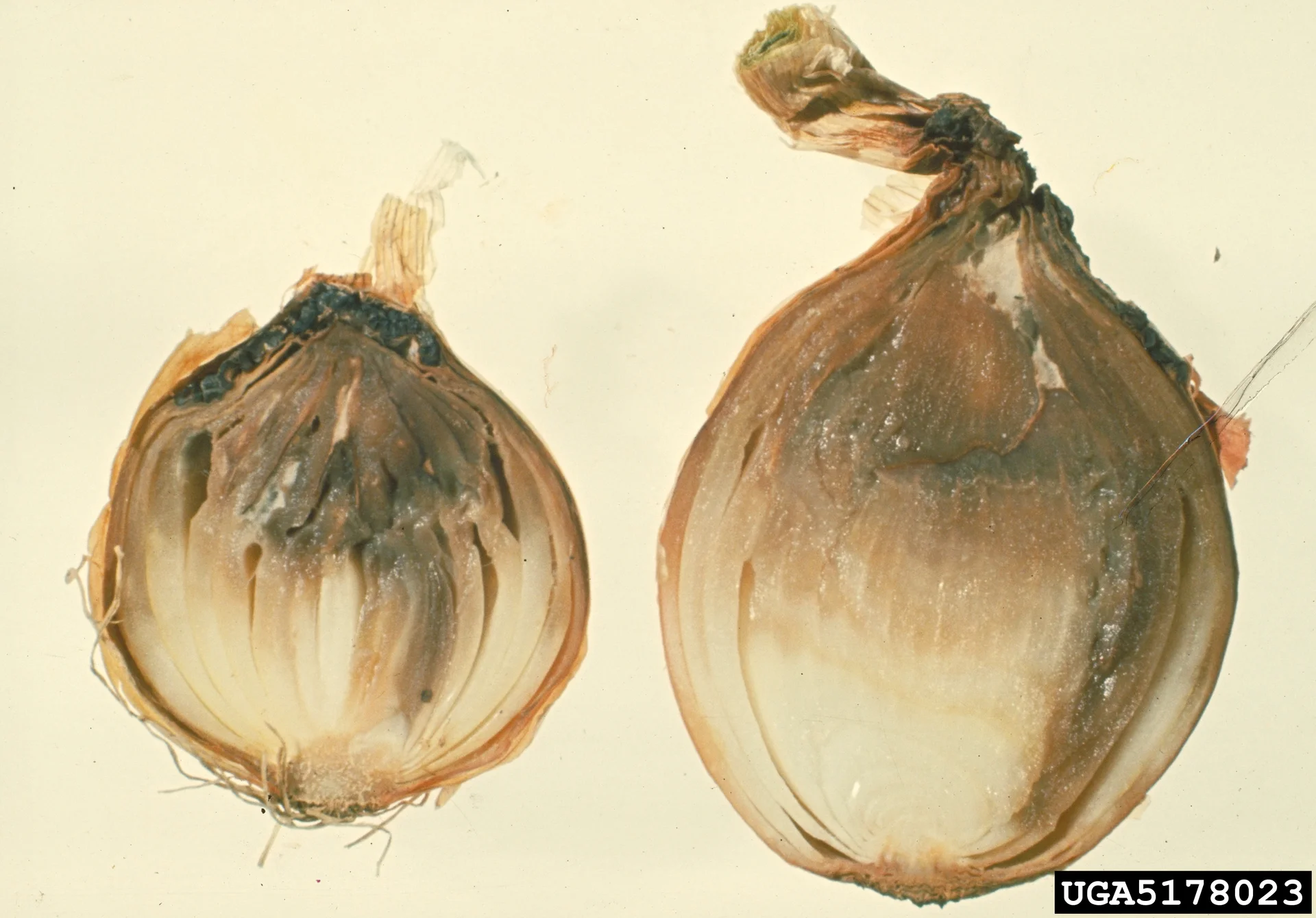
Photo: Lester E. Dickens, Bugwood.org · CC BY 3.0
Botrytis neck rot is a fungal storage rot of onions caused by Botrytis allii. It slips in through the neck and any wound late in the season, usually with no sign at all, then stays hidden through drying until the bulbs are in store — where it softens the neck, grows a grey mould, and rots the bulb from the top down. Because the damage only shows weeks after harvest, this disease is beaten in the field and the drying shed, not in the store.
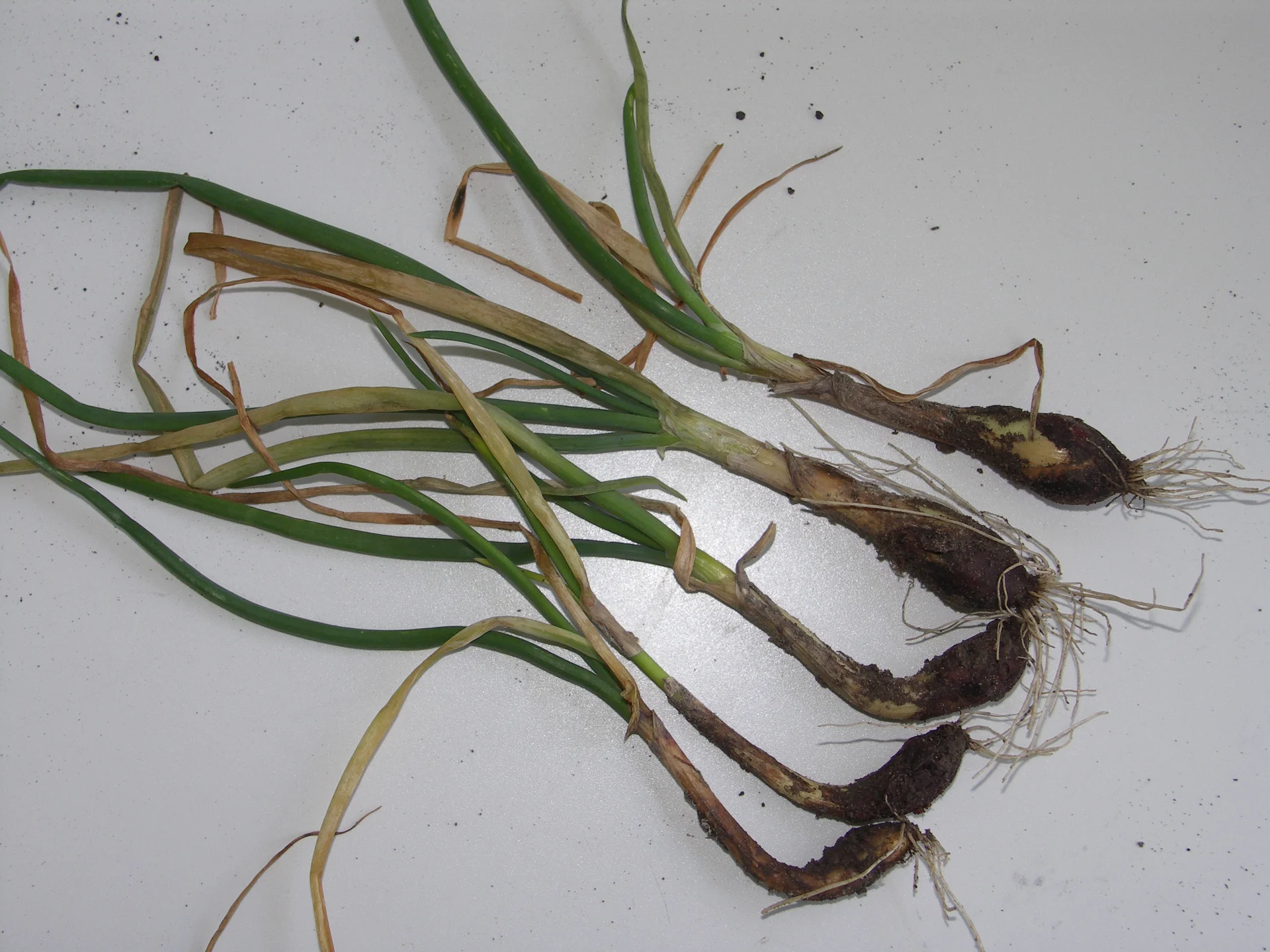
Jochen Kreiselmaier, DLR Rheinpfalz · CC BY-SA 4.0 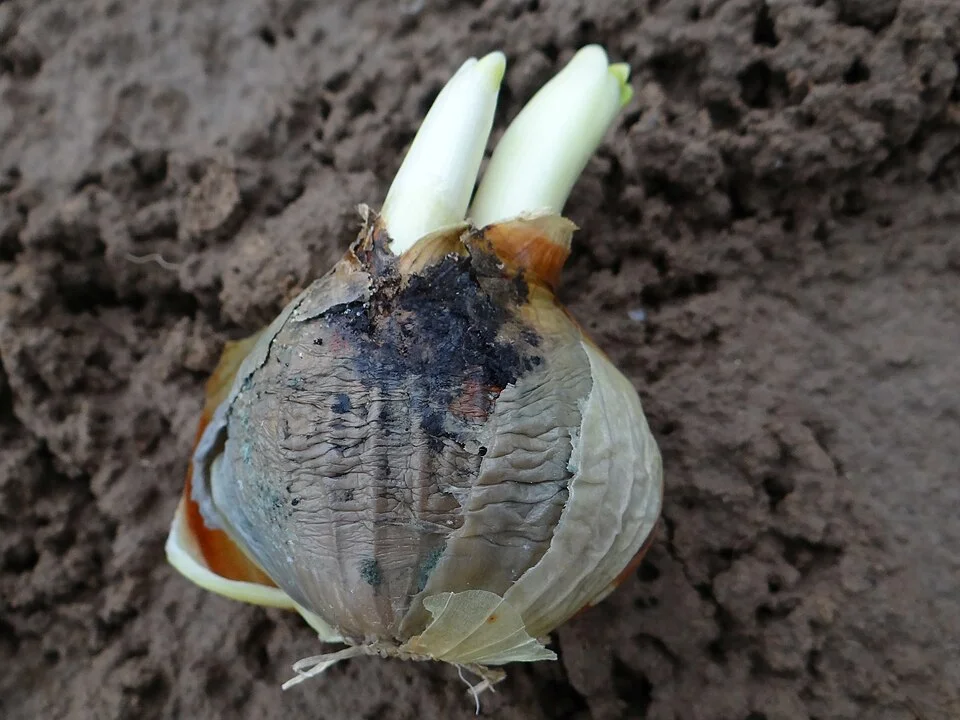
Jerzy Opioła · CC BY-SA 4.0
Why it matters
Neck rot is the onion grower's storage heartbreak. A store that looked perfect at lifting can lose up to half of its bulbs (50%) to a soft grey rot weeks later — after you have already spent the whole season, and the money, to grow, lift and store them. The fungus creeps in silently through the neck as the crop dries down and shows nothing until it is rotting in the bag, and by then no spray can save that batch. That is why everything rides on getting the crop fully mature, well dried, and gently handled before it ever reaches the store — once it is rotting, the loss is already made.
When to act
Manage before harvest and in store; the rot shows up weeks into storage, so prevention at maturity and curing is the decision point.
This guidance is general, compiled from published agronomic references including FAO and CABI. Thresholds and timing shift with your crop, your variety and the season.
In much of the region a spray is simply called mushonga — medicine. But a chemical group you cannot name is one you cannot rotate, and a product you did not write down has no pre-harvest interval you can observe. Mushonga, and other farming words →
The full Botrytis neck rot field guide
Identify it
The first sign (in store)
weeks after harvest, a bulb that felt firm starts to soften at the neck — the top of the bulb, where the green leaves used to join. Press it and it gives; the tissue just under the skin looks water-soaked and 'cooked', a pale tan-brown, and often sunken. The softening always starts at the top and works downward — that is why it is called neck rot.
The mould
peel back the neck or cut the bulb in half and you will see a grey, velvety, dusty mould packed into the neck and between the top scales — like a felt of grey-brown fuzz. The rotten scales are soft and half-see-through, as if they have been steamed.
The black lumps (later on)
as the rot ages, hard black crusty lumps form between and around the scales near the neck, sometimes joining into a black ring or crust. These are sclerotia — the fungus's tough survival seeds. By now the bulb is fully soft, may weep liquid, and caves in.
Don't confuse it with look-alikes
Fusarium basal rot rots from the bottom up (soft roots and a white-to-pink mould on the base plate), while neck rot comes from the top down. Bacterial soft rot is a slimy, wet, foul-smelling mush that squirts stinking liquid when squeezed — neck rot is drier, grey and fuzzy, and smells more mushroomy than rotten. Black mould leaves a sooty black powder under the skin in hot stores — neck rot's mould is grey, not black powder, and always begins at the neck.
Scout for it
When to watch
the danger window is late season, as the crop matures and the tops dry down. The fungus loves cool, damp drying weather (about 15-24°C and muggy, over 85% humidity) — if maturity is wet and cloudy, treat the risk as high. This is when the crop gets infected, so this is when your choices count.
Check maturity first — go by the number:
walk the field and watch the tops. When about half to three-quarters of the plants (5-7 in every 10) have flopped over and their necks gone soft, the crop is mature: stop watering and plan to lift within a week or so. Never lift while tops are still standing and necks are fat and green — an immature neck is a wide-open door for the fungus.
Walk the whole field, not just the edge
check maturity and neck-softness in a big 'W' across the field so you cross all four corners and the middle, stopping about 10 times to feel necks and look for any early soft, sunken neck tissue. The edge plants alone will fool you.
Then check the store — cut and look:
once the bulbs are in store, cut open 10 bulbs from different bags every week. Look just below the neck for grey mould and water-soaked scales. If even 1 or 2 of those 10 show it, that batch is turning — take it out and use or sell it first, before the rot spreads to the rest of the store.
Know what the 'threshold' really is
there is no caterpillar-style count and no rescue spray for this disease. The real trigger to act is the calendar and the weather — mature the crop fully, lift it dry, and cure it hard. If you wait until you can see neck rot, you are already looking at your losses.
Control it
Prevent it — mature and cure (your strongest tool):
let the tops fall and the crop fully mature before lifting, so the neck closes and starts to dry. Then cure thoroughly — meaning dry the onions in a single layer in a warm, airy, shaded place (or a well-ventilated shed) until the necks are papery, tight and rustling dry. A dry, sealed neck shuts the very door the fungus enters by. And cap late-season nitrogen fertiliser — too much makes thick, soft, sappy necks that never dry properly.
Handle gently and store dry
every bruise, cut and knock is a wound the fungus walks straight through, so lift, move and pack the bulbs gently — no throwing, dropping or over-filling bags. Store the cured onions cool, dry and well ventilated — never damp, warm or packed tight. Moving air and low humidity are what keep a hidden infection from ever waking up.
Break the fungus's supply line
neck rot rides in on infected seed and sets (sets are the small planting bulbs) and survives on old onion trash left in the soil. So plant clean, healthy seed or sets from a trusted source, clear and burn or bury old onion debris after harvest, and rotate your land — don't grow onions, garlic or leeks on the same plot year after year; give it about a 3-year break so the fungus in the soil dies out.
Chemical, only as a last resort — a protectant fungicide (iprodione):
where wet weather at maturity makes good drying impossible, a spray onto the leaves (a foliar spray) of iprodione late in the season can reduce neck infection. Understand what it is — a protectant: it coats the surface to block new infection but does not travel inside the plant the way a systemic fungicide would, and it cannot cure infection already inside. It is never a replacement for proper curing.
Spray it safely and protect it from resistance
cover your skin, eyes, nose and mouth; spray in the cool of morning or evening with the wind at your back; keep it off food, drinking water, children and bees; wait the full pre-harvest interval (the number of days the label says to leave between spraying and lifting) before you harvest; and wash yourself and your clothes afterwards. To stop the fungus getting used to the chemical (building resistance), rotate to a fungicide from a different chemical group rather than using iprodione over and over.
If it keeps spreading — cut your losses:
go through the store and remove every soft or grey-necked bulb at once — a single rotting onion infects its neighbours. Drop the temperature and humidity and improve the airflow if you can. When a batch is too far gone, stop trying to save it: pull it out, use or sell what is still firm quickly, and don't let rotting bulbs sit among the good ones. Then fix the real cause for next season — lift more mature, cure harder, handle gentler.
Catch Botrytis neck rot before it costs you the harvest
This guide is the general answer. Divisi works out yours — the week to scout your own field for Botrytis neck rot, and what to do the day you find it.


Crops it affects
Plan the crops it attacks


All planting calendars, country by country
Get Insights by email
A short digest of new Divisi articles. No email on quiet weeks.
Frequently asked questions
How do I identify Botrytis neck rot?
The first sign (in store). weeks after harvest, a bulb that felt firm starts to soften at the neck — the top of the bulb, where the green leaves used to join. Press it and it gives; the tissue just under the skin looks water-soaked and 'cooked', a pale tan-brown, and often sunken. The softening always starts at the top and works downward — that is why it is called neck rot.
When should I take action against Botrytis neck rot?
Manage before harvest and in store; the rot shows up weeks into storage, so prevention at maturity and curing is the decision point.
How do I control Botrytis neck rot?
Prevent it — mature and cure (your strongest tool):. let the tops fall and the crop fully mature before lifting, so the neck closes and starts to dry. Then cure thoroughly — meaning dry the onions in a single layer in a warm, airy, shaded place (or a well-ventilated shed) until the necks are papery, tight and rustling dry. A dry, sealed neck shuts the very door the fungus enters by. And cap late-season nitrogen fertiliser — too much makes thick, soft, sappy necks that never dry properly.
Which crops are attacked by Botrytis neck rot?
Among the crops covered here: Garlic, Onion.