 Divisi
Cercospora leaf spot
Cercospora beticola · Fungal
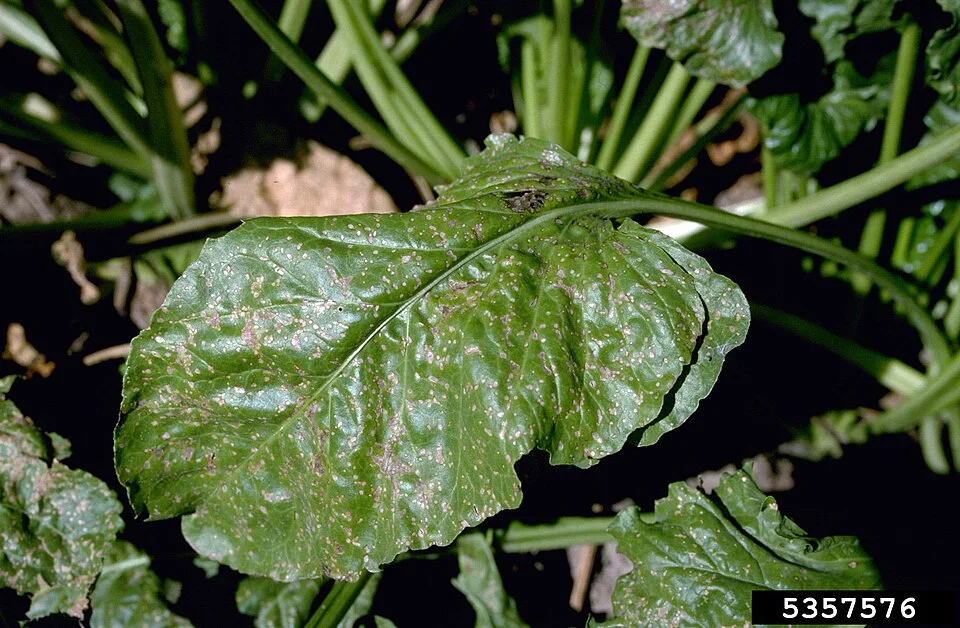
Photo: Howard F. Schwartz, Colorado State University, United States · CC BY 3.0
Cercospora leaf spot is the most damaging leaf disease of beet-family crops — beetroot, sugar beet, Swiss chard and spinach. It is caused by a fungus (Cercospora beticola) that survives from season to season on old infected leaves and seed, then spreads by airborne spores whenever the weather turns warm and humid and the leaves stay wet from dew, rain or overhead watering. Round tan-and-red spots peppering the older leaves multiply into a scorched, dying canopy, forcing the plant to waste its strength regrowing leaves instead of filling the root or leaf you sell.
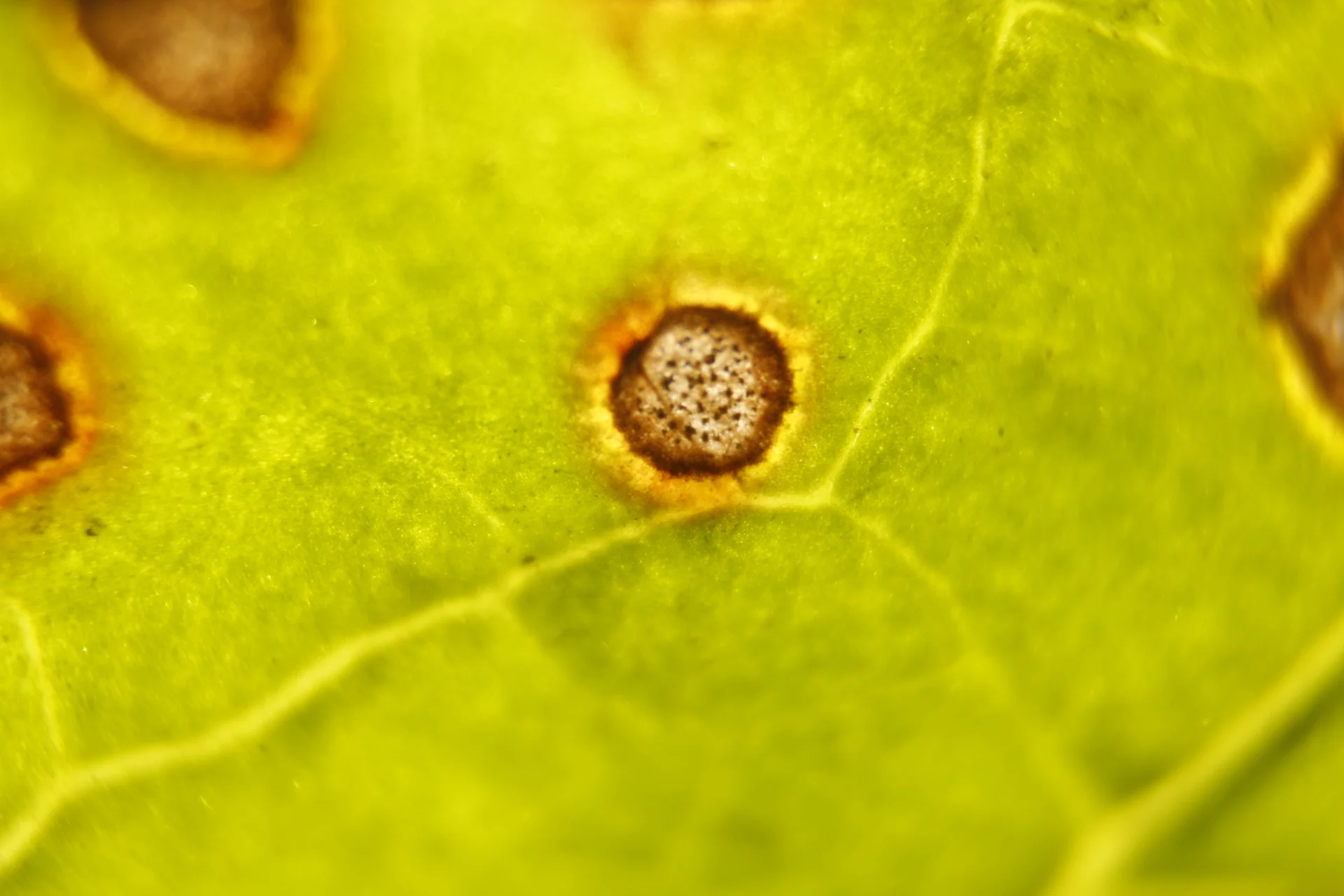
Ayman Esh · CC BY-SA 4.0 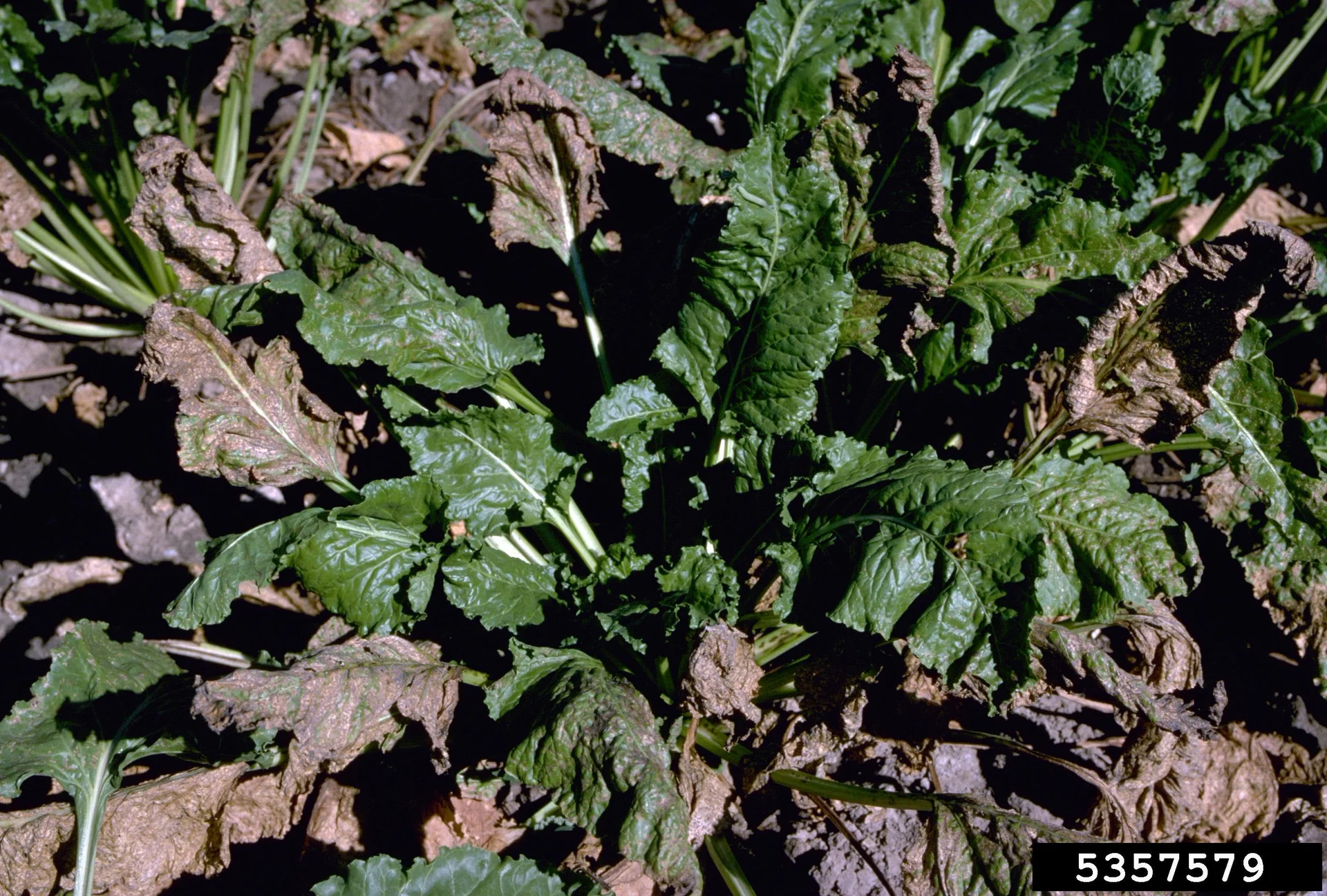
Howard F. Schwartz, Colorado State University, United States · CC BY 3.0
Why it matters
Cercospora leaf spot is the worst leaf disease of beetroot, chard, spinach and sugar beet. Once it takes hold in warm, humid weather it multiplies fast from just the first few spots, scorching the leaves until the plant has to burn its energy regrowing them instead of filling the root or leaves you sell — a bad attack can cost you up to 40% of your crop (nearly half). No spray brings a dead leaf back, so the whole game is catching it at the very first spots and stopping it from spreading through the canopy.
When to act
Begin scouting at canopy closure; start fungicides when the first spots appear during warm, humid weather and repeat on disease pressure.
This guidance is general, compiled from published agronomic references including FAO and CABI. Thresholds and timing shift with your crop, your variety and the season.
In much of the region a spray is simply called mushonga — medicine. But a chemical group you cannot name is one you cannot rotate, and a product you did not write down has no pre-harvest interval you can observe. Mushonga, and other farming words →
The full Cercospora leaf spot field guide
Identify it
The first sign
small round spots freckle the older, outer (lower) leaves first, while the young centre leaves stay green. As the spots multiply the leaf yellows and scorches from the outside in, and a badly hit plant throws up a flush of small new leaves to replace the dying ones.
The spot up close
each spot is tiny — 2–5 mm, about a pinhead to a match-head — with an ash-grey or tan centre and a sharp reddish-purple to red-brown ring around it. Look closely (a magnifying glass helps) and you'll see tiny black specks dotted in the centre — these are where the fungus makes its spores (its invisible, dust-like 'seeds'); in muggy weather the specks carry a fine grey velvety fuzz.
Don't confuse it
bacterial and other leaf spots look greasy or water-soaked and more angular (following the leaf veins), with no red ring and no black specks. Ramularia leaf spot makes bigger, greyer, fuzzy-white spots and likes cool weather — Cercospora spots are smaller, sharper-ringed and love the heat. Plain sun scorch, spray burn or old-age yellowing browns the leaf with no round shape, no ring and no specks.
Scout for it
When to look
start once the crop reaches canopy closure — when neighbouring leaves grow big enough to touch and close over the soil between the rows — and keep checking right through the leaf-building (development) and mid-season stages. Look hardest after warm nights with heavy dew, or a spell of warm (25–32°C), humid, rainy weather, because that is when the fungus explodes.
How to walk it
twice a week, walk a large 'W' across the field so you check all four corners and the middle, not just the edge by the path. Make about 10 stops along the way.
What to check
at each stop, turn up the older, outer (lower) leaves — where the disease always starts — and look for the small round spots with tan centres and red-purple rings. Confirm it really is Cercospora by finding the tiny black specks in the spot centre, not just general yellowing.
Your trigger — the first spots:
unlike a pest you can count, this fungus multiplies from the very first spots, so even 1 plant in 10 showing true, specked spots during warm, humid weather is your signal to act now. Don't wait for a big count — by the time spots are everywhere, the whole canopy is already at risk.
Control it
Prevent
-
break the cycle:
the fungus over-winters on old leaves and seed, so rotate away from beet-family crops (beetroot, chard, spinach, sugar beet) for 2–3 years, plough down or clear away infected leaf trash after harvest, plant clean, disease-free seed, and pull out volunteer beets (stray beet plants that sprout on their own from last season) and weedy relatives that carry the fungus over.
-
keep the leaves dry:
the spores only spread while the leaves stay wet, so widen your spacing and keep the canopy open for good airflow, and water early in the day at the base rather than overhead late on, so the leaves dry before nightfall. Where you can, grow a tolerant or resistant variety to slow the disease down and cut how often you need to spray.
Act early on the first spots
the moment you confirm the first specked spots in warm, humid weather, strip off and destroy (burn or bury) the worst-spotted lower leaves to slow the spore build-up, and focus on protecting the healthy young leaves. This first-spot moment is also your fungicide decision point.
Chemical — last resort, foliar fungicide (triazole / strobilurin):
if pressure is high, spray from the first spots and repeat on disease pressure. A contact (protectant) fungicide coats and shields the leaf surface; a systemic one is taken up inside the leaf — alternate the triazole and strobilurin groups every spray (never the same group twice running), because this fungus becomes resistant fast, especially to strobilurins ('resistance' = the chemical stops killing it). Safety: cover your skin, eyes, nose and mouth, spray in the cool of the day with the wind behind you, keep children, animals and bees away, and — because these leaves and roots are eaten — respect the pre-harvest interval (the set number of days you must wait after spraying before it is safe to harvest and eat) and wash well afterwards.
If it keeps spreading → cut your losses
if spots keep multiplying despite spraying, do not repeat the same chemical group — switch groups and keep the newest leaves covered. If the whole canopy is already blighted and dying back late in the season, more spray won't pay — harvest what you can, then clear and destroy every bit of infected residue and rotate next season so you don't carry the fungus into your next crop.
Catch Cercospora leaf spot before it costs you the harvest
This guide is the general answer. Divisi works out yours — the week to scout your own field for Cercospora leaf spot, and what to do the day you find it.


Crops it affects
Plan the crops it attacks


All planting calendars, country by country
Get Insights by email
A short digest of new Divisi articles. No email on quiet weeks.
Frequently asked questions
How do I identify Cercospora leaf spot?
The first sign. small round spots freckle the older, outer (lower) leaves first, while the young centre leaves stay green. As the spots multiply the leaf yellows and scorches from the outside in, and a badly hit plant throws up a flush of small new leaves to replace the dying ones.
When should I take action against Cercospora leaf spot?
Begin scouting at canopy closure; start fungicides when the first spots appear during warm, humid weather and repeat on disease pressure.
How do I control Cercospora leaf spot?
Prevent — break the cycle:. the fungus over-winters on old leaves and seed, so rotate away from beet-family crops (beetroot, chard, spinach, sugar beet) for 2–3 years, plough down or clear away infected leaf trash after harvest, plant clean, disease-free seed, and pull out volunteer beets (stray beet plants that sprout on their own from last season) and weedy relatives that carry the fungus over.
Which crops are attacked by Cercospora leaf spot?
Among the crops covered here: Beetroot, Swiss chard.