 Divisi
How to grow beetroot
Beta vulgaris subsp. vulgaris · Amaranthaceae
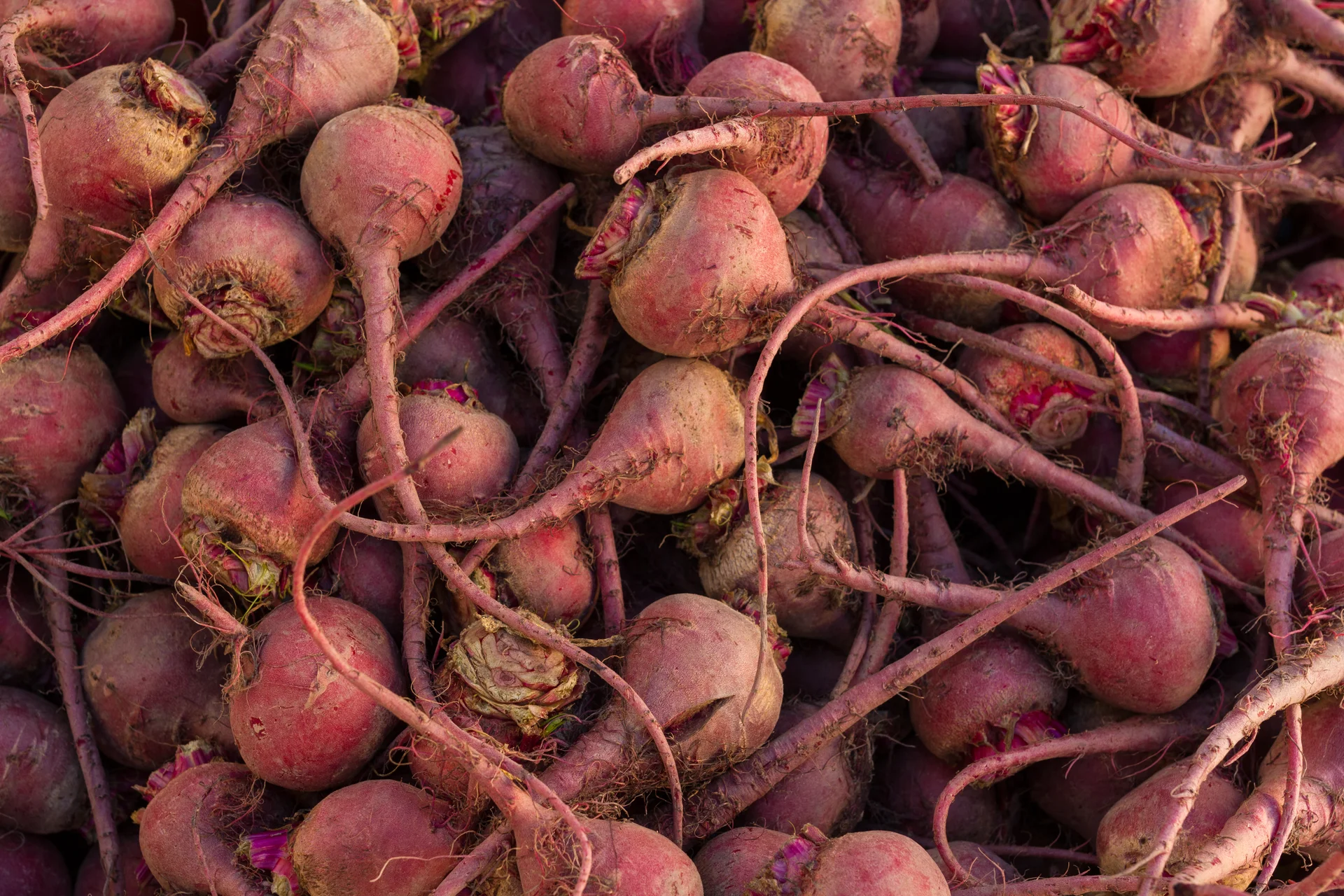
Photo: Frank Schulenburg · CC0
Beetroot (Beta vulgaris) is a cool-season root vegetable grown for its round, deep-red, sweet root — and its young leaves double as greens, cooked like spinach. You sow it straight into the ground (no nursery), and lift the first roots in as little as two to three months. Two things make or break the crop. First, the root swells into one smooth ball only in a loose, stone-free, evenly-damp bed — stones, hard clods, fresh manure or on-off watering make it fork, crack or grow whiskery. Second, beetroot must have a trace of boron in the soil, or the heart of the root rots black. Get the bed right, thin the seedlings so each root stands alone, feed a little potash and boron, and keep the water dead steady — and you lift firm, round, sweet roots.
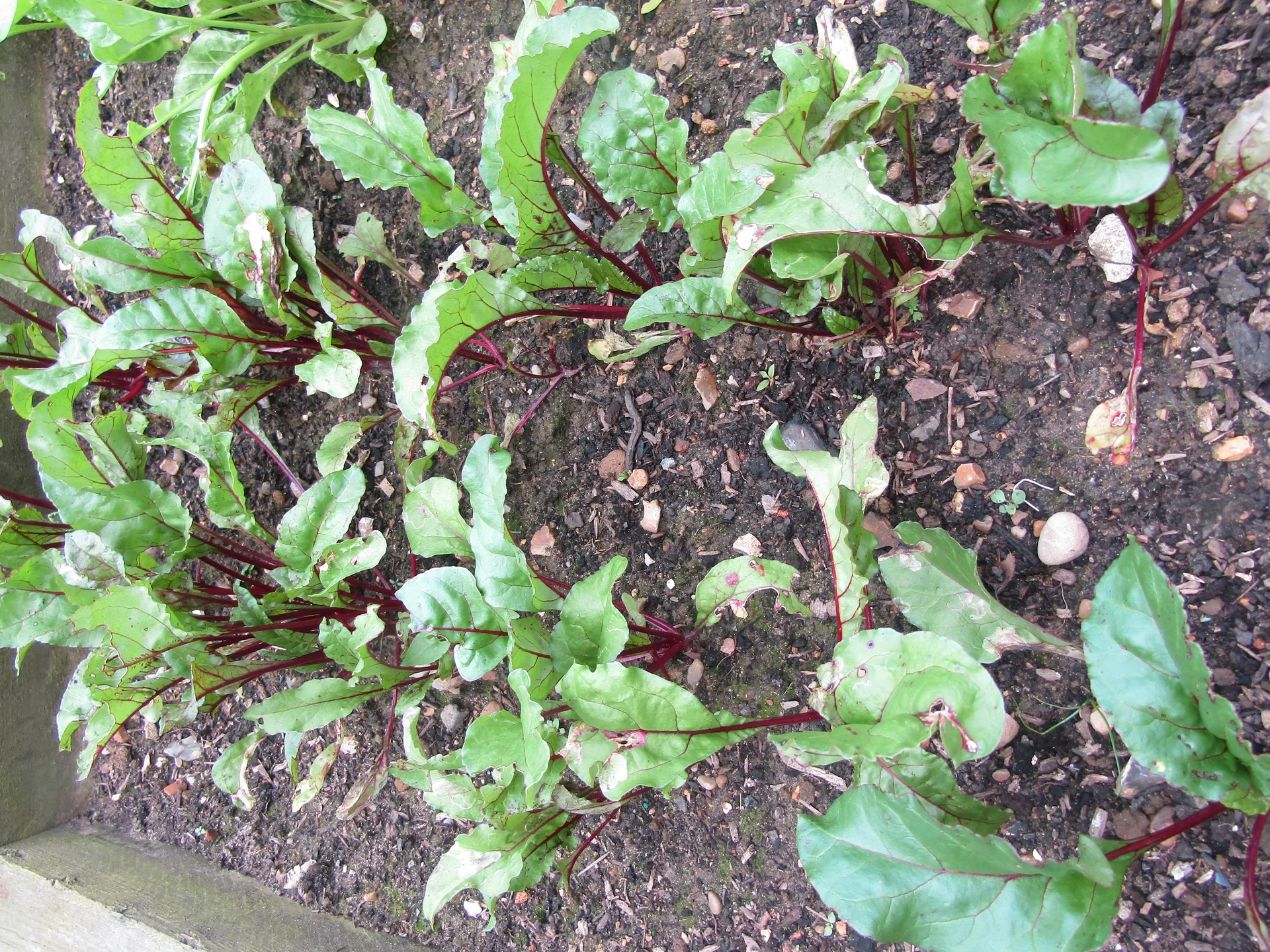
Kolforn · CC BY-SA 4.0 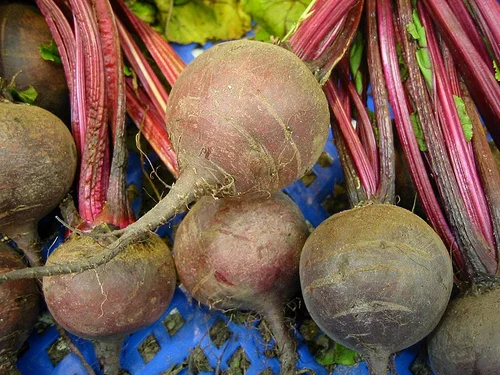
Dag Endresen · CC BY 2.0
- Days to maturity
- 55–90 days
- Row spacing
- 35 cm
- Plant spacing in the row
- 8 cm
- Sowing depth
- 2–3 cm
These are general figures for the crop, compiled from published agronomic references including FAO and CABI. The right choice for your field depends on your soil, rainfall and the yield you are aiming for.
Will beetroot actually do well on your field? Check your own field against every crop in the catalogue — no signup. Run the crop check →
Also known as
Beetroot is also called table beet and red beet.
- English
- table beet, red beet
- Afrikaans
- beet
- French
- betterave
- Portuguese
- beterraba
- Swahili
- biti, bitiruti
Working in buckets, bags or paces? The farming glossary turns the measures growers actually use into kilograms and hectares — what a 20 litre bucket of each crop really weighs, and how to size a field by walking it — alongside the Shona, Swahili, Ndebele and Yoruba words used in the field. Open the glossary →
Growing beetroot, stage by stage
Your beetroot season from bed to basket — dig a loose, stone-free bed, thin the seedball clumps to single plants, feed potash and boron, and keep the water steady so the roots swell smooth and sweet.
Get the bed ready
Beetroot's shape and smoothness are decided before you sow a single seed. The root pushes straight down into whatever you give it, so a stone, a hard clod or a lump of fresh manure makes it fork into fingers, twist, crack or grow whiskery — small and hard to sell. Your whole job now is to dig deep and break the soil into a soft, crumbly, stone-free bed, sweeten sour (acid) soil with lime toward a pH of about 6.5, and mix in only well-rotted compost. Do it a few weeks ahead so the bed settles before sowing.
Deep-work a loose, stone-free bed Recommended
The beetroot root comes up smooth and round only if the soil below it is soft and clear. Hit a stone, a hard clod or a pocket of fresh manure and the root forks into fingers, twists, or grows whiskery side-roots — misshapen and small. The loose bed you dig now is the shape of the root you will lift.
Do this in the 2–3 weeks before you sow, so the bed has time to settle and hold moisture evenly.
Dig or fork the whole bed 20–30 cm deep — about a spade blade's depth — so the root can push straight down and rain soaks in.
Break every clod and crumble the soil fine, like coarse flour. Both the tiny seed and the swelling root need soft, even soil all around them.
Pick out stones, sticks and old roots as you go — every one you leave is a spot where a root will fork or twist.
Rake the top flat and smooth, so you can sow at an even depth and water won't pool.
- Tip:
Fresh manure and stony ground — they are the top cause of forked, hairy, misshapen beetroot.
- Do:
Work the bed when the soil is just moist, not wet — digging wet soil turns it into hard clods that dry like bricks.
- Watch out:
On a slope, work across the slope, not up and down — it holds the water and stops your fine bed washing away.
Lime + well-rotted compost (no fresh manure) Recommended
Beetroot does best in soil that is only slightly sour to sweet — a pH around 6.5. In sour (acid) soil the roots grow poorly and can't take up the boron they need, so the hearts rot black. Lime sweetens sour soil but works slowly, so it must go on weeks ahead. Well-rotted compost feeds the soil and helps it hold the steady moisture beetroot needs — but fresh manure burns and forks the roots and must never be used here.
Lime only if your soil is sour (acid) — a soil test, or past crops that stayed yellow and stunted even when fed, will tell you. Your recommendation gives the amount for your bed.
Spread the lime evenly, like sprinkling flour, then work it into the topsoil with a hoe. Lime only helps the soil it is actually mixed into; left on top it does almost nothing.
Do the liming 3–4 weeks before you sow (the earlier the better) — lime is slow, so late liming won't help this crop.
Mix in only well-rotted compost — dark, crumbly, no strong smell. It feeds the soil and steadies the moisture. Never dig in fresh manure — it forks the roots and brings weed seeds.
Keep strong, salty fertiliser away from the seed rows for now. Grown beetroot shrugs off salt better than most crops, but salt near the seed stops it sprouting.
- Do:
Spread lime and compost a couple of weeks apart, not on the same day — give each time to work in.
- Tip:
Any fresh or raw manure in the bed — it scorches young roots and is the number-one cause of forked, hairy beetroot.
- Watch out:
Wash your hands after handling lime and keep the dust out of your eyes.
Sow, then thin to single plants
A beetroot 'seed' is really a little dried ball holding several seeds (a multigerm seedball), so each spot you sow comes up as a clump of seedlings crowded together — and crowded plants make small, twisted roots. So this stage has two jobs: sow shallow into moist soil, then thin each clump down to one strong plant. The thinning is the single step that decides whether you lift full, round roots or a mat of little ones.
Sow seedballs ~2–3 cm Critical
This is the start of everything. Sow too deep and the clump hasn't the strength to reach the light; let the bed dry out and the seedlings come up patchy. Sow shallow into steady moisture at the right row spacing, and you set up the even stand you can later thin to full roots.
Sow on a day the bed is soft and evenly moist — water it first if it is dry. Beetroot needs steady damp to sprout well.
Draw shallow furrows 35 cm apart — nearly two hand-spans between rows — so you can kneel and thin between them.
Trickle the seedballs thinly along each furrow, roughly a couple of finger-widths apart. Don't fuss over exact spacing — you will thin them to single plants soon.
Cover them just 2–3 cm deep — one finger-joint, down to your first knuckle — and firm the soil gently so each seed sits in moist earth.
Keep the bed evenly moist every day until they come up (about a week). Let it dry out and the clumps emerge patchy.
- Do:
Each seedball is a bunch of seeds and comes up as a clump — expect several seedlings per spot and plan to thin them, or the roots stay small and twisted.
- Tip:
Sowing deeper than 2–3 cm — the small seed runs out of strength before it reaches the light.
- Watch out:
Keep the bed damp but not swampy while seedlings emerge — soggy soil rots the clumps off at the base (damping-off, a soil rot).
Thin clumps to single plants Critical
This is the most important job in the whole beetroot crop — worth 10–30% of your harvest. Every seedball came up as a crowd, and crowded plants strangle each other into small, misshapen roots. Thinning down to one strong plant every 5–10 cm gives each root the room and light to swell full and round. Skip it and you lift a mat of little roots barely worth pulling.
Thin when the seedlings have 2–4 true leaves — usually 1–2 weeks after sowing. Do it while they are small and pull easily.
In each clump, keep the single strongest seedling and remove the rest. Pinch or snip the extras off at soil level, or pull them gently while holding the soil down around the keeper.
Space the plants you keep about 5–10 cm apart — a hand's width across four fingers — evenly along the row. Even spacing gives even roots.
Firm the soil back around each keeper and water lightly so its roots settle again.
Don't waste the thinnings — young beetroot leaves are good greens, cooked like spinach.
- Do:
Thin on a still, cool evening and water afterwards — the plants you keep settle back with less shock.
- Tip:
Leaving two plants in a spot 'to be safe' — they fight and both stay small. Keep one plant per spot.
- Watch out:
Thin on time. Leave the clumps crowded past the 4-leaf stage and the roots tangle together — you can't fix it later.
Scout (flea beetles, cutworms, damping-off) Recommended
The first weeks are when a young stand is easiest to lose. Damping-off can rot a patch of seedlings overnight, cutworms mow them down in the dark, and flea beetles riddle the leaves. A quick look every few days lets you catch trouble while you can still act.
From about 5 days after sowing, walk the bed every 3–4 days and look closely at the seedlings and the soil around them.
Damping-off (a soil rot): look for seedlings that have flopped over and collapsed, with the stem gone thin, dark and water-soaked right at the soil line, often spreading in a patch. Ease off the water and never let the bed sit soggy.
Cutworms: look for young plants cut clean off at ground level (worst overnight). Scratch the soil near a fresh-cut plant to find the fat, grey, curled caterpillar, and squash it.
Flea beetles: look for tiny black beetles that hop like fleas when you disturb a leaf, and leaves peppered with small round holes like buckshot. A few holes are harmless; heavy peppering on tiny seedlings needs action.
Check the stand is even — gaps or wilting patches point to rot or pests working below the surface.
- Watch out:
A fresh, spreading patch of collapsed seedlings means damping-off is on the move — dry the surface and stop overwatering at once.
- Do:
Carry the pest guides with you; if damage jumps, open the matching guide (flea beetle or cutworm) and act early.
Grow the leaves — feed light, weed shallow
Your single plants now build the leaves that will later pump sugar into the swelling root. Three jobs: give a small feed of nitrogen (the leaf-growing nutrient — too much makes big tops and a small root), keep weeds down with shallow hoeing (beetroot's feeding roots run just under the surface), and keep the water steady. In a cool, early sowing, watch for bolting — plants running up to flower instead of making a root; the cure is bolt-resistant seed, chosen when you buy.
First N side-dress (~3-leaf) Recommended
A little nitrogen now grows the leaves that feed the root. But beetroot needs only a little — pile it on and you get a big bushy top and a small root, and the leaves store up nitrate, which you don't want to eat. So feed light, to the side, once.
Feed at about the 3-leaf stage — roughly 2–3 weeks after sowing — once the plants are growing away well.
Use only the small amount in your recommendation. Beetroot wants far less nitrogen than a leafy or a grain crop.
Band it in a shallow line about 5 cm — two finger-joints — to the side of the row, beside the plants, not on them, then cover it or water it in.
Feed on moist soil (after watering or light rain) so it soaks down to the roots instead of gassing off into the air.
Keep the fertiliser off the wet leaves (it scorches them) and away from food, water and children. Wash your hands afterwards.
- Tip:
A heavy nitrogen feed — beetroot answers with big leaves and a small, nitrate-heavy root. Go light.
- Watch out:
Store and handle fertiliser dry, off the ground, away from food, water and children; wash your hands after touching it.
Shallow weeding Recommended
Young beetroot can't fight weeds — they steal its water, light and the food you paid for, just when the crop is small. But beetroot's feeding roots run just under the surface, so you must weed shallow: a deep hoe near the plants cuts those roots and checks the whole crop.
Start weeding from about 2 weeks after sowing, while the weeds are still small and the beetroot is settling in.
Hoe shallowly — just skim the surface to slice the weeds off. Beetroot's feeder roots are close to the top and a deep hoe cuts them.
Weed close to the plants by hand, where the hoe can't reach without doing damage.
Keep the bed clean until the beetroot leaves grow big enough to shade out new weeds themselves.
- Do:
Weed little and often while weeds are small — far easier and safer than clearing a jungle later.
- Tip:
Deep hoeing near the plants — it cuts the shallow feeder roots and can nick the swelling root.
- Watch out:
In a cool early sowing, a plant that shoots up a tall flower stalk from the centre has bolted (run to seed) — its root turns woody and useless. Pull it out, and next season sow bolt-resistant seed.
Begin steady irrigation Recommended
Beetroot wants soil that stays evenly damp — never bone-dry, never swampy. Starting steady watering now grows the leaves evenly and, just as important, settles the crop into the smooth, unbroken moisture that will keep the roots from cracking when they swell later.
From about 2 weeks after sowing, water on a steady rhythm — every 5–7 days, more often in heat or on sandy soil that dries fast.
Aim to keep the soil evenly moist down to about a hand-span deep (roughly 20 cm), where the roots are working.
Check with your finger: water when the top finger-joint or two of soil has dried out.
Water gently so you don't wash soil off the crowns or pond water in the furrows.
- Do:
Keep the watering even — the same amount on the same rhythm. Beetroot hates swings between dry and soaked.
- Tip:
Letting the bed dry out hard and then flooding it — that on-off is exactly what cracks and rings the roots later.
Swell the root — steady water, potash and boron
Now the root swells fast — the crop's make-or-break watering window. The one rule is steady moisture: swings from dry to soaked crack the root and draw pale rings through the flesh (zoning). Feed potash (potassium — the nutrient that builds a firm, sweet root) and a trace of boron to stop the heart rotting black inside. And guard the leaves: Cercospora leaf spot can strip them, and it is the leaves that feed the root.
Keep moisture steady Critical
The swelling root is very fussy about water. If the soil dries hard and then gets a big drink, the root splits and cracks, and uneven growth leaves pale rings through the flesh. Steady, even moisture through these weeks is the difference between smooth, solid roots and split, ringed, unsellable ones. This is the crop's most water-sensitive stage.
From about 4 to 8 weeks after sowing, keep the soil evenly moist at all times — water every 5–7 days, more often in heat.
Never let the bed swing from bone-dry to soaked. If it has dried out, bring it back with several smaller waterings, not one flood.
Water in the cool of the day, and keep the amount even across the whole bed.
Lay a mulch of dry grass or leaves between the rows — it holds the moisture steady and softens hot spells.
- Watch out:
Moisture swings and heat spikes crack and ring (zone) the roots — keep the water dead steady now above all else.
- Do:
Mulch between the rows — it is the easiest way to hold moisture steady through heat.
- Tip:
The dry-then-flood cycle — a big drink on hard-dry soil bursts the swelling roots open.
K-rich top-dress + boron foliar Recommended
Now the root needs potash (potassium) to swell firm and sweet — it is the nutrient beetroot uses most. And it needs a touch of boron, a trace nutrient it cannot do without: too little and the growing heart and the inside of the root rot black (heart rot). A little potash and boron now protects the whole harvest.
Feed at about 4 to 6 weeks after sowing, as the root begins to swell.
Top-dress the potash your recommendation gives — spread it in a band beside the rows on moist soil and water it in.
Add boron exactly as your recommendation says — usually a weak boron spray onto the leaves (a foliar feed — food sprayed on the leaves, not dug into the soil). Beetroot needs boron in only a tiny amount.
Measure the boron carefully. Too much boron is as harmful as too little — it poisons the crop. Never guess or add 'a bit extra to be safe'.
Spray the boron in the cool of the day with the wind at your back, cover your skin, and repeat it a couple of weeks later only if your recommendation calls for it.
- Do:
Measure the boron to the recommendation exactly — the safe dose is very small, and the gap to a harmful dose is narrow.
- Tip:
Adding extra boron for good measure — a little too much burns and stunts the crop just as badly as too little.
- Watch out:
Cover your skin, keep any spray off food crops and out of reach of children, and wash well afterwards.
Scout Cercospora Recommended
Cercospora leaf spot is beetroot's worst disease. It eats away the leaves, and since the leaves are what feed the swelling root, a bad attack shrinks your harvest. Caught early — at about one spot per leaf — it is easy to hold; left alone, it can strip a plant bare. The same walk catches the black hearts of boron shortage and the cracks of uneven watering.
Walk the crop once a week from about 4 weeks after sowing, looking over the leaves.
Cercospora leaf spot: look for small round tan or grey spots, each ringed with a red or purple border. Old spots dry and drop out, leaving little holes.
Act at about one spot per leaf — that is the moment to spray a recommended fungicide (a leaf-disease medicine), before the spots multiply and merge.
Boron shortage (heart rot): look for the youngest centre leaves going black and dying, or corky black patches when you cut a sample root — the sign the crop needs the boron feed.
Root check: pull a sample root now and then — cracks or pale rings inside mean your water has been swinging; even it out.
- Watch out:
The red or purple ring around a tan spot is the tell-tale of Cercospora — plain holes with no ring are usually something else.
- Do:
Spray at the first sign (one spot per leaf), in the cool with the wind behind you, and respect the pre-harvest interval — the wait on the label between spraying and safe eating.
- Tip:
Working among wet leaves — you carry the disease from plant to plant on your hands and clothes.
Lift the roots
The roots are ready when their shoulders (the top of the root, at the soil surface) stand about 5–8 cm across — golf-ball to tennis-ball. You can pull small, tender 'baby' beets from about 8 weeks (55 days), or let them size up to the main crop by about 90 days. Beetroot has a window, not a deadline: leave them too long chasing size and they turn woody and pale-ringed inside.
Lift roots before woody Critical
Lift while the root is firm, sweet and evenly coloured and you get the best of it. Leave it too long chasing size and it turns woody, pale-ringed and tough — bigger but worse. Judge by the shoulder, not the calendar.
Start checking from about 8 weeks (55 days) after sowing. Scrape the soil off a root's shoulder where it sits at the surface.
It is ready when the shoulder is about 5–8 cm across — golf-ball to tennis-ball (roughly a four-finger hand's-width).
Pull one and cut it open: good beetroot is an even, deep colour right through, firm but tender. Pale rings or a hard, woody core mean you have waited too long.
Lift by hand or fork: ease the fork in beside the root to loosen it, then draw it out by the leaves. Don't spear the root or it bleeds and won't store.
Get the whole bed up before the roots go over-mature, and harvest in the cool of the day, out of the hot sun.
If a cut sample is still small and pale → it is not ready; cover it back and check again in a few days. If it is already woody or pale-ringed inside → you are late; lift the whole bed now and use or sell it quickly.
- Tip:
Lifting too late — over-mature roots go fibrous and ring inside, tough and poor to eat.
- Do:
Loosen with a fork beside the root before pulling, so it comes up whole and unbruised.
- Watch out:
A root that bleeds dark juice from a nick or a cut tail won't store — set damaged roots aside to eat or sell first.
Top, clean and store
How you handle the roots in the first days decides how long they keep. Trim off the leaves (leaving a short stub), clean off the soil gently, then either bunch them with the tops for a quick fresh-market sale or store them cool and damp to hold for weeks. The catch: a beetroot cut or trimmed too close 'bleeds' its red colour and juice away and goes soft — so always leave a stub of stalk.
Top, clean, bunch or store cool Recommended
A little care now turns a few days of shelf life into a few weeks. Trim and clean the roots gently, leave a short stalk so they don't bleed their colour, and keep them cool and damp — and they hold firm and sweet long enough to eat or sell at a good price.
Within a day or two of lifting, twist or cut off the leaves but leave about 2–3 cm of stalk (one finger-joint). Cutting into the root itself makes it bleed red juice and go soft.
If you are storing, don't cut the thin tail root either, for the same reason.
Rub or shake off loose soil gently. Don't scrub or wash hard the roots you mean to store — a little dry soil left on helps them keep. Wash only what you'll sell or eat now.
To sell fresh: bunch the roots with their young leaves on and move them quickly — the leaves are a salad crop in their own right.
To store: keep the roots cool and damp — a shaded pit, a cool store, or a box of damp sand (about 0–5 °C and humid) — so they don't shrivel. Sound, unbruised roots keep for weeks.
- Do:
Leave 2–3 cm of stalk and don't trim the tail when storing, to stop bleeding, then store cool and damp.
- Tip:
Washing and scrubbing roots you mean to store — the damage and damp bring on rot. Store them with a little dry soil on.
- Watch out:
Sort out any cut, bruised or diseased roots and use them first — one rotting root spoils the whole box.
Pests and diseases that attack beetroot


Where to sell beetroot
Markets that trade this crop — what each one sells it by, when supply peaks there, and the currency used.

Grow beetroot with a plan, not a guess
This guide is the general answer. Divisi works out yours — the week to plant beetroot on your soil and your rainfall, and each job dated for your field.


When to plant beetroot, country by country
- When to plant beetroot in Algeria
- When to plant beetroot in Angola
- When to plant beetroot in Botswana
- When to plant beetroot in Burundi
- When to plant beetroot in Cabo Verde
- When to plant beetroot in Cameroon
- When to plant beetroot in Comores
- When to plant beetroot in Congo
- When to plant beetroot in Côte d'Ivoire
- When to plant beetroot in Egypt
- When to plant beetroot in Eritrea
- When to plant beetroot in Eswatini
- When to plant beetroot in Ethiopia
- When to plant beetroot in Gabon
- When to plant beetroot in Ghana
- When to plant beetroot in Guinea Ecuatorial
- When to plant beetroot in Guinée
- When to plant beetroot in Kenya
- When to plant beetroot in Lesotho
- When to plant beetroot in Libya
- When to plant beetroot in Madagascar
- When to plant beetroot in Malawi
- When to plant beetroot in Mali
- When to plant beetroot in Mauritanie
- When to plant beetroot in Mauritius
- When to plant beetroot in Morocco
- When to plant beetroot in Moçambique
- When to plant beetroot in Namibia
- When to plant beetroot in Niger
- When to plant beetroot in Nigeria
- When to plant beetroot in Rwanda
- When to plant beetroot in République centrafricaine
- When to plant beetroot in République démocratique du Congo
- When to plant beetroot in Sao Tome and Principe
- When to plant beetroot in Somalia
- When to plant beetroot in South Africa
- When to plant beetroot in South Sudan
- When to plant beetroot in Sudan
- When to plant beetroot in Sénégal
- When to plant beetroot in Tchad
- When to plant beetroot in Togo
- When to plant beetroot in Tunisie
- When to plant beetroot in Uganda
- When to plant beetroot in United Republic of Tanzania
- When to plant beetroot in Zambia
- When to plant beetroot in Zimbabwe
Where beetroot scores best
Districts where Divisi's engine currently rates this crop highest, ranked by fit.


Get Insights by email
A short digest of new Divisi articles. No email on quiet weeks.
Frequently asked questions
How do I grow beetroot?
How to grow beetroot: 55–90 days to maturity, 35 cm rows, 2–3 cm deep. Also called table beet, beet, betterave, beterraba, biti.
What is beet in English?
Beet is the Afrikaans name for beetroot.
What is betterave in English?
Betterave is the French name for beetroot.
What is beterraba in English?
Beterraba is the Portuguese name for beetroot.
What is biti in English?
Biti (also bitiruti) is the Swahili name for beetroot.
How long does beetroot take to grow?
Beetroot takes about 55–90 days from sowing to maturity, though the exact length varies with variety, temperature and how the season runs.
What spacing should I use for beetroot?
Space beetroot rows about 35 cm apart, with roughly 8 cm between plants within the row.
How deep should beetroot be planted?
Sow beetroot at about 2–3 cm deep. Shallower risks drying out; deeper wastes seed energy before the shoot reaches light.
What pests and diseases attack beetroot?
The ones covered in this guide are Amaranth leaf webber, Beet leaf miner, Cercospora leaf spot. Each has its own page explaining how to identify, check for and control it.