 Divisi
Beet leaf miner
Pegomya hyoscyami · Insect
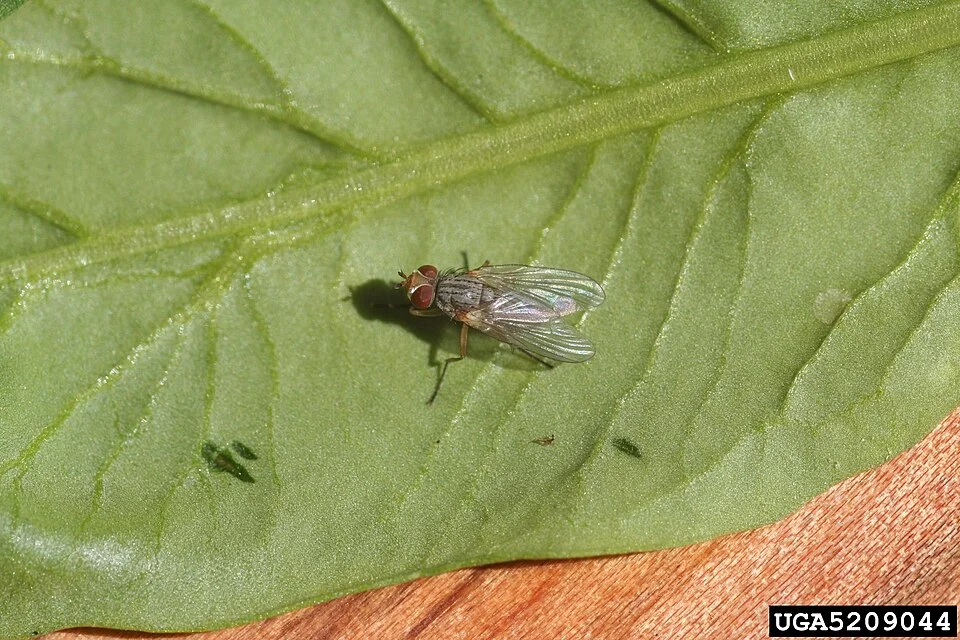
Beet leaf miner is the maggot of a small grey fly (Pegomya hyoscyami) that attacks the beet family — beetroot, Swiss chard and spinach. The fly lays little white eggs on the undersides of the leaves; the maggots hatch and tunnel inside the leaf, eating the green between the upper and lower skins and leaving pale, blister-like blotches. Several overlapping generations appear through a mild season, and the maggots can crawl from one leaf to the next as they feed.
Why it matters
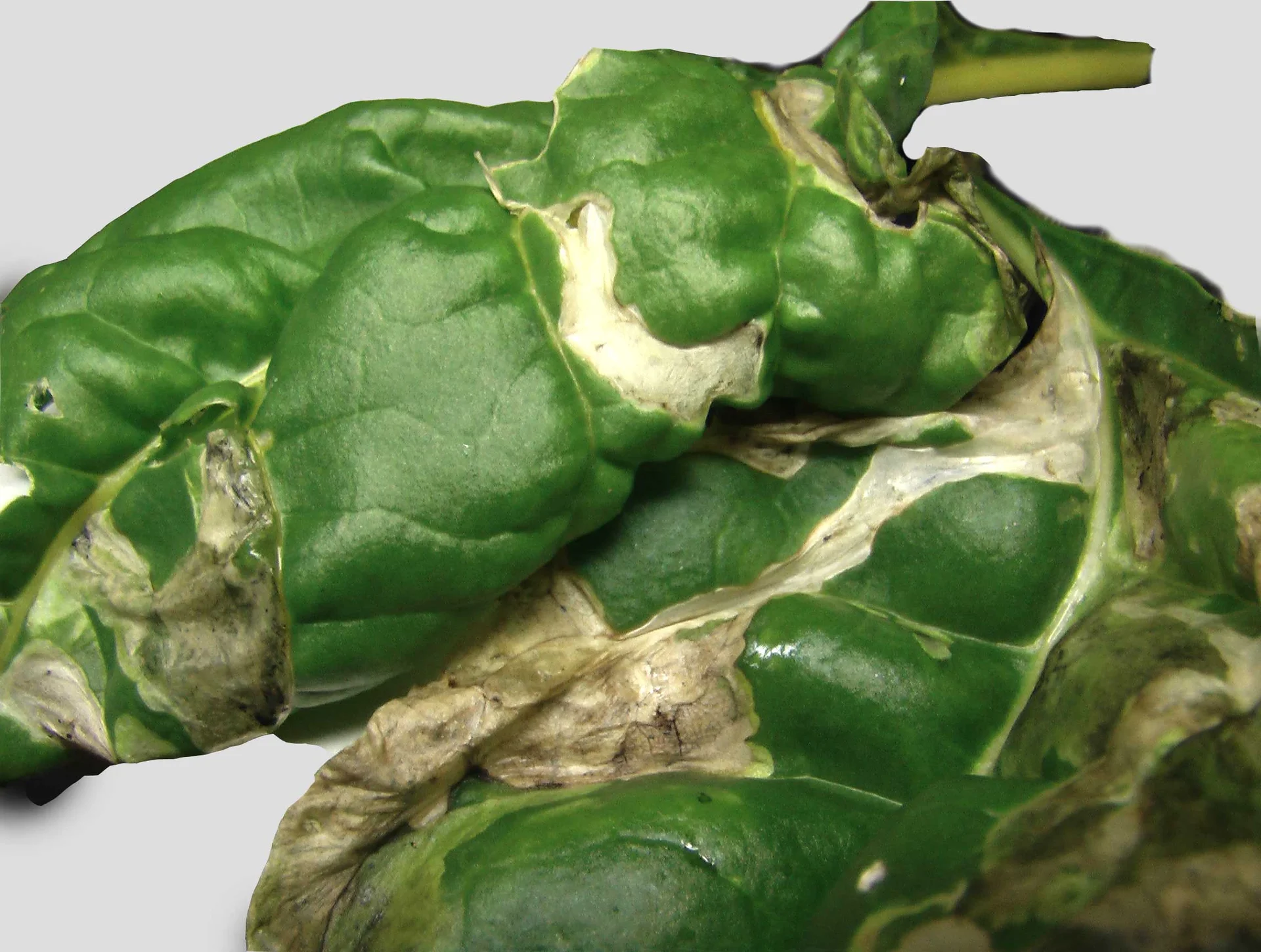
Beet leaf miner is the maggot of a small fly, and it eats your spinach, chard and beetroot leaves from the inside. A bad attack turns pale, papery blisters across up to 40% of your leaves — and on leafy crops you sell by the leaf, a mined leaf is worthless, while on beetroot the ruined leaves starve the root and shrink your harvest. Because the maggot feeds hidden between the two skins of the leaf, a spray can't reach it once it is inside, and the fly breeds generation after generation off nearby weeds — so the only real cure is to stop it laying eggs and to catch it early, before it burrows in.
When to act
Fresh mines or clusters of white eggs on leaf undersides on 1 in 5 plants, especially on young leafy crops grown for the leaf.
This guidance is general, compiled from published agronomic references including FAO and CABI. Thresholds and timing shift with your crop, your variety and the season.
In much of the region a spray is simply called mushonga — medicine. But a chemical group you cannot name is one you cannot rotate, and a product you did not write down has no pre-harvest interval you can observe. Mushonga, and other farming words →
The full Beet leaf miner field guide
Identify it
The damage you see first
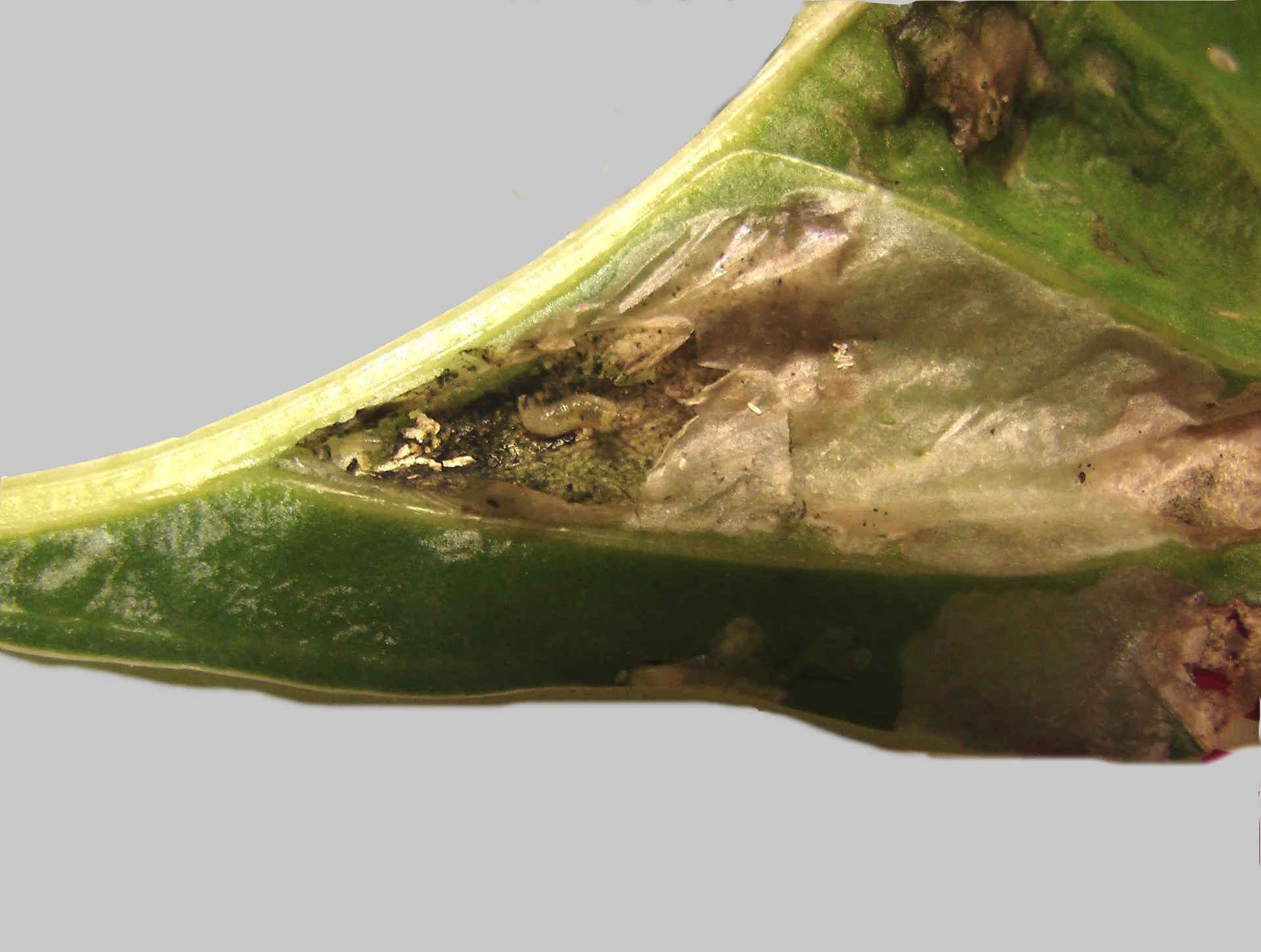
pale, winding lines or blister-like blotches on the leaves of spinach, chard and beetroot. They begin as thin, pale squiggles and swell into papery patches that turn from see-through green to brown and dry. Hold a leaf up to the sunlight: a mine (the fed-out patch) is hollow — you can see right through the skin, and often spot the small maggot or its dark specks of droppings inside.
The eggs — your earliest warning:
turn the leaves over and look on the underside. The fly lays tiny white, cigar-shaped eggs standing on end, in neat little rows or clusters of about three to five. This is the sign to act on, because the maggots hatch straight down into the leaf.
The maggot and the fly
inside the blister is a small, legless pale-whitish to greenish maggot, no bigger than a grain of rice. The adult is a small grey fly, like a little housefly, that rests on the plants or hovers low over the bed.
Don't confuse it
with fungal leaf-spot disease (solid brown spots, often with a reddish ring) or with slug and caterpillar chewing. Leaf spots are solid dead tissue — no hollow, no maggot; chewers eat holes right through the leaf. The leaf miner is different: it leaves the outer skin intact as a hollow blister with a maggot inside, and lays white eggs underneath.
Scout for it
When to look
start as soon as the crop comes up and check every week while the plants are young and growing fast — the first few weeks (the seedling and early-growth stages), when the tender new leaves are most attractive to the fly and most easily ruined.
Look more often in mild weather (about 15–28 °C)
, which is when the fly is busiest and lays the most eggs.
How to walk the plot
don't just check the edge by the path. Walk a big "W" shape so you cross all four corners and the middle, stopping at about five spots.
At each stop check 2 plants — about 10 plants in all
Turn the leaves over to look on the undersides for the white egg clusters, and hold the youngest leaves up to the light to spot fresh pale mines with a maggot inside.
The number that means act: 2 out of every 10 plants — that is 1 in 5
If you find fresh white eggs or fresh mines on 1 in 5 plants, especially on crops you grow for the leaf, act now — while the eggs are still on the surface and before the maggots burrow in.
Control it
Prevent it — starve the fly:
clear away goosefoot weeds such as fat hen (lambsquarters) and orache in and around the plot. These weeds feed the fly between crops and let it survive to attack your beds.
Rotate to fresh ground
don't plant spinach, chard or beetroot where a beet-family crop grew last season — the fly rests in the soil over winter and comes straight back up into a new crop on the same bed.
Cover the young crop
as soon as you sow or transplant, lay fine netting or fleece over the bed so the egg-laying flies can't reach the leaves. Avoid planting new leafy beds right beside older, infested ones, which just hands the fly a fresh supply of tender leaves.
Act early by hand
while numbers are still low, crush the white egg clusters on the leaf undersides with your thumb, and pick off and destroy (burn or bury) any leaves that already show mines — squash the maggot inside. This removes the pest that a spray cannot reach.
Protect your helpers
tiny parasitic wasps — harmless to you — lay their own eggs inside the mining maggots and kill them for free. Keep them working by avoiding broad, kill-everything sprays that wipe out these helpers along with the pest.
Chemical — last resort only, and mainly on root crops:
on beetroot grown for the root, not for the leaf, if fresh mines keep passing the 1-in-5 threshold you may use a registered insecticide (one approved for that crop). Time it for egg-hatch: a spray only kills the maggots while they are still on the leaf surface, because once they are mining inside the leaf a contact spray — one that only kills what it lands on — cannot reach them. On leaf crops you eat (spinach, chard), do not spray; rely on netting, weeding and hand-removal instead.
Spray safely
cover your skin, eyes, nose and mouth, spray in the cool of the day with the wind behind you, and keep the spray away from food, water, children and bees. Respect the pre-harvest interval — the set number of days you must wait after spraying before it is safe to eat or sell the crop. Wash yourself and your clothes afterwards, and rotate to a different chemical group each time so the fly does not get used to one poison and survive it (build up resistance).
If it keeps spreading
re-check the netting for gaps, keep clearing the weeds, and on a root crop time one insecticide spray at the next egg-hatch. When a leaf crop is already badly mined it is too late to save those leaves — don't waste money spraying a crop you are about to eat. Cut your losses: harvest any clean young leaves, pull out and destroy the worst plants, clear the bed promptly, and deep-bury or burn all the debris to kill the maggots and pupae in it. Then rest that ground from beet-family crops before you replant.
Catch Beet leaf miner before it costs you the harvest
This guide is the general answer. Divisi works out yours — the week to scout your own field for Beet leaf miner, and what to do the day you find it.


Crops it affects
Plan the crops it attacks


All planting calendars, country by country
Get Insights by email
A short digest of new Divisi articles. No email on quiet weeks.
Frequently asked questions
How do I identify Beet leaf miner?
The damage you see first. pale, winding lines or blister-like blotches on the leaves of spinach, chard and beetroot. They begin as thin, pale squiggles and swell into papery patches that turn from see-through green to brown and dry. Hold a leaf up to the sunlight: a mine (the fed-out patch) is hollow — you can see right through the skin, and often spot the small maggot or its dark specks of droppings inside.
When should I take action against Beet leaf miner?
Fresh mines or clusters of white eggs on leaf undersides on 1 in 5 plants, especially on young leafy crops grown for the leaf.
How do I control Beet leaf miner?
Prevent it — starve the fly:. clear away goosefoot weeds such as fat hen (lambsquarters) and orache in and around the plot. These weeds feed the fly between crops and let it survive to attack your beds.
Which crops are attacked by Beet leaf miner?
Among the crops covered here: Beetroot, Swiss chard.