 Divisi
Amaranth leaf webber
Spoladea recurvalis · Insect
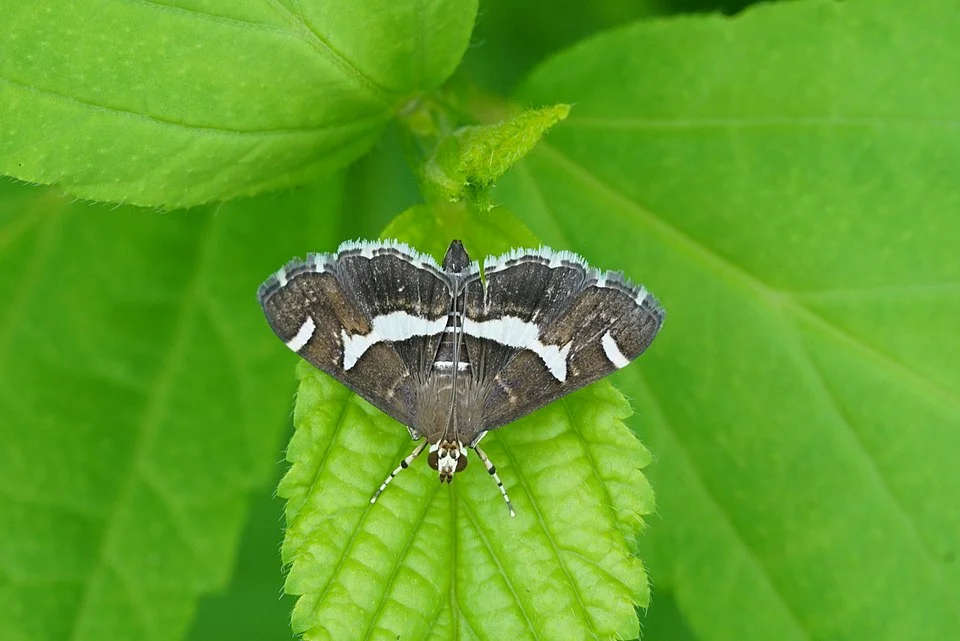
Photo: Vengolis · CC BY-SA 4.0
The amaranth leaf webber (Spoladea recurvalis), also called the Hawaiian beet webworm, is a small night-flying moth whose translucent green caterpillars spin silk to fold and tie amaranth leaves together, then feed hidden inside the shelter. It attacks amaranth and other leafy greens such as spinach and beetroot tops, skeletonising the leaves and packing the folds with droppings. In warm, humid weather one generation follows another quickly, so numbers explode on continuous leafy plantings.
Vengolis · CC BY-SA 4.0 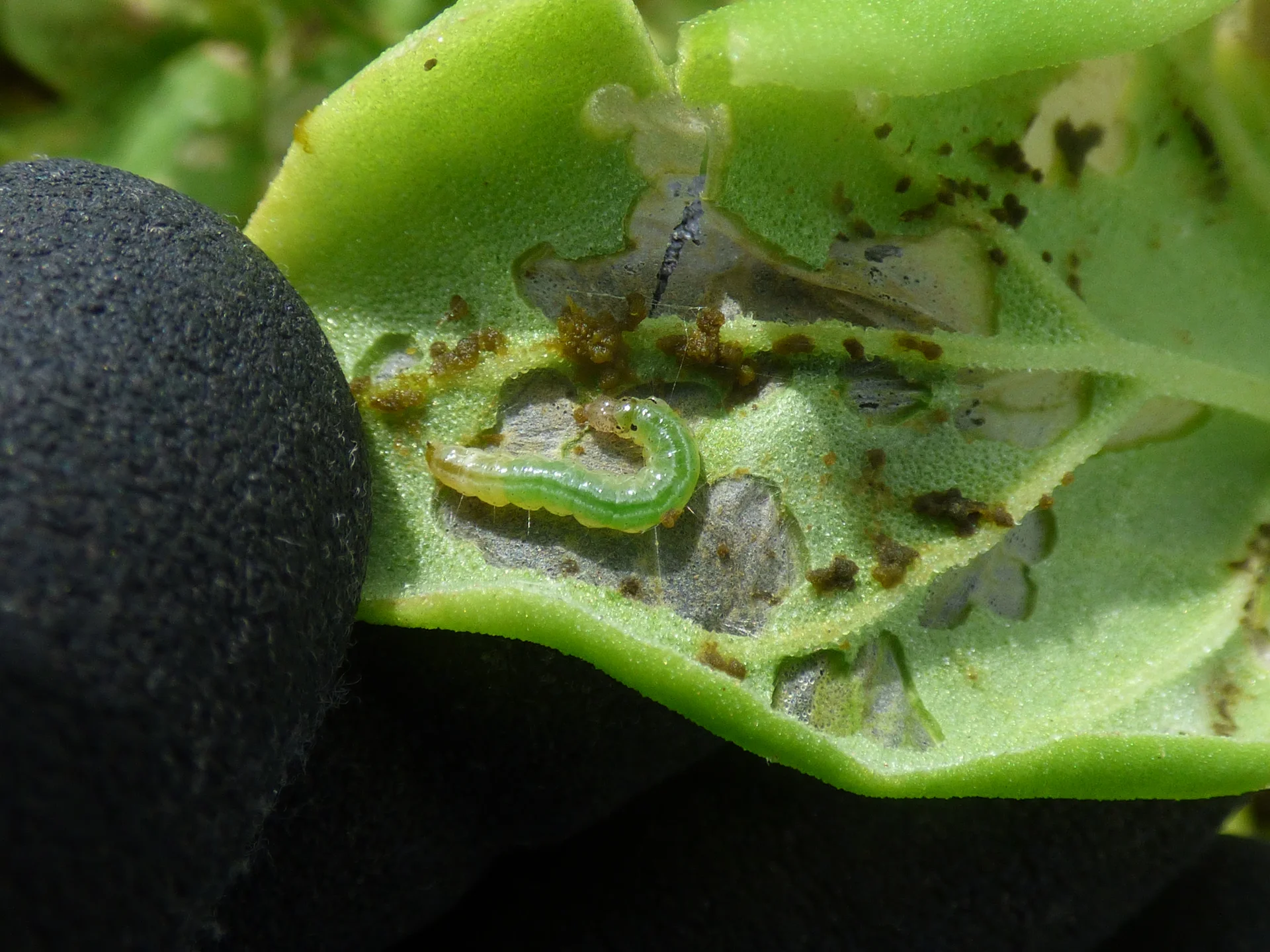
Forest and Kim Starr · CC BY 3.0 us
Why it matters
Amaranth is grown and sold for its leaves — so this pest hits you exactly where it hurts, on the very part you take to market. A heavy attack skeletonises and webs up your plants and can cost you up to 60% of the crop (more than half), and even light webbing and droppings make leaves unsellable. It is hard to stop once it settles in, because the caterpillars hide inside the folded, webbed leaves where sprays cannot reach, and in warm weather one generation follows another fast. Catching it early, while the caterpillars are small and out in the open, is everything.
When to act
Act when webbed leaves and caterpillars are found on about 1 in 5 plants, or earlier on a young leafy crop being sold whole.
This guidance is general, compiled from published agronomic references including FAO and CABI. Thresholds and timing shift with your crop, your variety and the season.
In much of the region a spray is simply called mushonga — medicine. But a chemical group you cannot name is one you cannot rotate, and a product you did not write down has no pre-harvest interval you can observe. Mushonga, and other farming words →
The full amaranth leaf webber field guide
Identify it
The damage (what you see first)
young leaves and growing tips folded over and tied together with fine silk webbing, like a little tent or parcel. Open one and the leaf inside is eaten down to a thin, see-through skin — "windowed" and skeletonised (only the veins left) — and packed with green-black droppings (frass). Under heavy attack whole plants look stripped, ragged and dirty with webbing.
The caterpillar
hiding inside the webbed fold — a slender, translucent green caterpillar up to about 1.5–2 cm long (shorter than your little finger), with a faint darker line down its back, a dark head, and rows of tiny dark dots along its body. When you open the shelter it wriggles backward violently and drops on a silk thread — a sure give-away.
The moth
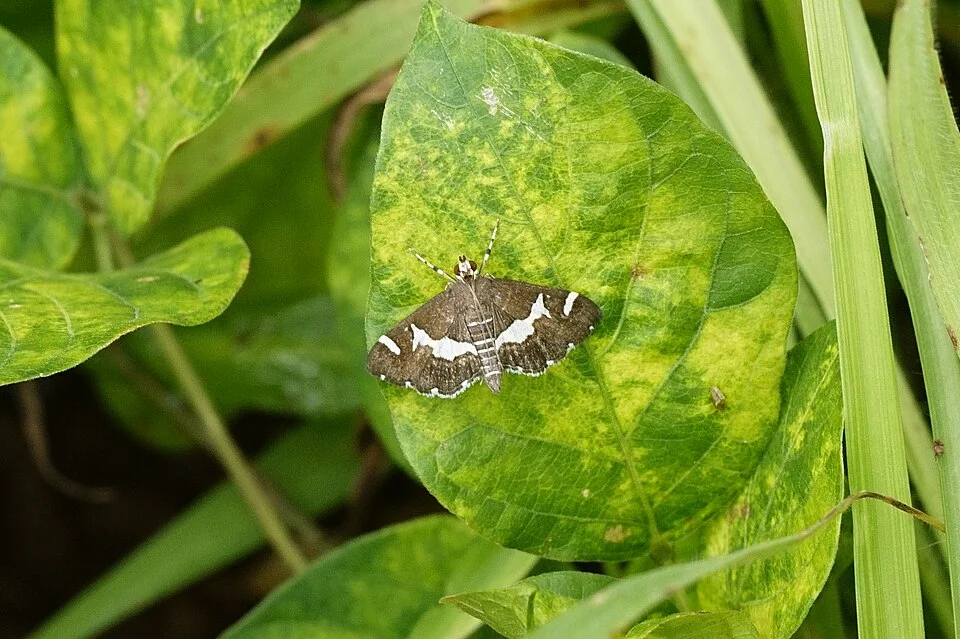
a small dark-brown moth about the size of your thumbnail (~2 cm across the wings) with a clear wavy white band across each wing and a little tuft at the tail. It hides under leaves by day and flutters up in a quick zig-zag at dusk when you brush through the crop.
Don't confuse it
with flea beetles (which chew clean round shot-holes but leave no silk), leaf miners (which make pale squiggly tunnels inside the leaf), or cutworms (which cut seedlings off at the base at night). The sure sign of the leaf webber is leaves silked together with a green caterpillar living inside.
Scout for it
When
check twice a week from the seedling stage right through leafy growth and cutting — this crop is at risk from its first true leaves all the way through the leafy growing and harvest season. Scout in the cool of early morning or late afternoon, when the caterpillars are active near the surface and the moths flutter up.
After warm, muggy weather, look harder
The pest breeds fastest in warm, humid spells (around 22–32°C with damp air) and several generations can pile up quickly — so step up scouting after a run of hot, sticky days.
Walk a big "W"
across the bed or field so you check all four corners and the middle, not just the edge by the path. Stop at about 5 to 10 spots and look at 10 plants at each stop.
What to check
the growing tips and youngest leaves first (the caterpillars prefer tender foliage). Turn leaves over to spot pale eggs and tiny caterpillars underneath, and gently open any folded or webbed leaves to find the green caterpillar and its droppings inside.
The number that means "act now"
treat when you find webbing and caterpillars on about 2 in every 10 plants (1 in 5). If you are growing a young crop to sell whole, act even earlier — at the first webbed leaves — because buyers reject any leaf with silk, holes or droppings on it.
Control it
Prevent it — break the food chain:
don't plant amaranth back-to-back on the same ground. The caterpillars need a constant supply of tender leaves, so rotate your leafy plots and leave a gap in time that starves each new generation. After every harvest, pull out and destroy old crop residues and weeds — wild amaranth and pigweed shelter the pest between crops.
Act early on the seedlings — handpick:
inspect young plants from the day they come up and handpick and crush the webbed shelters with the caterpillar inside — pinch them or drop them into a tin of soapy water. Because they cluster in the folded leaves, pulling off and burning the worst-webbed tips clears many at once and stops them spreading to clean plants.
Spray Bt on the young caterpillars (biological — the safest tool):
Bacillus thuringiensis (Bt) is a natural soil bacterium sold as a powder or liquid that only sickens caterpillars that eat it and is harmless to you, to bees and to helpful insects. Spray it onto the growing tips and the undersides of leaves while the caterpillars are still small and out in the open — before they web up — because once they seal themselves inside the fold, no spray can reach them. Spray in the cool of the day and wet the plants well.
Chemical — only as a last resort (spinosad):
if webbing keeps spreading past the threshold, spray spinosad, an approved leafy-vegetable insecticide. Because you eat and sell the leaves, you MUST respect the pre-harvest interval (PHI) — the set number of days you must wait after spraying before you may pick or sell — printed on the label. Safety: cover your skin, eyes, nose and mouth; spray in the cool of the day with the wind at your back; keep it off food, drinking water, children and bees; and wash yourself and your clothes afterwards.
Stop resistance building up
don't spray the same product every time, or the pest gets used to it and it stops working. Rotate to a different chemical group between sprays, and lean on Bt, handpicking and field sanitation first so you spray as little as possible.
If it keeps spreading → cut your losses cleanly
harvest the good, clean leaves early before more are ruined, then cut down and burn or bury the badly webbed, skeletonised plants so the caterpillars have nothing to crawl onto. Afterwards clear every residue and rest the ground from amaranth — plant a non-leafy crop next — to starve out the next generation before you grow leafy greens there again.
Catch amaranth leaf webber before it costs you the harvest
This guide is the general answer. Divisi works out yours — the week to scout your own field for amaranth leaf webber, and what to do the day you find it.


Crops it affects
Plan the crops it attacks


All planting calendars, country by country
Get Insights by email
A short digest of new Divisi articles. No email on quiet weeks.
Frequently asked questions
How do I identify amaranth leaf webber?
The damage (what you see first). young leaves and growing tips folded over and tied together with fine silk webbing, like a little tent or parcel. Open one and the leaf inside is eaten down to a thin, see-through skin — "windowed" and skeletonised (only the veins left) — and packed with green-black droppings (frass). Under heavy attack whole plants look stripped, ragged and dirty with webbing.
When should I take action against amaranth leaf webber?
Act when webbed leaves and caterpillars are found on about 1 in 5 plants, or earlier on a young leafy crop being sold whole.
How do I control amaranth leaf webber?
Prevent it — break the food chain:. don't plant amaranth back-to-back on the same ground. The caterpillars need a constant supply of tender leaves, so rotate your leafy plots and leave a gap in time that starves each new generation. After every harvest, pull out and destroy old crop residues and weeds — wild amaranth and pigweed shelter the pest between crops.
Which crops are attacked by amaranth leaf webber?
Among the crops covered here: Amaranth, Beetroot.