 Divisi
Clubroot
Plasmodiophora brassicae · Fungal
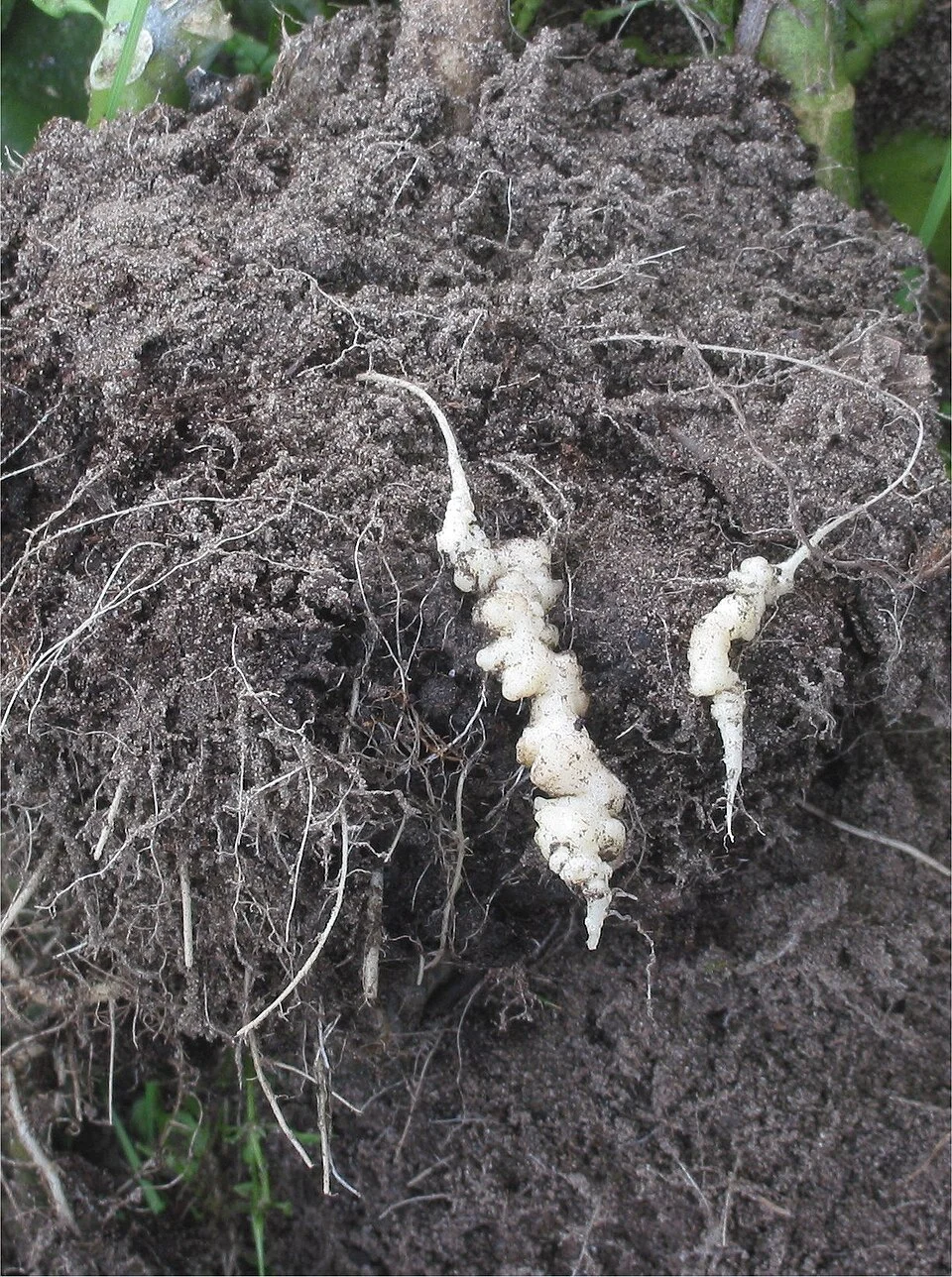
Photo: Rasbak · CC BY-SA 3.0
Clubroot is a stubborn soil disease of the cabbage family — cabbage, cauliflower, broccoli, kale, rape, canola, turnip and radish. It is caused by a tiny soil-borne germ (Plasmodiophora brassicae) that attacks the roots and swells them into useless clubs and knobs, choking off the plant's water and food. It thrives in wet, sour (acidic) soil in warm weather (about 18–25°C), and travels from field to field in contaminated soil clinging to tools, boots, wheels, running water and infected seedlings. Once it settles in a field its spores can wait in the ground for 15–20 years, so it cannot be sprayed away — it has to be kept out and managed.
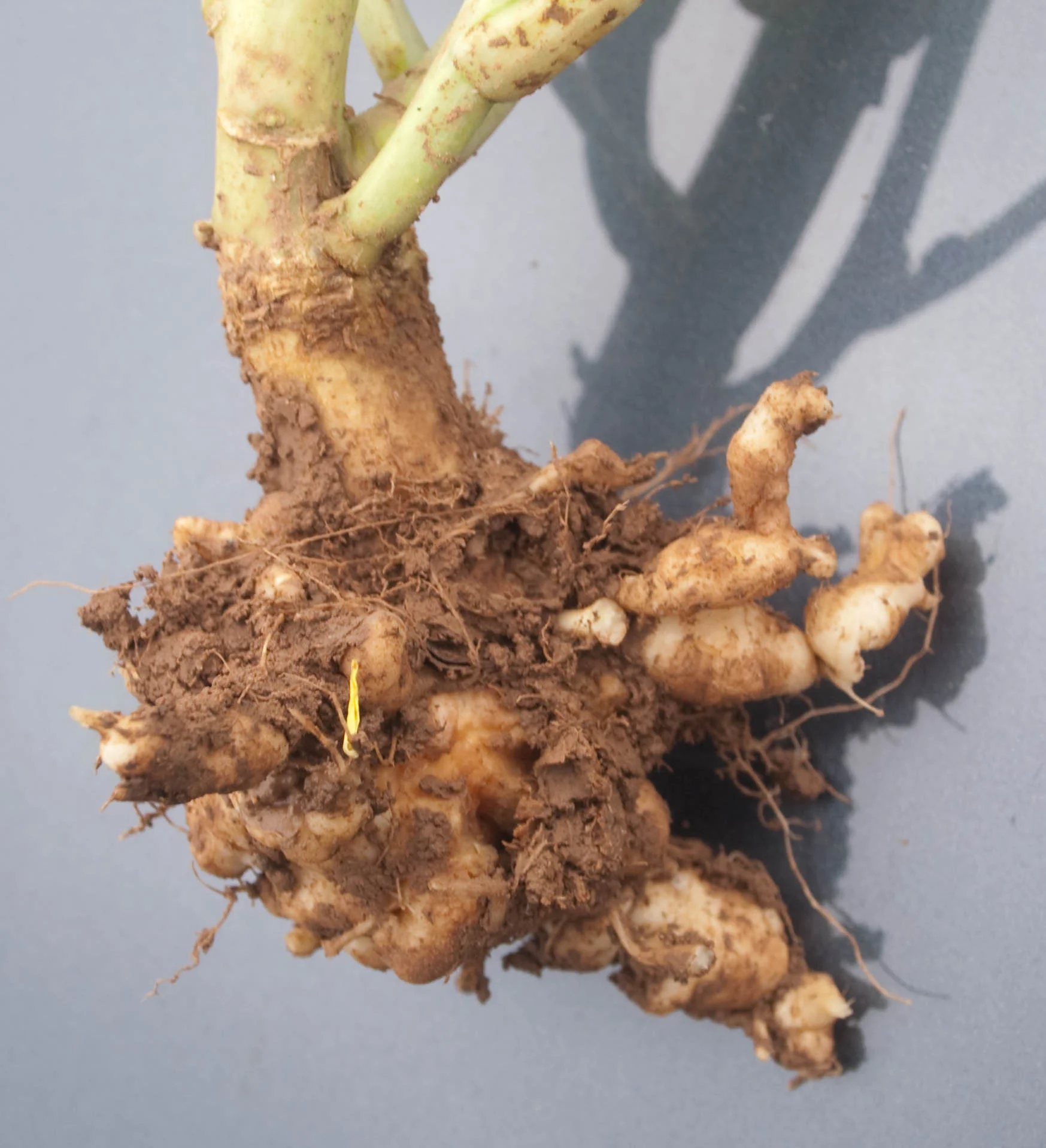
Leafhopper65 · Public domain 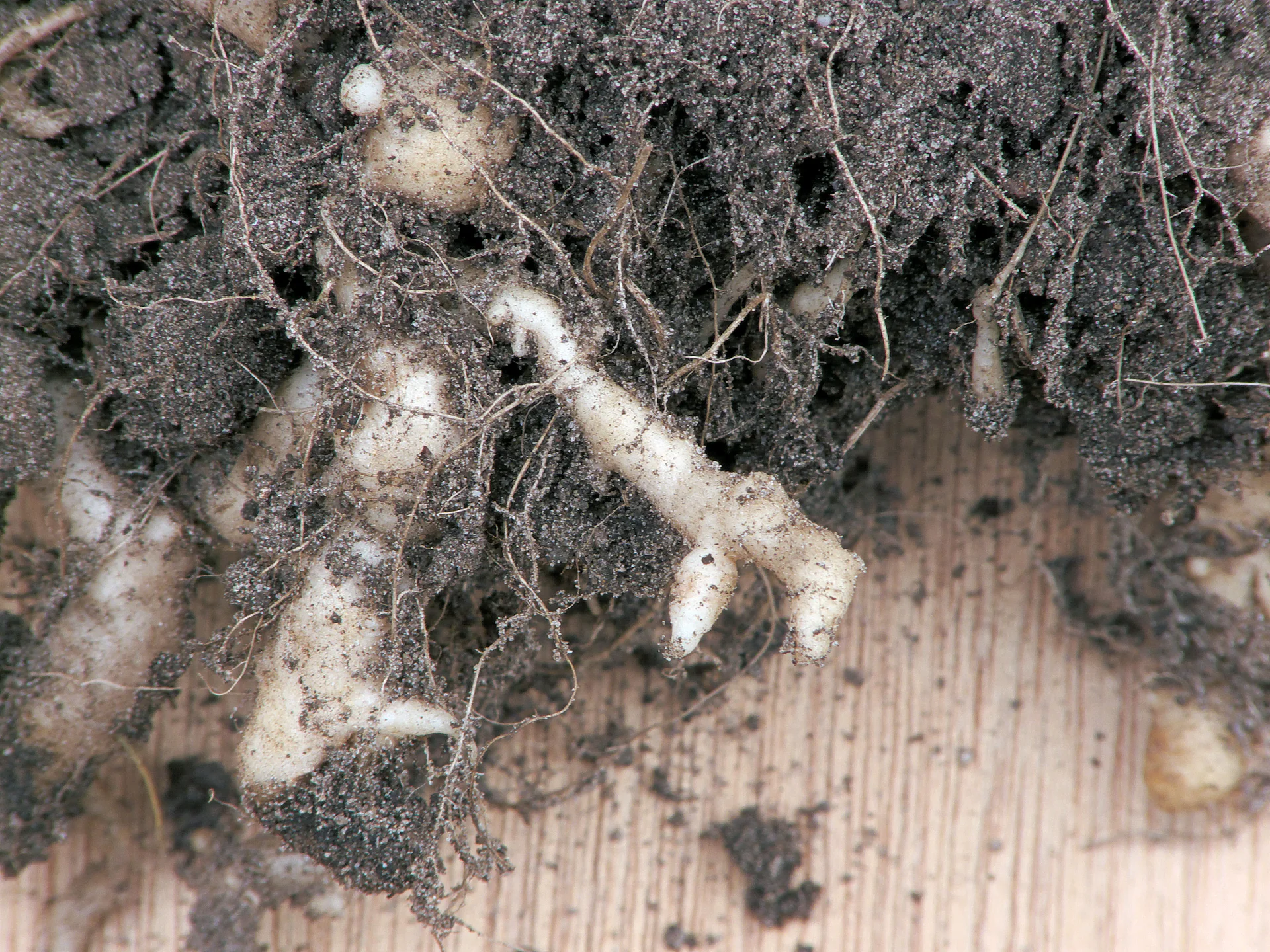
Rasbak · CC BY-SA 3.0
Why it matters
Clubroot swells the roots of your cabbage-family crops into useless lumps, so the plant can no longer drink water or take up food from the soil — it wilts, stays small, and gives you little or no head. A bad attack can cost you up to 80% of the crop — four out of every five plants. The worst part is that once it is in your soil it stays there: the tiny spores can live in the ground for 15 to 20 years, and no spray will clean them out. That is why keeping it off your land — clean seedlings, clean tools, limed and well-drained soil — matters more than anything you can do once it has arrived.
When to act
A field-status threshold: once clubroot is confirmed in a field, treat it as infested and manage on every future brassica crop; wilting patches plus clubbed roots on lifted plants confirm presence.
This guidance is general, compiled from published agronomic references including FAO and CABI. Thresholds and timing shift with your crop, your variety and the season.
In much of the region a spray is simply called mushonga — medicine. But a chemical group you cannot name is one you cannot rotate, and a product you did not write down has no pre-harvest interval you can observe. Mushonga, and other farming words →
The full Clubroot field guide
Identify it
The first sign is wilting in the heat of the day
On a warm afternoon your cabbages, kale or rape flop and droop as if they are thirsty — then perk up again overnight when it is cool. Day after day they wilt like this even though the soil is still damp — that is the giveaway.
As it takes hold the plants stay stunted and pale-yellow, older leaves may turn reddish or purple, and they never form a proper head. It usually shows up in patches, worst in the wet, low or sour corners of the field rather than evenly all over.
Pull up a wilting plant and look at the roots — this is the proof
Instead of normal thin roots you find them swollen into fat, misshapen clubs, knobs and stumpy fingers (old farmers call it "finger-and-toe"). Later these clubs rot, go soft, brown and slimy, and smell bad, spilling the disease back into the soil.
Tell it apart from look-alikes
root-knot nematode makes many small, round, bead-like knots along otherwise normal roots — clubroot makes the whole root swell into big, merged lumps. Cabbage-root maggots leave chewed, tunnelled roots with white grubs, not swellings. And if a wilting plant's roots look completely normal when you lift it, your trouble is dry soil or poor feeding — not clubroot.
Scout for it
Start looking from about two weeks after you plant out, right through the early growing weeks — the young stage, when clubroot does its damage. Check hardest after warm, wet spells, the weather it loves.
Walk the field in the heat of the afternoon, when sick plants show their wilting most clearly, and look hardest in the wet, low-lying and known sour (acidic) patches — clubroot strikes there first.
Walk a big "W" across the field so you cover all four corners and the middle, not just the edge by the path. Make about 10 stops and look for wilting, stunting, yellowing and uneven, patchy growth.
At each stop, lift 3 or 4 wilting plants with a fork and check the roots — the leaves alone will fool you, so you must dig. Lift gently so the whole root comes up, not a snapped-off stub.
Finding even ONE plant with swollen, clubbed roots is enough
That single plant confirms clubroot, and from that day on you must treat the whole field as infested and protect every future cabbage-family crop you grow on that ground.
Control it
Sweeten the soil with lime (prevent)
Clubroot loves sour (acidic) soil, so spread lime to raise the soil toward neutral — a pH of about 7 — well before you plant. This is your single strongest weapon: the disease struggles badly in limed, non-acid ground.
Keep the soil dry and rest the land (prevent)
Improve drainage and plant on ridges or raised beds so water does not sit — clubroot needs wet soil to spread. And grow cabbage-family crops on the same ground only once every 5–7 years; long breaks starve the disease down (though its spores linger for years, so rotation alone will not clear it).
Bring in clean, keep it clean (prevent)
The disease usually arrives on infected seedlings, so plant only healthy transplants raised in clean soil — better still, raise your own. Scrape the soil off your hoes, boots, wheelbarrow and any machine before you move from an infested field to a clean one, always work your clean fields first and the sick ones last, and never let runoff from a sick field wash into a clean one. Pull out wild mustard, wild radish and other cabbage-family weeds, which keep the disease alive between crops.
Grow clubroot-resistant varieties where you can get them (prevent) — but do not lean on them alone
Change the resistant variety you use from time to time and keep liming and rotating, because if you grow the same resistant type again and again the disease can shift and break through it.
Once you confirm it, pull out infected plants carefully (act)
A clubbed plant is already lost, so lift it gently — jostling it spreads spores — carry the plant and all its roots out of the field in a bag, and burn them or bury them deep. Never leave clubbed roots to rot in the soil, never put them in compost, and never feed them to animals; the spores survive all of that.
There is no spray that cures clubroot — do not waste money on fungicides
Your power is in the steps above, not in a chemical. If it keeps spreading despite liming and drainage, stop growing cabbage-family crops on that land and switch it to non-hosts the disease cannot feed on — maize, sorghum, beans, groundnuts or potatoes. Keep your wettest, most sour fields for those crops and save your cleanest, best-drained, limed ground for cabbages. When a crop is badly clubbed and no heads will form, cut your losses: pull it, remove every root, and put all your effort into not carrying the soil to clean land.
Catch Clubroot before it costs you the harvest
This guide is the general answer. Divisi works out yours — the week to scout your own field for Clubroot, and what to do the day you find it.


Crops it affects
Plan the crops it attacks


All planting calendars, country by country
Get Insights by email
A short digest of new Divisi articles. No email on quiet weeks.
Frequently asked questions
How do I identify Clubroot?
The first sign is wilting in the heat of the day. On a warm afternoon your cabbages, kale or rape flop and droop as if they are thirsty — then perk up again overnight when it is cool. Day after day they wilt like this even though the soil is still damp — that is the giveaway.
When should I take action against Clubroot?
A field-status threshold: once clubroot is confirmed in a field, treat it as infested and manage on every future brassica crop; wilting patches plus clubbed roots on lifted plants confirm presence.
How do I control Clubroot?
Sweeten the soil with lime (prevent). Clubroot loves sour (acidic) soil, so spread lime to raise the soil toward neutral — a pH of about 7 — well before you plant. This is your single strongest weapon: the disease struggles badly in limed, non-acid ground.
Which crops are attacked by Clubroot?
Among the crops covered here: Cabbage, Rape / covo / kale.