 Divisi
Fusarium basal rot
Fusarium oxysporum f. sp. cepae · Fungal
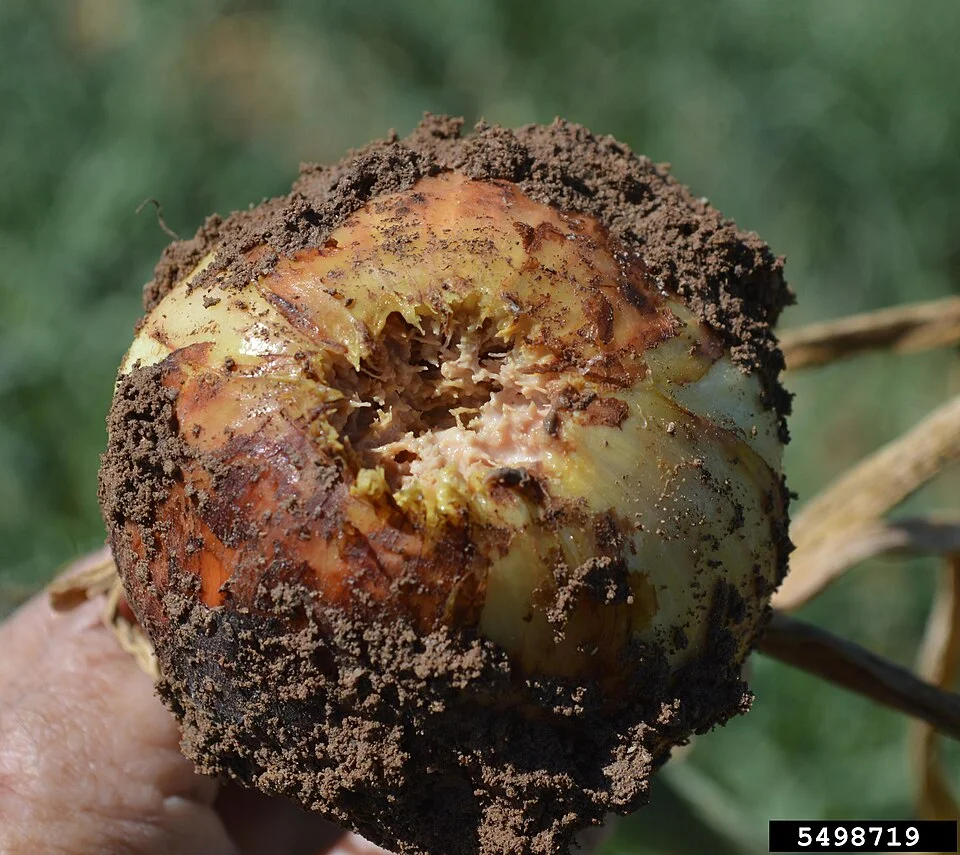
Photo: Howard F. Schwartz, Colorado State University, Bugwood.org · CC BY 3.0
Fusarium basal rot is a soil-borne fungus (Fusarium oxysporum f. sp. cepae) that attacks onions and garlic through the roots and the basal plate — the hard little disc at the very bottom of the bulb where the roots grow out. It loves warm soil and rots the plate upward into the bulb, killing the roots so the plant collapses. The fungus lives in the soil for many years and keeps rotting bulbs even after they are lifted and put in store.
Why it matters
Fusarium basal rot can take up to 40% of your onion or garlic crop — and the worst of it is hidden. Plants look sick above ground while the real damage is rotting the base of the bulb below, so you often only learn how bad it is when you lift the crop or open the store and find soft, spoiled bulbs. It is hard to beat because the fungus stays alive in the soil for many years: once your field is infected you cannot spray it out, you can only keep it from spreading and starving it of onions to feed on.
When to act
any plants yellowing and dying back with a soft, rotting basal plate found on lifting
This guidance is general, compiled from published agronomic references including FAO and CABI. Thresholds and timing shift with your crop, your variety and the season.
In much of the region a spray is simply called mushonga — medicine. But a chemical group you cannot name is one you cannot rotate, and a product you did not write down has no pre-harvest interval you can observe. Mushonga, and other farming words →
The full Fusarium basal rot field guide
Identify it
The first thing you see
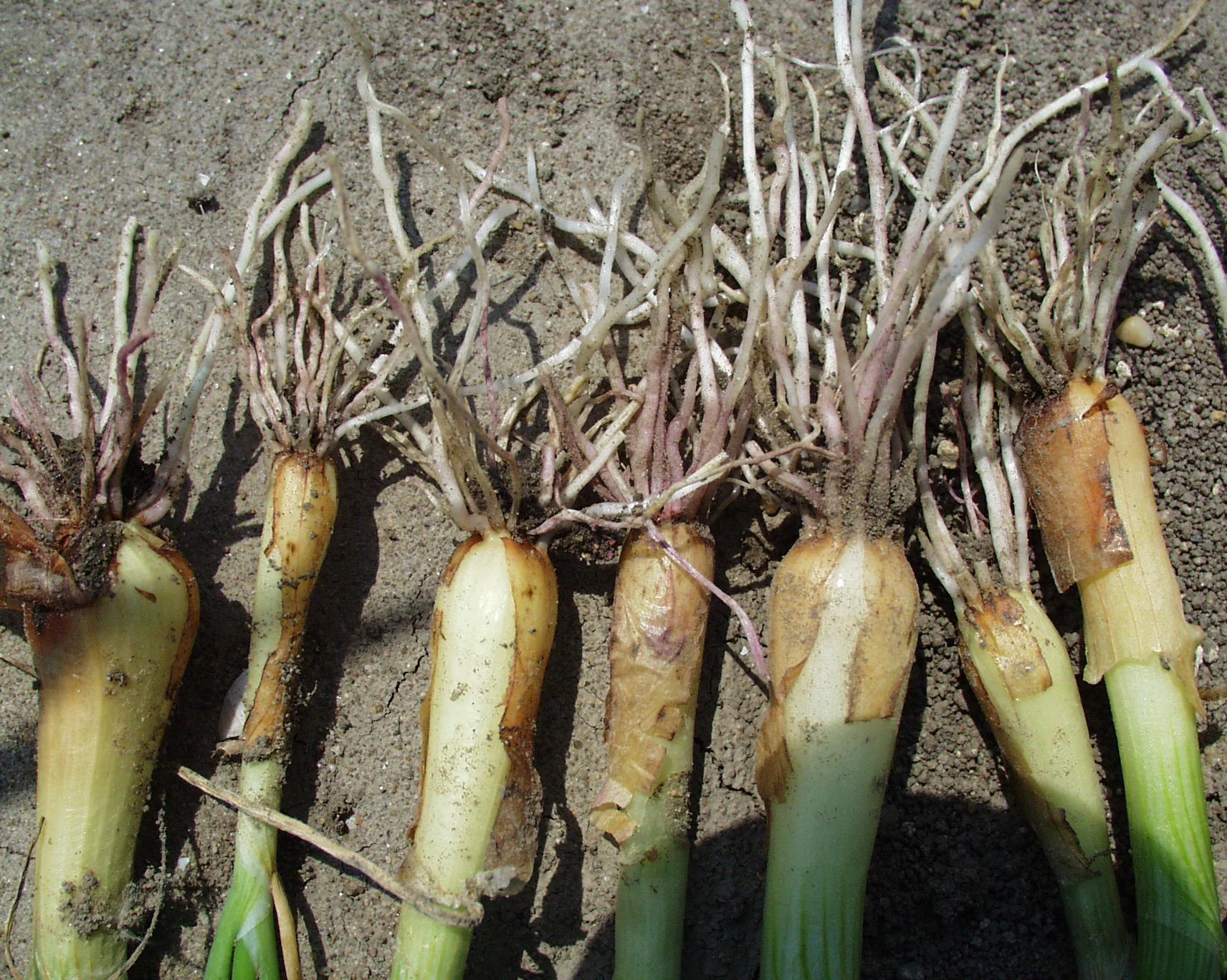
older leaves turn yellow from the tip downward and start dying back while the plant is bulbing, and the whole plant looks stunted and wilts in the heat of the day even when the soil is moist. A few plants collapse here and there across the bed.
Pull a sick plant and look at the base
The roots come away easily — they are brown, few, and rotted instead of white and firm. The basal plate (the hard disc at the bottom of the bulb where roots attach) is brown and soft, watery at first then firm and dry, and the rot creeps up into the bulb.
Cut the bulb in half from top to bottom
Infected scales are discoloured and softening, often browning from the base up, and you may see a pinkish-white, cottony mould on the rotted plate or between the scales.
Tell it apart from look-alikes
White rot shows fluffy white mould with tiny black dots (like poppy seeds) on the base — Fusarium's mould is pinkish-white with no black dots. Neck rot starts at the top/neck of the bulb in store, not the base. Simple drought or maggot damage will not give you a soft, rotting basal plate with easily-detached roots — that rotting base is the Fusarium fingerprint.
Scout for it
When to look
from bulbing right through to maturity and harvest (the mid- and late-season stages) — this is when the disease shows, especially in the warm months when the soil is hot (around 25-32°C, warm enough that the surface soil is uncomfortable to hold your hand on).
How to walk the field
every week or two, walk a big "W" across the plot so you cover all four corners and the middle, not just the row by the path. Stop at about 10 spots and check the plants around each stop.
What to check at each stop
look for plants that are yellowing, dying back or wilting while healthy neighbours stay green. These are your suspects.
Lift and confirm — this is the key test
At each stop, pull one or two suspect plants and cut across the basal plate. If you find a brown, soft rot and easily-detached roots (with or without pinkish-white mould), that is Fusarium.
Your action number
even ONE plant that is yellowing and dying back with a soft, rotting basal plate on lifting means the disease is in your soil. There is no spray to save a rotted plant — so the moment you confirm it, switch to protecting the rest of the crop and next season's field (see control). Mark and remove those plants; don't wait for more.
Control it
Prevent first — start clean
Plant only clean, healthy sets and seed from a trusted source (never save planting material from a field that had basal rot), and choose tolerant/resistant onion and garlic varieties where you can get them — these are your two strongest tools.
Starve the fungus with rotation and drainage
Do not grow onion or garlic on the same ground for at least 3-4 years — rotate to a non-allium crop so the fungus has nothing to feed on. Plant on well-drained ground or raised beds; avoid warm, waterlogged soil that stresses the roots during bulbing and lets the fungus in.
Close the doors the fungus uses
The fungus gets in through wounds, so control onion maggot and root-feeding nematodes (tiny soil worms) that chew the roots and basal plate. Remove and destroy rotted plants and crop trash — do not leave infected bulbs in the field or throw them on the compost.
Protect the harvest in store
Cure the bulbs well (dry the necks and skins thoroughly after lifting) and store them cool and dry with good airflow. Fusarium keeps rotting bulbs after harvest, so a poorly-dried, warm store will turn a few sick bulbs into a spoiled heap.
Chemical — last resort, and only at planting
There is no spray that cures an infected plant. The only chemical option is a seed treatment: treat seed or dip the sets in a registered fungicide before planting (a nurseryman's or shop's recommended, registered product for onions — never an unlabelled mix), and where available drench the planting furrow with a biocontrol such as Trichoderma (a friendly fungus that crowds out Fusarium). Follow the label rate exactly. Safety: cover your skin, eyes, nose and mouth when handling the treatment, mix and dip in the cool of the day with the wind behind you, keep it away from food, drinking water, children and animals, and wash your hands and clothes after. Because you use it so rarely, rotate to a different fungicide group the next time so the fungus doesn't build resistance.
If it keeps spreading
if rotted plants keep appearing despite clean sets and drainage, treat that field as infected soil — stop growing onions and garlic there and put it under a long rotation (4 years or more) of unrelated crops. If a crop is already collapsing at bulbing, lift the healthy bulbs early, cure them hard and sell or use them quickly — don't hold badly-affected bulbs in store, as they will rot and spoil the rest. Cut your losses on that field and protect the clean ground you have left.
Catch Fusarium basal rot before it costs you the harvest
This guide is the general answer. Divisi works out yours — the week to scout your own field for Fusarium basal rot, and what to do the day you find it.


Crops it affects
Plan the crops it attacks


All planting calendars, country by country
Get Insights by email
A short digest of new Divisi articles. No email on quiet weeks.
Frequently asked questions
How do I identify Fusarium basal rot?
The first thing you see. older leaves turn yellow from the tip downward and start dying back while the plant is bulbing, and the whole plant looks stunted and wilts in the heat of the day even when the soil is moist. A few plants collapse here and there across the bed.
When should I take action against Fusarium basal rot?
any plants yellowing and dying back with a soft, rotting basal plate found on lifting
How do I control Fusarium basal rot?
Prevent first — start clean. Plant only clean, healthy sets and seed from a trusted source (never save planting material from a field that had basal rot), and choose tolerant/resistant onion and garlic varieties where you can get them — these are your two strongest tools.
Which crops are attacked by Fusarium basal rot?
Among the crops covered here: Garlic, Onion.