 Divisi
Ganoderma basal stem rot
Ganoderma boninense · Fungal
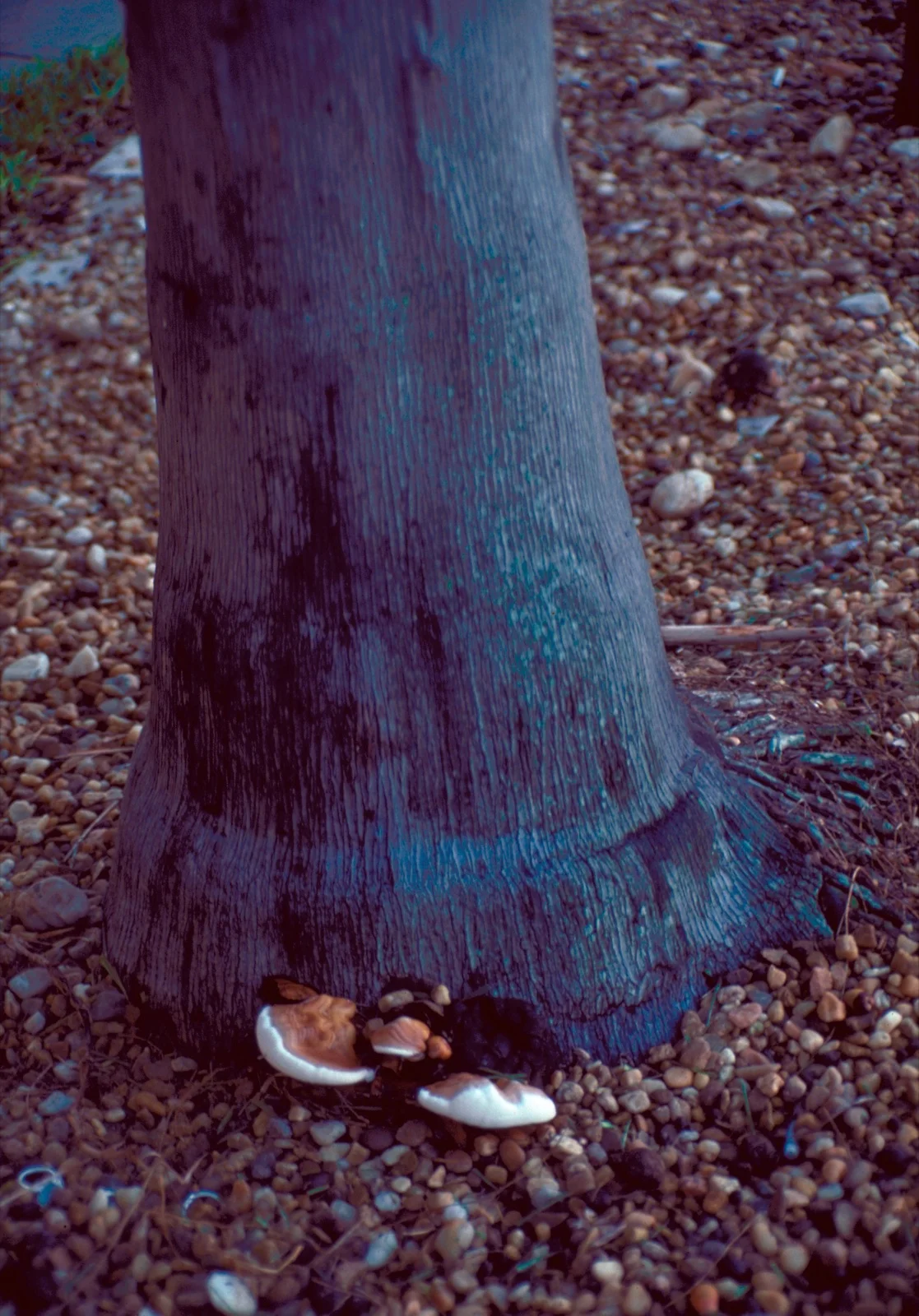
Photo: Edward L. Barnard, Florida Department of Agriculture and Consumer Services · CC BY 3.0
Ganoderma basal stem rot — also called butt rot — is a slow, lethal decay of the trunk base and root plate of oil palm and coconut, caused by the white-rot fungus Ganoderma boninense (closely related Ganoderma species cause the same rot on coconut and other palms). It quietly eats the woody base from the inside for years before anything shows above ground, then kills the palm. It creeps from palm to palm where their roots touch underground, lives on for years in old stumps and roots left in the ground, and also spreads by airborne spores settling on wounds and dead wood. It is worst on land replanted with palms a second or third time, and there is no cure once a palm is infected — the base finally gives way and the palm topples.
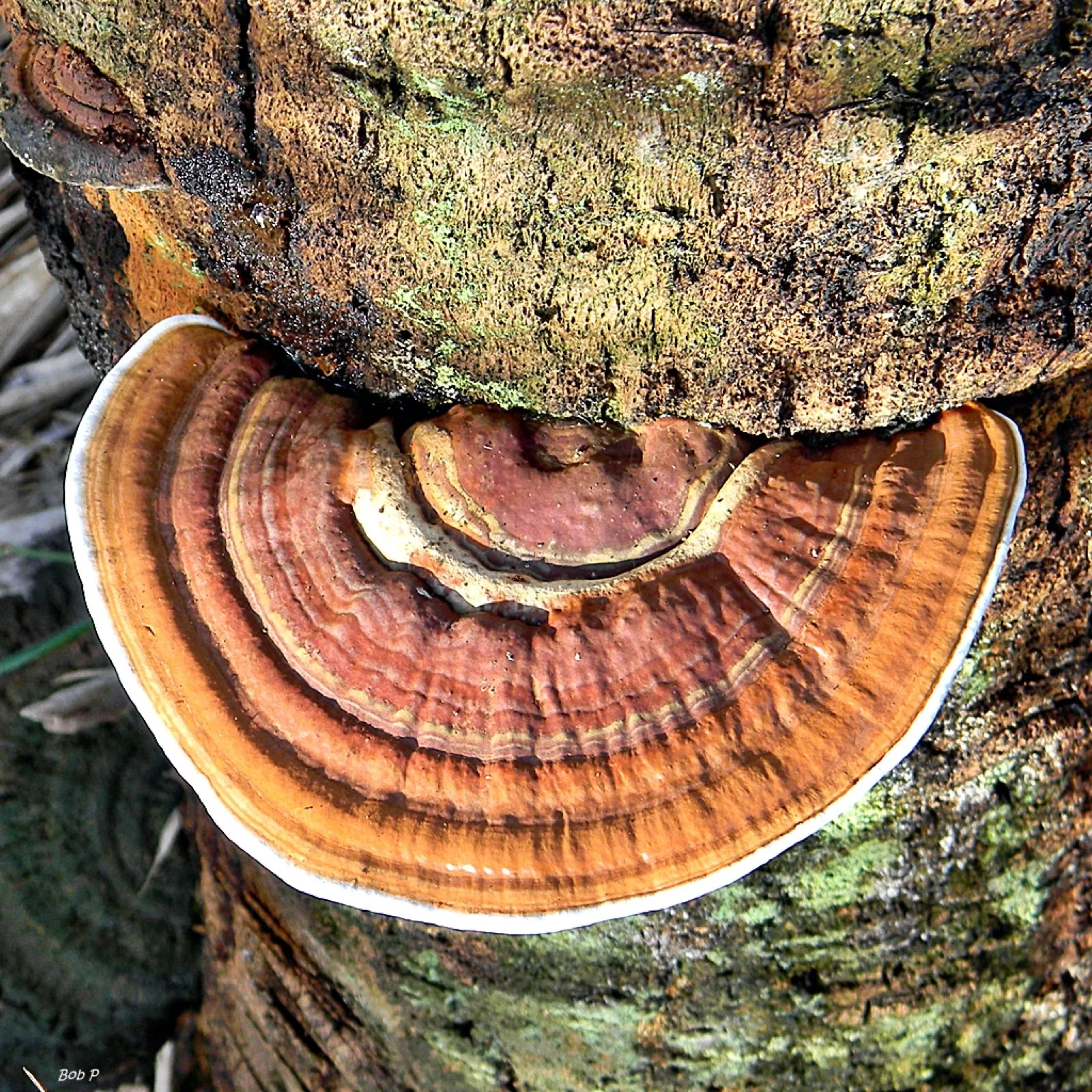
Bob Peterson (Flickr) · CC BY-SA 2.0 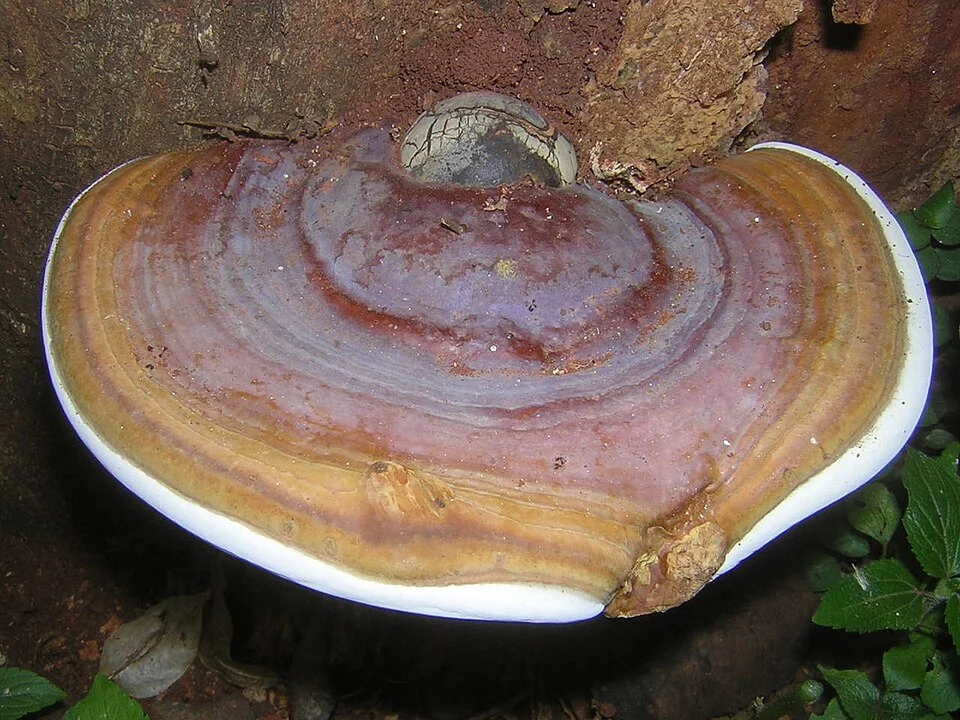
This image was created by user chuah at Mushroom Observer, a source for mycological images.You can contact this user here. · CC BY-SA 3.0
Why it matters
Ganoderma basal stem rot is a palm killer. On bad land — especially where old, infected palms were cleared before — it can rot and topple up to 4 out of every 5 of your palms (80%), and a palm takes years of care to reach bearing, so every one you lose is years of work and income gone. It is so hard to beat because it hides at the base and in the roots where no spray can reach, and it creeps underground from one palm to the next and out of buried old stumps. By the time you see the woody bracket at the base or the skirt of dead fronds, that palm is already lost — which is why keeping it OUT with clean replanting and strong palms matters far more than trying to cure it.
When to act
any palm with a bracket fruiting body at the stem base, or a skirt of hanging dead fronds with unopened spear leaves over a flattened, pale canopy
This guidance is general, compiled from published agronomic references including FAO and CABI. Thresholds and timing shift with your crop, your variety and the season.
In much of the region a spray is simply called mushonga — medicine. But a chemical group you cannot name is one you cannot rotate, and a product you did not write down has no pre-harvest interval you can observe. Mushonga, and other farming words →
The full Ganoderma basal stem rot field guide
Identify it
The first thing you notice is the crown
The oldest, lowest fronds turn pale and yellow, dry to brown, and hang straight down against the trunk like a skirt instead of dropping off. At the same time the youngest spear leaves (the new fronds before they open) pile up unopened in the middle, and the whole crown looks pale, flattened and one-sided — the palm is starving because its rotten base can no longer feed it.
The tell-tale sign is at the base (the butt) of the trunk
woody, shelf-like brackets called conks — these are the mushroom, or fruiting body, of the fungus. Young ones start as soft white or cream buttons at ground level; mature ones harden into hoof- or shelf-shaped brackets with a shiny reddish-brown, mahogany-coloured top and a white underside and rim, usually sitting on the trunk base or on an exposed root.
Kick or cut the base and it is rotten
— not solid wood but soft, pale, crumbly and powdery, with dark brown lines running through the light rotted tissue, and often damp to the touch. In the end the palm snaps off or topples right at the base, even while part of the crown is still green.
Don't confuse it with look-alikes
Yellow fronds on their own can just be hunger (a nutrient shortage) or drought — but those yellow evenly and the base stays hard; butt rot yellows from the bottom up into a hanging skirt AND rots the base. And brackets growing on a dead stump or a fallen log are harmless wood-rotters — the real alarm is a bracket growing on the base of a living palm.
Scout for it
Watch your mature, bearing palms
Butt rot strikes older palms in the mid- to late season, not young seedlings. Be most alert on any block that was replanted with palms a second or third time, or cleared from old infected palms — that is where the fungus is waiting in the ground.
Walk a big "W" across the block so you pass through all four corners and the middle, not just the edge by the path. Stop about 10 times, and at each stop look over the palms around you — and any pale or skirted palm you spot anywhere, go straight to it.
At each palm, check two places: the base of the trunk and the exposed roots — look for white buttons or woody brackets and press the wood to feel for soft, hollow or spongy spots; and the crown — look for a build-up of unopened spears and a skirt of dead fronds hanging down.
The threshold is ONE palm
Because a single sick palm feeds the fungus through its roots into its neighbours, even one palm with a skirt of dead fronds and unopened spears, OR a bracket (conk) at its base, means act NOW — you do not wait for a percentage. Mark that palm with a dab of paint or a peg and act on it.
Map the sick palms
every time you scout, so you can watch the rot creep down a row from palm to palm through their touching roots. That tells you where to dig your next trench and which neighbours to watch most closely.
Control it
Prevent it — clean the land before you replant
The fungus lives on for years in old palm stumps and roots, so before you plant a new palm crop, dig out and burn or destroy every old stump and big root from the palms that stood there before. Never plant a young palm straight into ground still full of old infected debris — that is how most new plantings catch the rot. This clean-up is your single most powerful defence.
Plant tolerant material and keep palms strong
Where you can get it, use partially tolerant oil-palm planting material — it resists the rot better, though it does not fully stop it. Feed and water your palms well: a strong, vigorous palm fights off the rot far longer than a starved, stressed one.
Act early on the first sick palms — isolate and prop them up
Dig a trench around an affected palm and between it and its healthy neighbours to cut the underground root-to-root contact the fungus travels along. For a lightly affected palm, mound fresh soil around the base to push out new roots above the rot — this won't cure it, but it can keep the palm bearing for a season or two more while you plan to remove it.
When a palm skirts or brackets, it is finished — cut your losses
Once you see the hanging skirt with unopened spears, or a conk at the base, that palm will not recover and it is now infecting its neighbours. Fell it, dig out and burn the whole stump and root plate, and trench around the gap. Replant that spot only after every scrap of infected debris is gone, using tolerant material — and keep a close eye on the palms on either side.
A biological helper, not a cure (Trichoderma)
You can put the beneficial fungus Trichoderma (a friendly fungus that competes with and slows the rot) into the planting holes and onto old stumps to hold the disease back. Treat it as support only — it is partial and works best alongside good sanitation, never on its own. There is no chemical spray that cures this disease, so do not waste money on one; handle any product you do use in the cool of the day, keep it off your skin, eyes, food, water and children, and wash after.
If it keeps spreading
tighten sanitation — take out and destroy sick palms and their stumps faster, widen your isolation trenches, and stop moving soil or roots from an infected block to a clean one. When a palm is too far gone (fronds collapsed, base rotted, bracket formed), cut your losses: fell it, clear the stump completely, and rest or clean that spot before you plant again rather than throwing a fresh seedling straight into infected ground.
Catch Ganoderma basal stem rot before it costs you the harvest
This guide is the general answer. Divisi works out yours — the week to scout your own field for Ganoderma basal stem rot, and what to do the day you find it.


Crops it affects
Plan the crops it attacks


All planting calendars, country by country
Get Insights by email
A short digest of new Divisi articles. No email on quiet weeks.
Frequently asked questions
How do I identify Ganoderma basal stem rot?
The first thing you notice is the crown. The oldest, lowest fronds turn pale and yellow, dry to brown, and hang straight down against the trunk like a skirt instead of dropping off. At the same time the youngest spear leaves (the new fronds before they open) pile up unopened in the middle, and the whole crown looks pale, flattened and one-sided — the palm is starving because its rotten base can no longer feed it.
When should I take action against Ganoderma basal stem rot?
any palm with a bracket fruiting body at the stem base, or a skirt of hanging dead fronds with unopened spear leaves over a flattened, pale canopy
How do I control Ganoderma basal stem rot?
Prevent it — clean the land before you replant. The fungus lives on for years in old palm stumps and roots, so before you plant a new palm crop, dig out and burn or destroy every old stump and big root from the palms that stood there before. Never plant a young palm straight into ground still full of old infected debris — that is how most new plantings catch the rot. This clean-up is your single most powerful defence.
Which crops are attacked by Ganoderma basal stem rot?
Among the crops covered here: Coconut, Oil palm.