 Divisi
Phytophthora blight
Phytophthora capsici · Fungal
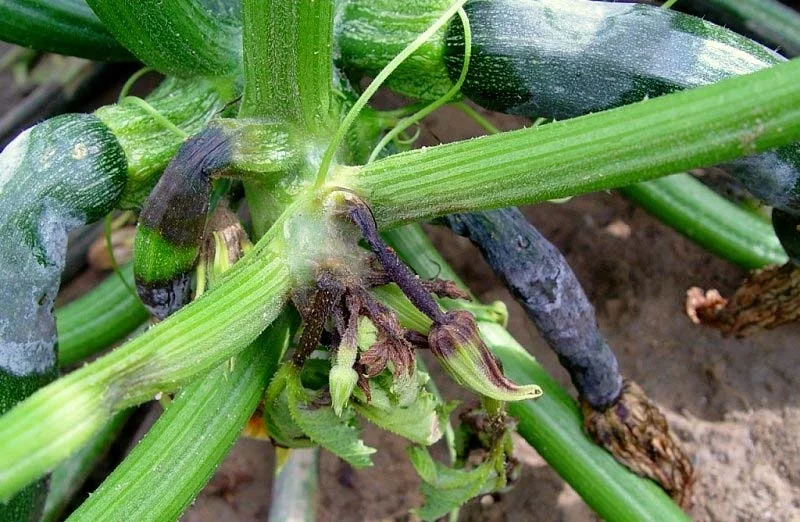
Photo: Kerstin Mahler, Anbauberatung Gemüsebau sowie Heil- und Gewürzpflanzen, beim DLR Rheinpfalz in Neustadt/Wstr. · CC BY-SA 4.0
Phytophthora blight is a water mould (an oomycete — a fungus-like organism that swims and spreads in water) that lives in wet soil. It makes swimming spores in waterlogged ground and rides splashing rain and runoff from plant to plant, rotting the roots, the stem base (crown), the leaves and the fruit of peppers, chillies, tomatoes, eggplants and cucurbits (pumpkins, cucumbers, melons, squash). It thrives in warm, wet weather and can move through a whole bed in days.
Kerstin Mahler, Anbauberatung Gemüsebau sowie Heil- und Gewürzpflanzen, beim DLR Rheinpfalz in Neustadt/Wstr. · CC BY-SA 4.0 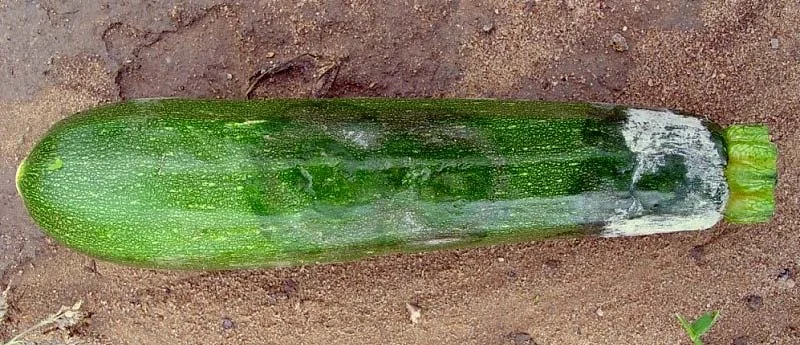
Kerstin Mahler, Anbauberatung Gemüsebau sowie Heil- und Gewürzpflanzen, beim DLR Rheinpfalz in Neustadt/Wstr. · CC BY-SA 4.0
Why it matters
Once this water mould gets into a wet field it can take your entire crop — up to 100% — because it kills the plant at the roots and stem base where you cannot see it, and no spray brings a dead plant back. It spreads fastest exactly when you most want to water: warm days and soaked soil let the spores swim from one plant to the next in hours. That is why it is so hard to beat once it starts — you cannot cure infected plants, you can only stop it reaching the healthy ones, so everything depends on drainage and catching the very first sick plant.
When to act
First wilting or stem lesions after heavy rain or irrigation; act immediately on drainage and remove affected plants (spreads fast in water)
This guidance is general, compiled from published agronomic references including FAO and CABI. Thresholds and timing shift with your crop, your variety and the season.
In much of the region a spray is simply called mushonga — medicine. But a chemical group you cannot name is one you cannot rotate, and a product you did not write down has no pre-harvest interval you can observe. Mushonga, and other farming words →
The full Phytophthora blight field guide
Identify it
The first thing you see
a plant that wilts and does not stand back up — even after you water it, even in the cool of the morning. Healthy plants droop in the midday heat and recover by evening; a blighted plant stays collapsed and dies within a few days.
Look at the stem base, right at the soil line
You will find a dark brown-to-black, wet, water-soaked band that wraps all the way around the stem (a girdling lesion). Above it the plant is choked off and dying. The roots and crown underneath turn brown and mushy — this is the crown and root rot.
On the leaves and fruit
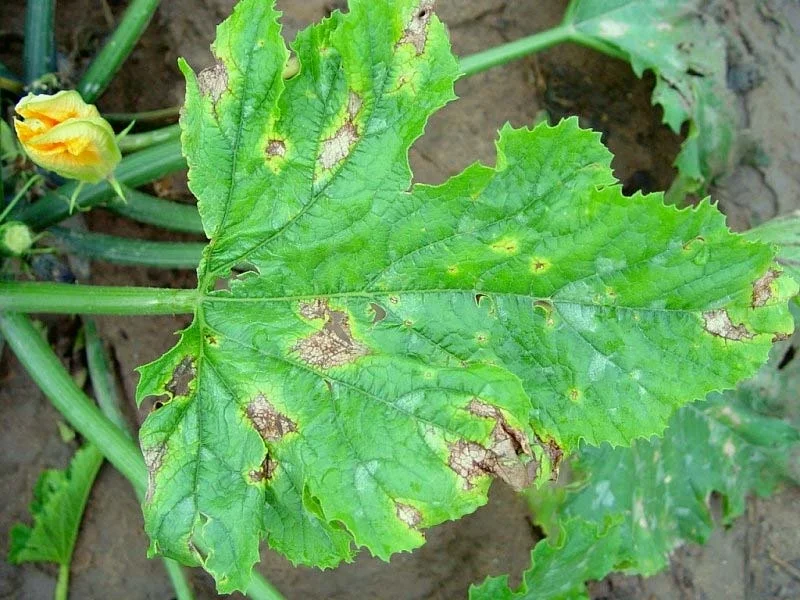
dark green, greasy, water-soaked blotches on leaves that dry to brown dead patches. Fruit touching or near the wet ground turns soft and rotten and is often coated in a fuzzy white mould (the mould's spores).
Where it strikes
always start looking in the low, wet spots — the bottom of the slope, the ends of furrows, anywhere water pools after rain or irrigation. It shows up there first and marches outward with the water.
Tell it apart from look-alikes
Bacterial wilt also makes plants collapse, but the stem stays firm with no dark girdling band at the soil line (cut a wilted stem and dip it in clear water — bacterial wilt bleeds a milky thread, this blight does not). Simple drought wilt recovers overnight after watering; blight wilt never does. Cutworm damage cuts the stem clean through at the base — there is no dark, wet, spreading rot.
Scout for it
When to look
watch hardest from when the plants are growing and bushing out through fruiting and right up to harvest (the development, mid-season and late-season stages) — the whole time the crop is in the wet field. Warm weather between 24 and 30 °C with soaked soil is the danger zone.
The trigger to walk the field: every heavy rain, flood or irrigation
The day after water sits in the field, go and check — that is exactly when this mould moves.
How to walk it
cross the field in a big "W" so you cover all four corners and the middle. Make about 10 stops, and at each stop deliberately swing through the low, wet patches where water collects — do not just check the dry high ground.
What to check at each stop
any plant that is wilting and not recovering; the stem base at the soil line for a dark, wet, girdling band; and any fruit lying on or near wet soil for soft rot or white mould.
The number that means act now
this mould spreads too fast in water to wait for a big count — even ONE plant with sudden un-recovering wilt or a dark stem-base lesion after rain or irrigation is your threshold. One sick plant → act today.
Control it
Prevent it first — this is your strongest defence (drainage + cultural care)
Plant on raised beds or ridges so water drains away and never sits around the stem. Do not over-water and never flood-irrigate onto soaked ground. Rotate peppers, chillies, tomatoes, eggplants and cucurbits away from any bed that has had this blight — go 3–4 seasons into non-host crops (like cereals) before coming back. Start with clean, healthy transplants from disease-free ground.
Plant a resistant variety where you can get one
Ask your seed supplier or extension officer for tolerant/resistant varieties or grafted plants on resistant rootstocks of your crop. They will not be perfect, but they slow the disease down and buy you time — combine them with good drainage, never rely on them alone.
Stop the spread the moment you find it (sanitation)
As soon as you spot a wilted or stem-rotted plant, pull it out with the soil around the roots and carry it right out of the field — bury it deep or burn it, never toss it on the field edge where water washes back. Do not let water run from the sick patch to healthy plants, and wash the soil off your tools, boots and hands before working clean beds, because you carry the spores in mud.
Chemical — last resort, on the healthy plants only (oomycete fungicide)
Ordinary fungicides do NOT work on this water mould; you need an oomycete-specific fungicide (the phosphonate or metalaxyl group — ask your agro-dealer for one labelled for Phytophthora). Sprays protect healthy plants and cannot save rotted ones, so drench the beds around a sick spot preventively. Safety: cover your skin, eyes, nose and mouth; spray in the cool of morning or evening with the wind at your back; keep it off food, drinking water, children, and bees; respect the pre-harvest interval (the number of days on the label you must wait between spraying and picking fruit); and wash yourself and your clothes afterwards. Resistance: metalaxyl especially fails fast if over-used, so rotate to a different chemical group each time and never spray the same one over and over.
If it keeps spreading
double down on drainage — cut channels to drain the wet spots, stop irrigating that block, and keep pulling and removing every new sick plant daily to save the rest. When a patch is lost, cut your losses: rope it off, harvest any clean fruit from healthy plants nearby, and after the season rotate that ground out of peppers, tomatoes, eggplants and cucurbits for several years — the spores survive in the soil, so replanting a host there just feeds the disease again.
Catch Phytophthora blight before it costs you the harvest
This guide is the general answer. Divisi works out yours — the week to scout your own field for Phytophthora blight, and what to do the day you find it.


Crops it affects
Plan the crops it attacks
-
 When to plant Eggplant in Kiuaba-N'Zoji (Cuaba Nzogo)
 -
 When to plant Sweet pepper in Manono
 -
 When to plant Tomato in Goma
All planting calendars, country by country
Get Insights by email
A short digest of new Divisi articles. No email on quiet weeks.
Frequently asked questions
How do I identify Phytophthora blight?
The first thing you see. a plant that wilts and does not stand back up — even after you water it, even in the cool of the morning. Healthy plants droop in the midday heat and recover by evening; a blighted plant stays collapsed and dies within a few days.
When should I take action against Phytophthora blight?
First wilting or stem lesions after heavy rain or irrigation; act immediately on drainage and remove affected plants (spreads fast in water)
How do I control Phytophthora blight?
Prevent it first — this is your strongest defence (drainage + cultural care). Plant on raised beds or ridges so water drains away and never sits around the stem. Do not over-water and never flood-irrigate onto soaked ground. Rotate peppers, chillies, tomatoes, eggplants and cucurbits away from any bed that has had this blight — go 3–4 seasons into non-host crops (like cereals) before coming back. Start with clean, healthy transplants from disease-free ground.
Which crops are attacked by Phytophthora blight?
Among the crops covered here: Eggplant, Sweet pepper, Tomato.