 Divisi
Rhizome rot
Pythium aphanidermatum · Fungal
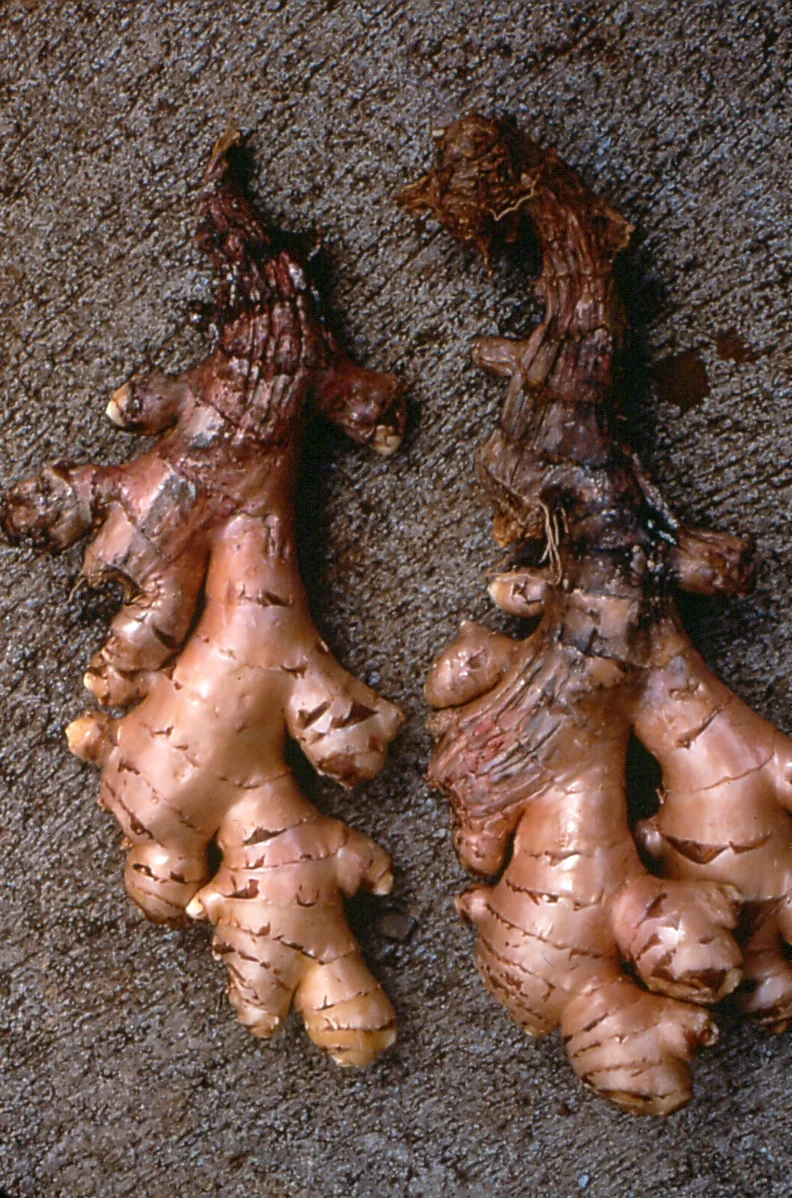
Photo: Scot Nelson · CC0
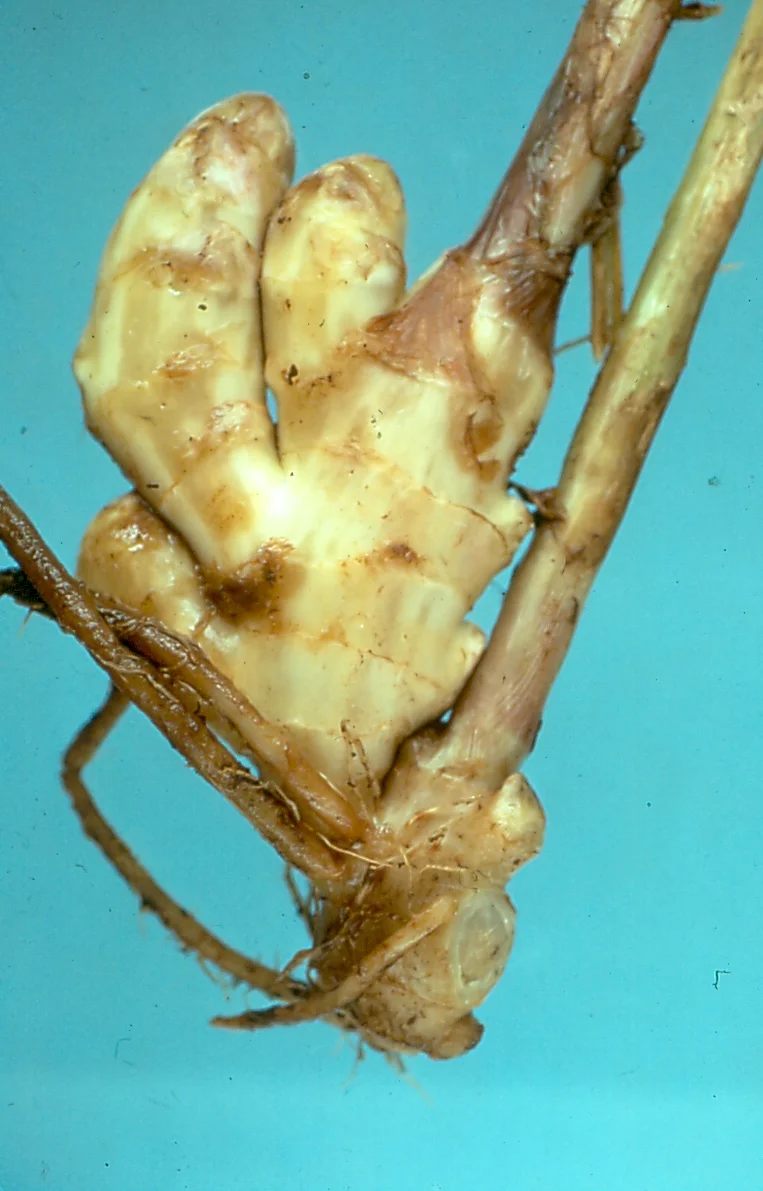
Rhizome rot is a soil- and water-borne rot (caused mainly by Pythium, often joined by Fusarium) that attacks the underground rhizome and the collar — the point where the shoot meets the soil — of ginger, turmeric and banana. It thrives in warm, waterlogged, poorly drained soil and rides into a clean field on infected seed rhizomes, rotting the plant away from the base until it topples.
Scot Nelson · CC0 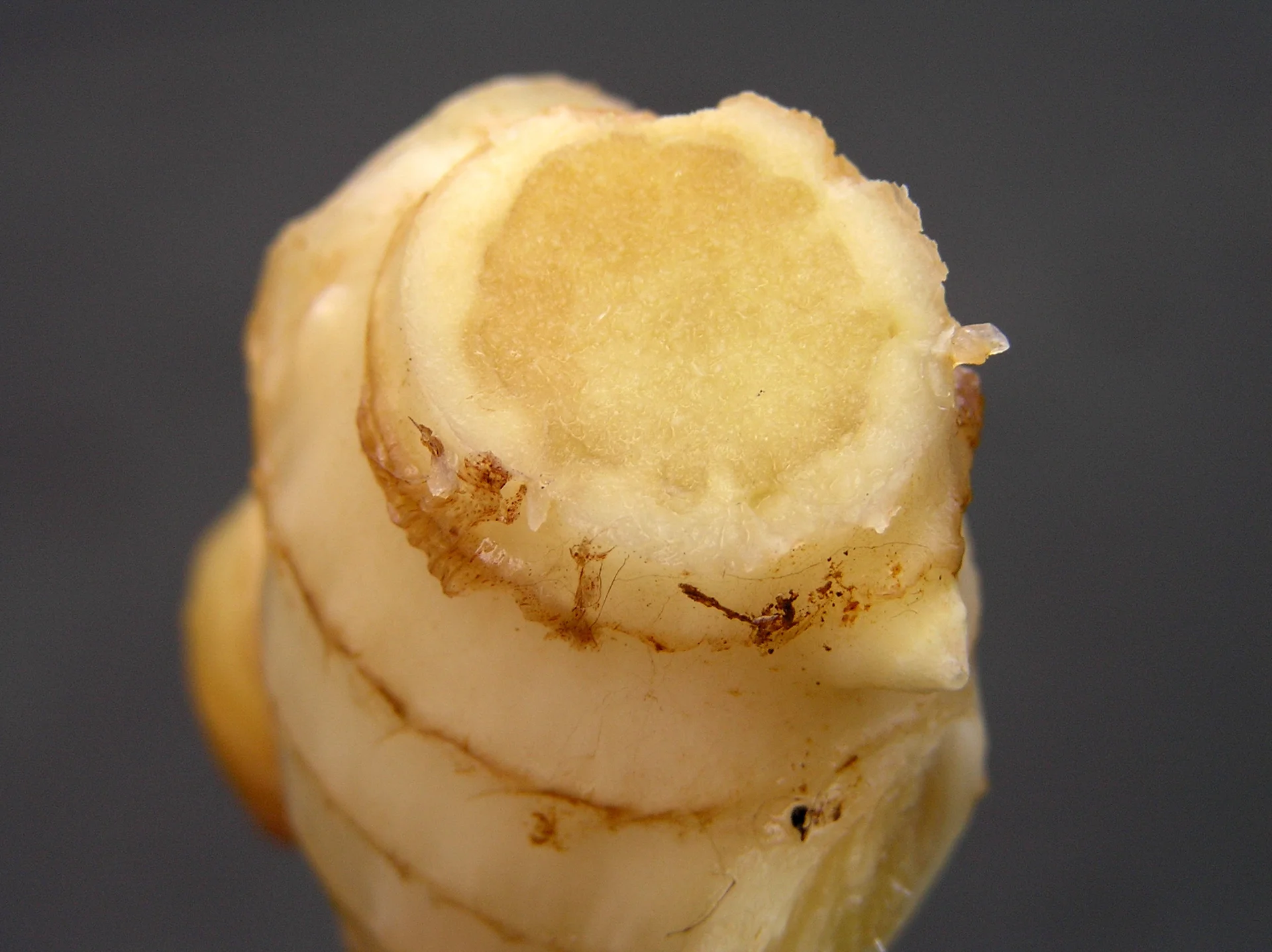
Scot Nelson · CC0
Why it matters
Rhizome rot goes for the part you actually sell — the rhizome underground — so by the time the leaves tell you something is wrong, the crop below is often already spoiled. In a wet season on poorly drained land it can take up to 80% of your harvest, nearly the whole field. It is hard to beat once it starts because it lives in the soil and water and spreads plant to plant through waterlogged ground, so you cannot spray it away — the win is keeping it OUT and catching the very first sick plant before it seeds the whole field.
When to act
first yellowing shoots or soft rotting rhizomes detected in the field
This guidance is general, compiled from published agronomic references including FAO and CABI. Thresholds and timing shift with your crop, your variety and the season.
In much of the region a spray is simply called mushonga — medicine. But a chemical group you cannot name is one you cannot rotate, and a product you did not write down has no pre-harvest interval you can observe. Mushonga, and other farming words →
The full Rhizome rot field guide
Identify it
The first thing you see (above ground)
the lower, older leaves turn pale yellow, and the yellowing creeps upward up the plant. The shoot loses its stiffness and wilts even when the soil is wet — a plant that flops in damp ground is a warning sign.
The tell-tale sign (at the base)
grip the shoot low down and pull gently — a sick plant's pseudostem (the false stem of leaf-sheaths) slips out easily, soft and rotten at the collar where it met the soil, while a healthy one holds firm.
Dig one up and look at the rhizome
it is soft, watery and mushy — you can push a finger into it — going brown to grey, and it gives off a clear foul, rotten smell. This wet, smelly rot is the surest sign.
Tell it apart from look-alikes
ordinary drought or nutrient hunger yellows the leaves too, but the rhizome stays firm and dry and there is no bad smell — rhizome rot's rhizome is always soft and stinking. A dry, sunken, hard rot with no odour is usually a different disease (dry rot / Fusarium), not this wet Pythium rot. And rot that appears only in the low, water-collecting patches of the field after heavy rain points straight to rhizome rot.
Scout for it
When to look hardest
from emergence right through the early growth and into mid-season — the sprouting, tillering and rhizome-bulking months — because these are the stages the disease hits. Look most closely in the days after heavy rain or flood irrigation, when the warm, waterlogged soil it loves is at its worst.
Walk a "W"
every week, walk a big "W" across the plot so you cover all four corners and the middle, not just the row by the path. Make about 10 stops along the way.
Check the low, wet spots on purpose
at each stop look hardest in the dips and poorly drained patches where water sits — that is where the rot starts and shows first.
What to check at each stop
scan for yellowing, wilting shoots; where you see one, tug the pseudostem — if it slips out soft, lift the plant and smell and squeeze the rhizome for the mushy, foul rot.
The action number — act on the FIRST one:
unlike a pest you can tolerate a few of, this disease has no safe level. The moment you find even ONE yellowing shoot or ONE soft, rotting rhizome, act now — mark that spot, because that single plant will infect its neighbours through the wet soil if you wait.
Control it
Prevent
-
start clean (most important):
plant only certified disease-free seed rhizomes from a healthy crop; never replant rhizomes from a field that had rot. Handle them gently — any cut or bruise is a doorway for the rot — and let cut setts heal before planting.
-
beat the water:
the disease needs standing water, so plant on raised beds or ridges with open drains so rain runs off fast and never pools around the collar. Avoid low, water-logging ground and do not over-irrigate.
-
break the cycle:
rotate away from ginger, turmeric, banana and other hosts for several seasons on land that has had the rot, and dig out and destroy (burn or bury far away) any infected clumps together with the soil around them so they do not seed next season.
Act early — biological (trichoderma):
before planting, treat the seed rhizomes and the planting soil with a Trichoderma (or Pseudomonas) biocontrol — friendly fungi/bacteria that colonise the roots and crowd out the rot. Use it as a routine at planting and again as a soil drench early in the season; it is safe for you, your family and bees.
Chemical — last resort (metalaxyl):
if the rot is a known problem on your land, dip the seed rhizomes and drench the soil around plants with an approved metalaxyl fungicide — a systemic product (one taken up inside the plant, as opposed to a contact one that only coats the outside). Metalaxyl is the right tool here because this rot is a water-mould (an oomycete), and metalaxyl was developed specifically to beat that kind of pathogen — an ordinary contact fungicide alone is weak against it. Safety: cover your skin, eyes, nose and mouth, mix and spray in the cool of the day with the wind at your back, keep it off food crops, drinking water, children and bees, wash yourself and your clothes after, and respect the pre-harvest interval (the minimum days the label says you must wait between the last treatment and harvest). To stop the rot building resistance, do not lean on the same chemical every time — alternate with the Trichoderma and the drainage/rotation measures rather than spraying alone.
If it keeps spreading
immediately rogue out and destroy every affected clump plus a ring of plants and soil around it, and stop irrigating that patch so you are not carrying the rot in the water. Cut off the wet spots from the rest of the field. If a whole low-lying block has collapsed and gone soft, it is too late for that block — harvest any sound rhizomes early, destroy the rotten ones, and rest that land out of hosts for several seasons rather than throwing good money after a lost crop.
Catch Rhizome rot before it costs you the harvest
This guide is the general answer. Divisi works out yours — the week to scout your own field for Rhizome rot, and what to do the day you find it.


Crops it affects
Plan the crops it attacks


All planting calendars, country by country
Get Insights by email
A short digest of new Divisi articles. No email on quiet weeks.
Frequently asked questions
How do I identify Rhizome rot?
The first thing you see (above ground). the lower, older leaves turn pale yellow, and the yellowing creeps upward up the plant. The shoot loses its stiffness and wilts even when the soil is wet — a plant that flops in damp ground is a warning sign.
When should I take action against Rhizome rot?
first yellowing shoots or soft rotting rhizomes detected in the field
How do I control Rhizome rot?
Prevent — start clean (most important):. plant only certified disease-free seed rhizomes from a healthy crop; never replant rhizomes from a field that had rot. Handle them gently — any cut or bruise is a doorway for the rot — and let cut setts heal before planting.
Which crops are attacked by Rhizome rot?
Among the crops covered here: Ginger, Turmeric.