 Divisi
Sugarcane mosaic virus
Sugarcane mosaic virus · Viral
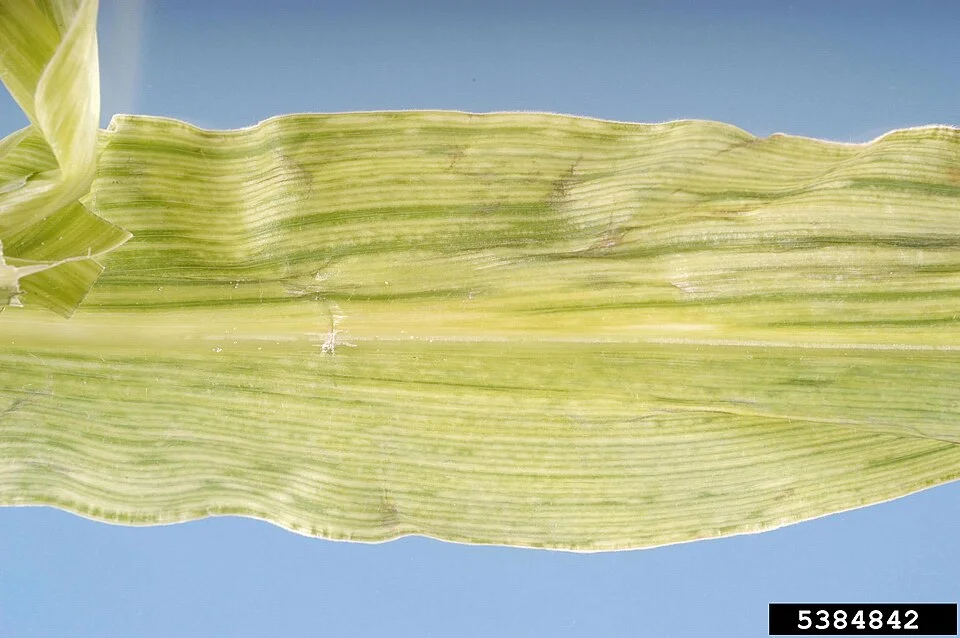
Photo: Jeffrey W. Lotz, Florida Department of Agriculture and Consumer Services, Bugwood.org · CC BY 3.0 us
Sugarcane mosaic virus is a plant virus (a potyvirus — a germ far too small to see, that lives inside the plant's sap). It rides into a new field mainly inside infected setts (the seed-cane cuttings you plant), and once growing it is carried plant-to-plant by aphids — small soft sap-sucking insects — in the few seconds it takes one to probe a leaf. There is no spray that cures it; the plant stays infected for life. It also attacks maize and sorghum, so those crops and nearby grasses act as a hidden store of the virus.
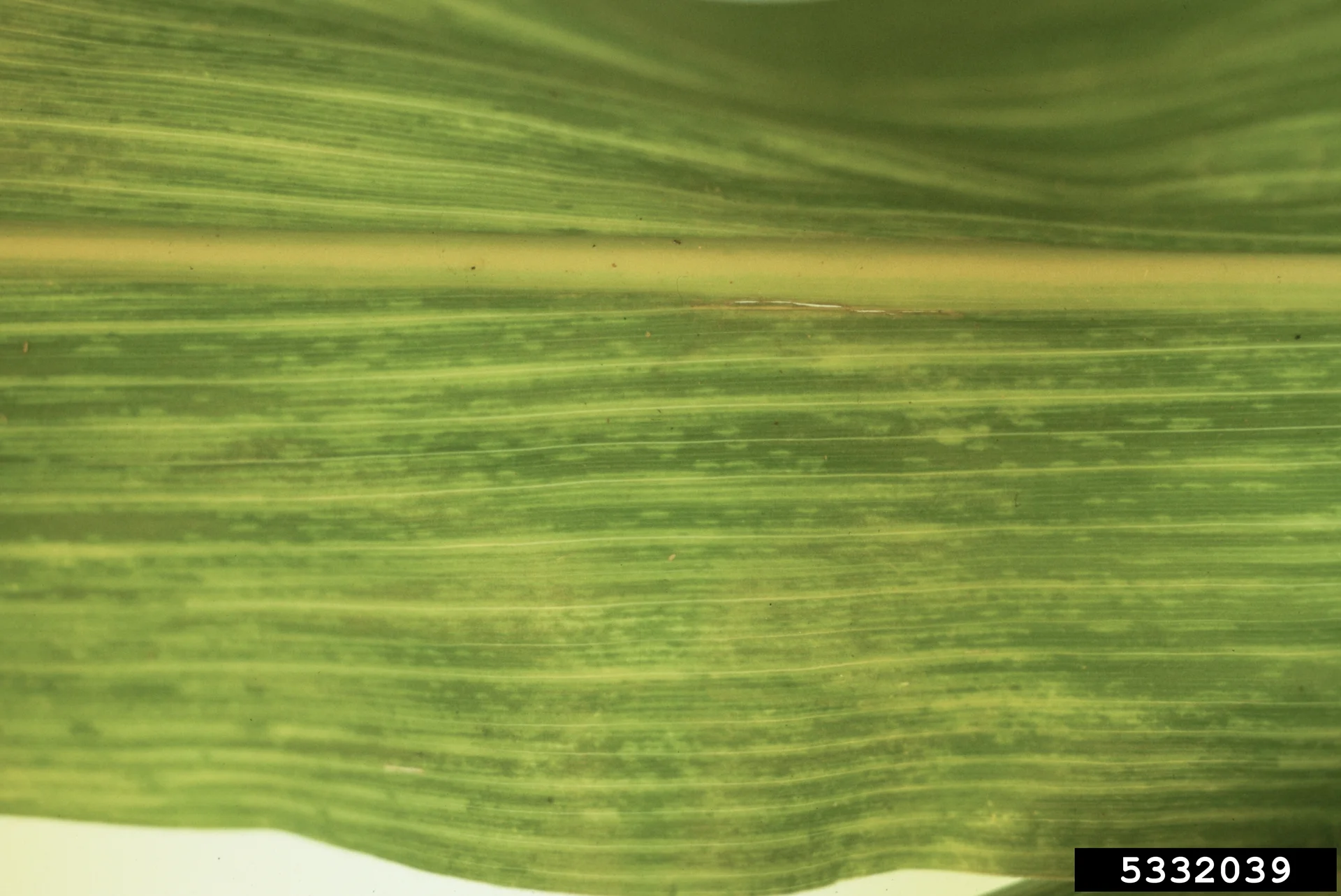
Mary Ann Hansen, Virginia Polytechnic Institute and State University, Bugwood.org · CC BY 3.0 us 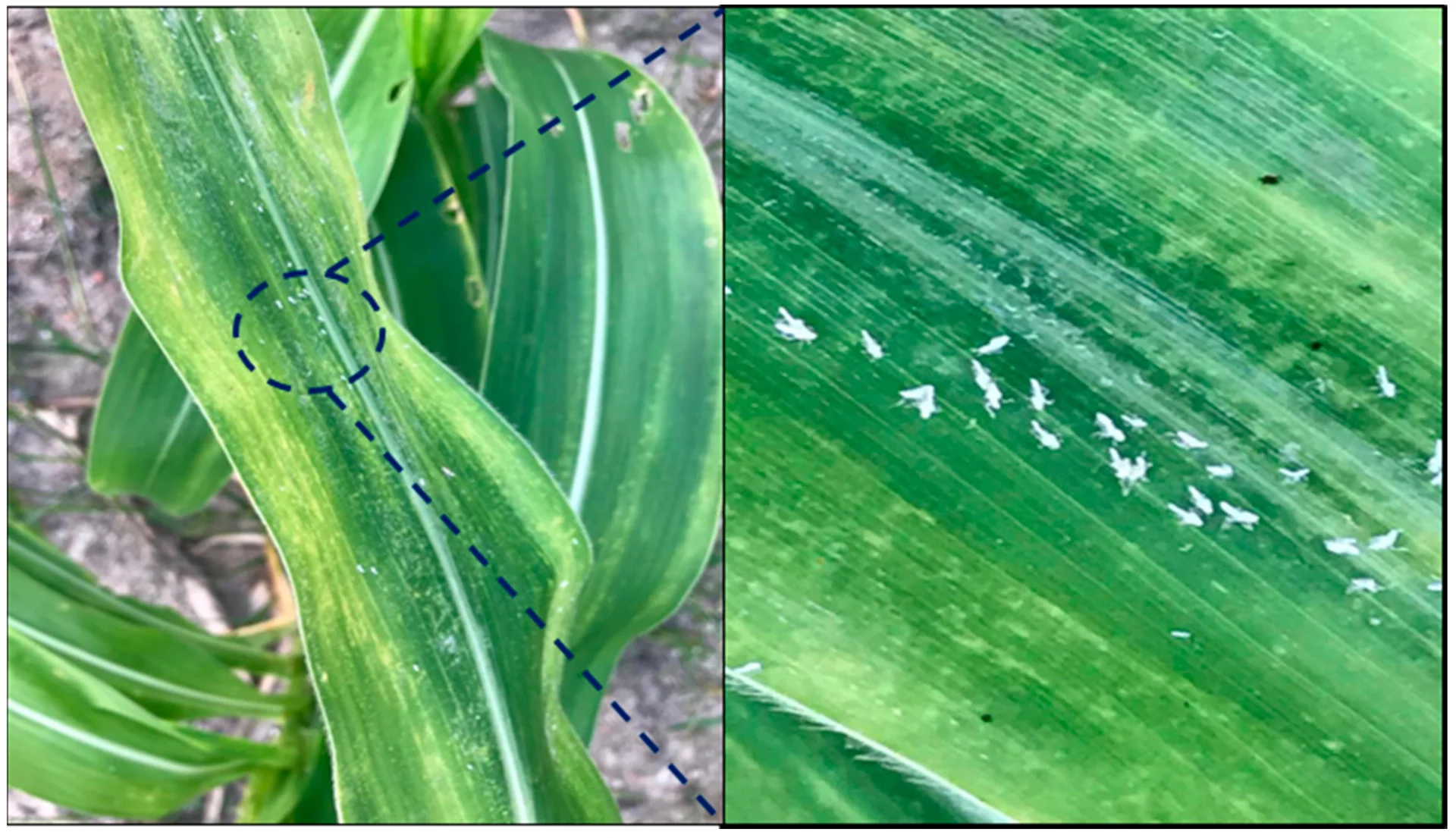
Maathavi Kannan, Ismanizan Ismail, and Hamidun Bunawan · CC BY 4.0
Why it matters
Once a stool is infected there is no cure — no spray, no medicine will clean it, and it stays sick for the rest of its life and passes the virus into every ratoon and every sett you cut from it. A bad case can rob you of up to 40% of your cane and sugar on a susceptible variety, especially when plants catch it young. Because it hides inside the plant and travels in your own planting material, by the time you see it across the field the damage is already done — so the whole fight is won or lost before you plant, in the setts and variety you choose.
When to act
No curative treatment; act pre-emptively with virus-free setts and resistant varieties, as the virus is carried in planting material and spread by aphids.
This guidance is general, compiled from published agronomic references including FAO and CABI. Thresholds and timing shift with your crop, your variety and the season.
In much of the region a spray is simply called mushonga — medicine. But a chemical group you cannot name is one you cannot rotate, and a product you did not write down has no pre-harvest interval you can observe. Mushonga, and other farming words →
The full Sugarcane mosaic virus field guide
Identify it
The first thing you see
hold a young leaf up to the light and look near the base — you'll see a mosaic, a mix of pale-green, yellow-green and normal dark-green patches, blotches or short stripes running along the leaf, like a shadow-pattern that doesn't belong. It shows clearest on the youngest leaves and fades as the leaf ages.
As the plant weakens
infected stools grow short and stunted, the leaves may look narrow, and on some varieties you'll see reddish or dead (necrotic) streaks on the leaf or a general lack of vigour — the plant is simply smaller and paler than its healthy neighbours.
Don't confuse it
with hunger signs: nitrogen shortage yellows the whole leaf evenly (usually the older, lower leaves first), while mosaic is a patchy light-and-dark pattern on the young leaves. Iron or other shortages give long even yellow stripes between the veins, not the broken, blotchy mix of mosaic. When you're unsure, look at the youngest leaf near its base in good light — that is where mosaic shows best.
Where it comes from
the virus is favoured by infected setts, high aphid numbers, susceptible varieties, and nearby maize, sorghum, grass and weeds that quietly harbour it.
Scout for it
When to look
check hardest while the crop is young — from emergence through the early growing (development) stage, because plants infected young lose the most. Also inspect every batch of seed cane before you cut setts from it.
Walk a large "W" across the field so you cover all four corners and the middle, not just the row beside the path. Make about 10 stops as you go.
At each stop, pick the youngest fully-open leaves on a few stools and hold them to the light, checking the leaf base for the pale-and-dark mosaic pattern. Look at roughly 10 stools per stop.
The number that triggers action
there is no spray to wait for — so act on the very first symptomatic stool. Find even 1 mosaic stool in 10 and you rogue (dig out and destroy) it the same day, and mark that block as not fit for cutting seed cane.
While you scout, note aphid activity on the leaves (small soft insects clustered on the underside), because warm weather with active aphid flights is when spread speeds up — but remember the real cure is clean setts and resistant cane, not chasing aphids.
Control it
Prevent
-
grow a resistant variety (your strongest tool):
plant a mosaic-resistant sugarcane variety wherever you can. This is the single most effective line of defence — a resistant crop shrugs off infection that would cripple a susceptible one.
-
start with clean planting material:
cut setts only from healthy, symptom-free seed cane, and never take setts from a field where you have seen mosaic. Where you can get it, use tissue-culture or heat-treated clean seed cane — planting material specially cleaned of the virus. Clean setts matter more than anything you do after planting.
Act early
-
rogue and destroy:
as soon as you spot a mosaic stool, dig it out whole and destroy it (burn it or bury it away from the field) so it can't seed the virus into cuttings or feed aphids. Do this while the crop is young and keep doing it every time you scout.
-
clear the reservoirs:
keep the field and its edges free of volunteer maize, sorghum, grasses and weeds that hold the virus, so aphids have nowhere to carry it from.
About sprays — there is no chemical cure:
no spray kills a virus inside the plant, and spraying insecticide to stop aphids does little, because aphids pass the virus in seconds (non-persistent spread — they infect a plant almost the instant they touch it, long before any poison acts). Don't waste money or risk your health chasing them. If you ever spray for another reason, still protect yourself: cover your skin, eyes and nose, spray in the cool of the day with the wind at your back, keep it off food, water, children and bees, respect the pre-harvest interval (the required wait between spraying and harvest), and wash well afterwards.
If it keeps spreading
step up roguing and switch entirely to certified clean setts and a resistant variety for your next planting. Where a block is heavily infected, don't ratoon it and never cut seed from it — plough it out, rest or rotate the land, and replant clean, resistant cane to start fresh.
Catch Sugarcane mosaic virus before it costs you the harvest
This guide is the general answer. Divisi works out yours — the week to scout your own field for Sugarcane mosaic virus, and what to do the day you find it.


Crops it affects
Plan the crops it attacks
-
 When to plant Maize in Mougalaba
 -
 When to plant Sorghum in Maracha
 -
 When to plant Sugarcane in Douigni
All planting calendars, country by country
Get Insights by email
A short digest of new Divisi articles. No email on quiet weeks.
Frequently asked questions
How do I identify Sugarcane mosaic virus?
The first thing you see. hold a young leaf up to the light and look near the base — you'll see a mosaic, a mix of pale-green, yellow-green and normal dark-green patches, blotches or short stripes running along the leaf, like a shadow-pattern that doesn't belong. It shows clearest on the youngest leaves and fades as the leaf ages.
When should I take action against Sugarcane mosaic virus?
No curative treatment; act pre-emptively with virus-free setts and resistant varieties, as the virus is carried in planting material and spread by aphids.
How do I control Sugarcane mosaic virus?
Prevent — grow a resistant variety (your strongest tool):. plant a mosaic-resistant sugarcane variety wherever you can. This is the single most effective line of defence — a resistant crop shrugs off infection that would cripple a susceptible one.
Which crops are attacked by Sugarcane mosaic virus?
Among the crops covered here: Maize, Sorghum, Sugarcane.