 Divisi
Tobacco mosaic virus
Tobacco mosaic virus · Viral
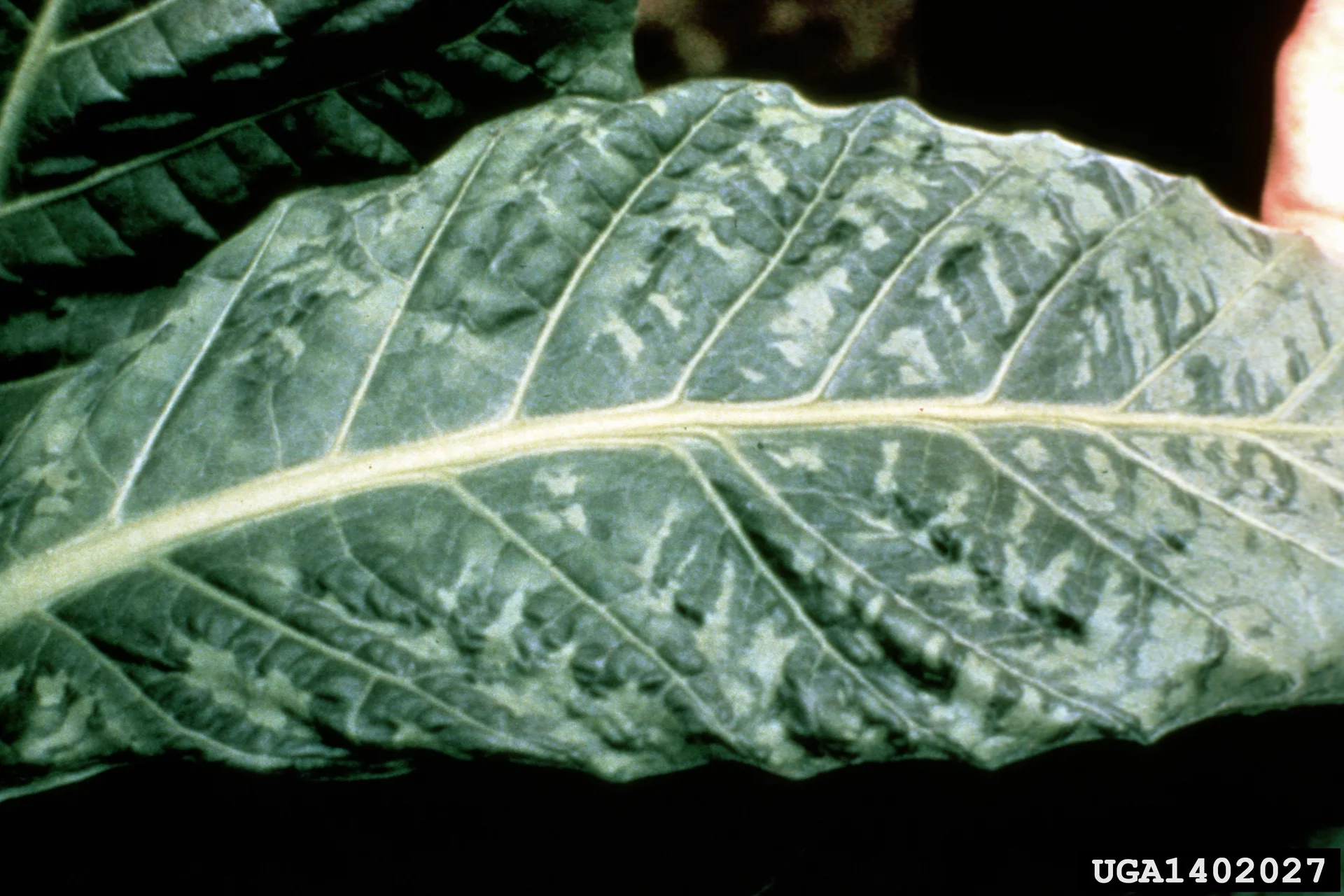
Photo: R.J. Reynolds Tobacco Company Slide Set · CC BY 3.0 us
Tobacco mosaic virus is a tough, long-lived virus that attacks tobacco, tomato and pepper. Unlike most diseases it is not carried by an insect — it rides on your own hands, tools, clothes and on tobacco, and slips into the plant through tiny wounds made when you transplant, stake, prune or pick. Once a plant is infected there is no medicine to save it, so the whole fight is about keeping it out and pulling out the sick plants fast.
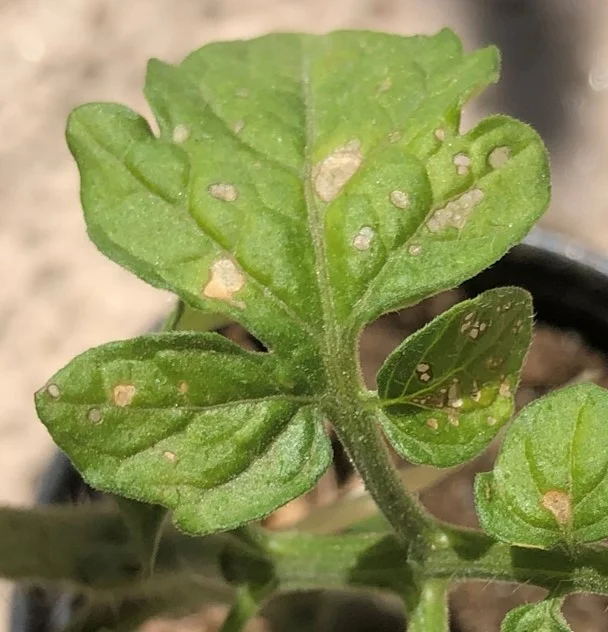
RosieScienceGal · CC BY-SA 4.0 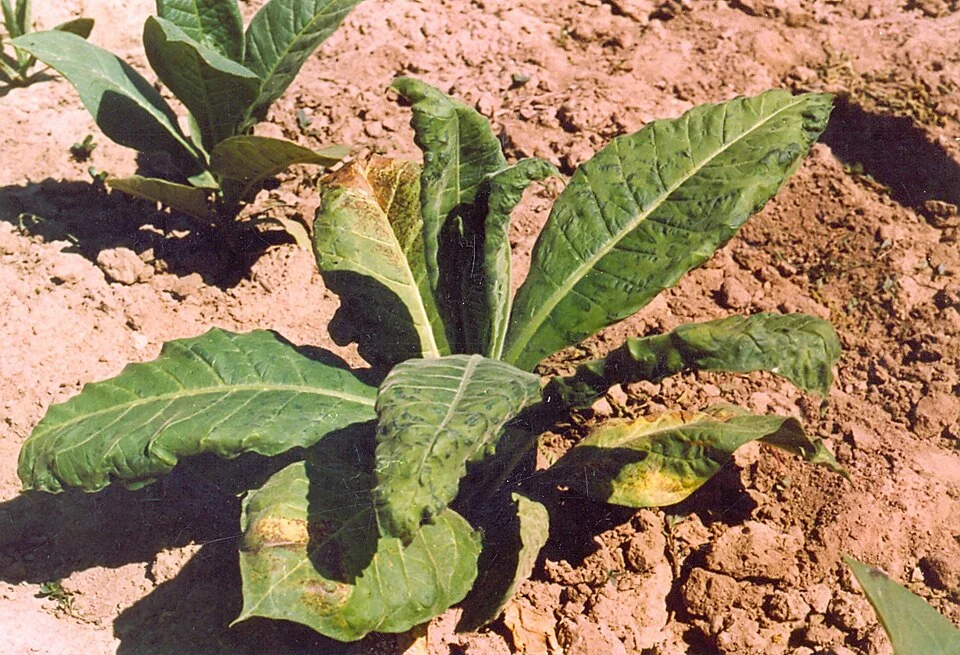
Tashkoskip · CC BY-SA 4.0
Why it matters
This virus can steal up to 40% of your harvest — nearly half the crop — by stunting plants and leaving tomato and pepper fruit small, mottled and brown-marked inside so they fetch a poor price or none at all. It is hard to beat because there is no spray or medicine that cures it: once a plant catches it, it stays sick for life. Worse, it spreads on your own hands and tools as you work down the row, and it can sit alive for months in dead leaves, on stakes and in tobacco — so one careless touch can seed the whole field.
When to act
Rogue symptomatic plants as soon as they are seen and tighten hygiene; there is no cure, so management is preventive.
This guidance is general, compiled from published agronomic references including FAO and CABI. Thresholds and timing shift with your crop, your variety and the season.
In much of the region a spray is simply called mushonga — medicine. But a chemical group you cannot name is one you cannot rotate, and a product you did not write down has no pre-harvest interval you can observe. Mushonga, and other farming words →
The full Tobacco mosaic virus field guide
Identify it
The first thing you see
on the young top leaves, a pattern of light-green and dark-green patches mixed together — like a blotchy map or the skin of an unripe pawpaw. This uneven "mosaic" is the giveaway; a healthy leaf is one even green all over.
As it spreads
leaves get puckered, crinkled, curled, or narrow and thread-like (fern-leaf), and the whole plant grows short and stunted with less fruit. On tomato and pepper the fruit sets poorly and comes out mottled, uneven, or brown-streaked inside when you cut it.
Warning — in hot weather the mosaic can fade and hide
, so a plant may look almost normal at midday and show the pattern again in the cool. Don't assume it has recovered.
Don't confuse it
with a feeding shortage (that yellows the whole leaf evenly, often oldest leaves first, with no green-on-green patchwork), with spray/herbicide drift (cupping and burning that hits many plants in one patch at once, not a spreading mosaic), or with spider-mite damage (fine pale speckling with tiny webs under the leaf). TMV's mark is the two-tone green mosaic plus twisted, stunted growth.
Scout for it
Look from the very start
This virus can strike from the seedling and nursery stage right through early growth and into mid-season, so begin checking in the nursery bed and keep checking every week until the crop is well grown. A single infected seedling in a tray can seed a whole field.
Check the nursery hardest
Bend down and look at the newest top leaves of the young plants for the light-and-dark green mosaic — young leaves show it first and clearest. One sick source here spreads to many when you handle the seedlings.
In the field, walk a big "W"
so you cross all four corners and the middle, not just the edge by the path. Make about 10 stops, and at each stop look closely at the young leaves of a few plants.
Follow the direction of your hands
Because it spreads by touch, look for sick plants strung out along the row in the order you transplanted, staked or pruned — a line of affected plants points to spread on tools and hands.
The action rule is simple: even ONE plant with the mosaic pattern means act now
There is no cure and no "wait and see" number — as soon as you spot a symptomatic plant, pull it and tighten your hygiene (see control). Every day it stands, your hands can carry it further.
Control it
Prevent first
-
plant resistance (your strongest tool):
where you can, grow resistant or tolerant varieties of tomato, pepper and tobacco that carry known resistance genes, and start from clean, tested seed. This is the single most effective defence you have — a resistant plant simply doesn't catch it the way a susceptible one does.
-
strict hygiene, because your hands are the vector (a "vector" is what carries the disease from plant to plant):
wash your hands with soap and disinfect tools, knives, stakes and seed-trays between plants and between beds. You can wipe them with milk, trisodium phosphate (a strong cleaning salt) or diluted bleach — the virus is tough and ordinary water is not enough.
-
cut off the other sources:
ban all tobacco use (cigarettes, snuff, chewing) while working, because tobacco itself carries live virus onto your fingers; anyone who has used it must wash hands first. Pull out solanaceous weeds and old volunteer tomato/pepper plants that hide the virus, and don't handle plants when they are wet — wet leaves bruise easily and spread infection fastest, so touch them as little as possible.
Act early — rogue and destroy:
the moment you see a plant with the mosaic, pull the whole plant out and destroy it (burn it or bury it far from the field — never drop it on the ground or the compost near your crop). Do the sick plants last, or wash up before touching healthy ones, so you don't wipe the virus down the row.
Note — there is NO spray or medicine that kills this virus
No fungicide, no insecticide, no chemical cures it, so don't waste money on sprays hoping to treat it. (If you do spray for other pests, still follow safety: cover your skin, eyes and nose, spray in the cool with the wind at your back, keep it off food, water, children and bees, respect the pre-harvest interval — the wait between spraying and picking — and wash afterwards.) For TMV itself, prevention and roguing are the only real tools.
If it keeps spreading
go back over your hygiene — most spread that continues comes from un-disinfected tools, hands or tobacco use — and rogue every new sick plant the day you see it. If most of a nursery bed is already infected, don't nurse it along — destroy the whole bed and start again with clean seed and a resistant variety, because saving a few plants isn't worth seeding your whole field. Next season, plant resistant varieties from the start so the virus has nothing to catch.
Catch Tobacco mosaic virus before it costs you the harvest
This guide is the general answer. Divisi works out yours — the week to scout your own field for Tobacco mosaic virus, and what to do the day you find it.


Crops it affects
Plan the crops it attacks


All planting calendars, country by country
Get Insights by email
A short digest of new Divisi articles. No email on quiet weeks.
Frequently asked questions
How do I identify Tobacco mosaic virus?
The first thing you see. on the young top leaves, a pattern of light-green and dark-green patches mixed together — like a blotchy map or the skin of an unripe pawpaw. This uneven "mosaic" is the giveaway; a healthy leaf is one even green all over.
When should I take action against Tobacco mosaic virus?
Rogue symptomatic plants as soon as they are seen and tighten hygiene; there is no cure, so management is preventive.
How do I control Tobacco mosaic virus?
Prevent first — plant resistance (your strongest tool):. where you can, grow resistant or tolerant varieties of tomato, pepper and tobacco that carry known resistance genes, and start from clean, tested seed. This is the single most effective defence you have — a resistant plant simply doesn't catch it the way a susceptible one does.
Which crops are attacked by Tobacco mosaic virus?
Among the crops covered here: Tobacco, Tomato.