 Divisi
Tomato yellow leaf curl virus
Tomato yellow leaf curl virus · Viral
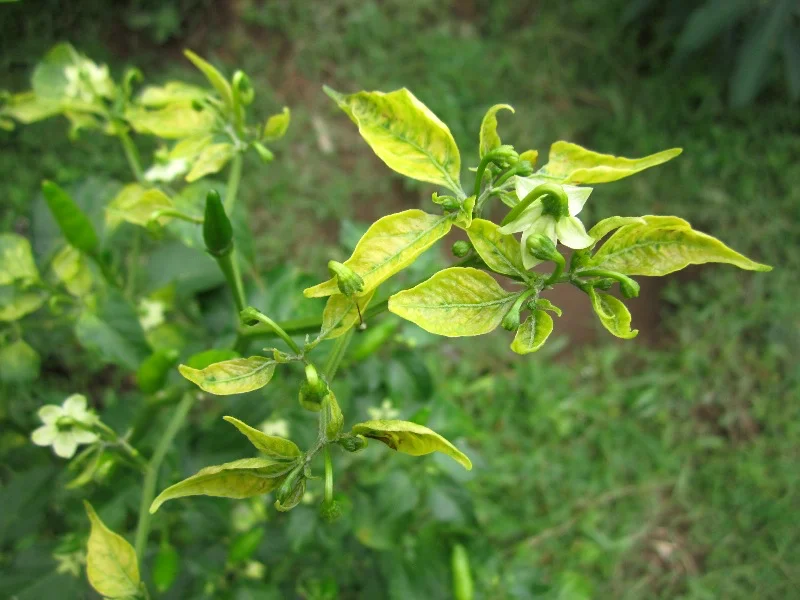
Photo: Kembangraps · CC BY-SA 3.0
Tomato yellow leaf curl virus is a whitefly-carried virus and one of the worst diseases of tomato. It is spread by the tiny white whitefly (Bemisia tabaci) — the insect that carries it is called the vector. Once a whitefly picks up the virus from a sick plant it can pass it on for the rest of its life. It does NOT spread by seed or by your hands, so the whole fight is against the whitefly and the sick plants it feeds on.
Philarium · CC BY-SA 3.0
Why it matters
This disease can take your whole crop — up to 100% — if it strikes while the plants are still young. There is no cure: once a plant is infected it stays infected, so a sprayer cannot save it. The virus is carried plant-to-plant by whiteflies faster than you can see, and a plant that catches it before it flowers will often set little or no fruit at all. That is why everything depends on keeping the whiteflies off your young plants and pulling out the sick ones before they infect the rest.
When to act
Control whiteflies and rogue symptomatic plants from the seedling stage; early infection before flowering can cause total loss, so protecting young plants is the priority.
This guidance is general, compiled from published agronomic references including FAO and CABI. Thresholds and timing shift with your crop, your variety and the season.
In much of the region a spray is simply called mushonga — medicine. But a chemical group you cannot name is one you cannot rotate, and a product you did not write down has no pre-harvest interval you can observe. Mushonga, and other farming words →
The full Tomato yellow leaf curl virus field guide
Identify it
The first sign
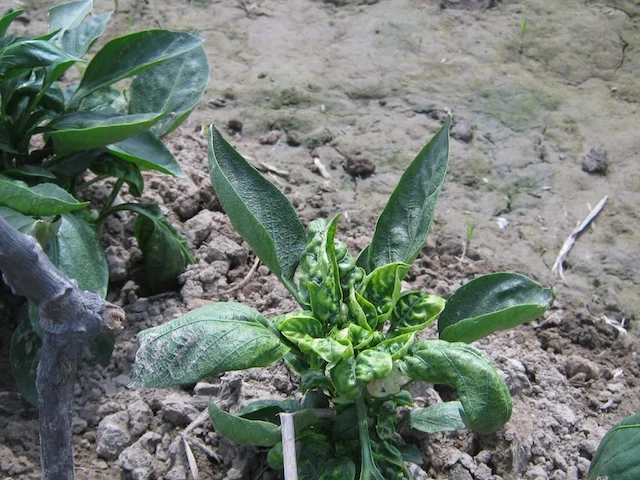
the young top leaves curl and cup upward like a little spoon or bowl, and turn yellow along the edges and between the veins while the veins stay green. The new leaves come out small, crumpled and brittle.
As it takes hold
the whole plant is stunted and bushy — short, crowded and stiff, like it stopped growing. Flowers and small fruit drop off, and a plant hit while young sets little or no sellable fruit.
Look under the leaves for the culprit
tiny white moth-like flies the size of a pinhead. Brush the plant and a little white cloud rises up, then settles again. Finding whiteflies plus curled yellow tops together is the strongest clue.
Don't confuse it
with heat or dry-spell leaf roll (leaves roll upward too, but stay a normal green, the plant is NOT stunted, and it happens on the older lower leaves in hot afternoons and relaxes by morning). Plain yellowing without curling or stunting is usually a food (nutrient) shortage. And twisted, cupped growth with no whiteflies can be spray-drift damage from a nearby weed-killer. Only this virus gives you upward cupping + yellow edges + stunting + whiteflies all at once.
Scout for it
When
start the day you sow the nursery and keep at it hard through the seedling and early growth stages, right up to first flowering — this is when the plants are most easily infected and one early infection can cost the whole plant.
How
twice a week walk a big "W" across the field so you check all four corners and the middle, not just the row by the path. Make about 10 stops.
What to check
at each stop look at the newest top leaves of a few plants for the upward curl and yellow edges, and turn a few leaves over to look for whiteflies underneath. Hang a few yellow sticky traps at plant height — whiteflies stick to yellow, so a trap filling up fast warns you the vector is building.
Act on this count
because there is no cure and young plants are the priority, act early and hard. Even 1 curled, stunted plant in every 20 → pull it out the same day. And if brushing the plants sends up a cloud of whiteflies, or your sticky traps are catching them fast → start whitefly control now, before the curling spreads.
Control it
Prevent first
-
plant a resistant variety (your strongest tool):
choose a tomato variety bred to resist this virus (sold as TYLCV-resistant or carrying "Ty" resistance). A resistant plant can still catch the virus but shrugs off most of the damage — this is the single most effective thing you can do.
-
grow clean, protected seedlings:
raise your nursery under fine insect-proof net so whiteflies can't reach the babies, and only transplant healthy, clean seedlings. Never plant next to an old, infected tomato field.
-
make the field hostile to whiteflies:
lay silver or reflective mulch on the beds (the shine confuses the flies and keeps them off young plants), plant a tall barrier crop like maize around the edge, and clear away weeds, self-sown volunteers and old tomato plants nearby — these feed both the virus and the whitefly between seasons. Where you can, leave a tomato-free break so the pest has nothing to live on.
Act early
-
rogue (pull out) sick plants:
"roguing" means uproot every plant showing the curl-and-yellow signs and destroy it (bury or burn it) — do this the same day you spot it, so whiteflies can't keep picking the virus up off it and carrying it to healthy plants.
-
help the natural enemies:
tiny helpful parasitoid wasps (Encarsia and Eretmocerus — they are harmless to you and lay their eggs inside whitefly young) and a natural fungus (Beauveria) attack whiteflies for free. Avoid broad, harsh poisons that kill these helpers too.
Chemical — last resort, and it only fights the whitefly, never cures the plant:
if whiteflies keep building, treat the seedlings and spray against the whitefly with a systemic insecticide — "systemic" means it soaks into the plant's sap so the sucking whitefly is poisoned as it feeds (unlike a "contact" spray that only kills what it lands on). Rotate to a different chemical group each time so the whiteflies don't become resistant (stop being killed by it).
Spray safely
cover your skin, eyes, nose and mouth, spray in the cool of morning or evening with the wind at your back, keep it away from food, drinking water, children and bees, respect the pre-harvest interval (the number of days you must wait after spraying before it is safe to pick and eat the fruit), and wash yourself and your clothes afterwards.
If it keeps spreading
tighten the basics — rogue harder and daily, renew the reflective mulch, keep the whitefly numbers down, and next season switch fully to a resistant variety and clean netted seedlings. If most of the field is already stunted and fruitless, spraying won't bring it back — cut your losses, pull out the crop to stop it seeding whiteflies for your neighbours, and start the next planting clean, early, and well away from the old plot.
Catch Tomato yellow leaf curl virus before it costs you the harvest
This guide is the general answer. Divisi works out yours — the week to scout your own field for Tomato yellow leaf curl virus, and what to do the day you find it.


Crops it affects
Plan the crops it attacks


All planting calendars, country by country
Get Insights by email
A short digest of new Divisi articles. No email on quiet weeks.
Frequently asked questions
How do I identify Tomato yellow leaf curl virus?
The first sign. the young top leaves curl and cup upward like a little spoon or bowl, and turn yellow along the edges and between the veins while the veins stay green. The new leaves come out small, crumpled and brittle.
When should I take action against Tomato yellow leaf curl virus?
Control whiteflies and rogue symptomatic plants from the seedling stage; early infection before flowering can cause total loss, so protecting young plants is the priority.
How do I control Tomato yellow leaf curl virus?
Prevent first — plant a resistant variety (your strongest tool):. choose a tomato variety bred to resist this virus (sold as TYLCV-resistant or carrying "Ty" resistance). A resistant plant can still catch the virus but shrugs off most of the damage — this is the single most effective thing you can do.
Which crops are attacked by Tomato yellow leaf curl virus?
Among the crops covered here: Common bean, Tomato.