 Divisi
Turmeric leaf spot
Colletotrichum capsici · Fungal
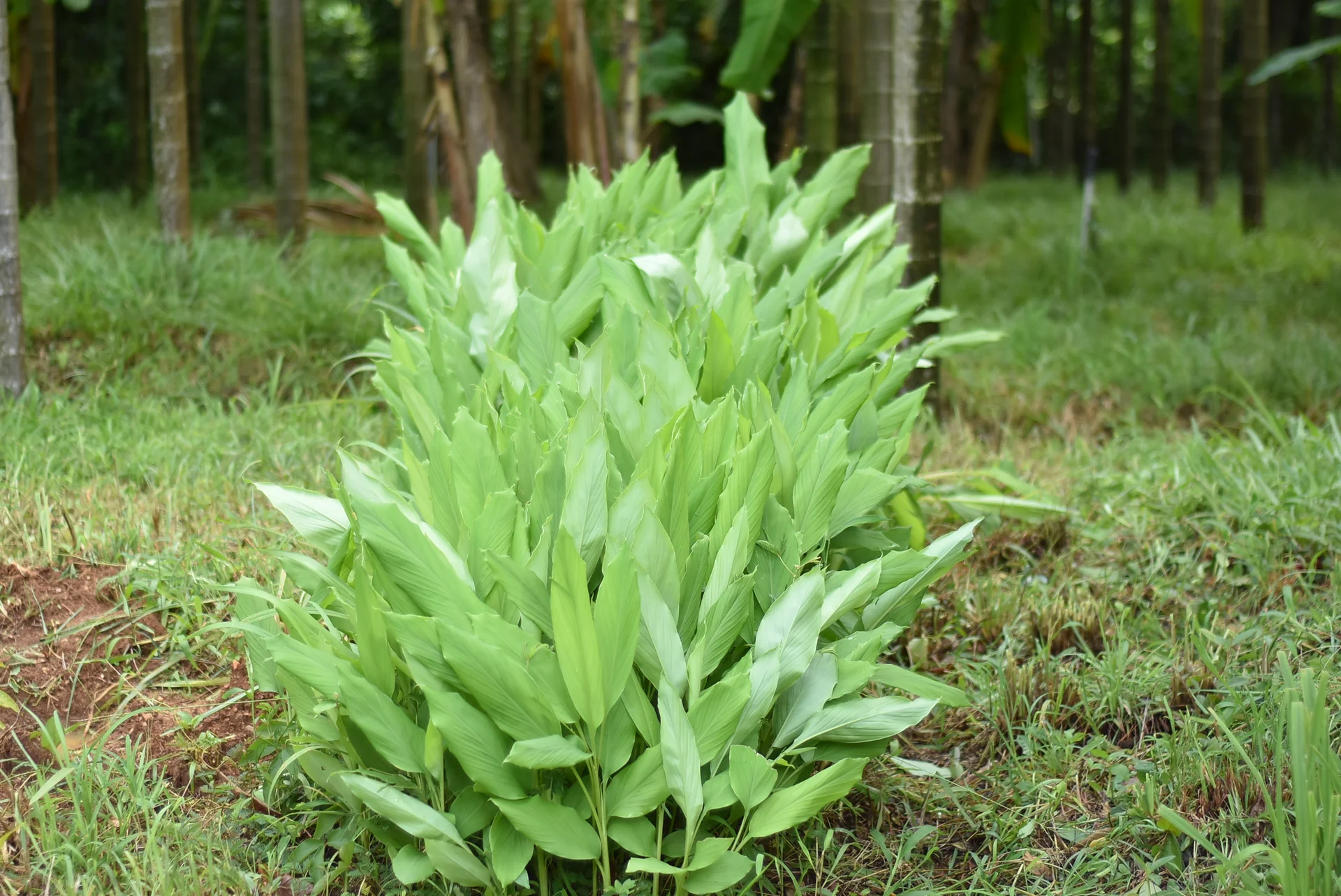
Photo: Ashay vb · CC BY-SA 4.0
Turmeric leaf spot is a leaf disease of turmeric and ginger caused by a fungus (Colletotrichum capsici). It survives the dry season on old infected leaves and crop trash, then during the rains its spores are splashed by raindrops onto healthy leaves, where warm, wet, humid weather lets it spread from spot to spot across the whole clump.
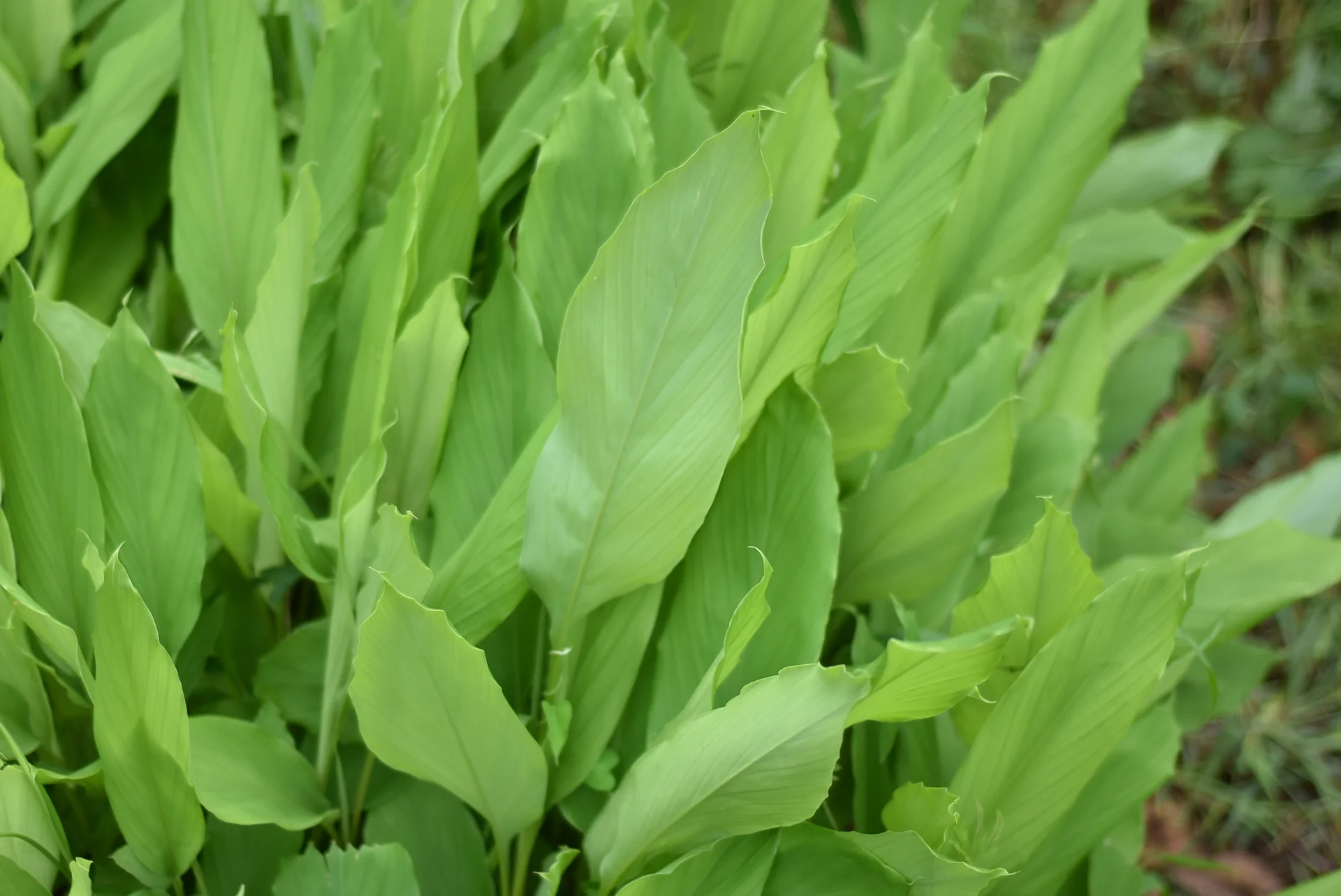
Ashay vb · CC BY-SA 4.0 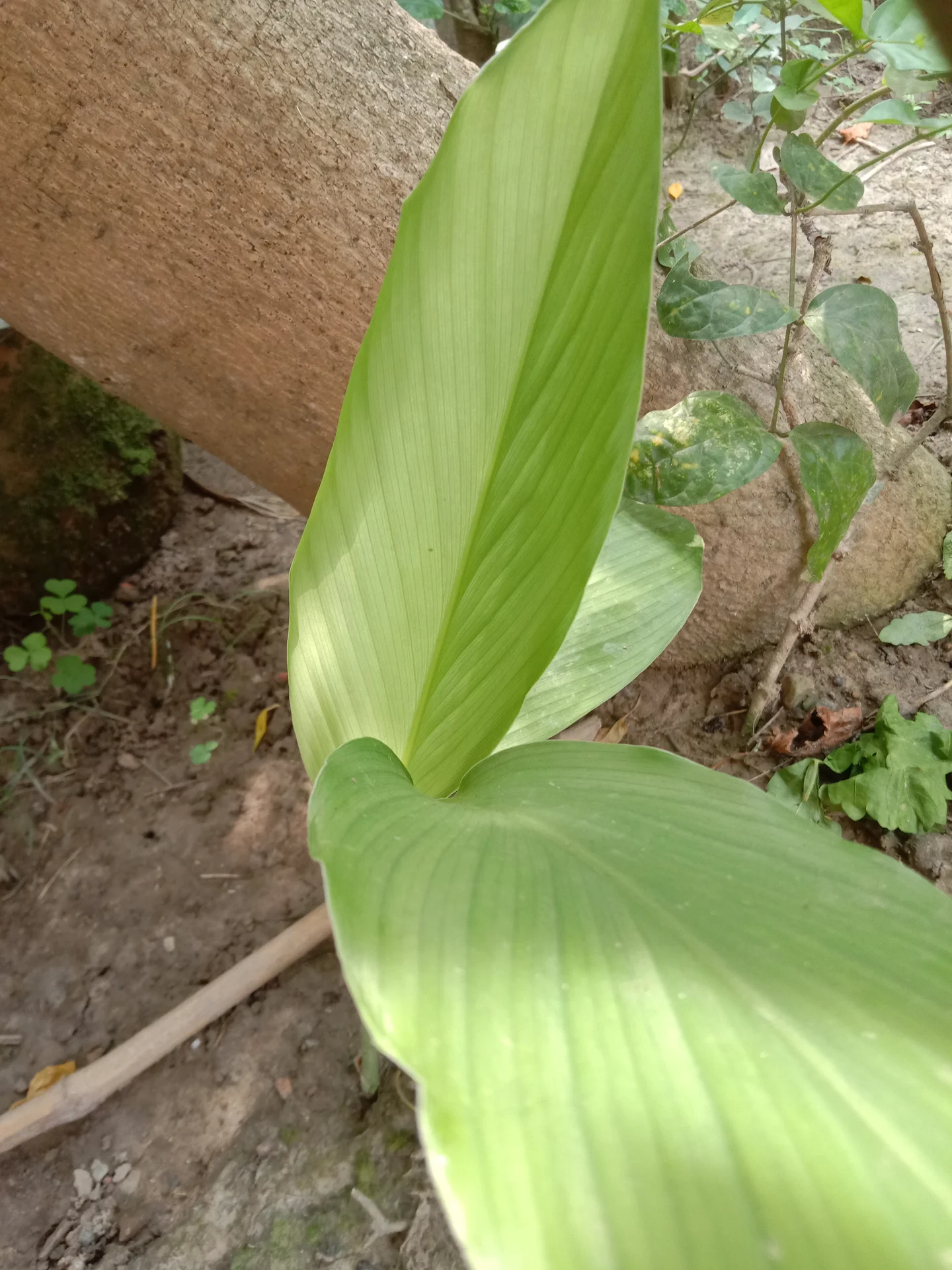
Billjones94 · CC BY-SA 4.0
Why it matters
Turmeric leaf spot eats away the green on your leaves, and green leaves are what feed the underground rhizomes you sell. In a bad, wet year it can cost you up to 40% of your harvest — smaller, fewer rhizomes. It is hard to fix once it is going because the fungus rides on rain-splash from leaf to leaf and hides in old crop trash, so prevention and catching it early beat any spray you try later.
When to act
Spots on more than a few leaves per clump during the rainy period, especially on a susceptible stand.
This guidance is general, compiled from published agronomic references including FAO and CABI. Thresholds and timing shift with your crop, your variety and the season.
In much of the region a spray is simply called mushonga — medicine. But a chemical group you cannot name is one you cannot rotate, and a product you did not write down has no pre-harvest interval you can observe. Mushonga, and other farming words →
The full Turmeric leaf spot field guide
Identify it
What you see first
small brown to reddish-brown spots on the leaves, each ringed by a yellow halo (a pale yellow edge, like a bruise around the spot). This is the earliest and clearest sign.
As it spreads
the spots grow and join into larger, irregular blotches with pale, dried-out grey centres. Look closely at those centres and you may see tiny black dots — these are the fungus's seed-cases. In a heavy attack the leaf dries, browns and tatters at the tips and edges as if scorched.
Where and when
worst in warm, humid, rainy weather (about 21-30°C) when leaves stay wet for hours, and in crowded clumps with poor airflow. Ginger in your garden gets the same disease, so check it too.
Don't confuse it with
sun-scorch or fertiliser burn (browns the leaf edges evenly, with no round spots and no yellow halo) or ordinary old-age yellowing of the lowest leaves (a whole leaf yellows slowly, no brown spots with haloes). True leaf spot gives you distinct round spots with yellow rings that multiply and merge.
Scout for it
When
walk your turmeric once a week during the rains, from when the plants are pushing out new leaves and building the clump right through the wet months — this is when the leaves are most at risk and the rhizomes are bulking.
How to walk
cross the plot in a big "W" shape so you cover all four corners and the middle, not just the row by the path where you always look.
How many
stop at about 10 clumps along the W. At each stop, turn over and check several leaves — both the lower older leaves and the fresh upper ones — for brown spots with yellow haloes.
When to act (the number)
the fungus is always around at a low level, so a stray spot or two is normal. Act once you find fresh, spreading spots on more than a couple of leaves in a clump — roughly 1 in 5 leaves spotted — across several clumps during the rains, and act sooner on a variety you know catches it easily. Fresh, growing spots with bright haloes mean it is active now; old dry grey blotches with no new spots are a past attack.
Control it
Prevent it
-
start clean (best defence):
plant only healthy, disease-free seed rhizomes from a clean source; never save seed from a plot that had leaf spot. Space your clumps wider so air moves through and leaves dry quickly after rain, and don't crowd the beds.
-
break the cycle:
the fungus over-winters in old leaves and trash, so after each crop rake up and burn all the old turmeric and ginger leaves and debris, and rotate — plant your next turmeric or ginger on different ground, not where it grew last year. If you water by hand, water the soil, not the leaves; wet foliage feeds the disease.
Act early — sanitation the moment you see it:
as soon as the first spotted leaves appear, pick them off and burn them (don't drop them in the field or the compost, and don't move from a sick clump to a healthy one carrying spores on your hands or tools). Opening up crowded clumps to let air in slows the spread for free.
Chemical — last resort, a copper spray:
if spots keep multiplying in wet weather past your action point, use a copper-based fungicide. Copper is a protectant — meaning it forms a shield on the leaf to stop new infections but does not cure spots already there — so spray it at the very first spots and repeat during long wet spells to keep new leaves covered. Cover the plant well, including under the leaves.
Spray safely (every time)
cover your skin, eyes, nose and mouth; spray in the cool of the morning or evening with the wind behind your back so the mist blows away from you; keep it off food, drinking water, children and bees; respect the pre-harvest interval (the number of days you must wait between the last spray and harvest, printed on the label); and wash yourself, your clothes and the sprayer afterwards. Don't lean on copper alone every time — keep up the clean-planting, spacing and sanitation so the disease never gets the upper hand.
If it keeps spreading / too late
if a heavy attack strips most of the leaves late in the season, don't waste money spraying dying foliage — let the crop finish, then harvest the rhizomes, clear and burn every leaf and stalk off the plot, and choose only clean, firm rhizomes as next year's seed. Move next season's turmeric to fresh ground to start the new crop ahead of the disease.
Catch Turmeric leaf spot before it costs you the harvest
This guide is the general answer. Divisi works out yours — the week to scout your own field for Turmeric leaf spot, and what to do the day you find it.


Crops it affects
Plan the crops it attacks


All planting calendars, country by country
Get Insights by email
A short digest of new Divisi articles. No email on quiet weeks.
Frequently asked questions
How do I identify Turmeric leaf spot?
What you see first. small brown to reddish-brown spots on the leaves, each ringed by a yellow halo (a pale yellow edge, like a bruise around the spot). This is the earliest and clearest sign.
When should I take action against Turmeric leaf spot?
Spots on more than a few leaves per clump during the rainy period, especially on a susceptible stand.
How do I control Turmeric leaf spot?
Prevent it — start clean (best defence):. plant only healthy, disease-free seed rhizomes from a clean source; never save seed from a plot that had leaf spot. Space your clumps wider so air moves through and leaves dry quickly after rain, and don't crowd the beds.
Which crops are attacked by Turmeric leaf spot?
Among the crops covered here: Ginger, Turmeric.