 Divisi
White rot
Stromatinia cepivora · Fungal
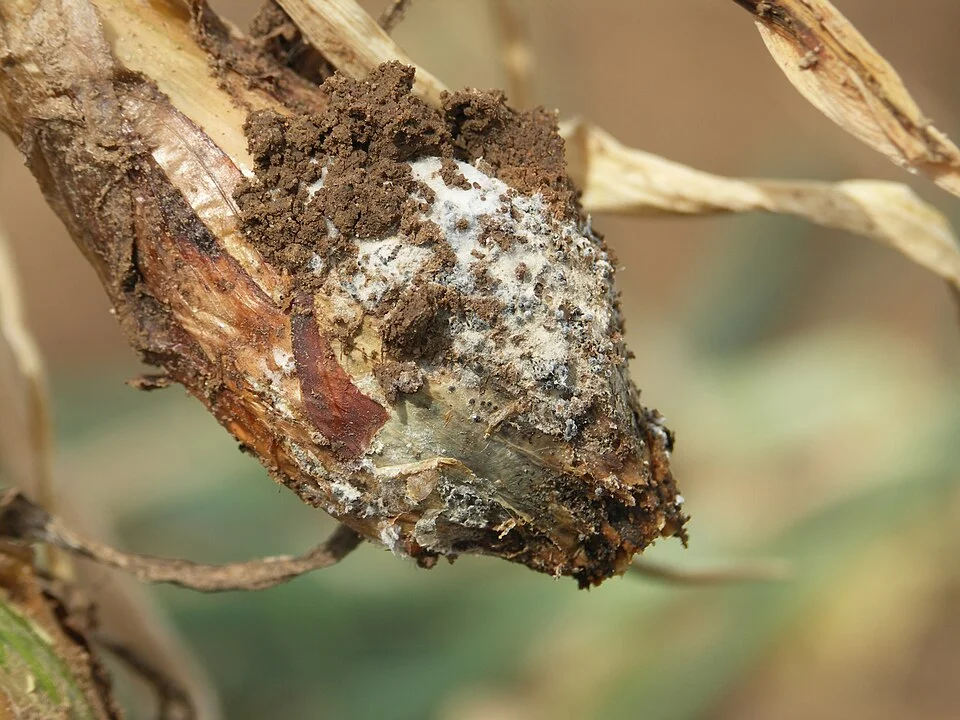
Photo: Jochen Kreiselmaier, Pflanzenschutzberater, Dienstleistungszentren Ländlicher Raum Rheinland-Pfalz (DLR Rheinpfalz) in Neustadt/Wstr. · CC BY-SA 4.0
White rot is a soil-borne fungal disease of the onion family — onions, garlic and leeks. The fungus survives in the ground for years as tiny, hard black grains (called sclerotia — think of them as long-sleeping fungus seeds). When you plant an allium in that soil, the roots wake them up; the fungus then rots the roots and the base of the bulb, killing the plant from below.
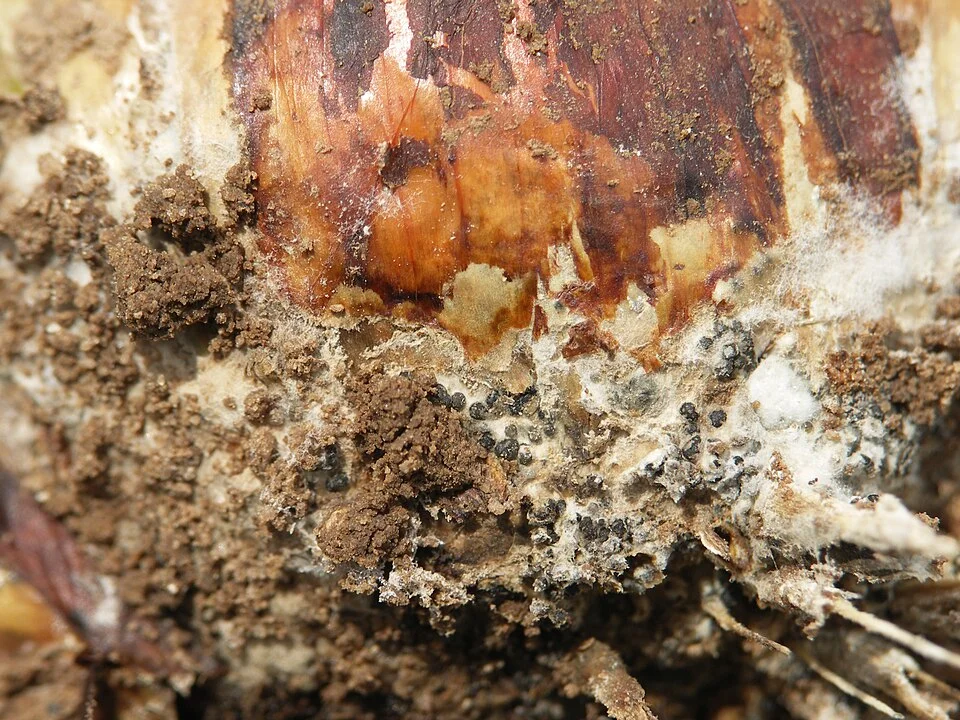
Jochen Kreiselmaier, Pflanzenschutzberater, Dienstleistungszentren Ländlicher Raum Rheinland-Pfalz (DLR Rheinpfalz) in Neustadt/Wstr. · CC BY-SA 4.0 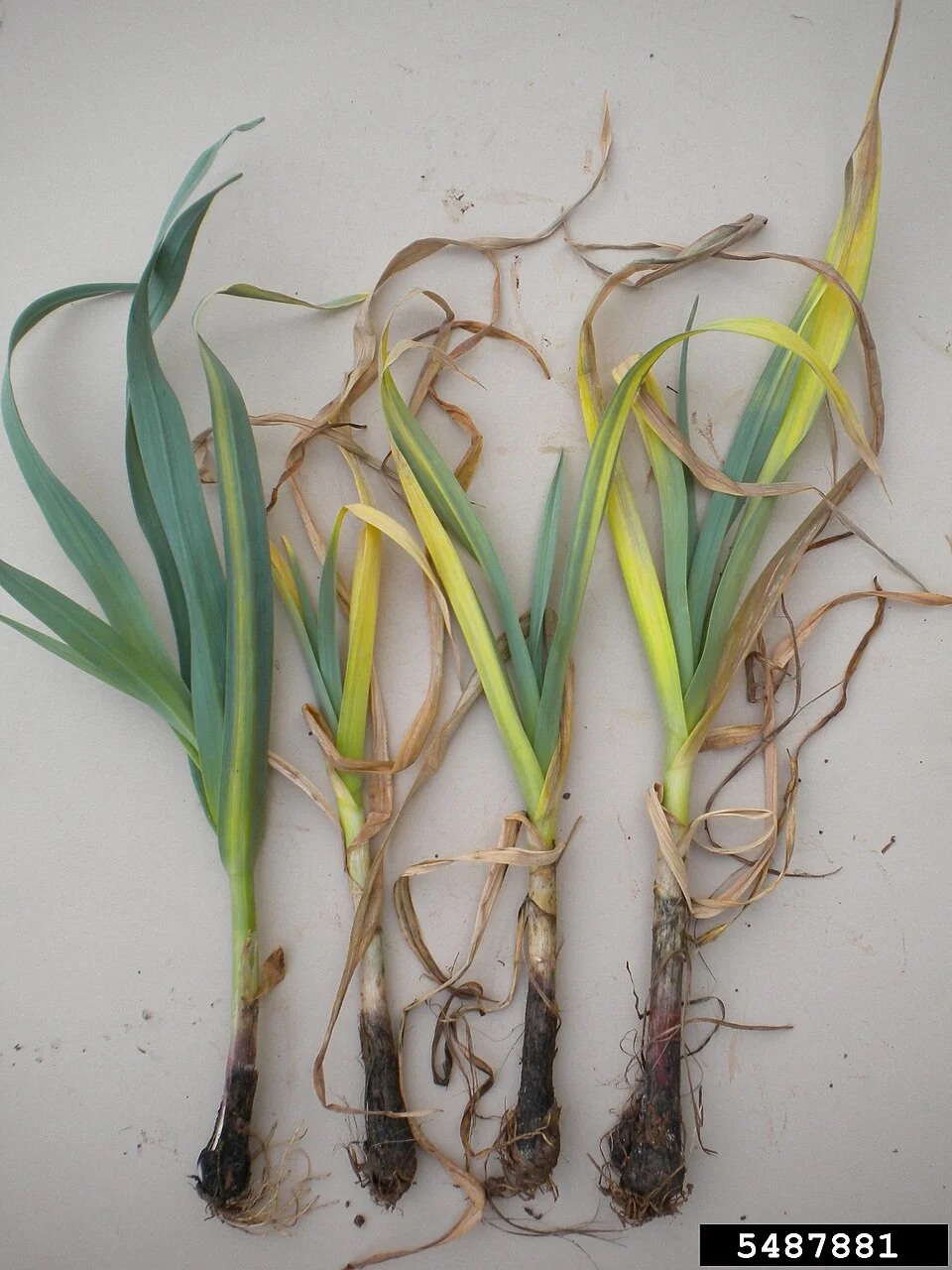
Elizabeth Bush, Virginia Polytechnic Institute and State University, Bugwood.org · CC BY 3.0
Why it matters
White rot is the disease that can finish a whole onion or garlic crop — in a bad, wet season it can take up to 80% of your harvest, and it rots bulbs even after you've lifted and stored them. The worst part is what it leaves behind: those hard black grains (sclerotia) sit in your soil and stay alive for many years — often 15 or more — waking up every time you plant onions or garlic there again. Once your plot is infested there is no spray that clears it, so the whole game is keeping it OUT and stopping it spreading.
When to act
Any plants collapsing with white mould and black sclerotia on the bulb; treat the plot as contaminated for years afterward.
This guidance is general, compiled from published agronomic references including FAO and CABI. Thresholds and timing shift with your crop, your variety and the season.
In much of the region a spray is simply called mushonga — medicine. But a chemical group you cannot name is one you cannot rotate, and a product you did not write down has no pre-harvest interval you can observe. Mushonga, and other farming words →
The full White rot field guide
Identify it
The first thing you see
older, outer leaves turn yellow, then wilt and die back from the tip while the plant is still growing — usually in patches, a few plants together, not the whole row at once. The plant looks starved and comes out of the ground with almost no pull because its roots have rotted away.
The sure sign — check the bulb base:
lift a sick plant and look at the roots and the bottom of the bulb. You'll see a fluffy, cottony white mould, like a soft white fur, growing over the base. This is what gives the disease its name.
The black grains (sclerotia)
sitting in that white fur are lots of tiny hard black balls, the size of poppy or mustard seeds (about 0.5 mm). This is the fungus's survival stage and the clincher for white rot — no other rot leaves these little black beads on an onion or garlic base.
Don't confuse it with look-alikes
ordinary onion neck rot and basal rot make the bulb go soft and brown but do not give the fluffy white fur studded with black grains. Simple waterlogging yellows leaves too, but the roots stay firm and there's no mould. If you see white fur + tiny black beads at the base = white rot, treat it as certain.
Scout for it
When to look hardest
white rot bites during the bulb-building weeks (the development and mid-season stages), and it loves cool, moist soil (about 10–24 °C). So watch most closely in the cooler, damp part of the season once plants are half-grown — that is when a hidden infection shows itself.
How to walk the plot
every week, walk a big "W" shape across the field so you cover all four corners and the middle, not just the edge by the path. Stop at about 10 spots along the way.
What to check
at each stop, look for patches of yellowing or wilting plants. Gently pull one or two suspect plants right out and turn them over to inspect the roots and bulb base for the white fur and black grains — you cannot see this without lifting the plant.
Your action number
the threshold is simple — even ONE plant with the white mould and black grains means the plot is infested. Don't wait for a percentage. As soon as you confirm the first plant, act the same day: from now on treat that plot as contaminated for years and switch to the control steps below.
Control it
Prevent first — this is where the battle is won
Only plant clean sets, seed and cloves from a source you trust, because the black grains ride in on infested planting material and soil. Keep known-good land clean: knock soil off tools, boots and tyres and don't let runoff or shared irrigation water carry soil from a sick plot to a clean one — the grains travel in mud and water.
Rotate long and wide
The single most useful cultural move: do not plant onions, garlic or leeks in the same ground for as many years as you can manage — the longer the better. Because the grains live so long, short rotations don't help; give infested land to totally unrelated crops (maize, beans, cabbage) for the longest break you can.
Act early — rogue out the first sick plants
The moment you find an infected plant, dig it out together with a good scoop of the surrounding soil and carry it off the field in a bag or bucket. Do this before the white fur dries and sheds its black grains into the plot — each plant you remove early stops thousands of new grains being added to the soil. Burn or bury the plants far away; never throw them on the compost or field edge, and don't rinse tools in the irrigation channel.
Biological help — Trichoderma
Where you can get it, apply a Trichoderma biological product (a helpful fungus that attacks white rot) to the soil, or a garlic-extract soil treatment that tricks the sleeping grains into sprouting when there's no crop for them to feed on, so they die out faster. Follow the product's own directions, and when applying any soil drench still protect yourself — cover your skin, keep it off your food, water and children, and wash your hands and tools afterwards.
Note on sprays
white rot lives in the soil around the roots, so leaf sprays and ordinary fungicides do not cure it — don't waste money spraying the tops. Prevention, rotation and roguing are your real tools here.
If it keeps spreading / when it's too late
if fresh patches keep appearing despite roguing, stop trying to save that crop — lift what healthy bulbs you can, use them quickly and don't keep any for seed or replanting. Then retire that plot from alliums for many years and grow unrelated crops there instead; put your onions and garlic on clean, well-drained ground far from the infested block. Cutting your losses and moving the crop is the honest answer once a plot is heavily infested.
Catch White rot before it costs you the harvest
This guide is the general answer. Divisi works out yours — the week to scout your own field for White rot, and what to do the day you find it.


Crops it affects
Plan the crops it attacks


All planting calendars, country by country
Get Insights by email
A short digest of new Divisi articles. No email on quiet weeks.
Frequently asked questions
How do I identify White rot?
The first thing you see. older, outer leaves turn yellow, then wilt and die back from the tip while the plant is still growing — usually in patches, a few plants together, not the whole row at once. The plant looks starved and comes out of the ground with almost no pull because its roots have rotted away.
When should I take action against White rot?
Any plants collapsing with white mould and black sclerotia on the bulb; treat the plot as contaminated for years afterward.
How do I control White rot?
Prevent first — this is where the battle is won. Only plant clean sets, seed and cloves from a source you trust, because the black grains ride in on infested planting material and soil. Keep known-good land clean: knock soil off tools, boots and tyres and don't let runoff or shared irrigation water carry soil from a sick plot to a clean one — the grains travel in mud and water.
Which crops are attacked by White rot?
Among the crops covered here: Garlic, Onion.