 Divisi
You can grow most of your own planting seed for free, and pool the rest with neighbours so a costly, risky season never leaves your farm empty. Across sub-Saharan Africa, smallholders already get more than 90% of their seed from their own harvest, neighbours and local markets — not agro-dealers. Chosen and stored well, saved seed sprouts as reliably as bought seed, and it keeps the tough local varieties that handle drought and flooding.
Which crops can I save seed from, and which should I not?
Save seed from crops that "breed true" — the seed grows into a plant just like the parent. Do not save seed from hybrids, which fall apart in the next generation.

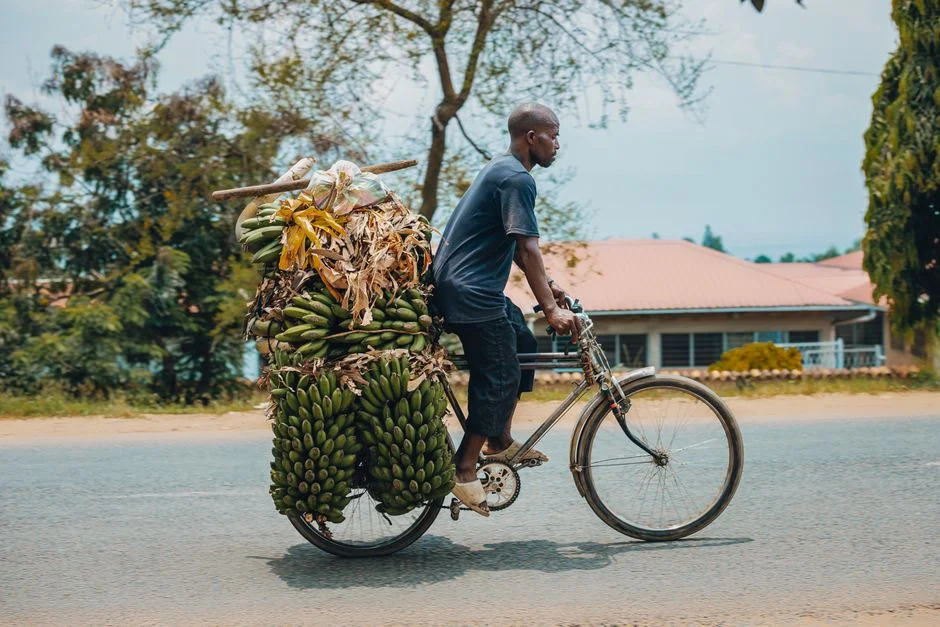
Photo: Raul Ling / Pexels
| Save it (breeds true) | Do NOT save it |
|---|---|
| Open-pollinated maize (OPVs), beans, cowpea, groundnut, sorghum, pearl/finger millet, rice | Hybrid (F1) maize, most F1 vegetables (many tomatoes, cabbages, onions) |
An open-pollinated variety (OPV) is one whose seed grows true year after year. A hybrid (F1) is a one-time cross of two parents: replant its seed and the crop "segregates" — plants vary wildly and yield drops. In Kenya, recycled hybrid maize lost about 16–20% of its yield in the first replant and 32–46% by the third. So keep buying fresh certified hybrid, or switch to a good OPV you can save. In drier zones — the Sahel and southern Africa's low-rainfall areas — sorghum, millet, cowpea and groundnut are the safest and most valuable to save.
One more distinction matters, even among crops that breed true. Beans, cowpea and groundnut are self-pollinated — a single plot stays pure with almost no extra care. Maize, sorghum and pearl/finger millet are cross-pollinated by wind and insects, so they need isolation from other varieties of the same crop to stay pure — planted apart from a neighbour's different maize or a stray hybrid plant left flowering nearby, with off-type plants rogued out before they shed pollen. Skip that isolation and your "pure" OPV can cross with whatever is flowering next door, and the seed you save won't breed as true as you think.
How do I choose the best seed to save?
Pick your seed from the best plants standing in the field, never from the grain heap at the end — the heap hides which plants were actually strong.
- Before harvest, walk the field and flag 30–50 healthy, high-yielding plants of a single pure variety (don't mix varieties). Spread them across the block, not one corner — this keeps the variety vigorous.
- For maize, mark the biggest, well-filled cobs on strong, disease-free stalks. For beans, cowpea and groundnut, choose the heaviest, cleanest pods. For sorghum and millet, pick the largest, fullest heads.
- Harvest those separately. Shell or thresh gently and keep only full, uniform, undamaged grain — discard anything small, cracked, insect-holed or discoloured. On a maize cob, use the middle grains and drop the tip and butt.
How do I dry and store my seed so it still germinates?
Dry it hard, then lock out air, moisture and pests — the same discipline you use against aflatoxin in stored maize. Dry seed to about 8% moisture or less. Seed life roughly doubles for every 1% you drop the moisture and every 5°C cooler you store it; left in an open tin at room conditions, germination can halve within six months.
- No-tool moisture test: bite a maize kernel — it should crack, not dent. A dry bean snaps or shatters rather than squashing. If grain dents or bends, dry it another day in the sun.
- Store in a clean airtight container — a sealed drum, a glass jar, or a hermetic bag like a PICS bag. Airtight storage starves weevils and bean bruchids of oxygen.
- Keep it cool and dark. Label each container with the variety, the date, and the germination % once you test it.
How do I test if my saved seed will grow before I plant?
Run a simple rag-doll (wet-cloth) test 2–3 weeks before planting, so you never waste a planting rain on dead seed. It costs nothing but a cloth and water.

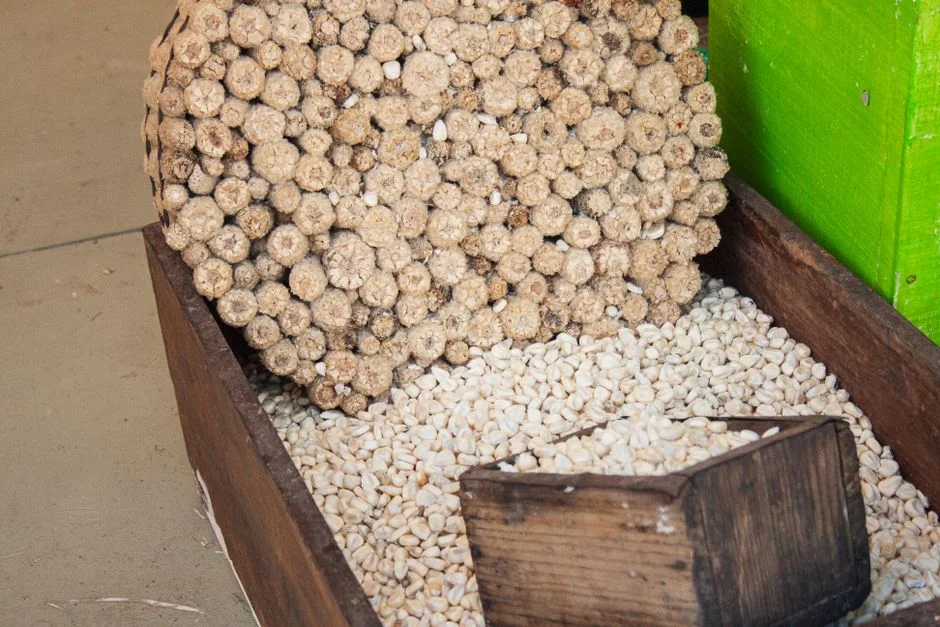
Photo: Nikolett Emmert / Pexels
- Count out 50 seeds at random from the batch.
- Lay them on a damp (not dripping) cloth, roll it up loosely like a swiss roll, and keep it in a warm, shaded place; keep the cloth moist.
- Start counting sprouts after 3 days; do a final count at 5–7 days. Multiply the number sprouted by 2 to get the germination %.
| Germination result | What to do |
|---|---|
| 90% and above | Plant at your normal seed rate |
| 70–89% | Usable — sow a little thicker, or 2 seeds per station |
| Below ~70% | Don't rely on it; get fresh or certified seed |
What is a community seed bank and how does it help after a bad season?
A community seed bank is a village-run store where farmers pool, catalogue and lend local seed — your insurance when bought seed is scarce or expensive. It is a locally governed store whose core job is to keep seed for local use.
Here's how it works:
- Members deposit clean, dried, tested seed of named local varieties — measured by the tin, the gorogoro (~2 kg) or the 50 kg bag. Each lot is catalogued: variety, who grew it, date, germination %.
- At planting, members borrow seed and repay a little extra after harvest — often 1.5 to 2 times what they took, so the store keeps growing.
- After a drought or flood wipes out everyone's seed, the bank rebuilds the community's planting stock fast.
Behind the village sits a bigger safety net: national gene banks and the SADC Plant Genetic Resources Centre in Chongwe, Zambia, which holds over 63,000 seed samples, with 38,000 duplicated at the Svalbard global vault. A variety lost on your farm is not lost forever.
Keep some certified seed in the mix every year — to refresh hybrids and add improved drought-tolerant, early-maturing varieties. Own-saved seed, community seed and certified seed together is real resilience. A village savings group is a ready-made structure to start one.
Your next step this week
Walk your field now and tie a bright string on your 30–50 best plants of one pure variety before you harvest. Harvest and dry that seed separately, run a 50-seed rag-doll test before you plant, and raise the idea of pooling seed at your next savings-group meeting.