 Divisi
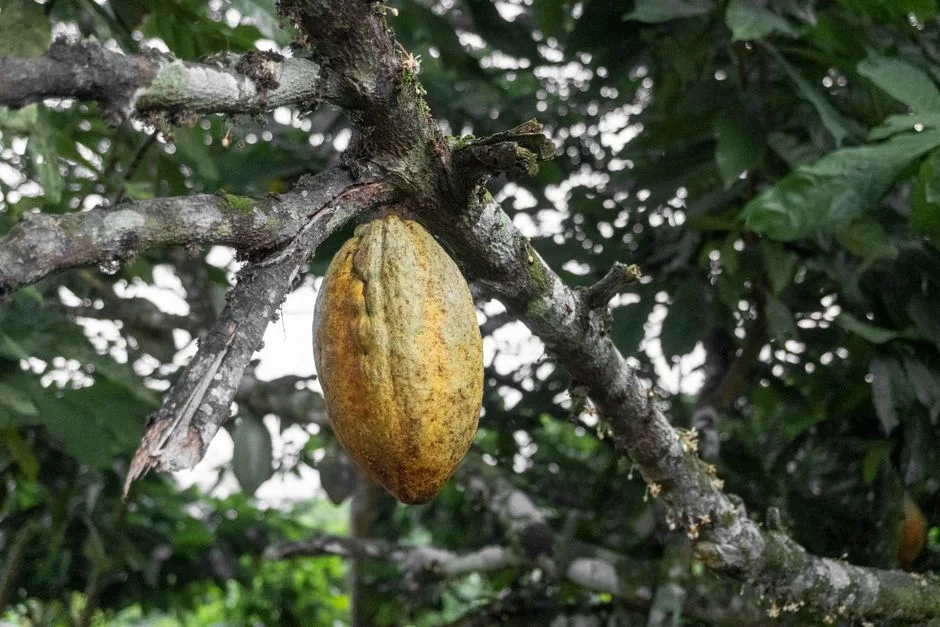
You can hold your cocoa steady through a wild El Niño year with three moves: right-size your shade, break the black pod cycle, and dry your beans to grade. Get those right and you protect both your trees and your price, even when the rain runs hot one week and heavy the next.
That hot-then-heavy pattern is what El Niño brings, and the West African forest belt feels it. In the 2023/24 El Niño, the International Cocoa Organization expected global output to fall almost 11%, and Ghana's crop dropped to a 14-year low. Ghana and Côte d'Ivoire grow about 70% of the world's cocoa, so your farm sits at the centre of a nervous market, and management, not luck, decides how much of the swing reaches your bags. (For the wider season picture, see our guide to protecting your West African main-season crop.)
Why is my cocoa yield swinging so much in an El Niño year?
Because cocoa is fussy about weather, and El Niño pushes it past its comfort zone. The tree does best with 1,500-2,500 mm of rain a year, temperatures of 18-32°C, and a dry season no longer than three months, according to a recent review of cocoa production challenges. Push rainfall above 2,500 mm and fungal disease climbs; one Cameroon study cited there found 65-70% of pods hit by Phytophthora rot once rain passed 2,200 mm. Then the dry, hot spells that follow drop cherelles (young pods) and shrink beans. You cannot change the weather, but shade, drainage and sanitation decide how hard it lands.

Photo: Bamidele Sodiq / Pexels
How much shade should cocoa have?
Aim for 30-40% shade, enough to cool the trees and hold moisture, but not so much that disease thrives. The Cocoa Research Institute of Ghana advises that level, roughly 16-18 tall shade trees per hectare (0.4 ha is about 1 acre), spaced 24 m x 24 m. In a Ghana trial that canopy cut air temperature by about 0.8°C and lifted humidity, a real buffer during a hot El Niño spell.
No-tool test: at midday, look at your farm floor. You want a patchwork, very roughly two parts shade to one part broken sunlight reaching the ground. If no sunflecks reach the floor at all, you are over-shaded, the air stays damp, and black pod spreads.
For young or replanted cocoa, use plantain or banana as temporary shade while permanent trees, such as mango (Mangifera indica) or odum (Milicia excelsa), grow up. Mixing species beats leaning on one. Our guide to farmer-managed natural regeneration covers choosing and protecting those trees.
How do I stop black pod from spreading through my farm?
Break the cycle at the source before you reach for a spray. Black pod is caused by Phytophthora fungi, the milder Phytophthora palmivora across the belt and the aggressive Phytophthora megakarya in Ghana, Nigeria and Cameroon. Surveys in Togo once recorded losses up to 80% when it ran unchecked. Work in this order:
| Step | What to do | Trigger to act |
|---|---|---|
| 1. Sanitation | Harvest ripe pods weekly; remove and bury every infected pod and husk; wipe your knife between trees; control ants | Any pod with a spreading brown-black spot |
| 2. Airflow and drainage | Prune to open the canopy so pods dry faster; clear drains so water never pools; weed | Dense, damp canopy or standing water |
| 3. Copper (last resort) | Copper-based fungicide, timed and safe | Rapid spread despite steps 1-2 |
Sanitation matters because infected pods are the source that re-infects healthy ones: a Cameroon field trial that removed rotten pods every week cut the black pod rate by 22-31% in its first season versus untreated plots. Where disease is severe, copper helps too; in Togo it cut losses from 80% down to about 19%. Better still, pairing sanitation with just three well-timed sprays instead of the usual six a year gave 25-48% less disease and 10.9-51.8% more yield, and paid back 1.8-2.1 times its cost.
Safety first: wear gloves, a mask and long sleeves, never spray into wind or near drinking water, and respect the pre-harvest interval on the label (the days you must wait before harvesting sprayed pods). Avoid the hottest hours (see working safely in extreme heat).
Are capsids worth spraying for?
Watch for them, and spray only when they build up. Capsids, also called mirids (Sahlbergella singularis and Distantiella theobroma), suck sap from pods and shoots, leaving dark sunken lesions, and can cut yield an estimated 30-40%; attacks on pods under three months old often kill them. Scout the canopy, and if you find fresh lesions and the small mottled bugs, target the two peak windows most West African programmes use, around July-September and December-January, rather than spraying blind.
How should I ferment and dry cocoa beans for top grade?
Ferment 6-8 days, then dry slowly to 7-8% moisture; that is what earns top grade and the best price. In a Ghana rainy-season trial, 8 days of heap fermentation plus 6 days of sun drying gave 98% bean purity, while a rushed 5-day ferment left 18% mouldy beans.

Photo: Zeal Creative Studios / Pexels
| Stage | How | Target |
|---|---|---|
| Ferment | Heap under banana leaves; turn every 2 days | 6-8 days |
| Dry | Raised mats or a clean floor; turn often | 6+ days in the sun |
| Moisture | Squeeze a handful: good beans rattle and the shell cracks crisp | 7-8% |
Never dry on bare roadside soil, and never over a smoky fire, which taints the flavour and gets your beans rejected. Above 8% moisture, mould sets in during storage; below 5%, beans turn brittle. Clean, well-fermented beans are the difference between a discounted lot and a full-price 64 kg bag (Ghana's standard cocoa bag). For timing and negotiating your sale, see four ways to get better farm prices.
Your next step this week
Walk your farm today and do the one job that pays most in a wet year: harvest and bury every black-pod-infected pod you can find, and mark where the canopy is too dense to dry after rain. That single round breaks the disease cycle before the next downpour. Then plan your shade thinning and your first fermentation so your beans hit 7-8% moisture and full grade.